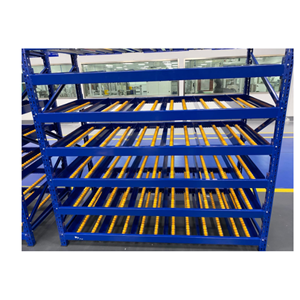
AOCHEN China Factory's Easy Assembly High-Strength Steel Warehouse Carton Flow Racking System Collapsible Powder Coated
Cold-Rolled Steel
FIFO Picking
Powder Coated
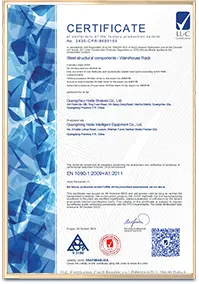
Modern warehouse procurement heads, logistics infrastructure consultants, and cold-chain facility operators demand high volumetric density, low SKU cycle times, and fail-safe seismic performance. As an established direct-to-enterprise manufacturer, we engineer precision-fabricated pallet shuttle systems, dynamic carton flow tracks, selective industrial steel racks, and heavy-duty gravity lanes conforming to strict ISO 9001:2015, FEM 10.2.02, and CE compliance standards.
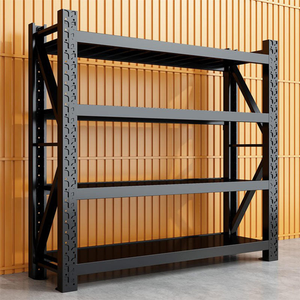
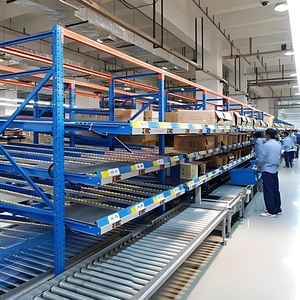
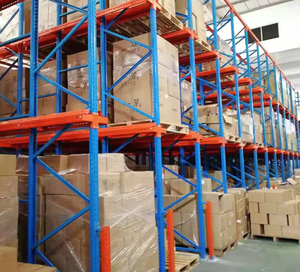
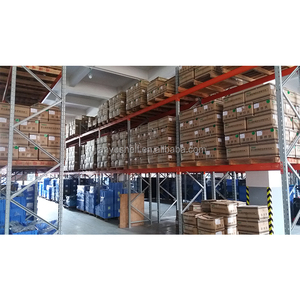
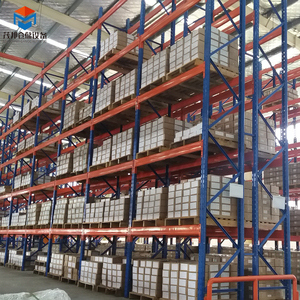
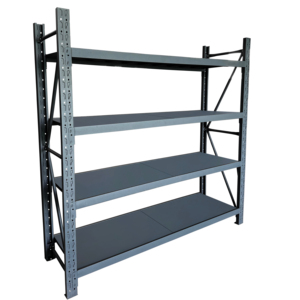
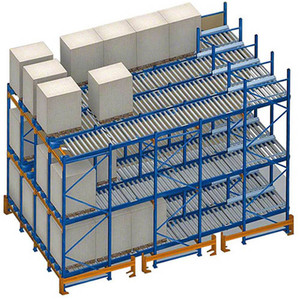
Unlike traditional Drive-In or Static Selective Racking, radio shuttle systems decouple the forklift from entering deep storage bays. A semi-automated, laser-guided battery carrier cart navigates within custom roll-formed galvanized running tracks beneath pallet loads, controlled via industrial RF remote or seamless WMS (Warehouse Management System) interfaces.
Radio shuttle channels eliminate access aisles needed by standard reach trucks, transforming unused cubic clearance into active pallet positions. Storage depth can reach over 40 to 60 meters per channel, unlocking over 85% warehouse space utilization compared to 40% in standard selective configurations.
Because forklift operators only dock pallets at the entry portal of the lane, mast impact collisions against vertical upright frames are minimized by over 90%. This drastically cuts annual rack maintenance expenses, structural damage liabilities, and operator hazard risks.
By positioning loading and discharge aisles on opposing sides, systems operate under strict FIFO (First-In, First-Out) for date-sensitive food, beverage, and pharmaceuticals. Alternatively, single-sided access delivers dense LIFO (Last-In, First-Out) storage for high-volume non-perishable freight.
Procurement directors and Chief Supply Chain Officers (CSCOs) are no longer purchasing steel uprights solely based on raw metric-tonnage pricing. Strategic sourcing decisions over the 2025-2030 cycle are governed by operational integration, automation readiness, and total lifecycle energy efficiency.
The global warehousing landscape is experiencing unprecedented pressures from soaring real estate per-square-meter acquisition costs, rising energy expenditures across temperature-controlled cold chains, and chronic industrial forklift labor shortages. Modern procurement strategies prioritize:
Selecting the appropriate pallet storage topology requires aligning capital expenditure (CapEx) against operational expenditure (OpEx), SKU profile diversity, pallet turnover velocity, and structural footprint requirements.
| Storage System Type | Volumetric Space Utilization | Pallet Selectivity | Handling Speed & Cycle | Structural Upright Impact Risk | Ideal Application Scenario |
|---|---|---|---|---|---|
| Radio Shuttle Racking | 85% – 92% (Maximum) | Channel Selective (FIFO/LIFO) | Fast (Automatic Carrier Transit) | Extremely Low (Forklifts Outside) | FMCG, Cold Stores, Bulk Buffer DCs |
| Selective Pallet Racking | 40% – 50% (Aisle-Heavy) | 100% Direct Access | Medium (Forklift Travels Down Aisles) | Moderate to High | High-SKU Retail, 3PL Multi-Tenant Hubs |
| Drive-In Pallet Racking | 70% – 80% (Dense) | Lane Selective (LIFO Only) | Slow (Forklift Drives Inside Channel) | Very High (Frequent Collision Points) | Uniform Raw Materials, Seasonal Harvests |
| Gravity Flow Pallet Racking | 75% – 85% (Roller Bed) | Strict FIFO Rotation | High (Automatic Gravity Glide) | Low | Perishable Dairy, Pharmaceutical Vaccines |
| Long Span & Carton Flow | 60% – 70% (Manual) | Item / Carton Level | Fast Manual Hand-Picking | Minimal | E-Commerce Fulfillment, Kitting Centers |
Industrial warehousing is experiencing a monumental transition toward multi-directional kinematics, AI-directed dispatching algorithms, and self-monitoring structural arrays.
While conventional 2-way radio shuttles travel along a single longitudinal axis, 4-way systems incorporate cross-directional wheel changing mechanisms. This allows a single shuttle to traverse cross-aisles, shift across tiers via automated vertical reciprocating conveyors (lifts), and service hundreds of lanes dynamically without manual forklift re-positioning.
Next-generation shuttle carts utilize redundant sensor arrays featuring high-accuracy laser time-of-flight (ToF) rangefinders and ultrasonic distance sensors. Pallet spacing inside the rail channel can be dynamically adjusted via software to prevent overhang deflection, tipping incidents, and pallet binding.
Embedded onboard microcontrollers constantly stream motor torque, battery cell temperature, wheel wear metrics, and vibration harmonics to cloud-based monitoring dashboards. Operators receive automated alerts before mechanical degradation causes channel lockups, ensuring uninterrupted 24/7 uptime.
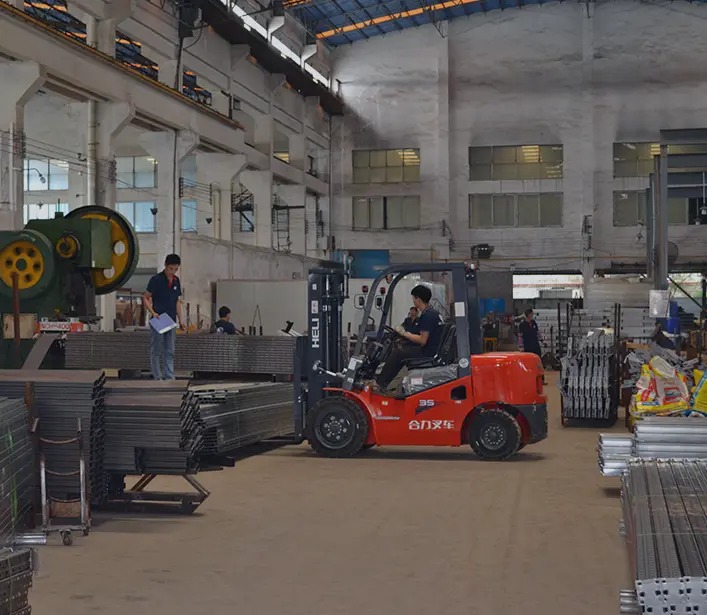
Founded in 2001, Guangzhou Heda Shelves Co., Ltd. has evolved into an international benchmark in warehouse storage solutions. Operating our dedicated 30,000 square meter intelligent production complex in South China, we maintain exhaustive end-to-end control across every manufacturing step.
We do not outsource rolling, punching, or welding. From raw mill-certified structural steel coils (Q235B and Q355B) to the final automated electrostatic powder coating chamber, our facility ensures structural reliability that guarantees your warehouse investment for decades.
Detailed answers covering floor slab requirements, battery endurance, cold chain thermal management, and structural safety codes.
Radio shuttle installations generate high static point loads beneath upright base plates, alongside dynamic horizontal forces during cart acceleration. Slabs should generally feature a minimum concrete compressive strength of C25/C30 (or 3,500 to 4,000 PSI) with a slab depth of 180mm to 250mm, reinforced with welded wire fabric or rebar matting. Floor flatness should conform to DIN 18202 Table 3 Group 3 or Concrete Society TR34 Free Movement (FM2) specifications to avoid track twisting and maintain smooth carrier cart transit across deep lanes.
Yes. We engineer customized cold-chain configurations featuring cold-resistant cryogenic lubricants, hermetically sealed electrical enclosures, and specialized Lithium Iron Phosphate (LiFePO4) battery packs equipped with internal resistive heating circuitry. Condensation prevention protocols are applied to structural running rails via hot-dip galvanizing to eliminate moisture rust and micro-frost friction variations during freeze-thaw cycles.
Each shuttle carrier is powered by heavy-duty 24V or 48V modular lithium power modules. A full charge provides 8 to 10 hours of continuous operation under typical 1,500 kg payload conditions. Recharging takes approximately 3 to 4 hours with our smart industrial charging station. For 24/7 round-the-clock shift fulfillment, systems are supplied with two battery packs per shuttle: one operating in the lane while the secondary pack charges.
The system accommodates standard Euro pallets (1200 x 800 mm), ISO standard pallets (1200 x 1000 mm), Australian GMA pallets (1165 x 1165 mm), and custom industrial steel skids. Pallet bottom runners must be oriented perpendicular or parallel depending on the chosen rail profile. Pallet deflection under full load should not exceed 15mm to ensure clearance above the shuttle cart lifting chassis.
Every structural proposal includes engineering verification matching your project location's seismic zone rating. We utilize advanced static and dynamic Finite Element Modeling (FEM) calculating horizontal acceleration forces in accordance with EN 15512:2020, RMI MH16.1, and AS 4084 guidelines. Base plates, high-tensile anchor bolts (Grade 8.8 or chemical injection anchors), and vertical portal bracing are engineered to dissipate vibrational energy safely.
Depending on facility labor wages, land leasing costs, and temperature control energy tariffs, payback timelines typically range between 14 to 26 months. The financial return is derived from a 60% reduction in forklift operating fleet hours, a 40% reduction in operator labor, a 90% reduction in structural collision repairs, and up to 85% higher volumetric capacity without expanding warehouse footprint.
Submit your building architectural drawings (CAD or PDF), clear ceiling heights, and pallet specifications. Our senior storage engineering team will deliver a comprehensive 3D layout, static engineering calculation, and transparent factory-direct quotation within 24 hours.