1. Engineering Foundation: Kinematics & Structural Mechanics of Rolling Pallet Racks
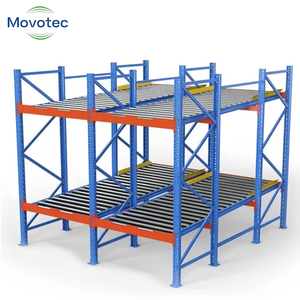
In high-velocity intralogistics and modern automated warehouse ecosystems, Rolling Pallet Racks—commonly classified under industrial standards as Gravity Roller Pallet Flow Racks or Pallet Live Storage (PLS)—represent the pinnacle of high-density mechanical throughput. Unlike conventional static selective racking that requires dedicated operating aisles for every row, rolling pallet flow racking operates on an inclined dynamic plane (typically sloped at an exact gradient of 2.5% to 4.0% / 1.5° to 2.3°). Utilizing the fundamental physics of earth gravity, pallets loaded at the upper charge face gently travel across heavy-duty cylindrical steel rollers down to the retrieval discharge face.
The design engineering of high-capacity rolling systems requires strict structural compliance with international finite element benchmarks, including EN 15512 (Steel static storage systems – Adjustable pallet racking systems – Principles for structural design) and RMI (Rack Manufacturers Institute) MH16.1. As a leading manufacturer and direct global exporter, our engineering office executes rigorous dynamic load distribution modeling, accounting for dynamic impact factors ($K_d$), pallet bottom-deck deformation, coefficient of rolling resistance ($\mu_r$), and thermal variation within sub-zero cold chain environments.
Mechanical Subsystem Breakdown of Industrial Dynamic Racks
Every heavy-duty rolling pallet rack exported from our factory integrates four strictly synchronized mechanical assemblies:
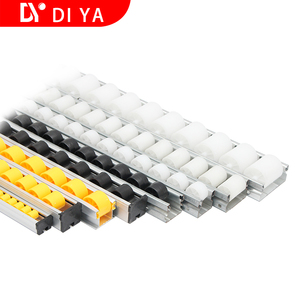
Galvanized Roller Tracks
High-precision carbon steel or heavy zinc-plated rollers fitted with shielded precision ball bearings, capable of continuous 1,500 kg dynamic rolling capacity per axis.
Centrifugal Speed Dampers
Non-electric, maintenance-free internal planetary geared brake drums that govern roll speed dynamically regardless of total pallet weight disparity (from 200 kg to 2,000 kg).
Charge Guides & Entry End
Heavy structural centering funnels that eliminate misaligned forklift placement and prevent track edge pinching, extending pallet runner life and eliminating track derailment.
Discharge End Separators
Pneumatic or pedal-actuated load isolation latches that ensure zero forward pressure on the front pallet, allowing instantaneous, snag-free forklift retrieval.
2. Intralogistics Comparison: Rolling Pallet Flow vs. Other Racking Architectures
Selecting the appropriate warehouse storage architecture requires balancing capital expenditure (Capex), volumetric footprint utilization, SKU selectivity, and operational cycle times. The matrix below demonstrates why global 3PL, FMCG, and cold-chain supply chains increasingly transition from traditional selective or drive-in racks to gravity rolling flow configurations.
| Storage Architecture | Stock Rotation Strategy | Floor Space Utilization | Operating Aisle Ratio | Forklift Cycle Velocity | Relative Capex / Pallet |
|---|---|---|---|---|---|
| Rolling Gravity Flow Racks | Strict FIFO | Up to 85% | Low (2 Dedicated Aisles) | Fast (Zero Transit Aisle Wait) | Medium - High |
| Standard Selective Racking | FIFO or LIFO | Approx. 40% | High (Aisle for Every Bay) | Moderate (Subject to Congestion) | Low |
| Drive-In Racking | Strict LIFO | Up to 75% | Very Low | Slow (Deep Bay Entry Risk) | Low - Moderate |
| Radio Shuttle Racking | FIFO / LIFO (Configurable) | Up to 80% | Low (1 or 2 Aisles) | Fast (Automated Carriage) | High (Electronics & Batteries) |
| Push-Back Cart Racking | Strict LIFO | Up to 65% | Moderate (Single Aisle Face) | Moderate (Push Resistance Load) | Moderate |
3. Strategic Future Procurement Trends in Rolling & Dynamic Storage (2025–2035)
The industrial racking sector is undergoing monumental transformation driven by real estate hyper-inflation, rising cold chain logistics requirements, and widespread warehouse automation. Warehouse planning committees must anticipate the following macro procurement trends:
Direct AGV/AMR Docking Integration
Modern rolling pallet lanes are no longer accessed solely by human operators. Next-generation systems feature precision laser-guided charging entry bays and anti-rebound discharge ends engineered for Autonomous Mobile Robots (AMRs) and automated high-reach forklifts.
Cold-Chain Energy Density Optimization
With industrial refrigeration power driving up to 60% of cold store operational costs, gravity flow racks eliminate wasted air volume. Condensation-resistant galvanized steel components and specialized low-viscosity bearing greases (-40°C rated) prevent track freezing.
Low-Carbon Green Steel Metallurgics
International ESG mandates are pushing Tier-1 warehouse developers toward low-carbon certified steel profiles. Our Guangzhou manufacturing base utilizes recycled scrap-melt EAF steel combined with solvent-free, heavy metal-free powder coatings compliant with EU RoHS and REACH directives.
4. Enterprise Manufacturing Strengths & Turnkey Engineering Excellence
Founded in 2001, Guangzhou Heda Shelves Co., Ltd. has grown into an internationally renowned designer, structural manufacturer, and premier exporter of warehouse storage equipment. Backed by our modern 30,000 square meter intelligent production facility, an engineering roster of over 300 skilled technical personnel, and a monthly manufacturing throughput exceeding 30,000 metric tons, we provide end-to-end reliability from structural concept to global site commissioning.
Full Chain In-House Production
From decoiling certified hot-rolled steel coils and high-precision CNC multi-station continuous roll-forming to robotic beam end-connector welding, we control the entire mechanical chain without outsourcing.
10-Stage Surface Pretreatment
Our automated surface treatment pipeline includes industrial chemical degreasing, multi-stage acid pickling, zinc phosphating, and electrostatic epoxy-polyester thermoset powder coating for maximum coastal corrosion resistance.
Free 2D/3D CAD & FEA Space Planning
Our senior engineering department provides complimentary architectural warehouse layouts, seismic zone dynamic calculations, and 3D realistic rendering simulations within 24 to 48 hours of initial project intake.
International Certifications
Our products and quality control systems are independently audited and certified under CE Marking (Certificate No. 2435-CPR-8605159), ISO 9001:2015 Quality Management (No. 18624Q00169R0M), and strict RoHS environmental standards.
Optimized Container Stuffing Logistics
Exporting to over 120 countries, our logistics engineers calculate precision 3D stuffing plans for 40HQ containers, protecting uprights and flow tracks with specialized steel strapping and bubble wraps to eliminate ocean freight damage.
Turnkey Global Project Oversight
Every exported project arrives complete with step-by-step CAD installation schematics, numbered components, detailed fastener bills of materials, and direct remote or on-site supervisory engineering support.
5. Industrial Buyer's Technical FAQ (Frequently Asked Questions)
Below are technical answers to the most frequent engineering and procurement inquiries raised by global warehouse facility managers, EPC contractors, and logistics directors.