Engineered Storage Portfolio
Factory-Direct Heavy-Duty Picking & Racking Configurations
Engineered specifically to solve vertical volume losses, slow SKU cycle times, and dynamic load stress across multi-echelon intralogistics networks.
2001
Established Engineering Origin
30,000m²
Advanced Manufacturing Base
30,000Tons
Monthly Cold-Forming Capacity
120+
Global Export Destinations
Technical Insight & Domain Expertise
Engineering Principles of Enterprise Picking Racking Systems
As the international supply chain pivots rapidly toward micro-fulfillment units, ultra-fast regional replenishment, and high-frequency omni-channel distribution, the structural demands on warehouse picking systems have undergone an unprecedented transformation. Warehouses can no longer treat picking shelving and heavy-duty racking merely as static ironmongery; they are integrated kinematic systems directly governing an enterprise’s order cycle time, SKU density, picking ergonomics, seismic safety margins, and long-term operating costs.
When selecting a qualified picking racking system exporter, engineering consultants, procurement leads, and third-party logistics (3PL) executives require verified compliance with finite element structural analysis (FEA), high-tensile cold-rolled steel profiling (such as Q235B and Q355B structural grades), and multi-stage anti-corrosion chemical treatment. Operating from our 30,000-square-meter facility in Guangzhou, Guangzhou Heda Shelves Co., Ltd. (HEDA Shelves) has spent over 25 years solving complex structural challenges for global clients across Europe, the Middle East, Southeast Asia, and South Asia (including primary distribution hubs across Nhava Sheva, Chennai, Chattogram, Karachi, and Colombo).
System Categorization and Picking Dynamics
The engineering topology of industrial picking racking must be calibrated according to inventory turnover characteristics, handling equipment compatibility, and unit load profiles. In modern logistics architecture, systems generally bifurcate into three distinct structural paradigms:
| System Architecture | Picking Accessibility | Structural Load Rating | Optimal Application Scenario | Automation Interface |
|---|---|---|---|---|
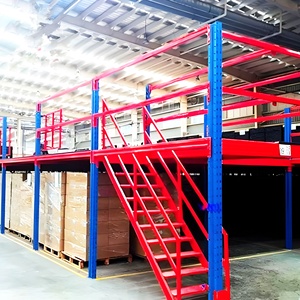
| Rack-Supported Mezzanines | 100% Multi-Level Pick Access | 300 – 1,000 kg/m² | High-SKU Garment, Spare Parts, E-Commerce | Conveyor & Spiral Chute Integration |
| Carton Flow / Dynamic Picking | First-In, First-Out (FIFO) | 50 – 500 kg per Roller Bed | Fast-Moving Consumables (FMCG), Pharmaceuticals | Pick-to-Light & Sensor Verification |
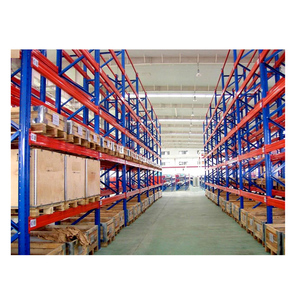
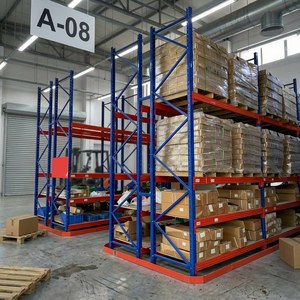
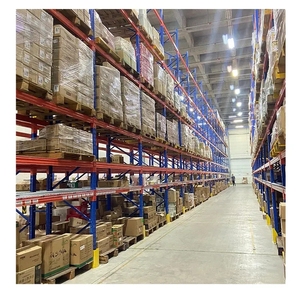
| Selective Pallet-to-Piece Racks | Immediate Single-Pallet Access | 1,000 – 3,000 kg per Beam Level | Heavy Mechanical Parts, Bulk Wholesale Depot | Very Narrow Aisle (VNA) Forklifts |
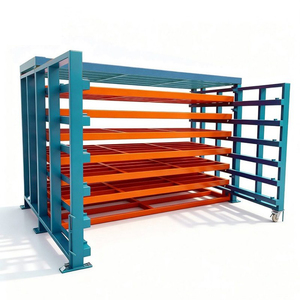
| Specialized Drawer Systems | 100% Ergonomic Pull-Out | Up to 2,000 kg per Cassette | Heavy Sheet Metal, Stamping Tooling, Tooling Dies | Overhead Hoist & Gantry Crane Sync |
Material Metallurgy and Structural Tolerances
Structural reliability starts with raw coil metrology. Substandard racking fabricators frequently compromise on steel ductility or use under-gauge coil stock that buckles under dynamic shock loading caused by erratic forklift maneuvering. HEDA Shelves utilizes certified coil feedstocks, automated multi-station cold-roll forming lines, and laser-guided automated continuous punching to maintain profile hole-pitch variances below ±0.1mm. This mechanical precision guarantees that beam connector claws seat with a strict interference fit, providing high bending stiffness and torsional resistance across high-bay installations exceeding 12 meters in height.
Finite Element Simulation
Every bespoke upright and beam assembly undergoes rigorous computational modeling under static, dynamic, and localized buckling forces to meet global safety standards.
Dual Certified Quality
Holding CE Certification (No. 2435-CPR-8605159) and ISO 9001:2015 accreditation (No. 18624Q00169R0M), our fabrication processes comply with strict safety and traceability benchmarks.
Industrial Pretreatment
Automated pickling and phosphating cycles clear surface mill scale and oil, generating an inorganic crystalline substrate that boosts thermosetting polyester powder adhesion.
Containerized Nesting
Proprietary structural bundle software optimizes the placement of beam sections, upright profiles, and modular wire decking inside 40HQ maritime containers to cut ocean freight overheads.
Industry Foresight
Future Procurement & Technological Trends in Picking Racking
As international enterprise buyers plan procurement cycles spanning the next five to ten years, four macro-trends are fundamentally reshaping technical bid specifications for industrial picking infrastructure:
1. Convergence with Autonomous Mobile Robots (AMRs)
Traditional low-tier manual picking bays are transitioning to hybrid racking systems. Upright structural framing must now accommodate precision clearance tolerances (±2.0mm) to allow collaborative mobile picking robots, rack-to-person shuttles, and autonomous guided vehicles (AGVs) to interface without racking deflection risks.
2. Cold-Chain & High-Humidity Surface Engineering
Driven by pharmaceutical cold storage and rapid urbanization across tropical geographies, buyers increasingly specify dual-finish solutions. Racking engineers combine hot-dip galvanization (HDG) for baseline footings with micro-textured, anti-microbial epoxy coatings capable of withstanding constant thermal cycling between -30°C and ambient ambient temperatures.
3. Modular Upward Scalability & Structural Mezzanines
Industrial real-estate premiums demand that distribution hubs exploit every cubic meter of facility height. Multi-tier rack-supported platforms (2-tier, 3-tier, and 4-tier platforms) featuring integrated integrated staircases, conveyor crossovers, and modular catwalks allow facilities to triple physical picking footprints within existing warehouse perimeters.
4. Circular Steel & Sustainable Procurement Metrics
International environmental corporate governance standards require documented steel lifecycle traceability. Leading racking exporters now provide certified documentation detailing low-carbon smelting inputs, fully recyclable powder-coat chemistry devoid of volatile organic compounds (RoHS compliance), and standardized bolt-free reconfigurations.
The Exporter Advantage
Why Global Supply Chains Partner with HEDA Shelves
Over 25 years of end-to-end manufacturing oversight, advanced roll-forming machinery, and direct export capabilities delivering reliable material handling systems worldwide.
Turnkey In-House Fabrication
We do not outsource critical structural processes. From raw coil de-coiling, precision slitting, continuous roll-forming, and welding to automatic shot-blasting, chemical passivation, and robotic electrostatic coating, every component is manufactured within our Guangzhou industrial base under strict batch control.
Complimentary 2D CAD & 3D BIM Design
Our engineering department delivers comprehensive architectural CAD layouts, aisle-to-forklift clearance diagrams, and structural calculations within 24 hours of receiving site drawings, helping your operational team validate warehouse capacity before placing orders.
Seismic Zone & Concrete Slab Verification
We calculate static dynamic factors, soil coefficients, and slab punch shears according to localized engineering codes (such as RMI, FEM 10.2.02, and EN standards), adjusting baseplate steel thicknesses and chemical anchor embedments to protect your facility from structural failures.
Export Logistics & Rapid Field Assembly
Our project management team provides detailed structural packing lists, piece-marked assembly schedules, and step-by-step 3D video manuals. For complex installations, on-site structural supervisors ensure local assembly crews complete safe, code-compliant erections.
Procurement Knowledge Base
Frequently Asked Questions for Picking Racking Procurement
Key structural, commercial, and operational considerations evaluated by engineering heads and logistics consultants prior to overseas contract confirmation.
How does an engineered picking racking system differ from standard industrial storage shelving?
Unlike static light-duty shelving designed for passive storage, picking racking systems are engineered for dynamic load profiles, high-frequency human-to-goods or robot-to-goods traffic, and strict deflection tolerances (typically limited to L/200 under full load). They feature reinforced aisle uprights, impact-resistant column guards, adjustable pick levels with ergonomic roll-in carton chutes or shelf dividers, and integrated catwalks with fall protections that comply with international industrial safety mandates.
What crucial operational parameters must be provided to generate an accurate CAD layout and structural quotation?
To prepare an accurate structural analysis and layout, our design team requires: (1) Architectural warehouse drawings (DWG/PDF) showing clear overhead heights, building columns, dock doors, and fire egress pathways; (2) Detailed SKU load parameters including tote/box/pallet dimensions (Width x Depth x Height) and gross unit weights; (3) Handling methodology (manual picking carts, reach trucks, or automated AMRs with required clear turning radiuses); and (4) Site seismic data along with concrete slab thickness and compressive strength (e.g., 200mm C25/C30 grade).
How does HEDA Shelves safeguard export containers against corrosion during ocean transit and local monsoons?
We employ an intensive multi-step surface treatment. Components pass through chemical pre-treatment stages (degreasing, acid pickling to eliminate scale, water rinsing, phosphating, and passivation) before receiving an electrostatically applied, thermoset epoxy-polyester powder coating cured at 200°C. For high-humidity coastal applications (such as ports across the Indian Ocean and Arabian Sea), we supply hot-dip galvanized upright configurations and specify heavy-duty PE-film bundling alongside industrial desiccants inside the containers.
Can warehouse picking platforms and mezzanines be altered or expanded as inventory scales?
Yes. Our structural systems are engineered with modularity at their core. By utilizing standard 50mm or 75mm beam adjustment pitches along with pre-punched multi-hole upright profiles, systems can be extended horizontally, outfitted with supplementary shelf levels, or retrofitted with drop-in flow rollers, dividers, and safety mesh without requiring on-site cutting or welding.
What quality audits and structural documentation accompany shipments from your factory?
Every export project is accompanied by material test certificates (MTC) certifying steel yield and tensile characteristics, dry film coating thickness test reports, third-party verified CE structural conformity certificates (No. 2435-CPR-8605159), ISO 9001:2015 quality management documentation, a container loading report with photographic logs, and marked erection drawings with beam load table plaques.
Request a Custom Racking Layout & Export Quotation
Consult directly with our structural engineering team. Submit your warehouse floor plans, load specifications, and project timeline to receive a comprehensive CAD design and factory-direct project bid within 24 hours.
Inquire Now