Featured Heavy-Duty Racking & Protection Systems
Direct factory-manufactured systems complying with ANSI MH16.1, FEM 10.2.02, and EN 15512 global structural standards. Precision-machined for extreme load capacities and impact shielding.
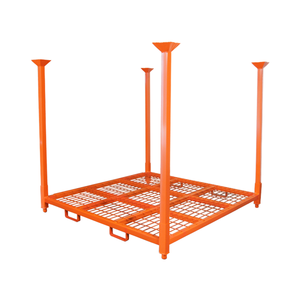
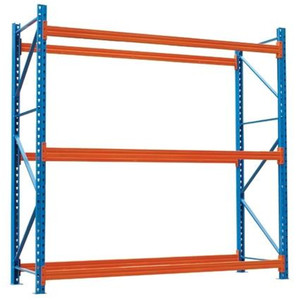
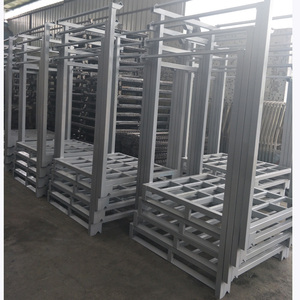
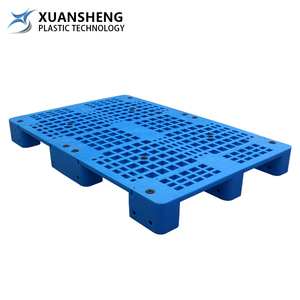
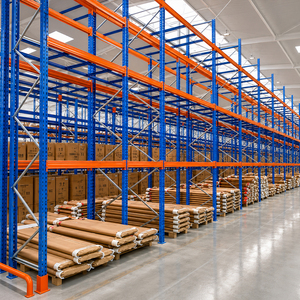
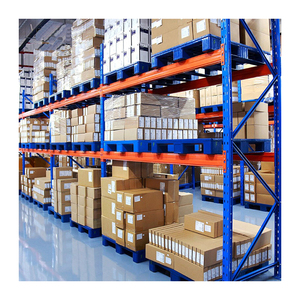
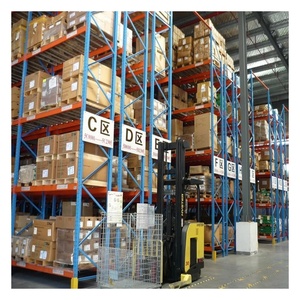
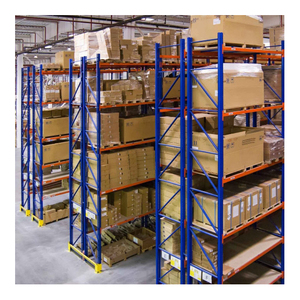
Structural Vulnerability of Upright Frames & Impact Dynamics
Modern high-density distribution centers operate under relentless operational throughput demands. Material handling equipment—predominantly counterbalanced forklifts, reach trucks, and Automated Guided Vehicles (AGVs)—maneuver within tight aisle tolerances, often exceeding operating speeds of 8 to 12 km/h while bearing dynamic payloads from 1,500 kg to over 4,000 kg. Under these operating conditions, unshielded pallet rack uprights are vulnerable to catastrophic shear stress, torsion, and post-impact buckling.
Structural failure analysis reveals that a forklift impact occurring at the bottom 300mm to 1000mm of a rack upright imposes severe localized plastic deformation. Because cold-formed rack columns (typically fabricated from certified Q235B or Q355 structural steel) are engineered primarily for axial compression, sudden transverse shock forces induce localized crippling of the profile flanges. Without high-efficiency impact protection, this triggers an immediate reduction in the member's cross-sectional radius of gyration, potentially precipitating an progressive structural collapse across adjacent rack bays.
The Direct Cost of Neglecting Armor Protection
Direct costs of an upright frame replacement average $850 to $2,400 per incident, factoring in specialized labor, engineered structural decoupling, and freight. However, the indirect costs—pallet unloading downtime, disrupted enterprise resource planning (ERP) order fulfillment, hazardous product spills, and facility insurance premium penalties—typically surpass direct repairs by 420% to 750%.
Comparative Matrix: Industrial Rack Protection Typologies
Selecting the optimal guarding configuration requires understanding energy dissipation mechanics, floor slab anchor stress distribution, and operational clearance requirements:
| Guarding Typology | Material Specification | Energy Dissipation (Joules) | Anchor Bolt Shear Transfer | Optimal Logistics Placement | Deflection Behavior |
|---|---|---|---|---|---|
| Wrap-Around Steel Column Guard | Q235B Cold-Rolled Steel (4.0mm - 6.0mm) | 1,200 J – 2,400 J | Direct Ground Anchor (M12/M16 Wedge) | Intermediate Aisle Uprights, Low-Traffic Zones | Rigid Plastic Yielding / Sacrificial Replacement |
| Polymer Elastic Shock Post Guard | Ultra-High Molecular Polyethylene (HDPE/EVA) | 1,800 J – 3,200 J | Zero Anchor Stress (Post-Clamped) | Narrow Aisles, Frozen Food Stores (-30°C) | Elastic Memory Recovery (Reversible Deflection) |
| Heavy-Duty End-of-Aisle Barrier | Twin Tubular Steel / C-Section Beam + Radius End | 4,500 J – 12,000 J | Multi-Anchor Heavy Baseplates (M20 Epoxied) | Main Transit Intersections & Staging Corridors | Progressive Hydro-Mechanical & Bolt Absorption |
| Integrated Pallet Entry Guide Rail | Heavy Unequal Structural Angle / Structural Box | 3,000 J – 6,500 J | Continuous Floor Anchoring Every 600mm | Very Narrow Aisle (VNA) & Drive-In Systems | Continuous Lateral Guidance & Wheel Deflection |
Engineered Protection Systems for Mission-Critical Facilities
Guangzhou HEDA Shelves Co., Ltd. manufactures heavy industrial guarding solutions optimized to reduce post-impact repairs to zero. Our technical protection portfolio includes:
1. Free-Standing Floor Protectors
Independent of the rack upright, our floor-anchored steel post shields absorb wheel impact before the kinetic shockwave touches the column. Engineered with 4.5mm to 6mm structural plate and dual M16 expanding floor studs.
2. Snap-On Composite Polymers
Molded from virgin High-Density Polyethylene with an engineered honeycombed dampening core. These guards snap directly around 80mm to 120mm uprights without drilling, conserving floor integrity in food-grade or post-tensioned slabs.
3. Dual-Beam End-of-Aisle Armors
Constructed from thick circular hollow sections (CHS) or high-tensile C-beams with rounded bullnose cast corners. Designed to defend against high-speed forklift turns at row terminuses, dissipating over 10,000 Joules of impact energy.
4. VNA Continuous Guide Rails
Heavy structural steel angles (100x75x8mm or 125x75x10mm) anchored every 500mm along the aisle floor. These rails physically guide wire-guided or rail-guided turret trucks while acting as an impenetrable continuous base bumper.
Future Procurement Trends in Pallet Rack Protection (2025–2030)
The industrial storage protection landscape is undergoing rapid technological transformation. Procurement directors must anticipate these structural and digital paradigm shifts:
1. IoT Smart Collision Telemetry
Modern rack guards are integrating embedded multi-axis accelerometer sensors and RFID nodes. Upon experiencing an impact exceeding 500 N, the guard transmits instantaneous location telemetry to the facility's WMS/ERP dashboard, flagging the post for immediate laser-alignment inspection.
2. Sub-Zero Polymer Resilience
Rapid expansion in cold-chain grocery and pharmaceutical logistics has exposed conventional PVC and cheap plastics to brittle fracturing at temperatures below -25°C. The new procurement gold standard involves cross-linked polyolefin polymers engineered for high dynamic elasticity at -35°C.
3. AMR & Robotic Swarm Synergy
Autonomous Mobile Robots (AMRs) operate with precise LiDAR optical sweeps. Outdated protruding guard bolts reflect laser scatter, causing navigation ghost-obstacles. Future procurement demands flush-fitting, low-profile safety skirts with optical-dull non-reflective powder coatings.
Guangzhou HEDA Shelves Co., Ltd.
Established in 2001, Guangzhou Heda Shelves Co., Ltd. has developed into a premier international manufacturing facility for structural warehouse racking and industrial protection systems. Operating from a modern 30,000 square-meter production complex in South China, our facility outputs more than 30,000 metric tons of precision cold-formed steel racking and safety components every month.
With an experienced team of 300+ structural engineers, certified welding specialists, and cross-border project managers, HEDA delivers turn-key OEM/ODM warehouse configurations to over 120 countries across Asia, Europe, the Americas, and the Middle East.
10-Stage Precision Manufacturing Workflow
Every upright post guard, aisle crash barrier, and heavy structural frame manufactured at our Guangzhou facilities undergoes strict automated production and multi-point QC auditing:
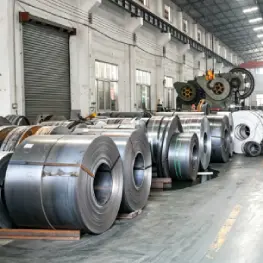 01
Certified Steel Coils
Spectrometric verification of chemical composition & tensile yield strength.
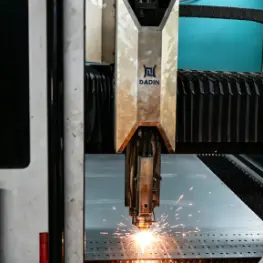 02
Precision CNC Slitting
Computer-guided continuous cutting to exact millimeter tolerance.
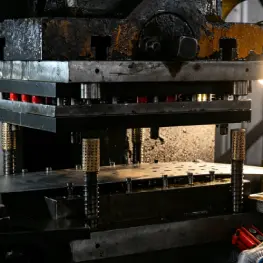 03
Automated Punching
High-speed hydraulic punching for 75mm/76.2mm pitch alignment.
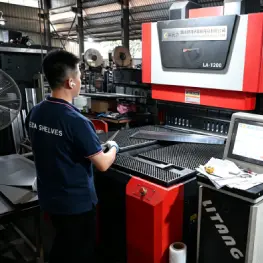 04
Cold Roll Forming
Multi-roller forming lines ensuring extreme cross-sectional rigidity.
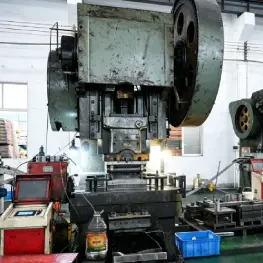 05
Profile Verification
Laser caliper check for flange symmetry and anti-torsion profiles.
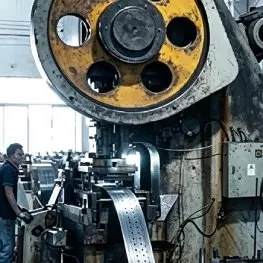 06
Polishing & Deburring
Removal of sharp burrs to guarantee operator and equipment safety.
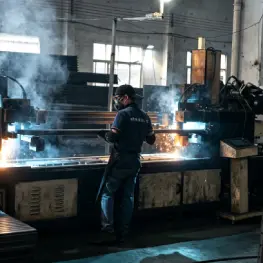 07
Robotic CO2 Welding
Deep-penetration continuous welding of baseplates and barrier flanges.
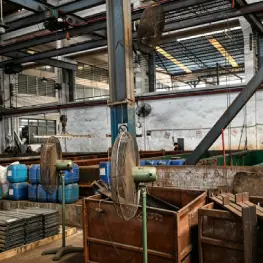 08
Pickling & Phosphating
Multi-tank chemical wash to eliminate mill scale and establish anti-rust bonding.
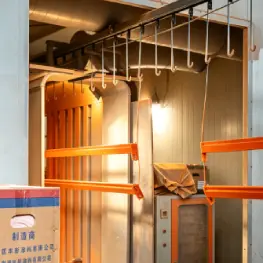 09
Electrostatic Coating
Epoxy-polyester hybrid powder cure at 200°C for durable impact resistance.
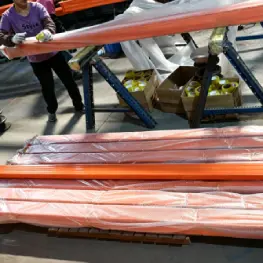 10
Load Audit & Packing
Batch cross-hatch adhesion tests, sea-worthy bundling, and containerization.
Frequently Asked Questions by Industrial Buyers
Detailed answers addressing engineering compliance, installation tolerances, and export shipping mechanics for warehouse safety solutions.
What is the main difference between floor-anchored and column-clamped protectors?
Floor-anchored steel protectors transfer impact energy directly into the concrete floor slab via mechanical wedge anchors or chemical threaded rods, isolating the racking frame from the shockwave. Column-clamped or clip-on polymer guards absorb lower-energy localized hits through material deformation directly on the upright, eliminating the need to drill into post-tensioned or heated floor slabs.
How does EN 15635 regulate allowable upright post deformation?
Under EN 15635 (Steel Static Storage Systems: Application and Maintenance of Storage Equipment), damage is classified into Green, Amber, and Red hazard levels. Lateral upright bending in the direction of the rack aisle exceeding 3.0mm, or transverse bending exceeding 5.0mm measured over a 1-meter straight edge, represents a mandatory "Red Risk," requiring immediate structural offloading and post replacement.
Can HEDA Shelves manufacture guards compatible with third-party racking brands?
Yes. Our in-house engineering and tooling division custom-engineers mounting apertures, flange geometry, and baseplate footprints to match all global profiles, including teardrop, slotted, hex-hole, and omega profiles (compatible with Dexion, SSI Schaefer, Stow, Interlake Mecalux, and Link51 specifications).
What concrete slab specifications are required for heavy-duty end-of-aisle barriers?
To safely dissipate a 10,000+ Joule collision, we recommend a non-cracked concrete slab rated at C20/25 (minimum compressive strength of 3,000 PSI) with an effective slab embedment depth of at least 150mm. For expansion anchor holes, our CAD drawings detail edge distance minimums to prevent concrete cone breakouts under shear.
How does powder-coating surface treatment prevent coastal and monsoon rust?
Our automated 5-stage chemical pretreatment line utilizes acid pickling to eliminate surface oxides, followed by zinc-phosphating. This generates a microscopic crystalline conversion layer that permanently anchors the 70–90µm electrostatic epoxy-polyester powder coat, exceeding 500-hour neutral salt-spray (ASTM B117) corrosion resistance.
What is the delivery lead time and container packing format for export?
Standard lead times range from 15 to 25 business days for standard-profile container orders. Components are bundled with protective corrugated paper edging, shrink-wrapped on steel skids, and loaded with customized timber shoring to maximize 40HQ maritime container cubic utilization while preventing transit rubbing.