Engineered Heavy-Duty Industrial Racking & Storage Systems
Direct factory-manufactured structural racking solutions engineered with high-tensile cold-rolled steel, rigorous FEM/RMI structural compliance, and custom vertical profiles for global distribution hubs.
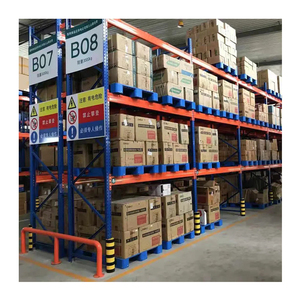
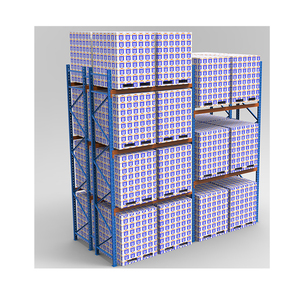
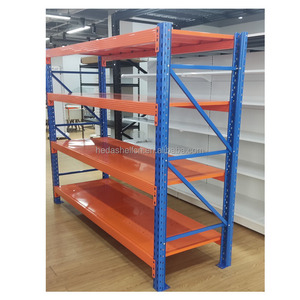
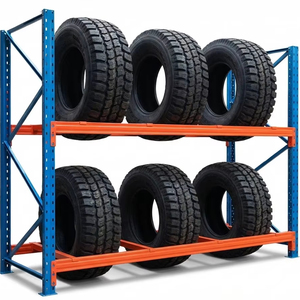
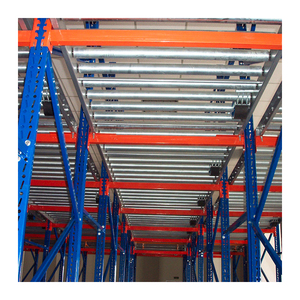
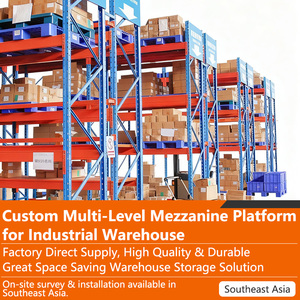
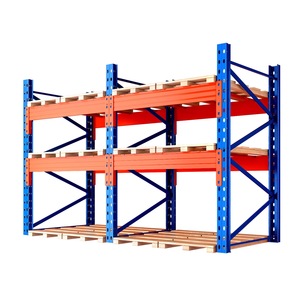
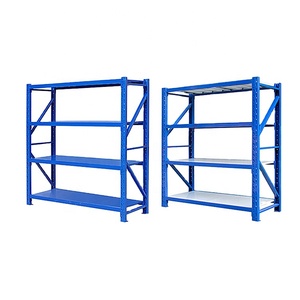
Good Warehouse Rack 2m Height Light Duty Shelf Shelving Long Span Shelving
View Specs1. The Narrow Aisle Engineering Paradigm: Maximizing Volumetric Efficiency
In modern industrial supply chain networks, land procurement costs and urban warehouse leasing expenses represent an escalating capital burden. Conventional Adjustable Pallet Racking (APR) systems typically demand operating aisle widths spanning 3.2 to 3.8 meters to accommodate standard counterbalance reach trucks. This design results in an inefficient warehouse footprint where upwards of 55% of the total cubic volume is surrendered strictly to vehicular transit aisles rather than revenue-generating pallet storage.
A properly engineered Narrow Aisle Pallet Racking (VNA - Very Narrow Aisle) system reduces aisle clearances down to 1.5 to 1.9 meters. By transforming horizontal transit voids into vertical storage matrices reaching clear heights between 12 meters and 18 meters, logistics operators achieve a net volumetric storage expansion of 40% to 55% within the identical building footprint. This spatial compression allows supply chain directors to delay expensive greenfield facility construction, slash cooling and lighting energy overhead per pallet position in temperature-controlled cold stores, and centralize SKU distribution under an ultra-dense logistical framework.
However, narrowing aisle tolerances radically intensifies structural load mechanics. Vertical upright deflection, floor anchor shear stresses, dynamic sway induced by high-reach turret trucks, and beam torsional deflection (restricted under FEM 10.2.02 to maximum span deflection L/200) require exact metallurgical tolerances. As a premier original equipment manufacturer, our Guangzhou fabrication base roll-forms high-yield Q235B and Q355B cold-rolled steel coils into specialized continuous omega-profile uprights engineered to resist combined bending, axial compressive loads, and sudden impact dynamics.
2. Architectural Floor-Flatness, Rail Guidance & Wire Navigation Criteria
A common failure point in narrow aisle racking implementations is the neglect of civil engineering floor slab conditions. Because Specialized Material Handling Equipment (MHE)—such as Man-Up Turret Trucks, Bilateral Articulated Order Pickers, and Automated Guided Turret Stacker AGVs—operate at vertical mast elevations exceeding 15 meters, the slightest floor deviation is amplified geometrically at the top tier. An uncorrected floor variance of a mere 2 mm at the base wheel track can cause the forklift carriage to deflect by over 50 mm at apex elevation, precipitating catastrophic racking collisions or load unseating.
Industrial VNA operations require stringent compliance with the DIN 18202 Group 4 or Concrete Society TR34 (Category Superflat / DM1) specifications. In existing brownfield logistics installations where precision floor grinding is financially prohibitive or unachievable, structural guidance infrastructure must be engineered directly into the bottom rack profile. Manufacturers deploy two primary guidance methodologies:
- Mechanical Guide Rails: Continuous, heavy-gauge steel angle iron (typically 100 x 75 x 8 mm to 125 x 75 x 10 mm) or structural C-channels secured to the warehouse slab via chemical expansion anchor bolts at 500 mm intervals. These rails mechanically lock the turret truck's side guide rollers within a straight line, completely relieving driver steering responsibilities inside the narrow aisle.
- Inductive Wire Guidance Systems: A high-frequency guidance antenna wire embedded into a 15 mm deep floor saw-cut slot centered in each aisle. The specialized turret truck tracks the electromagnetic frequency emitted by the floor loop, providing micro-steering corrections automatically while preserving floor flushness for cross-aisle pedestrian or standard pallet truck crossings.
Industrial Pallet Racking Systems: Technical Evaluation Matrix
Benchmark performance metrics across volumetric capacity, equipment capex, slab tolerances, and inventory rotation to optimize warehouse capital allocation.
| Racking System Classification | Operating Aisle Width | Floor Footprint Utilization | Direct Pallet Accessibility | Required Handling Equipment | Required Slab Tolerance | Comparative Capex / Pallet |
|---|---|---|---|---|---|---|
| Narrow Aisle (VNA) Selective | 1.5 m – 1.9 m | Very High (85-90%) | 100% Direct Immediate | Man-Up / Man-Down Turret Truck, VNA-AGV | DIN 18202 Group 4 / TR34 DM1 | Medium - High |
| Standard Wide Aisle (APR) | 3.2 m – 3.8 m | Moderate (40-50%) | 100% Direct Immediate | Standard Counterbalance, Reach Truck | Standard Commercial Flat (FM3) | Economical Baseline |
| Double Deep Pallet Racking | 3.0 m – 3.4 m | High (60-65%) | 50% Direct (LIFO per pair) | Pantograph Pantograph-Reach Truck | Standard Commercial Flat (FM2) | Moderate |
| High-Density Drive-In / Drive-Through | Continuous Lane | Extremely High (80%) | Low (Lane Filo/FIFO) | Standard Counterbalance Forklift | Standard Heavy Industrial Slab | Moderate |
| Automated Radio Shuttle System | Transit Bay Only | Maximum (90-95%) | Medium (Channel Buffer FIFO/LIFO) | Standard Forklift + Automated 24V Shuttle | Commercial Reinforced Slab | High (Automation ROI) |
| Dynamic Gravity Pallet Flow | Entry & Exit Aisles | High (75-80%) | Strict FIFO per Channel | Standard Forklift or Reach Truck | Standard Reinforced Slab | High (Roller Beds) |
Factory-Direct Quality: Guangzhou Heda Shelves Co., Ltd.
Established in 2001, Guangzhou Heda Shelves Co., Ltd. controls the complete manufacturing chain in-house—from certified raw steel coils to fully automated CNC roll-forming, robotic welding, and anti-corrosion chemical treatment.
Full In-House Metallurgy
We source prime, certified structural steel coils, strictly verifying tensile yields prior to cold roll-forming on our automated multi-station profiling lines for flawless upright consistency.
CE & ISO 9001 Certified
Fully compliant with international safety standards holding valid CE Certification (No. 2435-CPR-8605159), ISO 9001:2015 accreditation (No. 18624Q00169R0M), and RoHS environmental credentials.
Chemical Pickling & Phosphating
Every structural upright and box-beam undergoes immersion degreasing, acid pickling, and phosphating pretreatment before electrostatic powder baking, ensuring unmatched adhesion in humid coastal conditions.
Free 3D CAD & Structural Calculations
Our senior design engineers generate customized DWG floor plans, 3D renderings, and finite element analysis (FEA) structural calculation packs tailored to your site's specific seismic zone within 24 hours.
Future Procurement Trends in High-Density Narrow Aisle Logistics
Emerging engineering shifts transforming narrow aisle pallet racking from passive steel structures into integrated, dynamic automated fulfillment ecosystems.
Robotics & VNA-AGV Convergence
Procurement teams are transitioning rapidly from manned turret trucks toward Autonomous Mobile Robots (AMRs) and automated VNA stacker cranes. Modern narrow aisle specifications now mandate tighter manufacturing tolerances (±1.0 mm cumulative over 12 meters) to facilitate LiDAR, QR, and SLAM robotic guidance optics.
Microclimate & Cold-Chain Density Optimization
With pharmaceutical and fresh-food cold chains expanding globally, refrigeration operational expenditure per cubic meter is under scrutiny. Future narrow aisle racking designs specify continuous hot-dip galvanized finishes or marine-grade polyurethane coatings to resist sub-zero condensation thermal cycling.
Sensorized Structural Health Monitoring (SHM)
Enterprise logistics hubs are increasingly mandating IoT-enabled impact monitoring systems integrated directly into upright column protectors and row end-frames. Digital strain gauges and tilt telemetry deliver real-time collision alerts and structural overload warnings directly to warehouse management software (WMS).
Frequently Asked Questions (FAQ) for Global Racking Buyers
Essential technical guidelines addressing structural calculations, floor anchorage, guide rail selection, and containerized logistics.
What is the exact aisle width required for a Narrow Aisle (VNA) system?
Operating aisle widths in a Narrow Aisle system typically range between 1,500 mm and 1,900 mm depending strictly on pallet dimensions (1200x1000 mm UK/US pallets or 1200x800 mm Euro pallets) and the exact chassis width of the designated turret truck. To calculate clear aisle width: Ast = Truck Body Width + Minimum 200 mm (100 mm lateral safety clearance on each flank). Our engineering team cross-references your forklift technical specification sheet during the initial CAD layout phase.
Mechanical guide rails vs. wire guidance: which system should we specify?
Mechanical steel angle rails (e.g., L100x75x8 mm) are recommended when retrofitting older warehouse floors with imperfect floor levelness, or when pallet picking occurs directly from the lowest level without specialized base beams. Inductive wire guidance is preferred for brand-new facilities with laser-screeded floors (TR34 DM1), as it eliminates floor trip hazards, simplifies housekeeping, and allows lateral turret truck exit without rail clearance obstacles.
What concrete floor slab specifications are required for high-bay VNA installations?
Because vertical upright loads can reach 15 to 25 tons per column, the warehouse floor slab must possess an uncracked compressive strength of at least 30 to 35 MPa (C30/C37 concrete). Slab thickness typically ranges between 200 mm and 300 mm with dual-layer steel rebar reinforcement. Floor levelness should conform strictly to DIN 18202 Table 3 Line 4 or TR34 Superflat/DM1 to avoid severe mast sway during high-speed vertical operations.
Why is pickling and phosphating superior to simple solvent degreasing?
Industrial racking components subjected to high humidity, coastal sea air, or cold-store condensation can corrode prematurely if the base steel possesses mill-scale or micro-oxidation prior to coating. Our 10-stage chemical line immerses roll-formed sections into acidic pickling tanks to dissolve all scale, followed by a zinc-phosphate bath that etches a crystalline microscopic layer onto the steel. This provides an impenetrable anchor for thermoset electrostatic epoxy-polyester powder, guaranteeing 500+ hours of salt-spray resistance.
Can our existing standard selective pallet racks be converted to narrow aisle?
In many instances, yes. Conversion involves relocating existing double-deep or wide-aisle runs closer together to 1.7 m clearances and adding floor guide rails. However, an engineering audit is mandatory: because VNA systems typically build higher to capture vertical volume, the existing upright cross-sections, footplate sizing, and back-to-back row spacers must be verified against revised seismic and overturning moment calculations.
How does HEDA Shelves handle international shipping and container packing?
Uprights are pre-assembled or flat-packed with high-tensile steel strapping and protective edge cardboard to eliminate freight abrasion. Beams are bundled in matched pairs with customized nesting blocks. Accessories, footplates, shim plates, and grade 8.8 expansion anchors are secured in heavy-duty wooden crates. Every 40ft High Cube (40HQ) container is calculated using 3D stuffing software to achieve 98%+ volumetric loading efficiency, lowering your landed freight cost per pallet location.
What engineering documentation is delivered with an industrial racking project?
Every commercial project package includes comprehensive architectural layout drawings (DWG/PDF), finite element structural analysis calculations, static deflection certificates, assembly blueprints with piece-mark numbering, official mill test certificates (MTC) verifying steel metallurgy, CE Declarations of Conformity, and certified load capacity warning plaques to mount at aisle entrances.
What is the typical production and delivery lead time for custom VNA projects?
With an automated 30,000 square meter production facility and 30,000 tons of monthly capacity, standard project orders of 5 to 20 container loads are typically roll-formed, pre-treated, powder-coated, and packed within 15 to 25 working days. Ocean freight is coordinated directly from South China shipping ports (Guangzhou / Nansha / Shenzhen) to all global discharge ports worldwide.
Request a Turnkey Racking Layout & Engineering Quotation
Provide your warehouse clear height, building CAD drawing, pallet load profiles, and forklift models. Our senior storage engineering team will provide a comprehensive DWG layout, 3D visual rendering, and itemized factory-direct commercial proposal within 24 business hours.