High-Performance Metal Warehouse Racking Portfolio
Engineered from premium high-yield Q235B and Q355B structural steel, our industrial systems comply with CE (EN 15512), ISO 9001:2015, and FEM standards to guarantee seismic stability, maximum bay capacity, and floor area optimization.
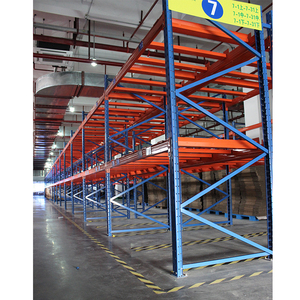
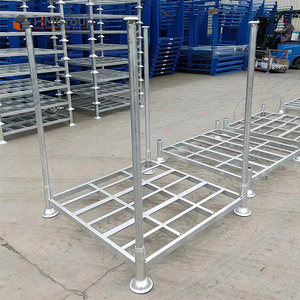
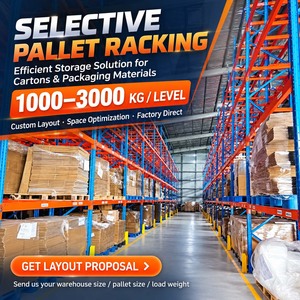
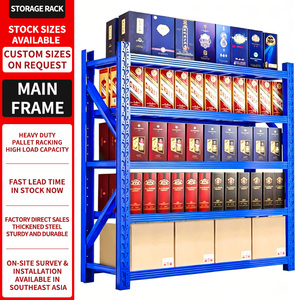
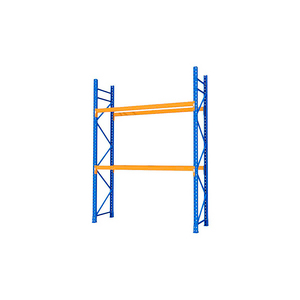
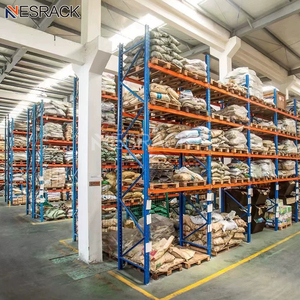
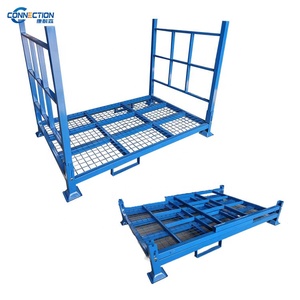
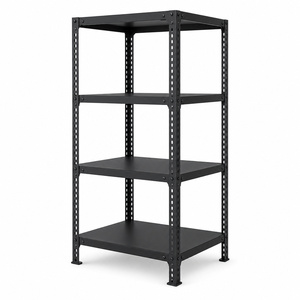
Why Tier-1 3PLs & Industrial Plants Partner With Us
Combining vertically integrated manufacturing, European standard engineering, and turnkey intralogistics consulting, we eliminate structural failure risks and reduce project CAPEX across commercial installations.
Certified Metallurgy & Safety
Every batch of Q235B and Q355B coil undergoes mill chemical analysis and physical tensile pull testing. Validated with CE (2435-CPR-8605159) and ISO 9001:2015 certifications to guarantee absolute deflection compliance below L/200 under maximal working load.
Free Turnkey CAD & 3D Modeling
Our in-house structural engineering group delivers complete building analysis, dynamic forklift aisle turning radius checks, structural baseplate calculations, and 3D virtual walkthroughs within 24 hours of receiving warehouse slab architectural drawings.
Ocean Freight Bundling Tech
Export packaging engineered for maximum 40HQ container volumetric efficiency. Nested profile nesting, anti-abrasive wrapping, and steel strap skids protect powder coating finishes while lowering ocean freight unit-landed costs across long-distance transit.
Complete Lifetime Traceability
Each upright profile, load beam, and frame brace is stamped with production shift identifiers and batch codes. We provide comprehensive erection manuals, CAD assembly schematics, numbered components, and optional on-site engineer project supervision.
10-Stage Industrial Cold-Forming & Surface Treatment
From raw metallurgical coil intake to final containerized dispatch, our automated continuous roll-forming lines operate under strict EN 1090-1 and ISO 9001:2015 factory production control systems.
Raw Steel Assay
Direct supply coils from certified Tier-1 mills checked for chemical composition and yield tensile strength.
Precision Slitting
CNC slitting lines trim strip widths to ±0.1mm tolerance, ensuring profile consistency across upright folds.
CNC Punching
High-speed progressive hydraulic dies punch uniform teardrop or diamond hole patterns on 50/75mm increments.
Multi-Roll Forming
Continuous 24-station cold-rolling mills gradually shape upright Omega profiles to eliminate residual metal stress.
Box-Beam Interlock
Twin C-channel continuous seam interlocking produces stiff, hollow box-section load beams for zero horizontal torsion.
Robotic MIG Welding
Automated robotic weld cells secure beam connection claws with deep penetration welds for seismic shear resistance.
Edge Deburring
Automated rotary finishing lines remove all laser and punch burrs, protecting installer safety and pallet interfaces.
Chemical Pretreatment
9-stage immersion bath: alkaline degreasing, ultrasonic water rinse, acid pickling, and protective zinc phosphating.
Electrostatic Coating
Automated reciprocator spray booths deposit 70–90µm epoxy-polyester powder cured in a 200°C infrared baking oven.
Deflection Testing & Packing
Hydraulic destructive batch proof testing, automated bundle strapping, and impact-resistant container dunnage packing.
Emerging Trends Reshaping Industrial Racking Sourcing
Global supply chain volatility, urban warehousing land premiums, and carbon border adjustment mechanisms (CBAM) are rapidly redefining the criteria logistics executives use to evaluate metal racking suppliers.
1. Transition to TCO (Total Cost of Ownership) Over Spot Steel Pricing
Enterprise procurement teams are turning away from low-initial-cost uncertified fabricators. Racking infrastructure is a 15- to 20-year structural asset. Premature upright deflection, micro-cracking from sub-grade steel, and poor powder coating adhesion lead to catastrophic rack collapses, OSHA penalties, and expensive operational downtime. Specifying certified Q355B high-tensile structural profiles lowers total life-cycle ownership costs by up to 34% by allowing higher clear spans with less raw metal mass, directly lowering ocean freight surcharges and ongoing structural reinforcement expenses.
2. "Automation-Ready" Modular Mechanical Framing
With warehouse labor shortages and rising hourly wages worldwide, modern distribution centers are progressively migrating toward semi-automated and fully automated intralogistics. Forward-thinking procurement strategies demand static selective pallet racks engineered with tight fabrication tolerances (±0.5mm) that can seamlessly accept autonomous mobile robot (AMR) under-pallet carriers, automated wire-guided VNA turret systems, and rail-mounted radio shuttle runners without requiring full bay teardowns or concrete slab re-coring.
3. Decarbonization & Green Steel Supply Chain Auditing
European and North American regulatory frameworks (such as the EU Corporate Sustainability Due Diligence Directive) now mandate verified Scope 1, 2, and 3 emissions reporting across warehouse infrastructure contracts. Top-tier metal rack suppliers must demonstrate closed-loop water treatment in chemical phosphating plants, high-efficiency electric curing ovens, zero-VOC electrostatic powder systems, and verifiable scrap steel recycling protocols. Sourcing racking with certified recycled scrap content is rapidly becoming a mandatory tender prerequisite for Fortune 500 logistics operations.
4. Ocean Freight Density Optimization & Knock-Down Packaging
Given recent volatility in trans-oceanic container indices, the volumetric efficiency of racking shipments represents a critical landed-cost determinant. Modern procurement contracts evaluate suppliers based on modular knock-down frame design. Bolted upright frames—shipped with columns, horizontal diagonal braces, and heavy baseplates nested as flat bundles—increase container space utilization by up to 45% compared to pre-welded upright frames, translating into thousands of dollars saved per hundred pallet bays deployed.
Structural Metallurgy & Material Advancements
In-depth technical analysis of structural cold-forming dynamics, anti-corrosion chemical formulations, and advanced seismic design frameworks implemented in modern metal racking manufacture.
High-Yield Cold-Formed Steel Metallurgy
The standard baseline for structural racking has shifted from basic hot-rolled structural steel to high-strength micro-alloyed cold-formed coils (Q235B vs Q355B / S355JR). Cold roll-forming induces strain hardening along the bends, increasing the yield strength ($R_{eH}$) of the profile edges by 12–18%. Our roll tooling utilizes optimized bend radiuses ($R/t \ge 1.5$) to prevent localized micro-fissuring and ensure ductile performance under extreme seismic shaking or accidental forklift impact loading.
Seismic Dissipation & Floor Anchorage
Seismic warehouse design demands precise finite element modeling (FEM) based on ASCE 7-22 and EN 16681 specifications. The baseplate is no longer just a resting foot; it functions as an engineered moment-dissipating interface. Using oversized, laser-cut ductile steel baseplates secured with heavy-duty wedge mechanical anchors or chemical resin capsules, our upright columns transfer horizontal ground shear stresses into the concrete slab while protecting the primary upright column from base-buckling failure.
Duplex Anti-Corrosion Systems
For cold chain facilities (-30°C), agricultural fertilizer storage, and marine coastal hubs, standard paint finishes fail rapidly due to condensation and galvanic micro-environments. We deploy dual-layer corrosion defense: automated hot-dip batch galvanizing (ISO 1461, minimum 65µm zinc thickness) combined with thermosetting zinc-phosphate powder barrier films that withstand over 1,000 hours of continuous ASTM B117 salt spray testing with zero blistering or creep.
Engineering Specification & System Selection Matrix
Cross-reference primary operational metrics to match your inventory handling dynamics, forklift aisle dimensions, and floor area footprint requirements with the optimal racking geometry.
| System Architecture | Pallet Selectivity | Floor Space Efficiency | Load Capacity / Tier | Stock Flow Profile | Primary Industrial Application |
|---|---|---|---|---|---|
| Selective Pallet Racking | 100% Immediate | Moderate (35%–40%) | 1,000kg – 4,500kg | FIFO / LIFO Any | Multi-SKU 3PL, FMCG, retail distribution hubs |
| Drive-In / Drive-Through | Low (Lane-by-lane) | High (65%–75%) | 800kg – 2,000kg | LIFO (Drive-In) / FIFO | Cold storage, beverage bottling, bulk agricultural crops |
| Radio Shuttle Cart System | Channel Selective | Maximum (75%–85%) | 500kg – 1,800kg | Dual FIFO / LIFO | Deep freeze cold chain, meat processing, dairy production |
| Heavy Duty Cantilever | 100% Unobstructed | Moderate to High | 500kg – 3,000kg/arm | Free Front Access | Steel pipes, extrusions, timber boards, building materials |
| Push-Back Cart Racking | Lane Selective (2–6 deep) | High (60%–70%) | 1,000kg – 1,500kg | LIFO Automatic | Medium turnover batch inventory, buffer holding areas |
| Multi-Tier Mezzanine Rack | 100% Manual Hand-Pick | Double / Triple Floor | 300kg – 1,000kg/m² | Carton & Bin Picking | E-commerce fulfillment, spare parts, textile garment hanging |
Industrial Racking Procurement FAQ
Technical answers to critical questions asked by procurement directors, structural consultants, and logistics facility managers during system specification and supplier qualification.
What steel grades do you specify, and how is raw metallurgical quality validated?
We source prime, mill-certified cold-rolled steel coils in standard grades Q235B and Q355B (equivalent to ASTM A36 / Grade 50 and European S235JR / S355JR). Every coil heat number is cataloged alongside its Mill Test Certificate (MTC) stating precise chemical percentages of Carbon, Manganese, Silicon, Phosphorus, and Sulfur, accompanied by yield strength, ultimate tensile strength, and elongation data. Independent batch tensile tests are regularly executed to guarantee compliance prior to roll-forming.
What deflection ratio limits do your load beam designs adhere to?
Our structural beam calculations strictly follow the European EN 15512 and RMI (Rack Manufacturers Institute) ANSI MH16.1 design codes. Beam vertical deflection under full rated uniformly distributed load (UDL) is rigorously capped at a maximum of $L/200$ (where $L$ is the clear distance between uprights). For automated crane-served and radio-shuttle applications, we engineer to even tighter tolerances of $L/300$ or $L/400$ to prevent carriage jamming.
How does concrete slab thickness and strength affect baseplate engineering?
Warehouse racking uprights generate intense concentrated point loads (ranging from 40kN to well over 180kN per column foot). We evaluate your concrete floor thickness (typically 150mm to 250mm) and compressive strength ($f'_c \ge 25\text{–}35\text{ MPa}$). Our engineers size the baseplate footprint, steel thickness (up to 12mm), and anchor embedment depth to distribute point pressures below the maximum bearing capacity of the concrete slab, preventing localized slab punching failure.
What surface finishes are recommended for tropical high humidity and cold stores?
For standard temperature-controlled warehouses, our 9-stage zinc-phosphating pretreatment coupled with 70–90µm electrostatic polyester powder coating delivers exceptional durability. For unheated warehouses in monsoon regions, coastal marine environments, or deep-freeze cold storage rooms (-30°C), we recommend pre-galvanized or hot-dip galvanized finishes (ISO 1461). Galvanization creates a metallurgical zinc-iron alloy bond that cannot peel or delaminate from thermal contraction cycles.
What exact data is required to generate a complimentary warehouse CAD design?
To supply an accurate CAD floorplan and structural calculation, we require: (1) Architectural DWG/PDF drawings indicating clear internal ceiling height and building column grid spacing; (2) Pallet specifications including overall dimensions ($W \times D \times H$), pallet type (Euro, GMA, or industrial), and maximum weight per pallet; (3) Forklift fleet models, minimum aisle widths required for turning radius, and maximum mast lift reach; and (4) Site seismic and wind zoning parameters.
What certifications prove structural safety for municipal and insurance audits?
We supply verifiable third-party documentation including European CE Marking certification (EN 1090-1 / EN 15512: No. 2435-CPR-8605159), ISO 9001:2015 Quality Management (No. 18624Q00169R0M, valid to 2027), and RoHS environmental compliance reports. Comprehensive finite element structural calculation dossiers, load capacity rating plaques, and structural engineer stamps can be prepared for local building control and fire marshal sign-offs.
How are components packed to prevent transport damage and reduce freight costs?
Upright frame columns, bracings, and load beams are bundled on dedicated automated packaging lines with heavy steel strapping, wooden base dunnage, protective cardboard corner guards, and thick plastic shrink wrapping. Fasteners, baseplates, shims, and safety drop pins are crated in export-grade fumigated wooden boxes. Shipments are mathematically container-nested to fill 95%+ of 40-foot high-cube container cube capacity.
Can you provide on-site installation support or supervision in our country?
Yes. Every container arrives with a comprehensive installation blueprint, 3D exploded connection views, numbered component identification tags, and video installation guides. For large distribution centers or complex multi-tier mezzanine and shuttle systems, we dispatch veteran site installation supervisors to project sites across Asia, the Middle East, the Americas, and Africa to manage local installation crews and conduct final load certification audits.
Accelerate Your Warehouse Capacity With Direct Engineering Support
Work directly with our senior intralogistics structural engineers to develop an optimized warehouse layout, maximize vertical clearance utilization, and secure factory-direct pricing with zero broker margins.
Request Technical Proposal
Submit your building dimensions or tender drawings to receive a custom engineering calculation and quotation within 24 hours.
Get a Quote