Engineered Industrial Racking Systems: Production & Portfolio
Precision-manufactured storage solutions meeting CE, ISO 9001:2015, and FEM/RMI international storage structural safety standards. Engineered for maximum volumetric density and material handling efficiency.
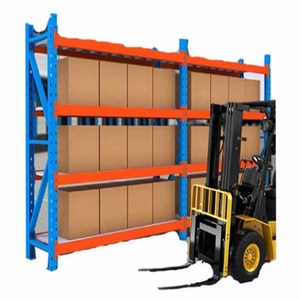
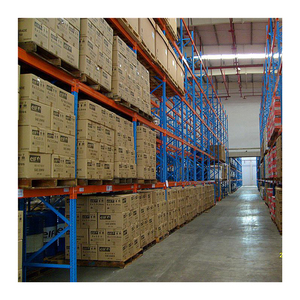
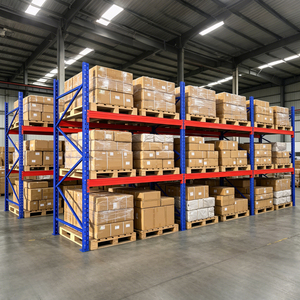
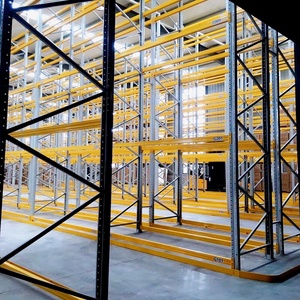
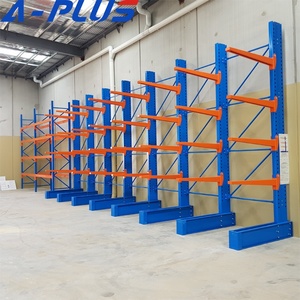
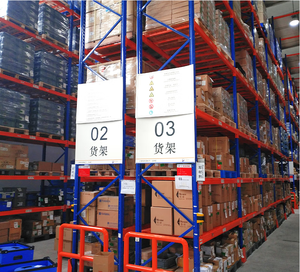
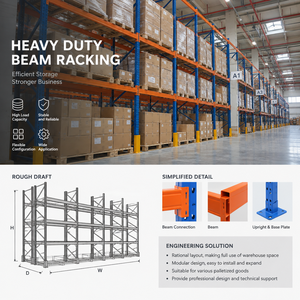
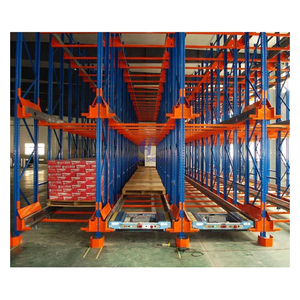
Strategic Engineering: The Structural Backbone of Global Supply Chains
Modern distribution complexes, third-party logistics (3PL) terminals, and enterprise-grade manufacturing hubs operate under stringent throughput requirements. Industrial pallet racking is no longer a passive steel component; it is an active structural framework engineered to withstand complex dynamic loads, seismic activity, cyclic fatigue, and precise material handling operations. Guangzhou Heda Shelves Co., Ltd. brings over two decades of metallurgical research and cold-roll manufacturing excellence to every structural installation.
By using premium Q235B and Q355B structural steel, our systems deliver consistent yield strength under maximum rated loading. Beam connectors feature precision robotic welding to maintain deflection tolerances well within international safety thresholds (≤L/250 to ≤L/300). From selective beam systems configured for mixed-SKU FMCG fulfilment to semi-automated deep-lane shuttle racks, our engineering approach combines volumetric density with full material safety across varied global operating environments.
Manufacturing Rigor & Enterprise Factory Advantages
Guangzhou Heda Shelves Co., Ltd. controls the complete manufacturing chain in-house, ensuring traceable quality, structural reliability, and cost-effective direct-from-factory export.
Continuous Roll-Forming Lines
Our facility runs specialized cold-roll profiling lines that gradually shape upright posts and beams without internal stress concentrations, maintaining uniform structural strength.
Certified Surface Treatment
Steel parts go through an automated 10-stage process including chemical cleaning, pickling, and phosphating prior to electrostatic powder coating, delivering durable adhesion and salt-spray resistance.
Documented International Compliance
All load designs are verified to CE (Certificate No. 2435-CPR-8605159) and ISO 9001:2015 management parameters, providing engineering documentation ready for site audit and local code verification.
Free Turnkey CAD & 3D Modeling
Our dedicated engineering department converts your building layout into space-optimized layouts within 24 hours, including seismic load checks and forklift aisle clearances.
Optimized Export Packaging
Uprights and beams are bundled with steel strapping, corner protectors, and moisture barriers, engineered for high 40HQ container utilization and minimal transit impact during ocean shipping.
Experienced Global Installation Support
Components are precision-drilled and tagged to match assembly blueprints and structural schedules, allowing efficient installation by local teams or under HEDA on-site supervision.
Procurement & Technology Trends in Warehouse Storage
Logistics automation and rising industrial land costs are shifting racking procurement from conventional storage toward integrated high-density and automated systems.
AS/RS & Shuttle Readiness
Procurement teams increasingly require static pallet structures to support radio shuttle carriages or future stacker-crane automation, prioritizing tight structural tolerances (±1.0mm) during design.
High-Bay VNA Configurations
With warehouse leasing costs rising across industrial hubs, operators are shifting to Very Narrow Aisle (VNA) systems up to 16 meters tall, using guide wire or mechanical rails to maximize cubic volume.
Cold-Chain Coating Technologies
Sub-zero cold storage facilities require specialized powder formulations and pre-galvanized finishes that resist thermal contraction, embrittlement, and surface condensation.
Site-Specific Dynamic Sizing
Buyers are moving away from standard load charts in favor of site-specific engineering that accounts for seismic zones, concrete anchor pull-out limits, and real slab characteristics.
Hybrid Mezzanine Racking
Fast order picking has driven demand for multi-tier rack-supported platforms that combine ground-floor pallet staging with overhead picking paths and conveyor integration.
TCO-Driven Steel Sourcing
Corporate procurement teams are focusing on total cost of ownership (TCO)—factoring in impact protection, reusable modular components, and long-term finish durability rather than base steel price alone.
Technical FAQ: Engineering & Global Procurement
Clear, practical answers to common questions asked by industrial supply chain directors, procurement heads, and structural consultants.
What primary inputs are required for an accurate CAD layout and price quotation?
We require warehouse architectural drawings (DWG/PDF) indicating clear height under truss, column grid spacing, entry/dock locations, floor slab specifications, unitized pallet dimensions (W x D x H including overhang), maximum pallet gross weight, and forklift model specifications (lift height, mast closed height, aisle width requirements).
How do you verify structural load capacity and prevent racking failure?
Calculations adhere to FEM 10.2.02 and RMI standards. Our structural engineers compute beam bending moments, upright axial compression, shear stress, and connection stiffness. Each configuration includes a safety factor (typically 1.5 to 1.65), with beam connectors featuring safety pins that resist accidental forklift dislodgement up to 5,000 N.
What steel grades and mill certifications are provided for export projects?
We use certified cold-rolled coils from established mills like Baosteel and Shougang. Material test certificates (MTC) confirm chemistry and mechanical properties (Q235B yield strength ≥ 235 MPa; Q355B ≥ 355 MPa). All raw materials are inspected upon entry into our Guangzhou plant before processing.
How is the finish protected against corrosion in coastal and humid climates?
Parts undergo chemical degreasing, rinse, rust-removal acid wash, and zinc phosphating before automated electrostatic powder coating. Cured at 180°C to 200°C, the resulting thermoset epoxy-polyester layer (60–80 microns) provides reliable barrier protection against humidity and everyday operational wear.
Can system components be adjusted or expanded if operational needs change?
Yes. Our systems are fully modular. Beams hook into upright column slots on 50mm or 75mm increments, allowing quick level adjustments without cutting or welding. Standardized profiles also make it straightforward to add bays or integrate drop-in accessories like wire decks, skid channels, and column guards later on.
What are your standard export lead times and container loading arrangements?
Standard fabrication runs 15 to 25 days depending on project tonnage. Our dedicated loading team plans container packing using specialized rigging to protect component finishes, with nested packing typically achieving 90%–95% cubic capacity inside 40ft High Cube containers.
Design Your Optimized Industrial Racking Layout
Speak with our factory design engineers for a complete structural proposal, 3D warehouse layout, and load capacity calculation tailored to your facility parameters.
Get Catalog