ISO 9001:2015 & CE Certified Heavy Storage Engineering
Top Trusted High Bay Racking System Manufacturers & Exporter
Engineered for extreme clearance density, automated material handling, and seismic resilience. Verified structural integrity compliant with EN 15512, FEM 10.2.02, and RMI standards.
Enterprise Product Portfolio
Featured Industrial High Bay & Heavy-Duty Storage Configurations
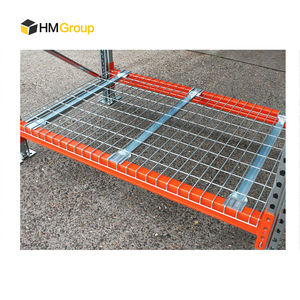
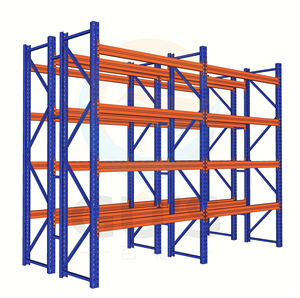
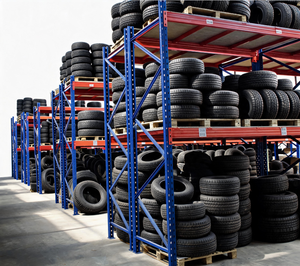
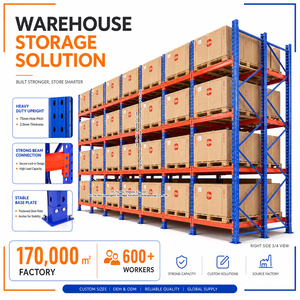
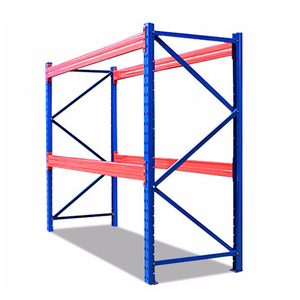
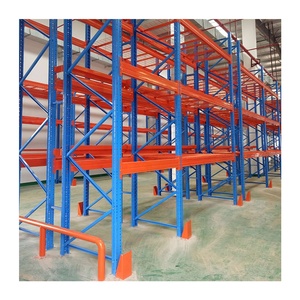
Engineered for intense throughput, cold chain resilience, and automated stacker interfaces. Review our premier export-grade systems fabricated from Q355B high-tensile structural steel.
Engineering Abstract: High Bay Racking Structural Dynamics & Deflection Mechanics
Modern distribution centers, automated 3PL facilities, and cold storage logistics hubs operate under stringent physical and temporal constraints. High Bay Racking Systems (typically designated for vertical clear heights ranging from 12 meters to upwards of 45 meters) represent the pinnacle of structural storage engineering. Unlike low-profile manual shelving, high-bay infrastructures function as dynamically loaded skeletal frames. They must absorb not merely static gravity loads (dead load of the steel and live load of stored palletized goods), but severe harmonic dynamic forces induced by automated storage and retrieval systems (AS/RS stacker cranes), high-acceleration VNA reach trucks, and site-specific seismic response spectra.
According to international structural guidelines—specifically EN 15512:2020 (Steel static storage systems - Adjustable pallet racking systems - Principles for structural design) and FEM 10.2.02 / RMI MH16.1 in North America—structural deflection calculations must account for second-order p-delta (P-Δ) effects. As column heights exceed 18 meters, sway deformations can amplify localized bending moments across bottom upright sections by up to 28%. Consequently, upright profiles must be cold roll-formed with variable rib geometries to mitigate Euler buckling, while maintaining precise mechanical interlock tolerances with box or step beams through multi-claw end connectors.
Clad-Rack Building Systems
Rack-supported buildings (Clad-Rack) eliminate traditional structural warehouse columns. The high bay racking framework carries roof wind loads, external wall cladding, and gantry crane accelerations directly to the reinforced foundation slab.
AS/RS Precision Tolerances
For automated crane bays traveling horizontally at 240 m/min and elevating at 90 m/min, deflection limits are restricted to L/400 or less, ensuring micro-millimeter optical target alignment for crane positioning sensors.
Seismic Ground Acceleration
Engineered baseplates anchored through high-ductility chemical anchors absorb vertical shock and horizontal base shears, calculated via finite element dynamic modal response in high seismic zones.
Enterprise Manufacturing Prowess
Guangzhou Heda Shelves Co., Ltd.: 25+ Years of Certified Heavy Structural Steel Production
Founded in 2001, Guangzhou Heda Shelves Co., Ltd. has established itself as an authoritative manufacturer and global exporter of high-precision heavy-duty warehouse racking and automated storage systems. Operating out of a state-of-the-art 30,000 m² specialized industrial manufacturing plant, our operations integrate full-cycle production from certified prime steel coil slitting to precision roll-forming and robotic welding.
Our automated production lines output over 30,000 metric tons per month, supplying mission-critical logistics infrastructures across 120+ countries. Every structural frame is subject to strict metallurgical inspections, third-party yield verification (ensuring Q235B and Q355B yield tensile integrity), and multi-stage anti-corrosion treatments certified under ISO 9001:2015 and CE EN 1090 / CPR standards.
Our Full-Chain Industrial Production & Surface Metallurgy Sequence
Structural reliability in high bay applications demands flawless manufacturing consistency. A single defective weld seam or an out-of-tolerance punching interval can compromise crane tracking or vertical load distribution. HEDA Shelves enforces a standardized 10-stage fabrication protocol:
Stage
Process Phase
Engineering Specification & Equipment
Quality Assurance Threshold
01
Raw Material Ingestion
Hot-rolled and cold-rolled prime steel coils (Q235B, Q355B structural grades)
Spectrometric chemical analysis & yield tensile coupon testing
Length tolerance strictly maintained within ±0.5mm
06
Robotic Seam Welding
Multi-axis robotic MAG welding stations for beam connector claws
Ultrasonic weld penetration check compliant with AWS D1.1 / EN 287
07
10-Stage Acid Pickling
Multi-tank immersion pickling removing mill scale and micro-oxides
Complete chemical scale removal to SA 2.5 cleanliness standard
08
Zinc Phosphating Pretreatment
Nanocrystalline phosphate conversion coating bath
Creates micro-porous bonding substrate; ensures 1,000-hr salt-spray life
09
Electrostatic Powder Deposition
Automated GEMA electrostatic spray reciprocators with thermosetting resin
Dry film thickness (DFT) controlled between 80–120 μm; ASTM D3359 5B adhesion
10
Curing, Packaging & Ocean Staging
Convection baking tunnels at 200°C followed by steel-strapped crating
Moisture-barrier wrapping; optimized container cube packing indices
Technical Architecture Evaluation
Comparative Matrix: High Bay Logistics Racking Topologies
Selecting the correct high bay configuration requires balancing structural height, space utilization indices, picking throughput velocity, and floor slab tolerance requirements.
Future Procurement Trends in High Bay Racking Infrastructure
Strategic supply chain directives are shifting away from transactional, lowest-unit-cost steel bidding toward long-term lifecycle optimization, modular automation readiness, and carbon-audited engineering.
Procurement Trend 01
Total Cost of Ownership (TCO) Over Initial Steel Tonnage Bidding
Global procurement directors increasingly evaluate racking systems on 25-year structural lifecycle metrics rather than immediate FOB steel spot prices. Racking failure, beam creep, or anchor shear failure can induce millions of dollars in downtime and warehouse catastrophic collapse. Specifying higher yield micro-alloyed steels (such as Q355B over standard structural steels) decreases dead-weight while substantially elevating dynamic impact thresholds and fatigue resistance under 24/7 automation cycles.
Procurement Trend 02
Brownfield Automation-Ready Modular Architecture
Warehouses constructed today must anticipate robotic evolution. Smart enterprises are sourcing conventional high-bay selective frames designed with standard structural attachment geometries, pre-punched tie-ins, and floor-level tolerances ready for subsequent integration of autonomous mobile robots (AMRs), automated guided vehicles (AGVs), or high-altitude rack-climbing bots without requiring total facility decommission.
Procurement Trend 03
Decarbonization, Scope 3 Disclosures & Green Warehousing
Multinational 3PLs and Fortune 500 logistics operations are subject to stringent ESG reporting. Racking procurement contracts now routinely mandate Environmental Product Declarations (EPDs) and Scope 3 carbon auditing. Sourcing from manufacturers utilizing energy-efficient scrap-recycled electric arc furnace (EAF) steel coils and closed-loop, non-volatile organic compound (zero-VOC) powder coating recovery loops is transitioning from a preference to a non-negotiable supplier qualification standard.
Ocean freight rate volatility has made stowage density engineering paramount. Export packaging that utilizes finite software nesting allows 40ft High Cube containers to hit maximum payload capacities without transit damage. Buyers are negotiating direct-to-port consolidated shipments with manufacturer-backed numbered component coding, significantly reducing on-site sorting, terminal dwell charges, and overseas assembly errors.
As global distribution hubs expand in seismically active regions across the Asia-Pacific, the Mediterranean, the Middle East, and Latin America, localized building codes mandate rigorous finite element model (FEM) non-linear time-history dynamic simulations. Procurement teams now require verified certification under Eurocode 8 and ASCE 7-16, with stamped engineering calculations validating site-specific structural base isolators.
Procurement Trend 06
Supplier Turnkey Accountability: From CAD to Site Commissioning
The fragmentation between rack manufacturers, installation contractors, and automation vendors is collapsing. Buyers now insist on single-source accountability. Manufacturers that provide free preliminary BIM/CAD spatial layout design, structural FEA calculation documents, precision-engineered components, and remote or on-site engineering commissioning supervision are steadily dominating global market share.
Industry 4.0 Engineering Horizons
Technological Development Trends: The Evolution of Intelligent High Bay Systems
From structural health monitoring to symbiotic AMR-racking coordination, high-bay storage is transitioning into a digitally monitored, proactive operational asset.
Tech Innovation 01
IoT Structural Health Monitoring (SHM) & Digital Twin Analytics
High bay installations exceeding 30 meters are increasingly integrated with embedded fiber-optic strain gauges, piezoelectric impact sensors, and tilt transducers positioned at strategic column nodes. Connected to building management digital twin platforms, these systems instantly alert warehouse managers to forklift impact events, localized beam overloading, or foundation settlement anomalies before structural failure occurs.
Modern high bay racking leverages advancements in micro-alloyed steels containing traces of vanadium and niobium. These alloys permit yield strengths exceeding 420 MPa without embrittlement at cold-storage temperatures down to -30°C. Advanced roll-forming machines utilize real-time laser profile scanners to verify beam channel symmetry within 0.1mm, ensuring completely uniform stress distribution along 40-meter upright spans.
Tech Innovation 03
Self-Governing Radio Shuttles & Multi-Tier Pallet Lifts
Radio shuttle technologies have evolved from basic remote-controlled carts to semi-autonomous robotic fleets coordinated via LiDAR optical navigation and 5G industrial mesh networks. Synchronized with high-speed vertical reciprocating conveyors (VRCs) and buffer transfer stations, high bay multi-tier systems achieve throughputs of 120+ pallet cycles per hour without requiring human operator intervention within storage lanes.
Tech Innovation 04
Next-Generation Friction-Damper Base Isolators
To prevent catastrophic collapse during seismic events, modern high bay systems utilize non-linear friction damper baseplates. Rather than anchoring rigidly into the concrete slab where extreme shear loads can snap anchor bolts, energy-dissipating base isolators allow controlled, damped micro-displacements during ground acceleration, absorbing up to 60% of seismic kinetic energy.
Tech Innovation 05
Advanced Thermosetting Nanotech Surface Chemistry
Environmental durability standards are advancing rapidly. Next-generation electrostatic powder finishes incorporate zinc-free zirconium conversion chemistry combined with polyurethane-epoxy hybrids. This delivers exceptional pencil hardness (>3H), extreme resistance to mechanical impact during pallet entry, and complete chemical inertness against harsh industrial wash-down detergents and high humidity.
Tech Innovation 06
Parametric BIM & Computational Generative Design
Racking engineering now utilizes algorithmic generative design. By inputting warehouse physical dimensions, ceiling truss clearances, slab load capacities, and SKU turnover curves into algorithmic solvers, structural software outputs the mathematically optimal ratio of beam lengths, upright depths, and aisle widths, minimizing steel consumption while maximizing cubic storage density.
Expert Procurement Technical Guidance
Frequently Asked Questions: High Bay System Engineering & Export
Detailed technical clarifications compiled by our senior structural engineering directors to support procurement managers, structural consultants, and logistics architects.
What concrete floor slab specifications and flatness tolerances are required for high bay racking?
For conventional freestanding high bay racking systems operated with Very Narrow Aisle (VNA) man-up turret trucks or articulated forklifts up to 16-18 meters, floor slab flatness must comply with DIN 18202 Table 3 (Zeile 3 or Zeile 4) or Concrete Society TR34 Superflat specifications (e.g., DM1 or DM2 classifications). Under standard loading, slab point loads typically exceed 100 to 250 kN per upright baseplate. Concrete compressive strength must be minimum C28/35 or C30/37, with fiber or double-mat rebar reinforcement engineered to prevent differential slab settlement. A localized differential settlement of merely 2mm at the slab surface can translate into a hazardous 40mm to 60mm lean at an 18-meter rack mast summit. For AS/RS clad-rack installations, micro-flat tolerances and foundation pile depth calculations are custom-engineered based on soil geotechnical reports.
When should a project transition from a freestanding high bay rack to a Clad-Rack (Rack-Supported Building)?
The structural economic tipping point typically occurs at clear heights between 20 and 24 meters, or when land footprints are severely constrained and land acquisition costs are exceptionally high. In a conventional building, constructing steel portal frames or concrete columns to support a 30-meter clear roof height while independently installing internal racking leads to redundant structural steel framing. A Clad-Rack building uses the racking columns themselves as the load-bearing pillars of the building, carrying roof trusses, snow loads, external wall sandwich panels, and lateral wind shears directly to the foundation. This architecture eliminates secondary building columns, maximizes internal cubic volume utilization to over 90%, reduces structural construction schedules by 25-35%, and yields substantial capital expenditure savings.
How does HEDA Shelves ensure seismic resilience under EN 16681, Eurocode 8, and US RMI codes?
Seismic structural validation is executed using non-linear finite element modal analysis. Our engineering team models the complete structural assembly under dead, live, and dynamic seismic acceleration spectra derived from local geographic building codes. Column baseplates are sized with enlarged footprints and high-tensile anchor stud groups (such as Hilti chemical injection anchors) to resist pull-out moments. Horizontal and vertical spine bracing towers, top portal ties, and diagonal cross-braces are introduced at calculated intervals along the rack run to limit inter-story drift and prevent systemic progressive collapse during an earthquake. We provide full structural calculation packages and third-party engineering stamps where required by municipal permitting bodies.
What anti-corrosion protection systems are implemented for cold storage or coastal high bay facilities?
For standard temperature-controlled warehouses, our 10-stage zinc-phosphating pretreatment combined with electrostatic powder coating provides a robust 80-120 μm dry film thickness exceeding 500 hours of continuous ASTM B117 salt-spray exposure. However, for deep-freeze cold storage (-25°C to -30°C) where constant condensation and thermal cycling occur, or coastal ports exposed to marine salinity, we specify continuous pre-galvanized coils (Z275 coating mass) or full post-fabrication Hot-Dip Galvanizing (HDG) compliant with ISO 1461 / ASTM A123. The zinc metallurgical alloy layer provides an impenetrable barrier and sacrificial galvanic protection, guaranteeing 20+ years of maintenance-free service life under severe corrosive conditions.
What documentation and mill test reports (MTR) are provided for international customs and project auditing?
Every export consignment shipped from our Guangzhou manufacturing facility is accompanied by a certified quality and engineering dossier. This includes: Original Mill Test Certificates (EN 10204 Type 3.1) verifying chemical composition (C, Si, Mn, P, S) and mechanical yield/tensile strength of the steel coils; CE Declaration of Performance (DoP) under certification No. 2435-CPR-8605159; ISO 9001:2015 audit certificates (Registration No. 18624Q00169R0M); coating adhesion and thickness inspection reports; comprehensive 2D CAD architectural plans; 3D isometric layout drawings; and numbered component packing lists color-coded to correspond directly with installation sequence guidelines.
How does HEDA Shelves manage container packaging to prevent deformation and maritime corrosion during ocean transit?
Heavy structural steel profiles are susceptible to transit damage if packed incorrectly. We utilize proprietary container loading software to model bundle configurations for 20GP, 40GP, and 40HQ containers down to the millimeter. Upright frames are nested with protective corrugated separator strips and strapped with high-tensile steel banding onto heavy timber runners. Beams are bundled in matched pairs with connector ears protected by heavy plastic caps to prevent claw deformation. The entire container interior is lined with heavy-duty desiccants to suppress maritime condensation cycles ("container rain"), preventing white rust on galvanized parts or premature surface degradation during trans-ocean voyages.
What operational tolerances are required when interfacing high bay racking with automated crane systems (AS/RS)?
Automated stacker cranes operate at horizontal travel speeds of 180 to 240 m/min and vertical hoisting speeds of 60 to 90 m/min. At these velocities, optical and laser positioning systems demand structural tolerances far more stringent than standard manual forklift racking. Deflection of load-bearing beams under maximum working payload is strictly limited to L/300 or L/400 (compared to L/200 in standard racking). Plumbness tolerances for upright columns must remain within 1:1000 of the total vertical height, and clear horizontal lane spacing between crane shuttle extraction forks and pallet edges must be verified with continuous laser scanning to prevent dynamic snagging during automated pick-and-deposit cycles.
What is the typical production and delivery lead time for large-scale international high bay projects?
Standard production time for custom-engineered high bay racking systems (ranging from 10 to 50 container loads) typically ranges from 25 to 35 business days following final CAD architectural drawing sign-off and structural engineering approval. Because our 30,000 m² factory processes over 30,000 tons of structural steel per month, we maintain immediate strategic rolling reserves of prime Q235B and Q355B coils, insulating our clients from mill allocation delays. Ocean shipping durations depend on destination ports: approximately 12-18 days to Southeast Asia and South Asia; 22-28 days to Middle Eastern and European hub ports; and 25-35 days to North America and Latin America. Expedited multi-stage partial dispatches can be scheduled to synchronize with foundation slab curing schedules on site.
Plan Your High Bay Logistics Infrastructure with Senior Structural Engineers
Submit your warehouse architectural drawings (CAD/DWG or PDF format), clear height targets, pallet dimensions, and crane or forklift specifications. Our engineering department will deliver a complimentary 3D spatial layout design, structural FEA static load calculation, and comprehensive factory-direct export proposal within 24 hours.