Engineered Gravity Flow Pallet & Carton Racking Systems
Explore our premier lineup of dynamic gravity-fed live storage solutions. Every profile is custom engineered from heavy-duty structural steel to guarantee seamless FIFO order fulfillment, high throughput velocity, and uncompromised warehouse safety.
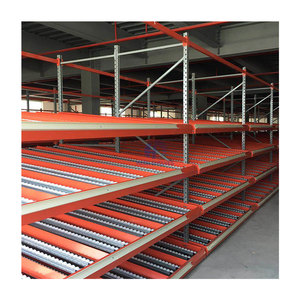
Ebb And Flow Vertical Rack Pallet Flow Racking Track Customized Carton Flow
Custom-built hybrid dynamic storage integrating heavy-duty pallet flow tracks with multi-tier carton flow roller channels for high-density mixed order picking.
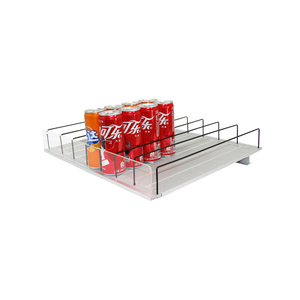
Stores Beverage Fridge Tilt and Gravity Flow Shelf Gravity Roller Sliding Shelf
Precision tilted gravity sliding system designed for beverage cold rooms, walk-in coolers, and front-facing retail staging with high inventory visibility.
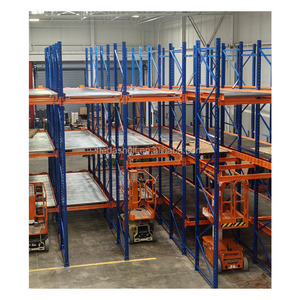
Heda Manufacturer Wholesale Heavy Duty Steel Gravity Flow Rack FIFO
Massive pallet live storage structure manufactured from Q235B high-tensile steel, providing automatic deceleration rollers and pallet separator clutches.
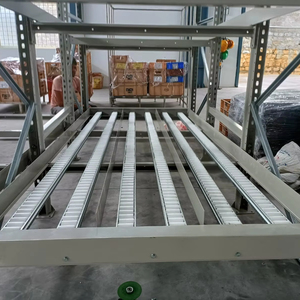
Heavy Duty FIFO Gravity Flow Racking Steel Rollers Modular Expandable 1500kg
Modular high-density flow racking engineered with powder-coated uprights, reinforced dual-roller tracks, and speed-limiting centrifugal governors.
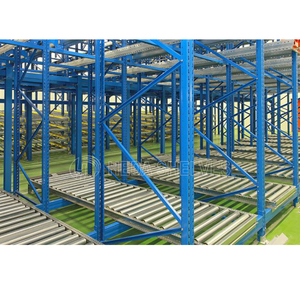
Warehouse Gravity Auto Flow Rack Dynamic Buffer Storage System
Automated gravity flow racking designed to bridge manufacturing assembly lines and packaging buffer stations with continuous zero-power replenishment.
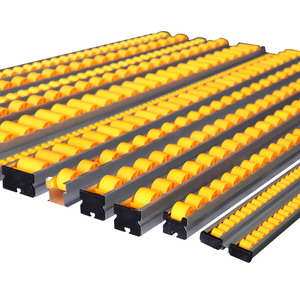
Gravity Flow Rail Roller Track PE ABS Wheel 200KG Load Carton Flow Rack
Smooth-rolling engineering-grade PE/ABS roller tracks engineered for carton picking modules, piece-pick fulfillment lines, and ergonomic assembly bays.
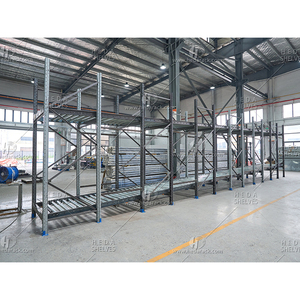
Heda Heavy Duty Gravity Flow Rack With Roller Tracks For Warehouse Storage
Continuous galvanized roller bed system optimized for non-standard wooden or plastic skids, ensuring uniform load dispersion and high pallet stability.
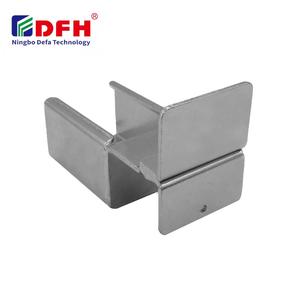
Standard Roller Track Fitting Gravity Flow Rack System Mounting Brackets
Precision CNC stamped structural steel mounting brackets, track connectors, guide flanges, and retrofitting adapters for flexible on-site elevation adjustments.
Kinematic Dynamics & Structural Architecture of Gravity Racking
Gravity flow racking represents the pinnacle of passive automation in intralogistics. By harnessing kinetic potential energy through calibrated inclines, warehouses achieve optimal operational velocity without relying on complex electrical drives.
Declination Slope & Angle Calibration
The fundamental operating coefficient of pallet flow relies on calculating the precise tangent incline against pallet deformation resistance. Standard pallet tracks are calibrated between 3.0% and 3.5% (approx. 1.7° to 2.0°), while carton flow systems operate between 2.5% and 5.0%.
- Eliminates stalling caused by pallet sag or deflection
- Prevents excessive velocity build-up in deep lanes
- Compensates for ambient temperature variations
Centrifugal Brake Rollers & Velocity Damping
In deep lanes exceeding three pallets (up to 20 pallets deep), runaway acceleration poses extreme collision risks. Internal speed controllers with centrifugal planetary gearboxes regulate pallet velocity dynamically, maintaining speed beneath 0.3 meters per second.
- Progressive braking force proportional to pallet weight
- Maintenance-free, sealed bearing configurations
- Cold-storage compliant low-temperature synthetic lubricants
Mechanical Pallet Separators & Safety Catches
When a forklift operator retrieves the front discharge pallet, line pressure from accumulated trailing pallets can crush the primary unit or bind the forklift tines. Mechanical separation clutches temporarily isolate rear pallets until extraction is completed.
- Automatic mechanical latching without electrical sensors
- Relieves back-pressure force up to 25 metric tons
- Integrated front impact steel buffer ramp
Comparative Logistics Analysis: Gravity Flow vs. Conventional Racking Architectures
Evaluating storage systems across volumetric efficiency, operational cycle time, and capital risk profiles:
| Racking Architecture | Aisle Ratio / Footprint | Stock Rotation Logic | Throughput Speed | Forklift Travel Distance | Energy & Maintenance |
|---|---|---|---|---|---|
| Gravity Flow (Pallet Live) | High Density (80% Vol.) | Strict FIFO | Ultra-Rapid (Dedicated Picking Face) | Minimal (Single Lane Entry/Exit) | Zero Power / Minimal Maintenance |
| Selective Pallet Racking | Low Density (40% Vol.) | Random Access (FIFO Capable) | Moderate (Aisle Congestion) | High (Forklifts Traverse Every Row) | Zero Power / High Wear & Tear |
| Drive-In Pallet Racking | High Density (75% Vol.) | Strict LIFO | Slow (Driver Must Enter Rack Structure) | High Collision Risk Inside Lanes | Zero Power / Elevated Frame Damage |
| Radio Shuttle Automation | Very High Density (85% Vol.) | FIFO & LIFO Flexible | Fast (Robotic Carriage) | Low (Aisle Face Staging) | Battery Charging & Electronic Spares |
| Push-Back Trolley Racking | Medium Density (65% Vol.) | Strict LIFO | Moderate (Push Resistance on Incline) | Medium (Front Access Only) | Low Maintenance / High Operator Skill |
Future Sourcing & Technology Trends in Dynamic Live Storage
Industrial supply chains are pivoting toward high-velocity fulfillment, carbon-neutral intralogistics, and omnichannel warehousing. Key procurement directives reshaping global dynamic racking investments include:
Zero-Carbon Passive Logistics Mandates
Global carbon abatement audits and spiraling kilowatt-hour industrial energy tariffs are compelling 3PLs and retail giants to substitute powered continuous conveyors with gravity flow lanes. Gravity pallet tracks consume zero electrical grid energy during operation while moving hundreds of tons reliably across manufacturing dispatch buffers.
Cold-Chain Food & Pharma Expiry Traceability
Stricter international cold-chain food safety and bio-pharma traceability protocols make strict First-In First-Out (FIFO) rotation mandatory. Gravity flow eliminates inventory batch expiration write-offs entirely by ensuring that the first pallet loaded on the rear replenishment face is guaranteed to be the first one discharged at the picking aisle.
High-Tensile Cold-Formed Steel Grades
Procurement teams are shifting away from heavy hot-rolled channels toward ultra-high-yield micro-alloyed cold-formed structural steels (such as Q355B and high-grade galvannealed alloys). This delivers superior structural strength-to-weight ratios, reduces ocean freight container shipping costs, and ensures complete seismic compliance in earthquake-prone regions.
Robotics & AGV-Interfaced Picking Buffers
Autonomous Mobile Robots (AMRs) and automated reach trucks require millimetric precision at pallet discharge terminals. Modern gravity racking integrates laser-guided docking plates, photoelectric position feedback brackets, and damped magnetic final stops to seamlessly blend passive gravity glide with state-of-the-art robotic fleet fulfillment.
Engineered Warehouse Racking Systems from Guangzhou Heda Shelves Co., Ltd.
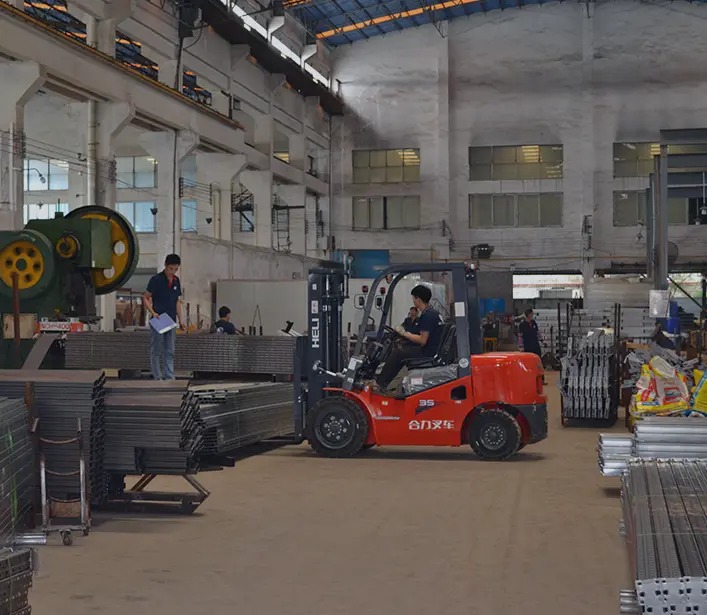
With over 25 years of specialized structural engineering experience, Guangzhou Heda Shelves Co., Ltd. has established itself as an authoritative global manufacturer and exporter of heavy-duty pallet racking and automated gravity storage systems. Operating out of a state-of-the-art 30,000 square meter manufacturing complex, we manage the entire production chain under strict quality control.
Our dedicated engineering department conducts finite element structural analysis (FEA), load distribution simulation, and dynamic velocity calculations for every gravity flow project. Whether your facility operates in ambient regional distribution hubs or sub-zero blast freezers at -30°C, our solutions are engineered for zero-failure reliability.
Frequently Asked Questions on Gravity Racking Procurement
Technical specifications, floor slab considerations, and operational protocols addressed by HEDA Shelves lead structural engineers.
What is the standard declination angle for heavy-duty pallet flow lanes?
The industry standard slope for heavy-duty pallet live storage ranges from 3.0% to 3.5% (approx. 1.7° to 2.0° pitch). This angle provides the ideal balance between gravitational rolling momentum and rolling resistance across standard GMA, EUR, or ISO wooden skids. If bottom runners are oriented perpendicular to the rollers, or if plastic skid runners with high friction coefficients are utilized, our engineers adjust the track gradient up to 4.0% with customized multi-line wheel tracks.
How do speed controller brake rollers prevent catastrophic high-speed impact in deep lanes?
In lanes storing 4 to 20 pallets deep, centrifugal speed controller rollers are spaced along the roller bed (typically every 1 to 2 pallet lengths). These rollers do not require electrical connections; as a pallet passes over them, the rotational velocity drives internal planetary gearing against brake shoes. The braking resistance increases exponentially with speed, ensuring pallets never exceed 0.3 m/s regardless of whether the pallet weighs 300 kg or 1,500 kg.
Can gravity flow racking function reliably in refrigerated and blast-freezer cold storage?
Yes, gravity flow racking is widely installed in cold-chain logistics because high-density storage minimizes the refrigerated cubic volume requiring cooling. For temperatures between 0°C and -30°C, HEDA specifies fully galvanized roller beds, low-temperature synthetic bearing grease that resists gumming or viscosity breakdown, stainless steel torsion springs on mechanical separators, and Q355B low-temperature impact-resistant steel frames.
What concrete slab specifications are required to support high-density gravity live storage?
Because gravity flow systems concentrate dense multi-tier loads without intermediate access aisles, point loads on concrete upright base plates are substantially higher than in standard selective racking. We typically recommend a minimum concrete slab thickness of 200 mm to 250 mm with a compressive strength grade of C25/30 or higher, reinforced with steel rebar mesh. Our CAD structural engineering team delivers localized point load schedules to ensure your floor slab integrity is fully verified prior to anchor drilling.
How does carton flow (live storage) integrate with order picking and pick-to-light systems?
Carton flow levels can be retrofitted directly into pallet racking lower tiers or erected as independent standalone multi-tier picking structures. By providing separate loading aisles behind the picking face, replenishment never interferes with picking personnel. High-strength aluminum track channels support electronic pick-to-light display bars, automated inventory barcode sensors, and pick-and-pack roller conveyors to accelerate order fulfillment rates by over 300%.
What is the typical lead time and export delivery procedure for containerized shipments?
Standard design validation, CAD rendering, and structural verification take 2 to 4 business days. Manufacturing lead time for customized gravity flow systems ranges from 15 to 25 days depending on tonnage. All components—upright frames, box beams, galvanized roller tracks, brake rollers, and mounting brackets—are color-coded, labeled, banded, and protected with moisture-barrier film to optimize 40HQ container cube efficiency and prevent ocean freight corrosion.
Optimize Your Warehouse Throughput with Custom Gravity Flow Engineering
Eliminate bottlenecks, double your high-density pallet positions, and secure 100% First-In First-Out inventory accuracy. Submit your building dimensions, pallet load parameters, and SKU turnover targets to our engineering team today for an exhaustive design layout and commercial quotation within 24 hours.
Inquire NowEngineering Design Checklist
- Warehouse CAD / PDF Floor Plan & Clear Height
- Pallet Dimensions (W x D x H) & Max Loaded Weight
- Bottom Skid Runner Profile (Wood / Plastic / Metal)
- Operating Temperature Range (Ambient / Cold Store)
- Target Throughput Velocity & Lane Depth Needs