Precision-Engineered Heavy Duty Storage Rack Portfolio
Explore our heavy-capacity bolted racking systems and high-density warehouse platforms. Precision-formed for cold chain, fast-moving consumer goods, automated hubs, and global industrial transit.
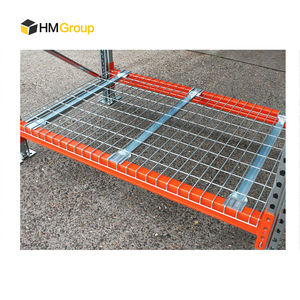
Warehouse Storage System Galvanized Durable Metal Mesh Pallet Racking Wire Decking
Galvanized flare and step waterfall wire decking offering superior overhead sprinkler penetration, load dispersion up to 1,500 kg UDL, and elimination of debris buildup.
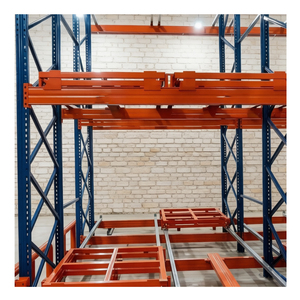
DJ High Density Storage Solution Warehouse Push Back Pallet Racks
Multi-cart nested rolling channel design holding 2 to 6 pallet positions per lane. High selectivity LIFO flow eliminates forklift entry into the structural bays.
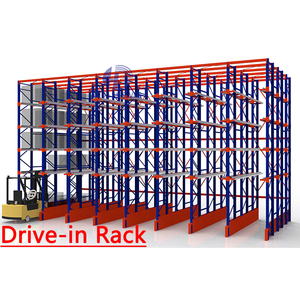
High Density Heavy Duty Drive-in Rack System Pallet Storage Shelf
Maximum volumetric utilization eliminating operational aisles. Heavy duty structural pallet support rails designed specifically for cold storage facilities and high volume homogenous SKUs.
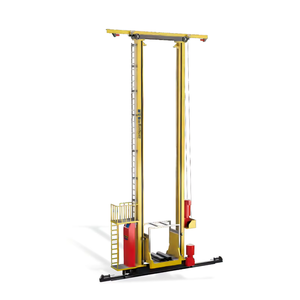
Intelligent Industrial Miniload Stacker Crane Storage Equipment
High-speed automated shuttle and stacker crane integration for single and double deep automated high-bay storage with real-time WMS telemetry connectivity.
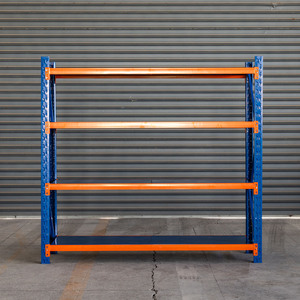
Industrial Adjustable High Performance Steel Medium Duty Long Span Shelving
Step-beam modular shelving with drop-in steel panels or timber decking. 300 kg to 800 kg per tier rating, ideal for fulfillment operations, automotive spare parts, and hand picking.
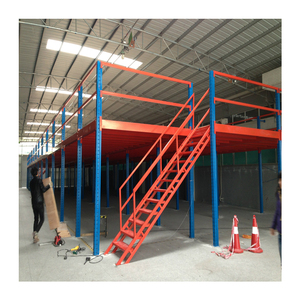
HUAWU 1000kg/sqm 2-Layer Steel Warehouse Mezzanine Platform System
Heavy structural Q235B multi-tier mezzanine converting warehouse vertical headroom into fully functional packing, storage, and administrative office space without civil expansion.
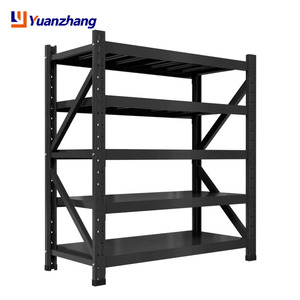
Custom Steel Heavy Duty Shelving 300kg Layer Black 4-Tier Rack Unit
Epoxy-finished bolted storage unit offering versatile boltless-beam vertical adjustment on 50mm increments. High resistance to scratching, impact, and chemical degradation.
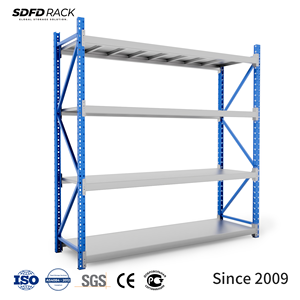
Custom Adjustable Pallet Racks Heavy Duty Long Span Shelving
Engineered for dynamic multi-SKU retail and 3PL sorting hubs. High-yield uprights paired with safety locking pins to ensure 100% pallet placement reliability and zero beam dislodgement.
Bolted vs. Welded Upright Frames: Structural Rigidity & Logistics Economics
In modern industrial warehouse design, selecting between structural bolted upright assemblies and shop-welded frames is a primary engineering and capital expenditure decision. Understand the structural science, seismic damping, and freight economics behind the global shift toward bolted pallet racking systems.
1. Moment Dissipation & Elastic Damping
Unlike rigid welded uprights where cyclical seismic stress and forklift micro-collisions concentrate at brittle weld seams, bolted upright frames utilize high-tensile Grade 8.8 structural bolts with calibrated torque retention.
- Dynamic micro-deflection without plastic deformation
- Elimination of heat-affected zone (HAZ) steel embrittlement
- Conforms to EN 15512 and RMI MH16.1 specifications
This mechanical flexibility allows the upright assembly to absorb, distribute, and shed dynamic kinetic loads across diagonal and horizontal brace trusses.
2. Shipping Density & Landed Freight Cost
Ocean freight represents a major variable in cross-border pallet racking procurement. Welded uprights create massive volumes of dead air inside 40ft High Cube containers, inflating landed freight costs per pallet position.
- Bolted knock-down (KD) packing triples shipping density
- Reduces international sea freight expenditure by up to 68%
- Prevents transit torque bending and upright distortion
Upright posts, horizontal bracing, and diagonal Z-channels are bundled in ultra-dense steel strapped packs, maximizing 40HQ payload weight close to 26 metric tons.
3. Zero-Downtime Maintenance & Repairability
Forklift outrigger and mast impacts inevitably strike bottom upright sections in high-turnover logistics corridors. Repairing a welded rack requires cutting, field welding, certified inspections, or replacing an entire 12-meter frame.
- Single brace or post segment isolated replacement
- No open flame hot-work permits inside operational hubs
- Maintains certified warehouse load capacity without frame scrapping
Operators simply unbolt the affected diagonal brace or anchor footplate, torque in a replacement certified component, and return the bay to immediate duty.
| Evaluation Parameter | HEDA Modular Bolted Upright Frame | Traditional Shop-Welded Racking Frame | Engineering Impact / Advantage |
|---|---|---|---|
| Steel Grade & Yield Strength | Certified Q235B / Q355B Cold-Rolled Carbon Steel | Variable commercial structural tube / Q235 | High Elastic Range (Yield > 355 MPa) |
| Container Cubing Efficiency | 850–1,200 pallet positions per 40HQ container | 280–380 pallet positions per 40HQ container | 65%-72% Freight Savings landed CIF |
| Seismic Stress Performance | Controlled rotational bolt joint compliance (FEM 10.2.02) | Rigid shear concentration along welded heat zones | Superior Damping in Zone 3/4 Seismic Belts |
| Corrosion Pretreatment | Continuous 12-stage automated pickling & phosphating | Manual surface wipe; internal tube unpainted | 500+ Hr Salt Spray (ASTM B117 pass) |
| Post-Impact Rectification | Modular unbolting of damaged brace or baseplate | Structural cutting, hot-work permit, bay replacement | <1 Hour Maintenance vs 3-day disruption |
Racking Architecture Selection by Velocity & Density Profile
A successful logistics facility matches the storage topology to product velocity, SKU selectivity, and building clearance. Review our engineering recommendations to pinpoint the exact rack structure for your facility.
Selective Bolted Racking
Throughput: High | Selectivity: 100% Direct | Footprint Utilization: 35–40%
The industry benchmark for third-party logistics (3PL) and fast-moving retail fulfillment. Bolted frames allow flexible beam adjustments at 50mm or 75mm increments as SKU packaging heights shift over multi-year lease cycles.
Drive-In & Drive-Through
Throughput: Moderate | Selectivity: LIFO / FIFO | Footprint Utilization: 65–85%
Engineered for cold storage, agricultural raw commodities, and bulk manufacturing with minimal SKU varieties. Pallets sit on continuous cold-formed side rails, eliminating individual operational access aisles.
Push-Back & Pallet Flow
Throughput: High-Dynamic | Selectivity: Lane Batch | Footprint Utilization: 70–80%
Utilizes nested structural rolling carts (Push-Back) or full-width brake-controlled gravity rollers (Pallet Flow). Ideal for food and beverage operations requiring strict FIFO expiration tracking with zero forklift lane ingress.
Radio Shuttle Racking Systems
Automation Level: Semi-Automated | Lane Depth: Up to 50 Pallets | Labor Reduction: 45%
Independent battery-powered smart shuttles navigate deep storage channels along structural galvanized rails. Operates in deep-freeze settings down to -30°C, drastically cutting forklift travel time and reducing structural frame impacts.
Structural Cantilever Racks
Load Capacity: 1,000–3,000 kg / Arm | Handling: Side-Loader / Crane | Orientation: Long Loads
Unobstructed horizontal storage for lumber, steel pipes, extrusion profiles, and sheet materials. Heavy bolted column bases and cantilever arms with micro-tapered engineering ensure deflection under load without load slippage.
Rack-Supported Mezzanines
Floor Rating: 300–1,000 kg / m² | Levels: 2 to 4 Tiers | Cube Utilization: Maximum
Transforms empty overhead vertical airspace into walkable sorting platforms, multi-tier manual pick towers, and administrative offices supported directly by our heavy bolted upright system. Avoids expensive civil construction.
Global Procurement & Technological Trends (2025–2030)
Supply chain infrastructure is evolving from passive static shelving into high-velocity automated ecosystems. Learn how international warehouse managers and structural consultants are engineering the next wave of intralogistics capital projects.
01. Automation-Ready Structural Uprights
Warehouse owners now specify upright perforation tolerances under ±0.2mm to future-proof their racks for retrofitted Autonomous Mobile Robots (AMRs), automated guided vehicles (AGVs), and stacker cranes without structural re-engineering.
02. Eco-Friendly Powder Formulations
Tightening ESG and carbon border mechanisms (such as the EU CBAM) are phasing out high-VOC solvent finishes. Leading facilities specify heavy-metal-free, RoHS-compliant thermosetting electrostatic polyester powders with 100% reclamation efficiency.
03. Containerized Engineering Modularity
Volatile shipping rates and port bottlenecks have made container space optimization essential. Procurement directors favor bolted, knocked-down configurations that reduce sea freight costs and simplify on-site flat-pack staging.
04. Dynamic Anti-Collapse Protection
Modern safety audits require heavy-gauge wraparound column guards, polymer floor baffles, and backstop drop barriers engineered into the primary layout design, preventing cascade collapse hazards caused by high-capacity reach trucks.
05. Micro-Climate Cold Chain Coating
Cold storage facilities and tropical coastal warehouses face constant condensation cycles that degrade standard paint. Next-gen standards demand hot-dip galvanization (HDG) or zinc-rich electrostatically bonded primers for lasting corrosion resistance.
06. High-Bay Clear Heights (>15 Meters)
Rising industrial land values have pushed new logistics builds to clear heights exceeding 15 meters. This demands continuous-section high-tonnage cold-rolled steel columns engineered to prevent torsion warping and local web buckling under massive dead loads.
Guangzhou HEDA Shelves: Enterprise Manufacturing Authority
With more than two decades of dedicated manufacturing, our 30,000 square meter intelligent production facility in Guangzhou, China delivers end-to-end quality assurance for turn-key logistics storage projects worldwide.
Full In-House Manufacturing Control
From high-speed automated roll-forming and CNC continuous progressive hole punching to robotic welding and electrostatic powder coating, every upright, beam, and bracket is produced and monitored under strict ISO 9001:2015 management.
Certified Compliance Standards
Our structural rack designs hold verifiable CE Certification (No. 2435-CPR-8605159), ISO 9001:2015 Certification (No. 18624Q00169R0M), and full RoHS safety compliance, giving global logistics auditors clear, traceable technical documentation.
Complimentary 24-Hour CAD Engineering
Share your facility DWG or PDF drawings, and our senior structural engineers will generate comprehensive warehouse CAD floorplans, 3D realistic renderings, and finite element load calculations tailored to your forklift fleet and pallet sizes—free of charge.
Strategic Seaport Logistics
Located near major South China container ports (Nansha, Huangpu, Yantian, Shekou), we manage ocean export shipments with custom-engineered steel-strapped bundles, water-tight wrapping, and container packing that protects against long sea transits.
Worldwide Project Supervision
Every international order includes piece-marked components, detailed 3D installation blueprints, step-by-step video manuals, and remote video technical support so local assembly crews can complete rapid, safe installations.
OEM & Project Customization
We deliver tailored upright hole configurations (teardrop, hex-hole, diamond, European 50mm/75mm pitches), branded corporate color powders, and customized heavy-duty baseplates engineered to meet regional seismic and soil foundation codes.
Frequently Asked Questions: Industrial Bolted Racks
Detailed engineering, manufacturing, and export answers to help procurement managers, logistics consultants, and warehouse operators plan their storage investments.
Bolted uprights ship knocked-down (KD), which triples packaging density compared to welded frames. A single 40ft High Cube container can hold up to 1,200 pallet positions of knocked-down bolted racking, compared to just 350 positions for pre-welded frames. This lowers ocean shipping costs by 60% to 70% and prevents transit frame warping.
We use certified, prime cold-rolled structural steel coils in Q235B (yield strength ≥ 235 MPa) and Q355B (yield strength ≥ 355 MPa, equivalent to European S355JR or ASTM A572 Grade 50). Full material test certificates (MTC) tracking chemical composition and tensile elongation accompany every production run.
Our engineering team sizes baseplates, anchor bolt diameters (such as M12 to M16 wedge anchors), and footing depths to meet regional building codes and site seismic zones. Structural cross-bracing and top portal ties are added based on finite-element calculations, balancing dynamic shear resistance with ground acceleration requirements.
Every steel component goes through an automated 12-stage chemical pretreatment, including spray washing, acid pickling to eliminate scale, and zinc-phosphate conversion coating. We then apply an electrostatic thermosetting polyester powder coat cured at 180°C–200°C, providing strong scratch resistance and passing ASTM B117 500-hour salt spray testing.
Yes. Our roll-forming lines punch post profiles with tight ±0.2mm hole pitch tolerances. This precision allows seamless integration of bolt-on radio shuttle guide rails, entry funnels, shelf sensors, and automated miniload stacker crane assemblies without binding or misalignment.
To generate your layout and structural proposal within 24 hours, our engineering department needs: (1) warehouse architectural drawings showing column locations and clear heights; (2) pallet footprint (W × D × H) including product overhang; (3) maximum loaded pallet weight; (4) forklift turning radius and maximum mast reach; and (5) operating environment temperatures.
Ready to Optimize Your Warehouse Storage Density?
Connect directly with our senior application engineers. Receive an optimized CAD warehouse layout, detailed bill of materials, finite-element structural validation, and container-optimized export pricing within 24 hours.