Top China Industrial Shelving System Manufacturers & Supplier
An authoritative technical guide to high-density warehouse racking, precision structural engineering, international quality standards (CE & ISO 9001:2015), and strategic factory-direct sourcing from Guangzhou, China.
Engineered Solutions
Featured Industrial Racking & Heavy-Duty Shelving Systems
Precision-manufactured with premium high-tensile cold-rolled steel (Q235B & Q355B). Designed for maximum spatial cubic efficiency, seismic resilience, and seamless logistical integration across modern global supply chains.
1. The Strategic Paradigm of Chinese Industrial Shelving Manufacturing
As modern international logistics operations confront rising urban land valuations, rapid SKU proliferation, and escalating labor costs, the selection of heavy-duty warehouse infrastructure has graduated from a simple facility expense into a high-stakes capital investment. Global supply chain leaders evaluating a China industrial shelving system manufacturer must scrutinize beyond preliminary baseline quotations. True operational resilience and low total cost of ownership (TCO) stem from cold-rolled steel metallurgical composition, automated profile continuous roll-forming tolerance, structural engineering compliance with international load deflection thresholds, and environmental-grade anti-corrosive finishing technologies.
China continues to command the global manufacturing landscape for structural storage racking and industrial shelving, representing more than 45% of worldwide production tonnage. Headquartered in Guangzhou, Guangdong Province, leading industrial clusters exploit tightly integrated regional raw supply chains—drawing premium prime-grade coil stock directly from domestic state steel mills such as Baosteel, Shougang, and Ansteel. By coupling immense metallurgical capacity with automated multi-station cold roll-forming lines, Chinese tier-1 suppliers deliver unmatched engineering sophistication, scalable batch production, and container-optimized logistics economies directly to worldwide sea discharge ports.
Key Engineering Insight: High-integrity industrial shelving depends fundamentally on certified yield strength. Structural upright frames engineered from certified Q235B (yield strength ≥ 235 MPa) or high-load Q355B (yield strength ≥ 355 MPa) prevent micro-buckling under static overload, outperforming non-certified commercial steel grades often prone to premature progressive structural collapse under dynamic forklift operations.
2. Structural Engineering Matrix: Matching Systems to Material Flow Demands
Every commercial logistics footprint presents distinct architectural and operational parameters: ceiling clear height below sprinkler mains, building column grids, concrete slab load capacities (kN/m²), unit load profiles, and required cycle velocity. Deploying an incorrect racking format can throttle distribution throughput or result in catastrophic floor failure.
System Architecture
Pallet Selectivity
Cubic Volumetric Density
Inventory Rotation
Optimal Handling Application
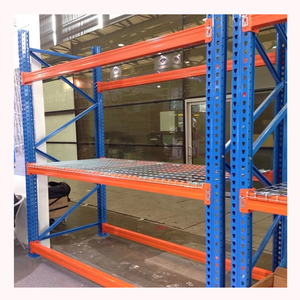
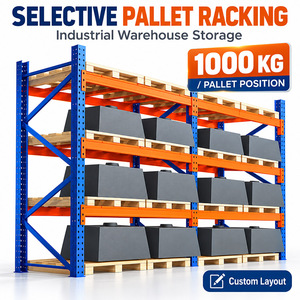
Selective Pallet Racking
100% Direct Access
Moderate (40–45%)
FIFO / LIFO Any
Multi-SKU fast fulfillment, 3PL DCs, retail retail hubs
3. Macro Procurement Trends Shaping Global Warehouse Infrastructure (2025–2030)
Industrial procurement executives across North America, Europe, Australia, the Middle East, and Southeast Asia are navigating seismic technological transitions. Procurement teams are discarding legacy procurement protocols in favor of performance-indexed, forward-compatible engineering strategies defined by the following four overarching industry trends:
Automation & Shuttle Readiness
Traditional static storage is rapidly giving ground to semi-automated radio shuttle car systems and autonomous mobile robot (AMR) interfaced mezzanine tiers. Procurement specifications now routinely require tight beam deflection ratios (≤ L/250 to L/300) and laser-guided leveling baseplates to ensure precise robotic carriage docking without friction jams.
Severe Environment Anti-Corrosion
With massive cold chain investments in blast freezers (-25°C to -30°C) and coastal humidity exposure across equatorial ports, buyers increasingly mandate hot-dip galvanizing (HDG) per ASTM A123 or multi-stage zinc-phosphate immersion pre-treatment beneath epoxy polyester electrostatic powder coats to prevent hidden under-film oxidation.
Digitized Seismic Simulation & BIM
Modern structural approvals mandate full finite element analysis (FEA) validating dynamic seismic moment frames in compliance with RMI MH16.1, EN 15512, and AS 4084 codes. Top Chinese manufacturers supply native 3D Building Information Modeling (BIM) files for clash detection with mechanical HVAC, lighting, and ESFR fire sprinkler grids.
The manufacturing gap between tier-1 Chinese racking producers and fragmented low-end fabricators lies in advanced line automation and metallurgical repeatability. Over the last decade, Guangzhou Heda Shelves Co., Ltd. and premier Chinese manufacturers have modernized their facilities with industrial 4.0 production technologies:
1. Continuous Multi-Station Roll-Forming Lines: Traditional hydraulic press brake bending induces micro-stresses along sheet metal bend lines, leading to uneven thickness and weak corners. Modern 24-station automated cold roll-forming lines gradually contour steel coils into intricate omega (Ω) and box profiles. This process cold-works the structural steel, significantly increasing local yield strength along corner radii while guaranteeing a length tolerance within ±0.5mm across 12-meter upright extrusions.
2. Precision Robotic Punching & Welding: Upright pitch perforation (50mm or 75mm teardrop, diamond, or hex hole profiles) is punched on high-speed servo CNC stamping dies prior to forming. This sequence eliminates pitch error accumulation across tall racking frames. Furthermore, automated robotic welding arms with closed-loop laser seam tracking fuse beam connectors to tubular box beams, ensuring continuous, deep-penetration weld beads certified under ISO 3834-2 welding quality standards.
3. Advanced Surface Pretreatment Chemistry: Racking longevity is dictated by adhesion chemistry. Prior to entering curing ovens, components undergo an 8-stage automated pretreatment sequence: chemical spray degreasing, ultrasonic water rinsing, acid pickling to eradicate hot-rolling mill scale, surface neutralizing, and nanotechnology zirconium or zinc phosphating. This substrate preparation guarantees over 500 hours of continuous ASTM B117 salt spray resistance, paired with 60–90 micron electrostatic thermoset powder coating.
Established in 2001, Guangzhou Heda Shelves Co., Ltd. operates as an internationally verified industrial shelving and heavy warehouse pallet racking manufacturer with headquarters situated in Guangzhou, South China. Backed by a modern 30,000 square meter standardized production base, 300+ seasoned engineers and precision technicians, and a monthly manufacturing capacity topping 30,000 metric tons, HEDA Shelves delivers turnkey intralogistics infrastructure across 120+ countries.
25+ Years Industrial Mastery
Founded in 2001, possessing a quarter-century of proven structural engineering experience across complex chemical, 3PL, FMCG, and automotive parts depots.
Verifiable Audited Quality
Strict production control backed by authentic, auditable credentials: CE Certification No. 2435-CPR-8605159, ISO 9001:2015 Management System, and RoHS compliance.
Complimentary CAD/3D Layouts
In-house structural engineering team provides 2D spatial CAD drawings, 3D parametric renderings, and dynamic load stress simulations within 24 hours.
Container-Optimized Logistics
Engineered bundling, corner-cushioned steel strapping, and custom loading schedules maximizing 40ft HQ container cubic utilization to slash international shipping rates.
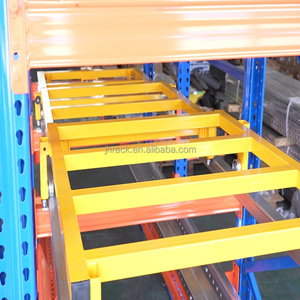
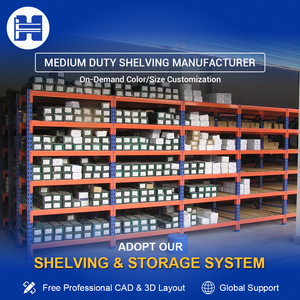
Whether configuring high-density Drive-In cold storage facilities, semi-automated Radio Shuttle systems, multi-tier Rack-Supported Mezzanines, or medium-duty Longspan picking layouts, HEDA Shelves manages the entire industrial chain in-house. Raw material metallurgical testing, steel slit-shearing, cold roll-forming, automatic stamping, robotic GMAW welding, powder line curing, and pre-dispatch container rigging are held under strict ISO 9001 quality audits.
To assist industrial engineers, procurement officers, and third-party logistics (3PL) directors during facility tender evaluations, our engineering department has assembled detailed technical answers to the most frequent inquiries:
How do you verify structural steel yield strength, and which steel grades are specified?
We exclusively procure prime hot-rolled and cold-rolled coil steel certified to Chinese National Standards GB/T 700 (Q235B) and GB/T 1591 (Q355B), equivalent to European EN 10025 S235JR and S355JR, or American ASTM A36 and ASTM A572 Grade 50. Every incoming raw steel batch must pass spectrographic chemical analysis and tensile yield testing accompanied by Mill Test Certificates (MTC 3.1) prior to entering slit cutters.
What beam deflection safety factor is calculated for heavy-duty pallet racking?
Our structural beam calculations adhere rigorously to European standard EN 15512 and American RMI MH16.1 specifications. Under full uniformly distributed load (UDL), allowable vertical beam deflection must not exceed L/200 (or L/250 in automated shuttle applications), where L represents the clear beam span between upright columns. Structural safety margins incorporate a minimum 1.5 load factor on yield strength to withstand dynamic impact stresses during forklift placement.
What environmental durability and surface coating tests are conducted?
Finished components undergo comprehensive electrostatic coating quality verification. Dry film thickness (DFT) is maintained between 60 to 90 μm and checked via calibrated magnetic electromagnetic gauges. Surface finish adherence is evaluated using cross-cut hatch adhesion testing (ISO 2409 Class 0), impact resistance testing (ASTM D2794 at 50 kg-cm), and continuous salt spray exposure testing (ASTM B117) exceeding 500 hours without red rust blister formation.
How are overseas shipments packaged to prevent transit abrasion and container space waste?
Components are bundled utilizing engineered packaging procedures. Structural uprights and beam sections are interlocked with non-abrasive PE corrugated foam separators, corner-protected with heavy-gauge galvanized edge guards, and tightly bound with high-tensile polyester strapping. Small accessories (baseplates, row spacers, shims, safety pins, wedge anchors) are crated in seaworthy, heat-treated fumigated plywood cases (ISPM 15 compliant) designed for rapid slip-sheet and forklift devanning at destination.
What essential project specifications are required to receive a turnkey engineering design?
To generate an optimized spatial layout and detailed commercial quotation within 24 hours, our engineering office requires: (1) Warehouse building DWG CAD drawings indicating clear eaves height, building column matrix, overhead obstructions, and dock door locations; (2) Pallet specifications including dimensions (Width x Depth x Height including cargo overhang) and maximum gross weight; (3) Material handling equipment specifications (forklift model, minimum turning aisle width, maximum mast fork elevation); and (4) Floor slab thickness, reinforcing mesh, and concrete compressive strength rating (e.g., C25/30).
Request an Engineered Layout & Factory Direct Quotation
Partner directly with one of China's premier industrial shelving system manufacturers. Our senior engineering team will evaluate your warehouse architectural parameters and deliver a complimentary 2D/3D CAD layout, load capacity calculation report, and competitive CIF/FOB pricing proposal.