Featured Industrial Heavy Duty Racking Systems
Precision-rolled structural steel profiles conforming to FEM 10.2.02, EN 15512, and ANSI MH16.1 specifications, engineered for high-throughput distribution hubs, manufacturing staging, and high-density cold storage.
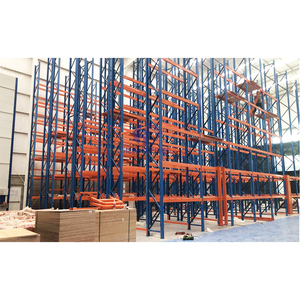
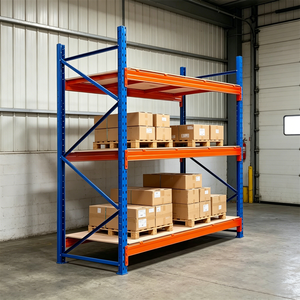
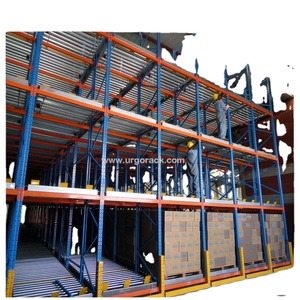
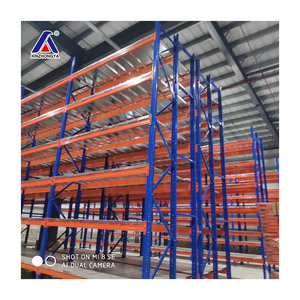
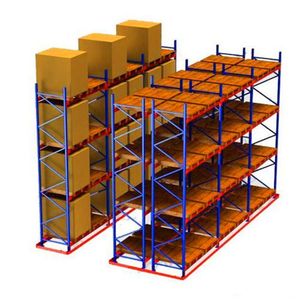
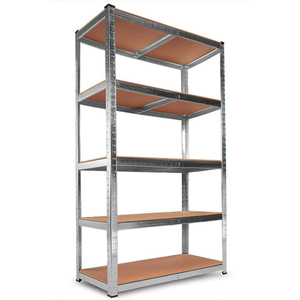
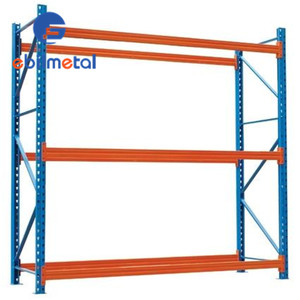
Procuring Industrial Heavy Duty Storage Racks from China: Engineering Integrity, Raw Material Grade Dynamics & Structural Safety Benchmarks
In modern supply chain engineering, warehouse storage racks cease to be simple steel shelving; they form the physical structural backbone of intra-logistics operations. When global supply chain directors, third-party logistics (3PL) providers, and industrial plant managers evaluate the Top China Heavy Duty Warehouse Storage Racks Factories & Suppliers, the primary objective is no longer solely focused on FOB unit pricing. Instead, global tier-one buyers scrutinize total structural reliability, engineering deflection ratios (L/200 standard), raw steel alloy consistency, seismic resistance modeling, and long-term operating lifecycle costs.
China accounts for over 65% of the world’s cold-formed steel racking output. However, manufacturing prowess varies significantly between regional light fabricators and specialized, certified racking engineering manufacturers like Guangzhou Heda Shelves Co., Ltd. (HEDA Shelves). Established in 2001, HEDA Shelves integrates complete automated roll-forming, computerized structural calculation, robotic beam-connector welding, and continuous automated electrostatic powder coating lines inside a 30,000 square meter specialized industrial production facility.
The difference between standard and high-reliability racking originates in raw material selection. While low-tier fabricators frequently use re-rolled scrap plate with variable tensile strength and uncontrolled carbon distribution, certified Chinese manufacturers utilize prime hot-rolled coils from premier mills (such as Baosteel, Shougang, or Tangshan Steel) classified under standard Q235B and high-tensile Q355B (equivalent to European S355JR or ASTM A572 Grade 50). High-tensile steel provides superior yield strength (up to 355 MPa), allowing taller upright columns (exceeding 16 meters) to endure dynamic wind shear, heavy seismic oscillations, and extreme asymmetric live loads without structural buckling.
Technical Comparison: Industrial Storage Rack Archetypes
Match warehouse throughput velocity, building clear heights, and material handling equipment (MHE) with optimal structural configurations.
| Racking Type | Primary Steel Grade | Standard Capacity | Aisle Clearance Req. | Inventory Velocity | Seismic / AS/RS Readiness |
|---|---|---|---|---|---|
| Selective Pallet Racking | Q235B / Q355B Roll-Formed | 1,000 – 4,500 kg / level | 3.0m – 3.8m (Counterbalance / Reach) | 100% Direct Selectivity (High) | Medium / Readily Retrofittable |
| Very Narrow Aisle (VNA) | Q355B Heavy Upright Profiles | 1,000 – 3,000 kg / level | 1.6m – 1.9m (Turret Truck / AGV) | High Density & Direct Access | High / Laser Alignment Required |
| Drive-In / Drive-Through | Q235B Heavy Formed C-Channel | 1,000 – 2,000 kg / pallet | Forklift Drive Lane (2.8m - 3.2m) | LIFO / FIFO Batch Storage | Requires Structural Portal Bracing |
| Radio Shuttle System | High-Precision Cold-Rolled Rail | 500 – 2,000 kg / pallet | Front Access Only (Aisle Free Inside) | High Velocity Automated LIFO/FIFO | Fully AS/RS & WMS/WCS Compatible |
| Gravity Pallet Flow | Q235B Steel + Steel Roller Beds | 800 – 1,500 kg / lane | Loading Face & Discharge Face | Strict Automatic FIFO Rotation | Integrated Centrifugal Speed Brakes |
| Cantilever Racks | Hot-Rolled H-Beam or Roll-Formed | 500 – 3,000 kg / arm | Variable depending on load length | Direct Crane or Side-Loader Access | Specialist Wind/Outdoor Anchor Design |
Future Warehouse Racking Procurement Trends (2025–2030)
How international corporate buyers, 3PL consortiums, and supply chain developers are recalibrating supplier evaluations.
AS/RS & Autonomous Integration
Global procurement teams are shifting away from standalone manual racking toward automation-compatible configurations. Even when manual operations exist today, forward-looking contracts mandate beam punching accuracy within ±0.5mm, floor-load deflection limits that accommodate future Automated Storage and Retrieval Systems (AS/RS), and guide rails for Autonomous Mobile Robots (AMRs).
Total Landed Cost & Flat-Pack Optimization
Ocean freight fluctuations and geopolitical tariff updates place a premium on shipping density. Tier-1 Chinese suppliers now utilize customized 3D container bundling software. Nesting upright frames, bolting diagonal bracings on-site, and shipping modular knock-down box beams achieve up to 98% 40HQ container volumetric capacity, dramatically reducing landed freight cost per pallet position.
Verifiable ESG & Structural Traceability
Corporate ESG procurement mandates demand verification of steel origin, mill certificates, and sustainable surface treatment. Modern facilities replace heavy chemical dipping with eco-friendly continuous phosphating and solvent-free, zero-VOC electrostatic powder coatings that withstand 500-hour ASTM B117 salt spray tests, critical for humid coastal and cold storage environments.
Industrial Racking Technology & Engineering Innovations
The industrial warehouse racking sector in China is undergoing intense technological modernization driven by Industry 4.0 automation:
1. Automated Roll-Forming with CNC Punching
Older manual punch-press operations generated punch-hole pitch deviations of 1-3mm across a 12-meter upright column, resulting in uneven beam loading and twist. Leading factories utilize continuous multi-station CNC roll-forming lines with flying servo punches, keeping hole pitch variance under ±0.1mm. This guarantees verticality and prevents lock-in joint stresses.
2. Multi-Claw Beam Connectors with Safety Pin Interlocks
Standard 3-claw connectors are vulnerable to accidental forklift uplift. Contemporary heavy-duty systems deploy precision stamped 4-claw and 5-claw connectors coupled with high-yield automatic spring safety locking pins. This joint design enhances beam-to-column rotational stiffness, crucial for maintaining frame rigidity under heavy pallet impact.
3. Specialized Cold-Chain Thermal Treatments
In deep-freeze operations (-25°C to -35°C), standard carbon steel experiences ductile-to-brittle transitions, resulting in micro-cracking under fork collision. Modern export manufacturers provide modified Q355D/E low-temperature impact-resistant steel and hot-dip galvanized finishes (≥85μm thickness) to prevent embrittlement and substrate oxidation.
4. Finite Element Modeling (FEM) & Dynamic Seismic Design
Rather than relying on generic rule-of-thumb load charts, HEDA Shelves engineers utilize advanced finite element analysis (FEA) software. Structural simulations evaluate buckling, asymmetric live loading, second-order P-Delta structural effects, and local seismic acceleration coefficients (UBC / IBC / Eurocode 8 standards) tailored to the buyer's geography.
Why Global Procurement Leaders Partner with Guangzhou Heda Shelves
Delivering engineering rigor, automated production capacity, and turnkey international execution from South China to global destination ports.
Industrial Manufacturing Scale & Engineering
- 30,000 m² Integrated Factory: Dedicated manufacturing facility in Guangzhou housing automated coil slitters, 18 continuous roll-forming lines, automated robotic welding cells, and electrostatic powder coating plants.
- 30,000 Tons Monthly Capacity: Capable of handling mega-distribution centers, multi-phase port logistics warehouses, and national retailer rollout schedules simultaneously without delivery bottlenecks.
- 300+ Skilled Specialists: Fully staffed with structural engineers, project managers, certified welders, and international logistics coordinators ensuring rapid execution.
- Free Full CAD & 3D Rendering: We generate turnkey layout proposals, 3D architectural models, and pallet location counts within 24–48 hours of receiving floor plans.
Audited Quality Standards & Global Trade Footprint
- Verifiable Quality Certifications: Formally accredited with CE Factory Production Control Certificate (No. 2435-CPR-8605159), ISO 9001:2015 Quality Management System (No. 18624Q00169R0M), and full RoHS compliance.
- 120+ Export Country Footprint: Direct logistics routes to major global container gateways including Nhava Sheva, Chennai, Chattogram, Colombo, Karachi, Jebel Ali, Rotterdam, Los Angeles, and Santos.
- Turnkey Installation Guidance: Every container includes color-coded, labeled components, detailed bolt-torque specifications, 3D erection sequencing manuals, and optional on-site engineering supervision.
- OEM / ODM Bespoke Capability: Customized roll profiles, bespoke color schemes (RAL matching), special galvanized finishes, and OEM private branding for international system integrators.
Industrial Warehouse Storage Racks: Procurement FAQ
Answers to key engineering, commercial, and logistical questions encountered during China direct sourcing.
Q: How do we ensure structural load integrity when sourcing racks from China?
Load integrity is verified through mill test certificates for steel yield strength, structural calculations conforming to FEM 10.2.02 or ANSI MH16.1, and maximum permissible beam deflection standards (typically L/200, where maximum deflection equals span length divided by 200 under full rated uniform distributed load). HEDA Shelves provides comprehensive structural calculation documentation and safety factor certificates (≥1.5 to 1.67) with every design proposal.
Q: What warehouse architectural data is required to generate a turnkey CAD layout?
To deliver an optimized, free 3D CAD layout, provide: (1) Warehouse architectural drawings showing column grids, overhead trusses, dock doors, fire sprinklers, and clear ceiling height; (2) Pallet specifications (width, depth, overall height including cargo overhang, and gross maximum load weight); (3) Forklift fleet details (minimum aisle turning radius, maximum mast lift height); (4) Inventory SKU turnover velocity (FIFO vs LIFO requirements).
Q: How are steel racking frames protected during maritime shipment and monsoon humidity?
Long ocean voyages subject steel to salty sea spray, high relative humidity, and condensation ("container rain"). HEDA Shelves subjects all steel profiles to pre-treatment via acid pickling, multi-stage rinsing, and phosphating before applying high-density thermoset electrostatic epoxy-polyester powder coating (60–80μm). Bundles are wrapped in reinforced waterproof film, corner-protected with heavy corrugated guards, and steel strapped on custom dunnage skids.
Q: What is the typical factory production lead time for 10–50 shipping containers?
Standard production lead time for custom roll-formed selective or heavy-duty pallet racking ranges from 15 to 25 business days following CAD approval and technical sign-off. High-capacity operations supported by our 30,000 m² Guangzhou facility and monthly 30,000-ton processing lines enable phased batch shipments, ensuring on-site civil works and installation crews proceed without site stoppage.
Q: Can HEDA Shelves engineer racking systems for active seismic zones?
Yes. In high seismic regions (such as parts of California, Japan, New Zealand, Indonesia, the Philippines, or Northern India), storage racks must resist significant horizontal ground acceleration. Our structural engineering department incorporates seismic engineering calculations, expanding base plate footprints, integrating heavier H-profile bracing, increasing wedge anchor diameters, and adjusting top frame ties to satisfy local building codes.
Q: How do Chinese rack manufacturers support on-site installation overseas?
HEDA Shelves provides a three-tiered installation support framework: (1) Comprehensive component indexing where every upright frame, cross-beam, safety pin, and floor anchor corresponds to stamped engineering shop drawings; (2) High-definition 3D installation video tutorials; (3) For large-scale projects exceeding 5,000 pallet positions, we deploy veteran installation supervisors directly to your site to direct local assembly labor.
Ready to Optimize Warehouse Capacity & Secure Direct Factory Pricing?
Connect with senior structural racking engineers at Guangzhou Heda Shelves Co., Ltd. Request a complimentary project layout analysis, load calculation sheet, and rapid export quotation today.