[email protected] Serving India · Bangladesh · Pakistan · Sri Lanka · Nepal
English (South Asia)
ISO 9001:2015 & CE Certified Factory Direct

Top China FIFO Racking System Factory & Exporter

Precision-Engineered Pallet Flow, Gravity Roller Tracks, and Dynamic Radio Shuttle Racking. Manufactured by Guangzhou Heda Shelves Co., Ltd. for High-Throughput Global Supply Chains.

Engineered Storage Portfolio

Featured Industrial Warehouse Racking & Mezzanines

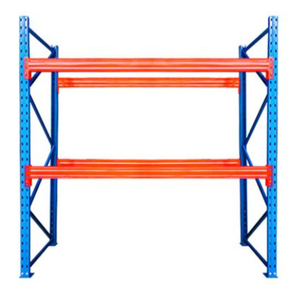
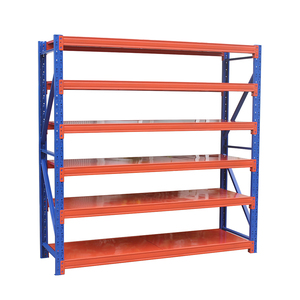
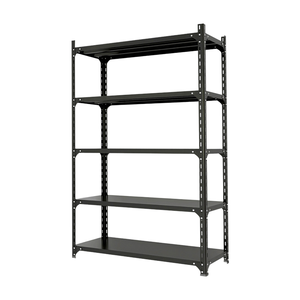
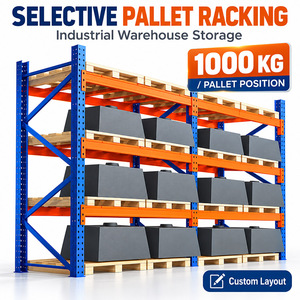
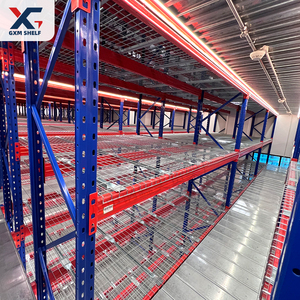
Customized heavy-duty storage architectures built with certified Q235B/Q355B structural steel, precision roll-formed profiles, and anti-corrosion pre-treatments for worldwide commercial distribution facilities.

Contact Us
Engineering Whitepaper & Technical Analysis

The Mechanical Anatomy & Physics of Industrial FIFO Racking Systems

First-In-First-Out (FIFO) material handling is the gold standard for date-sensitive, fast-turnover distribution. Achieving reliable FIFO flow demands exacting kinetic friction controls, structural beam calculations, and fail-safe deceleration mechanisms.

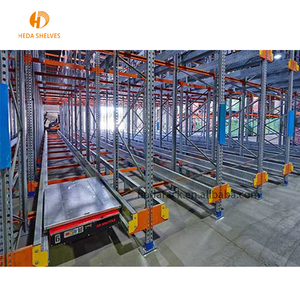
In modern industrial intralogistics, inventory depreciation and expiration represent significant operational loss factors. Warehouses processing perishable foodstuffs, pharmaceuticals, temperature-controlled chemicals, dynamic retail FMCG, and batch-stamped automotive components require absolute control over lot rotation. A truly operational FIFO racking infrastructure relies on two discrete mechanical formats: Gravity Pallet Flow Systems (roller tracks on an engineered incline) and Automated Radio Shuttle FIFO Systems (bi-directional battery-powered robotic shuttles moving pallets along dedicated internal support rails).

1. Gravity Pallet Flow Mechanics: Gradient, Velocity & Centrifugal Braking

A continuous-slope gravity pallet flow bed uses an engineered slope gradient typically ranging between 1.5° to 3.0° (2.5% to 5.0% declination), calculated precisely against the tare weight, underside wooden runner configuration, and deflection curve of standard pallets (1200x1000mm UK/ISO or 1200x800mm Euro-pallets). When pallets travel under gravitational acceleration, mechanical control devices become paramount:

Centrifugal Brake Rollers

Internally geared centrifugal brake rollers disengage at resting velocities and automatically expand internal friction pads when pallet travel exceeds 0.30 m/s, preventing dangerous runaway acceleration along deep 15-pallet lanes.

Mechanical Pallet Separators

Mounted at the unload picking discharge face, these mechanisms mechanically lock the accumulated rear line of pallets roughly 450mm back from the lead pallet, completely relieving line pressure so the forklift operator can lift smoothly.

Heavy-Duty Twin Roller Tracks

Cold-drawn zinc-plated cylindrical steel rollers engineered with precision ball bearings rated for 150 kg to 250 kg per individual roller. High-impact entry modules absorb forklift shock loading during loading cycles.

Self-Centering Guides

Welded flared guide angles at the charging side center the incoming pallet within the roller track, eliminating track wander and preventing pallet edge scraping against vertical frame uprights.

2. Comparative Architecture: FIFO Flow vs. Competing Storage Formats

Selecting the optimal pallet storage solution involves balancing volumetric cubic utilization, capital investment per pallet position, selectivity, and operational cycle times. The table below outlines how Guangzhou Heda Shelves Co., Ltd.'s FIFO gravity systems compare across primary metrics against other common warehouse topologies:

Racking Topology Inventory Rotation Volumetric Density Picking Direct Selectivity Forklift Cycle Efficiency Typical Applications
Gravity Pallet Flow (FIFO) Strict FIFO (100% Guaranteed) Very High (Up to 85% Floor Use) 1 SKU per Dedicated Lane Ultra-Fast (Separated Loading & Picking Aisles) Perishable Food, Pharma, High-Turn FMCG
Radio Shuttle FIFO Racking FIFO or LIFO Configurable Maximum (90%+ Floor Use) 1 SKU per Level / Lane High (Forklift Never Enters Racking Lane) Cold Storage (-25°C), Beverage Plants, Buffers
Drive-In / Drive-Through LIFO (Drive-In) / FIFO (Drive-Thru) High (70% - 80%) Low (Lane-Restricted) Low (Forklift Drives Deep into Steel Frames) Seasonal Bulk Crop Storage, Low-SKU Raw Goods
Push-Back Cart Racking Strict LIFO (Last-In-First-Out) Medium-High (Up to 5 Deep) 1 SKU per Lane Moderate (Forklift Pushes Back Preceding Pallet) Medium Velocity Non-Perishables, Staging Buffers
Standard Selective Racking FIFO Possible (Manually Managed) Low (40% - 50% Due to Aisles) 100% Direct Immediate Access Standard (Significant Aisle Travel Time) Distribution Centers with 10,000+ Diverse SKUs
Contact Us
Strategic Sourcing Intelligence

Future Procurement & Technological Trends in FIFO Racking (2025–2030)

As warehouse real estate leases rise globally and supply chain automation deepens, industrial procurement officers must design racking investments around emerging automation interfaces, cold chain requirements, and dynamic seismic codes.

1. High-Density Cold Chain Surges

Thermal loss and refrigeration energy costs are proportional to warehouse cubic volume. Global cold storage operators are aggressively swapping out standard wide-aisle racks for deep-lane FIFO pallet flow and radio shuttle systems. This compresses refrigeration footprint by up to 55%, directly lowering kilowatt-hour power draw in Sub-Zero (-25°C to -30°C) logistics facilities.

2. AGV & AMR Autonomous Integration

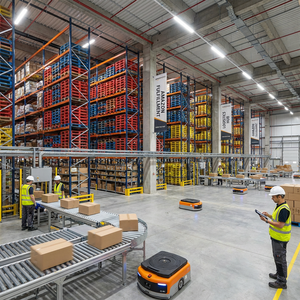
Manual forklift operations are transforming into Autonomous Mobile Robot (AMR) and Automated Guided Vehicle (AGV) workflows. Procurement teams now require strict roller lead-in tolerances, optical retroreflective targets embedded on rack uprights, and sensorized mechanical stop-plates that confirm pallet readiness to automated warehouse management software (WMS/WCS).

3. Higher Yield Metallurgies & Finite Element Design

Procurement specifications are shifting from basic commercial steel to certified Q355B and high-yield cold-rolled micro-alloyed structural steel. Using advanced Finite Element Analysis (FEA) compliant with EN 15512 and ANSI MH16.1, engineers shave unnecessary steel dead-weight while drastically enhancing seismic resistance and structural elasticity under dynamic cyclic impact.

4. Total Cost of Ownership (TCO) Prioritization

Sophisticated multi-national supply chain procurement is abandoning "cheapest beam price per unit" in favor of holistic TCO models. Factors such as zero-energy gravity movement, 40% reduction in forklift fleet travel mileage, fewer aisle collision hazards, and rapid trailer turnaround times dictate long-term capital allocation decisions.

5. Hybrid Mezzanine-Flow Topologies

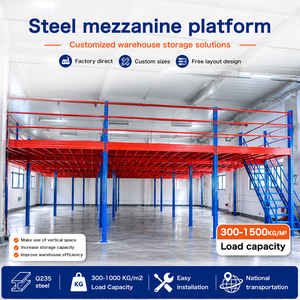
Maximizing warehouse clear ceiling height (10m to 16m) is creating hybrid facilities. The ground level utilizes high-speed gravity FIFO flow for fast-moving bulk pallets, directly supporting an elevated structural steel mezzanine on upper tiers for high-density piece-picking, carton-flow chutes, and automated sortation conveyors.

6. Anti-Corrosion Chemical Pre-Treatments

Global logistics hubs situated near marine harbors (e.g., Chennai, Chattogram, Karachi, Rotterdam, Houston) demand superior resistance against salt-spray and monsoon humidity. Modern procurement requires full immersion acid pickling and phosphating pre-treatments prior to thermosetting epoxy-polyester electrostatic powder coating (minimum 60–80 microns).

Enterprise Manufacturing Authority

Why Tier-1 Importers Source from Guangzhou Heda Shelves Co., Ltd.

Established in 2001, Guangzhou Heda Shelves Co., Ltd. has developed into a premier Chinese heavy-duty racking factory and international exporter, integrating layout CAD design, dynamic structural engineering, roll forming, and automated production.

2001
Year Founded
30,000m²
Factory Floor Area
30,000Tons
Monthly Output Capacity
120+
Export Destined Countries
01

25+ Years Experience

Over two decades mastering continuous cold roll forming, robotic welding fixtures, and customized storage engineering for global 3PL, retail, pharmaceutical, and manufacturing projects.

02

Free CAD & 3D Modeling

Our dedicated engineering group generates complete warehouse layout CAD schematics, 3D structural load simulations, and pallet position count optimizations within 24–48 hours at zero cost.

03

Audited Certifications

Complete traceability backed by independently verifiable certifications: CE Certification (No. 2435-CPR-8605159), ISO 9001:2015 Quality Management (No. 18624Q00169R0M), and RoHS compliant finishes.

04

Container-Optimized Logistics

Expert cargo grouping engineered specifically for 40HQ maritime containers. Bundled uprights, boxed beams, and custom steel stillages ensure zero shipping deflection and maximized cubic utilization.

10-Stage Precision Manufacturing Workflow

From prime cold-rolled steel coils to finished crated components ready for ocean freight, our vertically integrated Guangzhou facility maintains stringent quality checkpoints at every manufacturing phase:

  1. 01. Certified Steel Intake: Spectrometric testing of Q235B/Q355B coils.
  2. 02. Slitting & Cutting: CNC precision shear lines with ±0.5mm tolerance.
  3. 03. Automated Punching: Continuous pitch-hole punch machines (50mm/75mm).
  4. 04. Cold Roll Forming: Multi-station roll formers shaping rigid omega uprights.
  5. 05. Beam Box Forming: Interlocking twin-C profiles double-welded for rigidity.
  6. 06. Robotic Welding: CO2 gas shielded automatic beam-connector welding.
  7. 07. Edge De-burring & Shot Blast: Cleans mill scale and sharp steel edges.
  8. 08. 8-Stage Chemical Pre-Treatment: Degreasing, pickling, and zinc phosphating.
  9. 09. Electrostatic Powder Coating: Automated reciprocal spray guns; 200°C oven cure.
  10. 10. QC Load Verification & Packing: Deflection load-testing, steel-banded bundling.
Procurement Knowledge Base

Frequently Asked Questions (FIFO Racking Engineering & Export)

Detailed technical, logistical, and commercial answers compiled by Guangzhou Heda Shelves Co., Ltd.'s senior application engineering team to support international procurement audits.

What is the optimal bed slope angle for heavy-duty FIFO gravity pallet flow racking?

The standard industrial gradient for pallet flow systems is engineered between 1.5° and 3.0° (approximately a 2.5% to 5% slope), or roughly 30mm to 45mm of vertical drop per linear meter of track. The exact angle depends on three empirical factors tested by our Guangzhou testing lab: total pallet gross weight (ranging from 300 kg to 1,500 kg), the structural hardness and surface condition of bottom runners (hardwood, softwood, smooth plastic, or perimeter steel base), and the ambient temperature (e.g., ambient vs. -25°C frozen storage, where bearing grease viscosity alters initial breakaway friction). For deep lanes exceeding 5 pallets, speed controller brake rollers are calibrated alongside the gradient to maintain steady speeds below 0.35 m/s.

How does a mechanical pallet separator work, and why is it mandatory for deep FIFO lanes?

In a 10-pallet deep gravity lane holding 1,000 kg pallets, the cumulative hydrostatic line pressure exerted on the front pick-face pallet can reach several metric tons. Attempting to lift the front pallet under this back-pressure causes severe friction damage, binds the pallet against the uprights, and can flip the adjacent pallet into the forklift mast. A mechanical pallet separator is a spring-loaded or counter-weighted floor trip mechanism installed 400–600mm behind the discharge stop. It physically holds back the 2nd pallet and the entire rear line until the operator fully lifts and extracts the front pallet. Once clear, the driver taps a foot latch or pneumatic release to allow the queue to index forward safely by exactly one pallet position.

Can FIFO gravity flow racking accommodate damaged or poor-quality wooden pallets?

Gravity flow beds depend entirely on continuous, unobstructed physical contact between the underside pallet boards and cylindrical steel roller bearings. Missing bottom runners, broken stringers, protruding nails, or pallet base deflection exceeding L/100 (more than 10–12mm sag) can cause a pallet to stall midway down a gravity lane. To mitigate low-grade pallet risks in developing supply chains, Guangzhou Heda Shelves supplies continuous multi-track roller beds (3 or 4 roller lanes across instead of 2) or incorporates customized heavy-duty steel slave pallets/trays. Alternatively, for operations with non-standard pallets, our Radio Shuttle FIFO System is recommended, as the motorized shuttle lifts and supports pallets directly by their top block stringers.

What international manufacturing and seismic safety standards do HEDA racking systems fulfill?

Guangzhou Heda Shelves designs, manufactures, and load-tests its complete industrial racking range in strict accordance with major global engineering codes. Our systems comply with the European standard EN 15512:2020 (Steel static storage systems – Adjustable pallet racking systems – Principles for structural design), FEM 10.2.02, and the American Rack Manufacturers Institute standard ANSI MH16.1. For high-seismic zones (such as Chile, New Zealand, Indonesia, Japan, or coastal seismic faults in India/Pakistan), our CAD engineers calculate site-specific seismic acceleration factors, designing widened base plates, dual chemical anchor bolts (M12/M16 grade 8.8), and heavy-gauge diagonal K-bracing along the rear upright spine.

How does your factory protect export steel against coastal salt air and monsoon humidity?

Corrosion protection begins long before the paint booth. At HEDA Shelves, all steel profiles undergo an 8-stage automated pre-treatment line comprising immersion alkali degreasing, twin water rinses, hot hydrochloric acid pickling (to remove mill scale and oxidation), water rinse, and micro-crystalline zinc phosphating. This chemically converts the steel surface into an inert, rust-inhibiting crystalline layer. Following dry-off, an electrostatic thermosetting polyester-epoxy hybrid powder is applied to a uniform thickness of 60 to 80 microns and cured at 200°C for 20 minutes. This finish easily achieves 500+ hours in ASTM B117 salt spray chamber tests. For coastal or outdoor port installations, full Hot-Dip Galvanization (HDG to ISO 1461, 85+ microns) is available.

What export shipping terms, port coverage, and installation support do you provide?

We export under FOB (Guangzhou/Shenzhen/Foshan), CFR, and CIF terms to major worldwide maritime gateways including Nhava Sheva, Chennai, Mundra, Chattogram, Karachi, Colombo, Singapore, Jebel Ali, Rotterdam, and Los Angeles. Every shipment includes container-stowage plans, numbered beam and upright bundles, component manifest packing lists, structural calculation certificates, and detailed 3D step-by-step CAD installation manuals. For large commercial distribution centers or multi-tier mezzanine projects, Guangzhou Heda Shelves dispatches senior installation project managers to provide on-site supervision, laser leveling verification, and contractor commissioning.

Direct Factory Collaboration

Request a Custom FIFO Racking System Layout & Engineering Proposal

Share your warehouse floor plan (DWG CAD / PDF), clear ceiling height, pallet dimensions, and SKU turnover velocity. Our technical storage engineering department will deliver an optimized 2D layout, 3D render, and detailed FOB/CIF container budget quotation within 24 hours.

✓ Zero-Cost CAD Layout ✓ ISO 9001 & CE Certified Factory ✓ 30,000 Tons Monthly Output ✓ Exporting to 120+ Countries