Featured Industrial Warehouse Storage Systems
Engineered by Guangzhou Heda Shelves Co., Ltd. from premium cold-rolled structural steel. Certified to CE and ISO 9001 standards, our high-bay and dynamic racking solutions are deployed across heavy industrial, cold-chain, and multinational retail fulfillment centers.
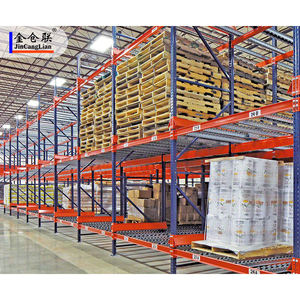
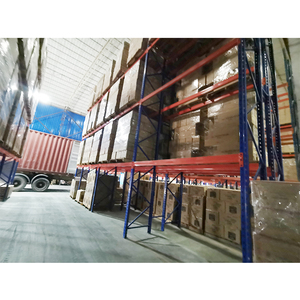
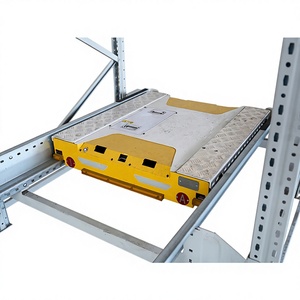
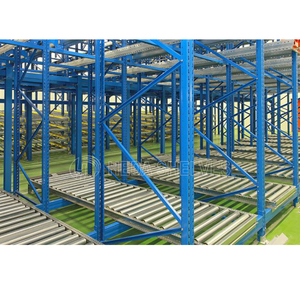
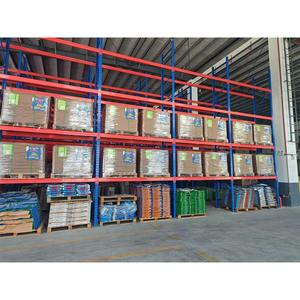
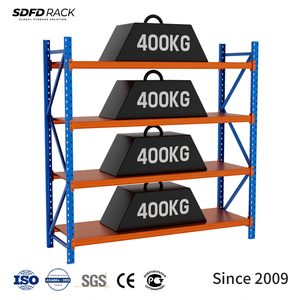
Drive-In Racking Architecture: Physics, Capacity & Space Physics
An exhaustive technical evaluation of high-density storage mechanics. How Chinese manufacturing precision transforms raw Q355B coils into heavy-duty cantilevered rail structures that boost cubic warehouse utilization by up to 85%.
In the contemporary logistics ecosystem, warehouse real estate expenditure represents one of the steepest operational overheads. Conventional selective pallet racking systems dedicate between 60% and 68% of total building floor area to material handling equipment (MHE) transit aisles. For cold-storage operators, raw material bulk buffers, and single-SKU high-volume manufacturers, this spatial inefficiency directly translates into escalated refrigeration costs and inflated cost-per-pallet metrics.
Drive-In Racking—and its through-access counterpart, Drive-Through Racking—addresses this challenge by eliminating traditional operating aisles. Forklifts enter directly into the structural storage lanes to deposit and retrieve unit loads resting on continuous bilateral cantilevered support rails. Operating primarily on a Last-In, First-Out (LIFO) inventory discipline (or First-In, First-Out (FIFO) when configured as Drive-Through with dual entry faces), this system achieves volumetric storage densities ranging between 75% and 85% of total warehouse volume.
Structural Omega Uprights
Roll-formed from high-yield Q355B structural steel, featuring continuous 50mm or 75mm tear-drop or diamond punched pitches. The modified Omega cross-section profile increases torsional stiffness by 34% compared to standard channel profiles, resisting lateral bucking forces induced by internal MHE traffic.
Reinforced Cantilever Arms
Heavy-gauge one-piece stamped support brackets (single-sided for outer perimeter frames and double-sided for intermediate uprights) engineered with wrap-around locking teeth. These arms rigidly anchor the continuous load-bearing rails while dissipating dynamic impact vibrations into the upright frame.
Portal & Top-Tie Bracing
Because Drive-In structures eliminate traditional horizontal pallet beams inside the storage bays, structural stability is maintained through heavy overhead portal bracing trusses, cross-lane top ties, and rear vertical diagonal K-bracing, guaranteeing dynamic structural integrity under high seismic loads.
Comprehensive Structural Comparison Matrix
Specifying the optimal industrial storage system requires balancing SKU selectivity, inventory throughput velocity, capital expenditure (CapEx) per pallet position, and volumetric efficiency. The comparison matrix below outlines how Drive-In systems correlate with alternative industrial racking typologies according to European EN 15512 and American RMI ANSI MH16.1 design parameters.
| Racking Topology | Volumetric Density | Direct Selectivity | Inventory Flow | Typical CapEx / Position | Ideal Application Profile |
|---|---|---|---|---|---|
| Drive-In Racking | Very High (75-85%) | Low (Lane-based) | LIFO | Economical / Low | Cold storage, beverage plants, seasonal agri-produce, bulk single-SKU goods. |
| Selective Pallet Racking | Moderate (35-45%) | 100% Direct | FIFO / LIFO | Lowest Baseline | Multi-SKU distribution centers, retail fulfillment, e-commerce fast picks. |
| Radio Shuttle Racking | Maximum (85-90%) | Medium (Lane-based) | FIFO & LIFO | Moderate-High | Deep-lane high-throughput food distribution, blast freezers, high labor cost hubs. |
| Push-Back Cart Racking | High (65-75%) | Moderate (2-6 deep) | LIFO | Moderate | Medium batch rotation, staging areas, warehouses with limited forklift mast reach. |
| Very Narrow Aisle (VNA) | High (55-65%) | 100% Direct | FIFO / LIFO | Moderate-High | High ceiling industrial warehouses with premium land cost and high SKU counts. |
Engineering Calculations: Beam Deflection & Seismic Considerations
In Drive-In pallet systems, structural calculations deviate significantly from standard pallet racking. The continuous longitudinal pallet support rails function as continuous beams supported at discrete cantilever bracket intervals. Under European standard FEM 10.2.02 / EN 15512 and American RMI (Rack Manufacturers Institute) guidelines, maximum allowable vertical rail deflection under nominal static working load is constrained to:
Key Design & Safety Formulations for Drive-In Structures
Structural stability relies on strict mathematical verification of frame buckling and anchor shear tolerances:
- Rail Deflection Limit: $\delta_{max} \le L / 200$ (where $L$ is upright frame bay pitch)
- Overturning Safety Factor: Minimum $1.5$ against seismic base shear
- Steel Grade Specification: Q355B (Yield Strength $f_y \ge 355\text{ MPa}$, Tensile $470\text{--}630\text{ MPa}$)
- Floor Anchor Pullout Margin: Rated to withstand $\ge 25\text{ kN}$ dynamic uplift forces
Drive-In Racking System Recommendations
Customized structural configurations engineered for specific logistics operating conditions. Select the optimal profile, coating, and floor guidance system based on your facility's operational parameters.
Standard Ambient Heavy-Duty Drive-In
Optimized for fast-moving consumer goods (FMCG), dry raw materials, and beverage buffering. Features powder-coated Q235B/Q355B steel, modular bolt-free load arms, and high-visibility floor entry guide shoes for rapid forklift positioning.
Sub-Zero Cold Chain Galvanized System
Engineered for blast freezers operating down to -30°C. Hot-dip galvanized to ISO 1461 standards or treated with zinc-rich epoxy to prevent low-temperature condensation corrosion and eliminate structural steel embrittlement risks.
AGV-Ready High Precision Drive-In
Fabricated with ultra-tight structural manufacturing tolerances (±1.0mm) for seamless integration with Autonomous Guided Vehicles (AGVs) and Laser-Guided Forklifts (LGVs), incorporating optical reflector mounts and continuous guide kerbs.
Seismic-Reinforced Drive-Through
Engineered for dual-face loading with independent front and rear aisles for FIFO inventory turnover. Outfitted with heavy-duty overhead portal tie beams and engineered baseplates anchor-bolted into 250mm reinforced concrete slabs.
Future Procurement & Technological Trends in Drive-In Storage
How automation convergence, carbon-neutral manufacturing, and digital twin engineering are transforming the next generation of industrial high-density warehouse racking systems.
1. Hybridization with Semi-Automated Shuttles
Traditional Drive-In lanes are increasingly retrofitted or planned as hybrid radio shuttle tunnels. Replacing manual forklift lane entry with independent battery-operated shuttle carts reduces forklift collision risks by up to 92% while boosting operating speeds.
2. Digital Twin Stress Simulation
Modern engineering departments now simulate real-world seismic waveforms and MHE impacts using advanced Finite Element Analysis (FEA). This eliminates structural over-engineering while reinforcing critical point-load junctions at the bracket-column interface.
3. Eco-Friendly Powder Formulations
Global procurement teams prioritize ESG targets. The transition to solvent-free, heavy-metal-free thermosetting polyester powder coatings processed through low-temperature curing ovens dramatically decreases the embodied carbon footprint per pallet position.
4. Smart Telemetric Deflection Monitoring
Integrated RFID and IoT strain gauges embedded into high-bay Drive-In support rails provide real-time telemetry on static load creep, thermal fatigue in sub-zero freezers, and accidental upright impact alerts sent straight to WMS platforms.
5. High-Tensile Micro-Alloy Steel Metallurgy
The industry is migrating from Q235B steel to micro-alloyed Q355B and Q420 cold-rolled steel. The heightened yield strength permits thinner structural profiles with elevated load-bearing capacity, reducing total container freight weight and landed import duties.
Guangzhou Heda Shelves Co., Ltd. — Your Global Manufacturing Partner
Established in 2001, Guangzhou Heda Shelves Co., Ltd. (HEDA Shelves) is an internationally recognized leader in warehouse storage systems engineering. We deliver fully integrated, factory-direct racking packages to 120+ countries worldwide.
Certified Engineering Excellence
All HEDA storage systems are certified under European CE Certification (No. 2435-CPR-8605159), ISO 9001:2015 (No. 18624Q00169R0M), and RoHS environmental directives. Our structural calculations conform strictly to EN 15512, FEM 10.2.02, and RMI standards.
In-House 10-Stage Production
From initial raw steel coil spectrographic inspection, CNC precision slitting, continuous multi-station roll-forming, and automated hydraulic punching to robotic welding and 9-stage pickling and phosphating, our manufacturing process is 100% vertically integrated.
Electrostatic Powder Coating
Our automated powder-coating lines apply high-grade thermosetting polyester powder at a controlled 60-80 micron dry film thickness (DFT). This ensures maximum scratch resistance, chemical inertia, and superior corrosion resilience in humid and tropical environments.
Free 2D/3D Engineering Layouts
Our dedicated design team of 30+ structural engineers provides comprehensive AutoCAD layout drawings, 3D structural visual renders, and precise pallet load distribution calculations within 24 hours of receiving your warehouse architectural drawings.
Container-Optimized Bundling
Export packaging is engineered for high volumetric packing density. Uprights and beams are bundled with steel straps and heavy plastic wrapping, maximizing 40HQ container cube utilization to reduce ocean freight and landed cost per pallet position.
Global Turnkey Export Support
Regular container shipments depart from South China ports (Guangzhou, Shenzhen, Foshan) to key trade gateways across South Asia, the Middle East, Europe, and the Americas—accompanied by detailed piece-marked assembly blueprints and video supervision.
Frequently Asked Technical & Procurement Questions
Essential technical guidance for warehouse operations managers, procurement directors, and industrial engineers evaluating Chinese Drive-In Racking systems.
Engineer Your High-Density Warehouse with HEDA Shelves
Eliminate costly intermediary markups. Partner directly with China's leading warehouse racking manufacturer. Our structural engineering team will prepare your full CAD layout, structural calculation report, and export quotation within 24 hours.
Send an InquiryNeed Urgent Engineering Assistance?
Submit your architectural floor plans, ceiling clearances, and pallet dimensions. Our senior storage systems specialists are available 24/7 to review your specifications.
Send an Inquiry