[email protected] Serving India · Bangladesh · Pakistan · Sri Lanka · Nepal
English (South Asia)
Industrial Engineering Whitepaper · Class-A Storage

Top China Double Deep Racking System Supplier & Suppliers

High-Density Cold-Rolled Pallet Architecture, Structural FEA Mechanics, and Turnkey Logistics Engineering from Guangzhou Heda Shelves Co., Ltd.

Direct Factory Portfolio

Engineered Heavy-Duty Storage Configurations

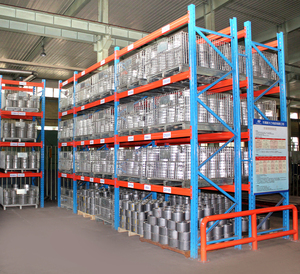
As a premier China double deep racking system supplier, Guangzhou Heda Shelves manufactures precision-formed, structural-grade steel systems designed to bridge the gap between pure 100% selectivity and hyper-dense cubic utilization. Browse our standard and specialized assemblies below.

Get a Quote
Structural Mechanics

Kinematics, Load Moments & Double Deep Physics

Double deep pallet racking is not merely selective racking doubled up; it is an engineered compromise between spatial footprint and dynamic reach mechanics. Understanding its structural physics is paramount for warehouse safety and longevity.

Pantograph Derating & Deflection

Double deep configurations require pantograph-reach or telescopic-fork lift trucks. When reaching into the second pallet depth (typically 1,100mm to 1,400mm past the inner frame), the forklift's combined center of gravity shifts forward dramatically. In structural design, beams must be calculated to resist not only pure vertical dead loads but the dynamic impact oscillations induced as long-reach pantographs deposit loads at extreme elevations up to 11 meters.

Dual-Pallet Beam Shear & L/250 Criteria

Under international standards including EN 15512 and RMI MH16.1, racking beam deflection must not exceed L/200, with premium cold-storage specifications demanding L/250. HEDA box beams utilize continuous submerged arc automated seam welding and interlocking 3-, 4-, or 5-claw high-tensile connectors. This eliminates the risk of torsional rotation during asynchronous loading where the back pallet is loaded while the front position remains vacant.

Slab Punch Shear & Baseplate FEA

Consolidating four pallet depths into a single double-sided bay run doubles the concentrated point-loading transferred into the concrete warehouse floor slab. HEDA engineers carry out Finite Element Analysis (FEA) to verify baseplate dimensions, ensuring floor pressure remains beneath the slab’s ultimate bearing capacity (typically 40 to 60 kN per footplate), while calculating chemical anchor shear resistance under Zone 3 and Zone 4 seismic acceleration profiles.

Why Double Deep Outperforms Single Selective in Cold Storage and High-Land-Cost Regions

Every cubic meter of cooled air in a temperature-controlled cold room carries direct, continuous refrigeration costs. Conventional selective pallet racking leaves over 60% of warehouse floor area dedicated exclusively to empty forklift aisles. By installing double deep racking, operators immediately eliminate two out of every five service aisles.

This layout yields an instantaneous 30% to 45% increase in pallet storage density without requiring the massive capital outlay and motorized infrastructure associated with automated shuttle cars or crane-driven ASRS. For 3PL contractors and FMCG cold warehouses handling 2 to 4 pallets per SKU, double deep represents the optimal thermodynamic and capital efficiency balance.

  • 50% Immediate Selectivity: Instant access to 1 out of every 2 pallets, perfectly matching batch-production dispatch.
  • Lower Capital Expenditure: Up to 55% lower CAPEX per pallet position compared to motorized radio shuttle systems.
  • Structural Redundancy: Heavy-gauge upright profiles prevent frame racking under seismic windup loads.
Get a Quote
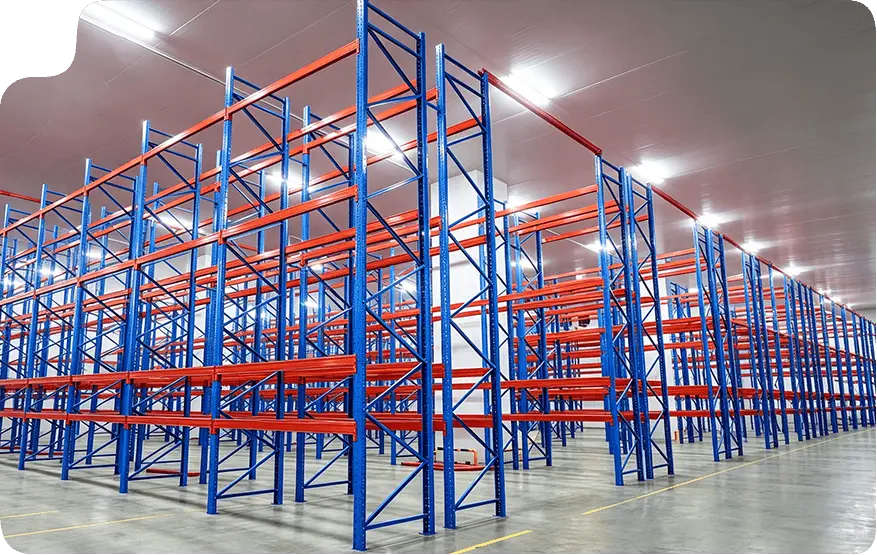
Double Deep Cold Storage Racking System Engineered by HEDA Shelves
Spatial Economics

Warehouse Footprint & System Selection Matrix

Procurement decisions require clear visibility into volumetric efficiency, throughput cycles, and capital requirements. The following benchmark compares double deep racking against other industrial storage typologies for standard 1,200mm × 1,000mm pallet footprints.

Racking System Type Pallet Access Selectivity Floor Space Utilization Forklift Aisle Requirement Relative CAPEX / Position Inventory Rotation Logic
Standard Selective Racking 100% Direct 35% – 42% 3,000mm – 3,400mm (Standard) Baseline ($) FIFO / LIFO Independent
Double Deep Pallet Racking 50% Direct 55% – 65% 3,100mm – 3,500mm (Double-Reach) 1.15× – 1.25× Baseline FILO / LIFO (2 Pallets/SKU)
Drive-In / Drive-Through < 15% Direct 65% – 75% Forklift enters rack lane 1.35× – 1.60× Baseline Strict LIFO / FIFO
Push-Back Cart Racking Lane Face Only 60% – 70% 2,900mm – 3,200mm 2.20× – 2.80× Baseline LIFO (2–5 Pallets Deep)
Radio Shuttle Automation Channel Face Only 75% – 85% 3,000mm (Shuttle moves in lane) 3.20× – 4.50× Baseline FIFO & LIFO Flexible
Very Narrow Aisle (VNA) 100% Direct 50% – 58% 1,650mm – 1,900mm (Guided) 1.80× – 2.40× Baseline Full FIFO Compliance
+42%
Storage Density Gain
50%
Fewer Aisle Crossings
-28%
Refrigeration Power Overhead
< 24Mo
Typical Payback Period
Manufacturing Rigor

Precision Cold-Roll Metallurgy: Inside Guangzhou Heda Shelves

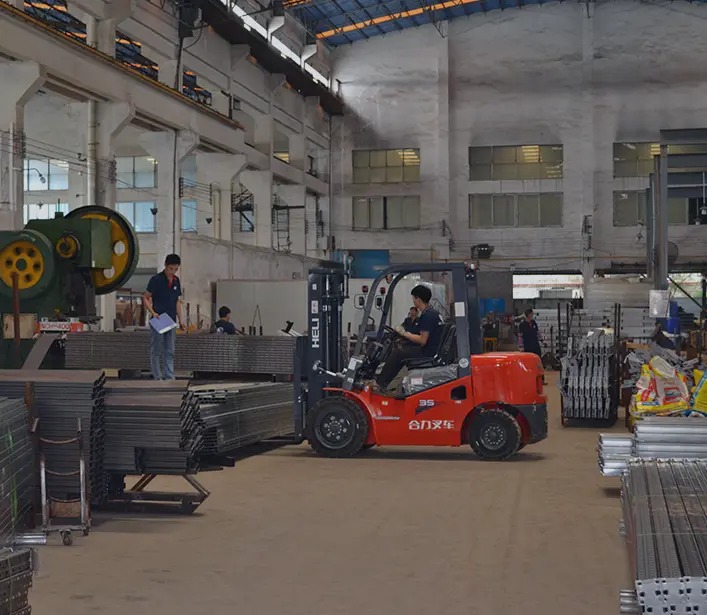
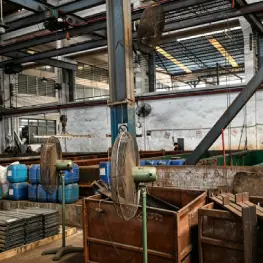
Founded in 2001, Guangzhou Heda Shelves Co., Ltd. operates a specialized 30,000 m² manufacturing plant with over 300 experienced engineers and technicians. With monthly production output exceeding 30,000 tons of structural racking, we manage every production phase under rigorous ISO 9001:2015 and European CE safety certification protocols.

Guangzhou Heda Shelves 30,000 sqm Intelligent Manufacturing Center

Certified Steel Grades & Structural Integrity Control

Unlike secondary suppliers using scrap or variable-yield slit strip coils, HEDA double deep components utilize certified Q235B and Q355B structural cold-rolled steel sourced directly from tier-one Chinese mills (Baosteel, Shougang). Our profile cross-sections undergo continuous computerized monitoring to guarantee uniform thickness tolerances within ±0.05mm across all 11-fold omega upright columns.

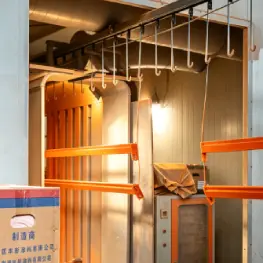
For chemical, pharmaceutical, and high-humidity environments, we implement a comprehensive 9-stage pre-treatment wash. Automated pickling and ultrasonic phosphating eliminate all mill scale, microscopic oxides, and oil residues, followed by an electrostatic thermosetting epoxy-polyester powder coat baked at 180°C–200°C. This delivers an impermeable 70–90µm dry film thickness resistant to salt spray, caustic cleaners, and mechanical abrasion.
Our 10-Stage Precision Manufacturing Workflow

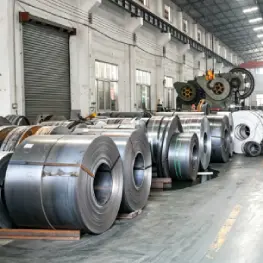
STEP 01 Prime Certified Steel Coils

Raw Material QC

Spectrometric tensile and chemical verification of incoming steel coils.

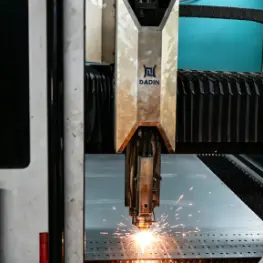
STEP 02 Precision CNC Steel Cutting

Precision CNC Slitting

Computerized longitudinal shearing ensuring zero edge-burr distortion.

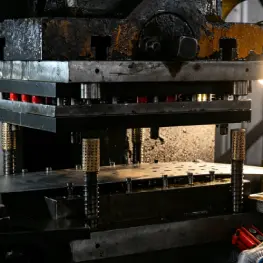
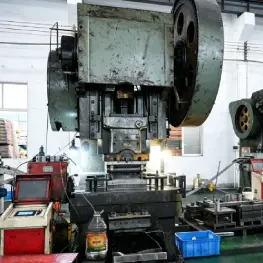
STEP 03 Automated Upright Hole Punching

Automated Punching

High-speed punch presses deliver exact 50mm/75mm hole pitches.

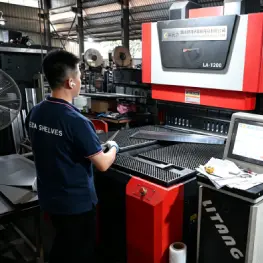
STEP 04 Cold Bending and Forming

Cold Bending Forming

Progressive roll forming enhances section stiffness and modulus.

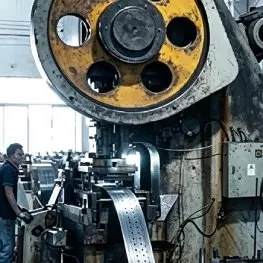
STEP 05 Multi-Station Profile Roll Forming

Continuous Roll Forming

18-station cold roll formers shape heavy-gauge uprights and beams.

STEP 06 Surface Polishing and Deburring

Deburring & Polishing

Automated mechanical rotary deburring eliminates sharp contact edges.

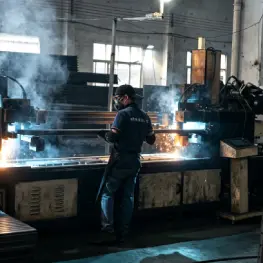
STEP 07 Robotic Connector Welding

Robotic Seam Welding

Japanese robotic MIG welders secure beam end-connectors with zero voids.

STEP 08 Chemical Pickling and Phosphating Pretreatment

Chemical Pretreatment

9-stage acid pickling and zinc phosphating ensure rust-free adhesion.

STEP 09 Electrostatic Powder Coating System

Electrostatic Coating

Swiss Gema automated powder guns bake hard-wearing finishes at 200°C.

STEP 10 Export Packing and Quality Inspection

Bundle Packaging & QC

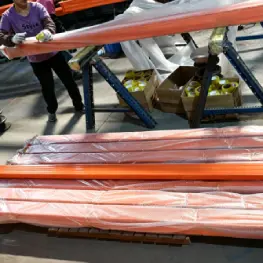
Protective corner wrapping and steel strapping for containerized shipping.

Industry Horizon (2025–2030)

Strategic Procurement & Technological Evolution Trends

Industrial supply chain directors are no longer purchasing static steel racks in isolation. Future-proof double deep systems require structural agility to interface with robotics, smart sensors, and fluctuating ESG energy benchmarks.

Autonomous Reach AGVs & AMRs

The global shortage of certified double-reach forklift drivers is accelerating adoption of automated guided reach trucks (AGVs). Modern double deep racking now integrates ground magnetic tracks, optical retro-reflective targets on uprights, and laser deflection sensors on bottom beams, ensuring automated machines seat pallets at depth with millimeter precision.

IoT Structural Strain Telemetry

Smart warehouses are incorporating piezoelectric strain gauges and MEMS accelerometers into critical double deep load-bearing uprights. These nodes continuously stream vibration, impact, and micro-deflection data to warehouse management systems (WMS), alerting facilities management the moment an accidental forklift mast strike exceeds yield thresholds.

Nearshoring & Knockdown Packaging

International ocean freight volatility has prioritized volumetric packaging density. HEDA engineers have redesigned double deep upright bracing profiles into interlocking knockdown assemblies. This design maximizes 40HQ container cube utilization to over 92%, substantially reducing shipping freight costs per pallet position to global ports.

Net-Zero Micro-Climatic Thermal Bays

Energy-intensive cold stores are utilizing computational fluid dynamics (CFD) modeling on double deep bay profiles. By specifying specialized ventilated wire-mesh decking instead of solid timber or steel panels, operators enhance vertical convective airflow around dual pallets, slashing compressor power consumption by up to 22%.

Engineered Deployments

Specialized Applications Across High-Velocity Sectors

From raw material buffering to regulated pharmaceutical distribution, discover how customized double deep architectures solve complex logistics bottlenecks.

Cold Storage & Blast Freezers

In facilities operating at -18°C to -30°C, structural steel risks low-temperature brittle fracture. HEDA engineers formulate high-impact ductile Q355D steel grades treated with low-temperature impact-resistant powder polymers, preventing micro-fissuring around punch slots and connection claws.

Chemical Drums & Heavy Liquids

Storing 200-liter chemical drums or IBC liquid containers creates concentrated rolling and static loads. We equip double deep bays with integrated secondary steel channel cradles, spill-retention sumps, and anti-spark galvanized grating ensuring full environmental and occupational compliance.

Automotive Components & Stamping

Auto assembly supply hubs experience severe pallet weight variation from light plastics to 2,500 kg steel engine blocks. HEDA double deep systems integrate custom-welded structural cross-ties, backstop beam fences, and aisle guide angles to protect high-tonnage storage racks against forklift mast over-travel.

Auditable Compliance

International Certifications & Structural Verification

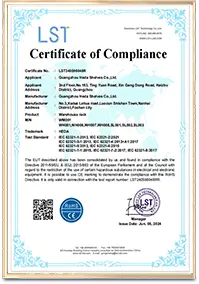
Structural safety in seismic zones and high-hazard storage requires verifiable testing documentation. Guangzhou Heda Shelves Co., Ltd. holds third-party audited credentials recognized by international building regulators, consulting engineers, and underwriting bodies worldwide.

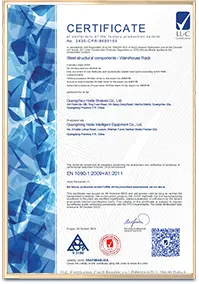
CE Mark (EN 15512:2020)

Certificate No: 2435-CPR-8605159
Audited factory production control (FPC) validating cold-formed structural steel racking tolerances, weld integrity, and cyclic deflection limits under European construction products regulations.

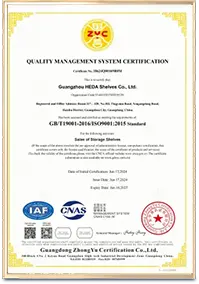
ISO 9001:2015 Quality Management

Certificate No: 18624Q00169R0M
Comprehensive quality management protocol covering raw material procurement traceability, continuous automated dimensional checks, and standardized structural testing through 2027.

RoHS & Eco-Coat Compliance

Heavy Metal Free Coatings
Certified free from lead, mercury, cadmium, and hexavalent chromium. Ensures our powder finishes are safe for direct installation inside food manufacturing and pharmaceutical logistics centers.

HEDA CE Structural Certification Document

CE Attestation (EN 15512)

HEDA ISO 9001 Quality System Certificate

ISO 9001:2015 Registered

HEDA RoHS Eco Finish Compliance

RoHS Environmental Standard

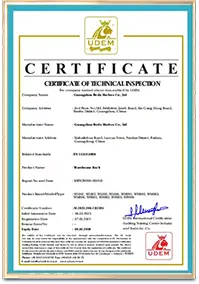
HEDA Factory Quality Audit Credential

Export Structural Verification

Technical Due Diligence

Double Deep Racking Procurement: Frequently Asked Questions

Direct answers to the critical engineering, operational, and commercial questions raised by warehouse general managers, supply chain directors, and structural consultants.

1. What is the precise pallet density increase of double deep racking compared to standard selective racking?

Double deep racking increases net pallet storage capacity by 30% to 45% compared to standard single-selective racking within the identical warehouse building footprint. Standard selective racking requires an operating aisle for every two rows of pallets. Double deep configurations position two rows back-to-back on either side of the aisle, effectively eliminating 50% of the aisles otherwise required for single-row access. This reduces the aisle floor area footprint from ~60% down to approximately 35%–40%, dedicating substantially more cubic volume to active storage.

2. What specific forklift equipment is mandatory for double deep rack operation?

Double deep racking requires either a pantograph reach truck (a scissor-mechanism reach system) or a forklift equipped with telescopic hydraulic forks. Pantograph trucks extend the fork carriage forward into the second bay depth. Forklift capacity must be derated by the equipment manufacturer; for example, a 2,000 kg rated truck may safely handle only 1,000 kg to 1,200 kg when fully extended at heights above 7.5 meters due to the shifting load center from 600mm to 1,400mm.

3. How does double deep racking impact inventory management and pallet selectivity?

Double deep operates under 50% immediate pallet selectivity and functions on a Last-In, First-Out (LIFO) or FILO basis per individual storage lane. To retrieve the back pallet, the front pallet must first be removed and temporarily staged if it holds a different SKU. For this reason, double deep racking is ideal for operations storing 2 to 4 pallets per SKU, or for fast-turnover FMCG, cold chain food distribution, and batch-staged industrial products where entire production lots are moved together.

4. What safety accessories are recommended to prevent rear pallet dislodgement?

Because the forklift operator's line of sight is partially obscured when placing the rear pallet at higher elevations, HEDA strongly recommends three structural safety features: heavy-duty pallet support bars (2 to 3 per pallet position) to prevent bottom skid fracture, rear backstop beams or offset pallet safety stops to establish a positive physical stop, and structural floor guide rails or inductive wire guidance inside working aisles to minimize mast sway and eliminate rack upright collisions.

5. Can our existing single selective racking system be reconfigured into double deep?

Yes, provided the structural uprights have sufficient load-bearing capacity to support the higher total tonnage. Conversion involves repositioning existing frame rows together using specialized 200mm to 300mm row spacers, adjusting beam heights, and installing pallet support bars. HEDA engineers can evaluate your current beam profile drawings and concrete slab thickness to determine if re-profiling or reinforcement is required.

6. What data does Guangzhou Heda Shelves require to generate a free 2D/3D CAD layout?

To provide a fully calculated engineering design within 24 hours, our design team requires: (1) Warehouse architectural drawings (CAD or PDF) showing column grids, building perimeter, and dock locations; (2) Building clear height to the lowest overhead obstruction or sprinkler head; (3) Pallet specifications (width, depth, overall height including cargo, and maximum gross weight); (4) Model and specification sheet of your planned double-reach forklift; and (5) Specific environmental factors such as operating temperature or seismic design parameters.

7. How does HEDA guarantee anti-corrosion protection for maritime shipping and humid warehouses?

All HEDA racking components pass through an automated 9-stage pre-treatment line featuring chemical pickling to remove microscopic surface scale followed by zinc-iron phosphating to seal the steel matrix. We apply electrostatic thermosetting powder coatings baked at 200°C to achieve a resilient 70–90µm surface layer. For open port sheds, fertilizer distribution sites, or severe coastal environments, we provide hot-dip galvanized steel components with coating thickness exceeding 65µm under ISO 1461 standards.

8. What are typical factory lead times and shipping container load efficiencies from Guangzhou?

Standard manufacturing lead time is 15 to 25 business days depending on total project tonnage. We package frames, beams, and accessories using precision wooden dunnage, protective plastic wrap, and high-tensile steel strapping engineered to maximize 20GP and 40HQ container cube utilization. A standard 40HQ container typically accommodates 22 to 25 tons of racking components, lowering your landed freight cost per pallet position.

9. Does HEDA Shelves offer on-site installation guidance for international projects?

Yes. Every overseas shipment is accompanied by complete, numbered assembly drawings, 3D exploded diagrams, component cross-reference packing lists, and step-by-step video installation manuals. For major warehouse installations, HEDA can dispatch senior installation engineers on-site to direct local rigging teams, verify vertical plumb tolerances, and sign off on anchor torque validation.

10. What structural warranty and load capacity guarantees accompany HEDA racking systems?

HEDA double deep racking systems come with a standard 5 to 10-year structural warranty against steel fracture, weld shear, and manufacturing defects when loaded according to engineered specifications. We issue stamped load capacity plaques to be affixed to each bay aisle, specifying maximum beam pair loads and bay capacity limits in full compliance with EN 15635 and OSHA warehouse safety guidelines.

Request Your Free Double Deep Engineering Layout & Quotation

Collaborate directly with Guangzhou Heda Shelves Co., Ltd.'s structural design engineers. We will analyze your warehouse drawings, floor slab load criteria, and forklift fleet to deliver a compliant, cost-optimized CAD layout and formal bill of materials within 24 hours.