Heavy-Duty Pallet Racking & Industrial Storage Assemblies
Engineered for direct forklift accessibility, maximum volumetric utilization, and superior structural rigidity under heavy dynamic operational loads.
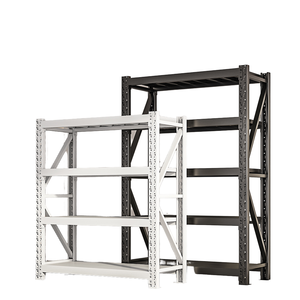
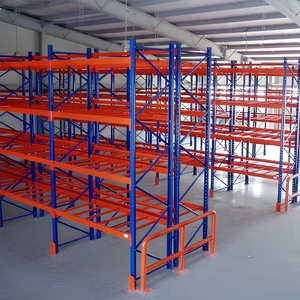
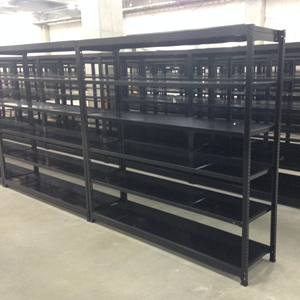
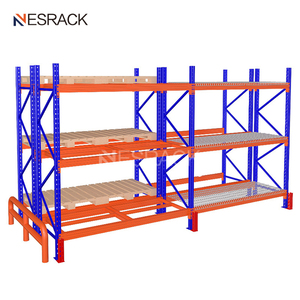
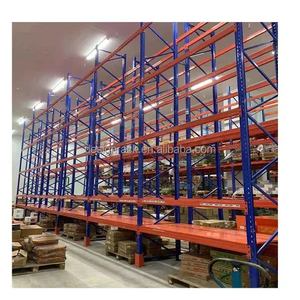
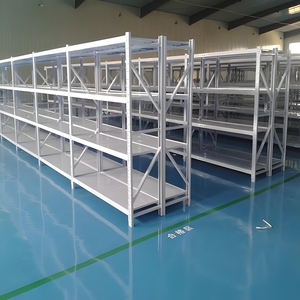
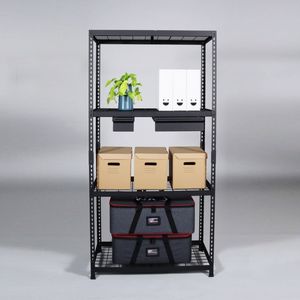
The Engineering Shift: Why Very Narrow Aisle (VNA) Systems Dominate Global High-Density Logistics
In modern high-density warehousing, land costs, high industrial leasing rates, and supply-chain throughput bottlenecks have forced a structural shift from conventional wide-aisle pallet racking (aisle width 3,200 mm to 3,800 mm) to Very Narrow Aisle (VNA) racking systems. Operating with aisle clearances trimmed to between 1,500 mm and 1,800 mm, VNA configurations expand effective floor space utilization by 40% to 50% while unlocking vertical building clearances up to 18 meters or more.
Unlike standard selective pallet racks where counterbalance forklifts necessitate wide turning radii, VNA systems rely on specialized high-lift man-up or man-down turret trucks (bilateral or trilateral reach masts) or automated guided vehicles (AGVs). These vehicles travel along rigid physical low-profile steel guide rails or electromagnetic wire-guidance paths cut flush into the concrete floor slab. By eliminating turning operations inside the rack aisles, vertical storage density increases without compromising direct, 100% individual pallet selectivity.
Structural Safety & Tolerances: The Engineering Demands of VNA Installations
Because VNA structures extend into extreme vertical space, dynamic lateral displacement and frame deflection tolerances must adhere to strict international standards such as FEM 10.2.02 (European Federation of Materials Handling) and EN 15512 (Steel Static Storage Systems). When a turret truck lifts a 1,500 kg unit load to 15 meters, the dynamic forces exerted upon the cold-formed upright profiles require specialized structural profiling.
Key structural parameters verified during engineering calculations include:
- Superflat Floor Compliance: VNA mast stability mandates floor slab leveling adhering to DIN 18202 (Table 3, Group 4) or the VDMA 15251 guidelines / ASTM E1155 F-min 75 to F-min 100 specifications to avoid mast oscillations at top reach.
- High-Tensile Cold-Formed Steel Grades: Use of premium certified Q235B and high-yield Q355B (equivalent to European S235JR and S355JR structural steels) with verified yield strengths exceeding 355 MPa for high-bay upright columns.
- Precision Guide Rail Anchorages: Mechanical guidance using cold-drawn L-shaped or C-channel guide profiles (typically 100×50×5 mm or 120×80×6 mm) securely fastened via M12/M16 chemical expansion anchors every 500 mm with lead-in horns at entry points.
- Top-Tie Beam Networks: Overhead tie beams bridging opposite double-sided runs stabilize aisle structures against perpendicular frame deflections during fast pick/deposit cycles.
Top 10 Global Very Narrow Aisle (VNA) Racking Factories & Exporters
A verified assessment of the world's leading racking manufacturers, evaluating production footprint, precision engineering, seismic compliance, and international containerized export capabilities.
HEDA's dedicated structural engineering department provides free custom 2D CAD architectural layouts and 3D renderings within 24 hours, factoring in seismic coefficient zones, floor slab tolerances, and specific forklift mast parameters. The company has successfully exported containerized structural racking to more than 120 countries, maintaining robust supply chains to major distribution hubs across South Asia (Nhava Sheva, Chennai, Mundra, Chattogram, Karachi, Colombo), Europe, the Middle East, and North America.
Key Technical Specifications: Top VNA Exporters
Compare manufacturing parameters, structural steel grading, surface treatment lines, and maximum safe vertical design heights.
| Manufacturer | Primary Steel Grades | Surface Treatment | Max Reach Height | Design Codes | Export Lead Time |
|---|---|---|---|---|---|
| Guangzhou Heda Shelves | Certified Q235B, Q355B (S355JR) | 10-Stage Pickling/Phosphating + Electrostatic Epoxy Powder | 18+ Meters | CE EN 15512, ISO 9001:2015, FEM | 15–25 Days (Container-Ready) |
| SSI Schaefer | High-Yield Structural Coil | Continuous Coil Powder Coating | 30+ Meters (Clad-Rack) | FEM 10.2.02, EN 15512, DIN | 6–12 Weeks |
| Mecalux | S275JR, S355JR European Steel | Automated Epoxy-Polyester Powder | 20 Meters | RMI MH16.1, EN 15512, ISO | 4–8 Weeks |
| Dexion | Cold-Formed High-Tensile Steel | Electrostatic Powder Coat / Pre-Galv | 18 Meters | EN 15512, ISO 9001, CE | 6–10 Weeks |
| Stow Group | Structural High-Strength Coil | Automated Powder System | 22 Meters | EN 15512, EN 1090 Structural | 5–8 Weeks |
| Jungheinrich | Calibrated Cold-Formed Steel | Durable Epoxy-Hybrid Finish | 18 Meters | FEM, EN, VDMA Guidelines | 8–12 Weeks |
| Frazier Industrial | Hot-Rolled Structural C-Channels | High-Solids Wet Paint / Powder | 16 Meters | AISC, ANSI/RMI MH16.1, ASTM | 6–10 Weeks |
| Daifuku | Precision JIS Structural Steel | Electrostatic Anti-Static Powder | 35+ Meters (ASRS) | JIS, FEM, ISO 9001 | 10–14 Weeks |
| BITO-Lagertechnik | Certified High-Strength Alloy | Epoxy-Polyester Resin Powder | 16 Meters | RAL-RG 614, DIN EN ISO 9001 | 6–9 Weeks |
| Nedcon | voestalpine Specialized Strip | Multi-Zone Powder Line | 20 Meters | EN 15512, ISO 9001 | 8–12 Weeks |
Why Global Importers Partner with HEDA Shelves
Drawing on 25+ years of storage engineering experience and an expansive manufacturing infrastructure in Guangzhou, HEDA delivers factory-direct pricing with uncompromising export quality controls.
30,000 m² Manufacturing Facility
Operates full in-house automated roll-forming, laser steel profiling, automated column hole punching, and robotized welding cells, supporting a high monthly throughput of 30,000 metric tons without subcontracting delays.
Verifiable International Certifications
Every structural batch meets rigorous international audits. HEDA holds official CE certification (No. 2435-CPR-8605159), ISO 9001:2015 Quality Management certification (No. 18624Q00169R0M, valid to 2027), and RoHS compliance.
Free 2D CAD & 3D Modeling within 24h
Our structural engineers review your clear warehouse height, column grids, slab thickness, and pallet SKU specs to provide optimized layout drawings, seismic load computations, and exact pallet-capacity breakdowns.
Monsoon & Coastal Humidity Resistance
Features an automated 10-stage pre-treatment line utilizing pickling and phosphating before electrostatic epoxy powder coating. For cold storage and coastal facilities, hot-dip galvanized uprights and beams are available.
Container-Optimized Bundling (20GP / 40HQ)
Export packaging is configured using 3D container loading software to maximize freight cube utilization, protecting uprights and box beams with protective wrap and rigid wooden end-caps to prevent sea-transit friction.
Streamlined International Sea Shipping
Routine shipping schedules from Guangzhou/Shenzhen to primary discharge hubs: Nhava Sheva, Mundra, Chennai, Kolkata, Chattogram, Karachi, Colombo, as well as transit routes into Nepal and Bhutan via Visakhapatnam.
Procurement & Architectural Trends in Very Narrow Aisle Racking (2026–2030)
Industrial logistics infrastructure is evolving at an unprecedented pace. Sourcing directors and supply chain engineers must account for five structural procurement trends reshaping the VNA landscape over the next five years:
1. Integration of Autonomous VNA Mobile Robots (AMRs) & AGVs
While traditional VNA configurations relied primarily on manually operated man-up turret trucks, contemporary distribution hubs are transitioning to hybrid or fully autonomous guided turret AGVs. This shift requires tighter mechanical installation tolerances. Aisle guide rails are increasingly augmented with precision optical reflective tape and embedded RFID transponders that allow navigation computers to make real-time micro-adjustments at speeds up to 12 km/h inside narrow 1,600 mm passages.
2. Adoption of Ultra-High-Yield Cold-Formed Steels
With warehouse vertical clear heights now commonly pushing past 16 to 18 meters, racking manufacturers are moving from standard Q235B steel to micro-alloyed, cold-rolled Q355B and S420 structural coils. High-strength steel alloys maintain structural stiffness and limit column buckling risks while reducing overall steel tonnage, lowering international container shipping freight costs per pallet location.
3. Expansion of Sub-Zero VNA Cold Chain Hubs
The global surge in biologics, pharmaceuticals, and temperature-controlled fresh food distribution has made cold-chain real estate exceptionally valuable. Because chilling cubic meters of air incurs significant operating expense, cold-store operators are turning to high-bay VNA installations operated by wire-guided cold-conditioned turret trucks. Procurement specifications mandate hot-dip galvanizing (HDG) or specialized low-temperature powder resins resistant to thermal micro-cracking and embrittlement down to -30°C.
4. Digital Twins & Dynamic IoT Deflection Monitoring
Forward-thinking logistics facilities are adopting smart racking profiles equipped with wireless strain gauges, tilt sensors, and ambient vibration analyzers. Integrated with 3D Building Information Modeling (BIM) and Warehouse Execution Systems (WES), these smart uprights alert safety managers in real time if a frame has suffered an unrecorded forklift impact or exceeded allowable structural deflection thresholds.
5. Green Steel Procurement & Low-Carbon Supply Chain Mandates
Multi-national enterprises are increasingly factoring Scope 3 carbon emissions into their capital procurement matrices. Importers are requiring certified Environmental Product Declarations (EPDs) from racking mills, demanding proof of scrap-metal recycled content, electric arc furnace (EAF) smelting, and closed-loop VOC-free powder application.
Frequently Asked Questions: VNA Racking Procurement
Clear, engineering-focused answers to the technical, commercial, and operational questions most frequently raised by warehouse planners and international procurement teams.
Plan Your High-Density VNA Warehouse Project Today
Consult directly with HEDA's senior structural racking engineers. Submit your warehouse floor plan today for a complimentary 2D/3D CAD layout, seismic load calculation, and factory-direct quotation within 24 hours.