Engineered Heavy-Duty Pallet Racking Units
Explore eight certified, structural steel pallet storage systems engineered for extreme industrial capacities, automated throughput, and harsh atmospheric environments.
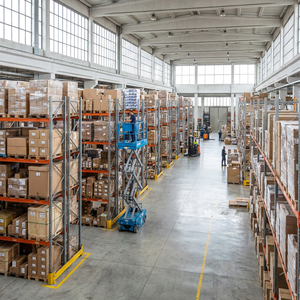
Complete Industrial Warehouse Storage Solution Heavy Duty Steel Pallet Racking System
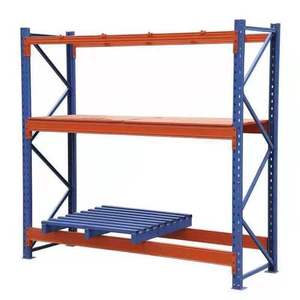
Adjustable Pallet Rack Warehouse Storage Heavy Duty Shelving Pallets Racking
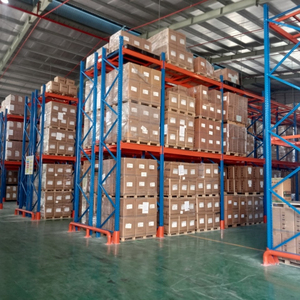
Selective Pallet Racking Designed for Cold Storage Applications
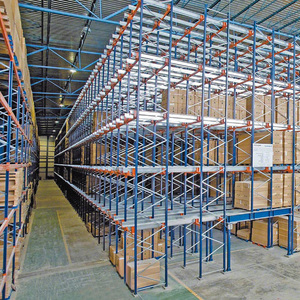
High Density Radio Shuttle Automated Pallet Storage Racking System
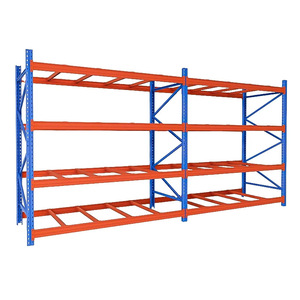
Safe & Durable Industrial Cold Rolled Steel Pallet Rack Shelves
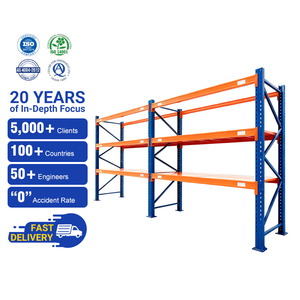
Customized Heavy Duty Industrial Storage Metal Stacking Units Racking
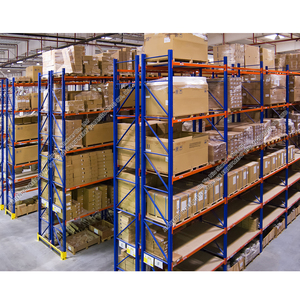
Industrial Pallet Storage 1000–3000KG Load Distribution Center Racks
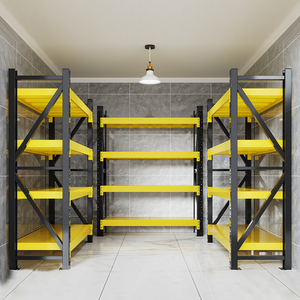
Ultra-Heavy Steel Stacking Shelf Units for Tire & Bulk Industrial Storage
Top 10 Pallet Storage Unit Manufacturers & Suppliers
A rigorous comparative analysis of Tier-1 global racking corporations and factory-direct manufacturing leaders that shape modern automated and conventional intralogistics.
Guangzhou Heda Shelves Co., Ltd.
Founded in 2001, HEDA Shelves is an internationally acclaimed manufacturer with an expansive 30,000 m² smart production base and a 30,000-ton monthly capacity. Renowned for zero-gap OEM/ODM customization, end-to-end cold-rolled manufacturing, and certified structural performance across global distribution hubs.
- Accreditations: CE (2435-CPR-8605159), ISO 9001:2015, RoHS
- Core Products: Selective, Radio Shuttle, Double Deep, Mezzanine
- Engineering Edge: Free comprehensive 3D BIM/CAD layout within 24h
SSI Schaefer Group
One of the world's largest warehouse logistics providers, SSI Schaefer delivers fully automated pallet rack-supported buildings (clad-rack structures), high-bay storage facilities, and integrated crane systems engineered for ultra-large automated distribution centres.
- Core Strengths: High-bay AS/RS clad-rack complexes, proprietary software
- Best Suited For: Mega mega-tier logistics centres with CAPEX exceeding $5M
Daifuku Co., Ltd.
A benchmark titan in material handling automation, Daifuku specializes in extreme-density automated stacker crane storage units, cleanroom automated pallet storage for electronics, and integrated supply chain systems across APAC, North America, and Europe.
- Core Strengths: Precision robotics, high-speed AS/RS pallet transfer
- Industry Focus: Semiconductor, pharmaceutical, automotive assembly
Mecalux, S.A.
Operating widespread manufacturing plants across Europe and the Americas, Mecalux is prominent for both conventional pallet storage (selective, drive-in, live flow) and pallet shuttle systems, backed by its proprietary Easy WMS software suite.
- Core Strengths: Comprehensive product catalog, software integration
- Compliance: Rigorous adherence to European EN standards
Stow Group
Stow Group stands out for precision cold-formed engineering, standard industrial pallet racking, and its automated brand "stow Robotics" (Movisat shuttles and e.stow 2D automated carriers), commanding a dominant presence across European logistics hubs.
- Core Strengths: High profile rigidity, deep lane shuttle density
- Application: Heavy automotive parts, third-party logistics (3PL)
Jungheinrich AG
Known globally for warehousing trucks and intralogistics systems, Jungheinrich engineers cohesive racking infrastructures optimized precisely for reach trucks, very narrow aisle (VNA) turrets, and automated guided vehicles (AGVs).
- Core Strengths: Tight synchronization between truck masts and racking
- Focus: VNA high-bay racking systems with inductive wire guidance
Interlake Mecalux, Inc.
The primary manufacturing pillar of the North American logistics market, supplying roll-formed and structural steel teardrop pallet racking systems tailored specifically to RMI (Rack Manufacturers Institute) and ANSI MH16.1 standards.
- Core Strengths: Universal teardrop profile compatibility, RMI certification
- Application: High-velocity retail distribution, e-commerce fulfilment
Frazier Industrial Company
Frazier is the recognized pioneer of 100% structural steel (hot-rolled channel) pallet storage racks. Known for extreme resistance against forklift impact collisions in punishing environments such as refrigerated and heavy industrial distribution.
- Core Strengths: Hot-rolled structural channel uprights, high abuse tolerance
- Application: Heavy beverage plants, frozen food warehouses
Dexion (Gonvarri Material Handling)
With roots tracing back to the invention of slotted-angle framing in 1947, Dexion (part of Gonvarri Material Handling) provides highly engineered adjustable pallet racking, mobile pallet racking (MOVO), and multi-tier platforms throughout Europe and Australasia.
- Core Strengths: MOVO heavy mobile racking eliminating idle aisles
- Application: Cold storage facilities, archive depots, FMCG hubs
Dematic (KION Group)
Dematic designs and installs intelligent automated pallet storage solutions, high-rate sortation architectures, and fully integrated AS/RS rack matrixes driven by high-speed software algorithms for omnichannel retailers and global beverage conglomerates.
- Core Strengths: End-to-end automated supply chain integration
- Industry Focus: Massive e-commerce distribution and pharmaceutical hubs
Pallet Storage Unit Technology Comparison
Shortlist the appropriate structural format based on your operational SKU profile, required pallet accessibility, floor footprint utilization, and material handling fleet.
| Storage System Type | Direct Selectivity | Volumetric Density | Inventory Rotation | Deflection Limit (FEM / RMI) | Procurement Cost / Pallet |
|---|---|---|---|---|---|
| Selective Pallet Racking | 100% (Instant) | Moderate (35–45%) | FIFO or LIFO | L / 200 (Span/200) | Economy Baseline |
| Double Deep Racking | 50% Direct Access | High (55–65%) | LIFO | L / 200 (Span/200) | Economy to Mid |
| Drive-In / Drive-Through | Low (Per Lane) | Very High (70–80%) | Strict LIFO (FIFO if Drive-Thru) | Cantilever Beam Rated | Mid-Level |
| Semi-Automated Radio Shuttle | Lane Dependent | Ultra-High (80–90%) | Both FIFO & LIFO Flexible | High Rigidity Rail Form | High (Fast ROI) |
| Push Back (Gravity Cart) | 2–5 Pallets / Lane | High (65–75%) | Strict LIFO | Incline Slope Dependent | Mid-High |
| Gravity Pallet Flow | Picking Face Only | Maximum (85–90%) | Strict Dynamic FIFO | Continuous Roller Deflection | High Engineering Grade |
Macro Procurement Trends & Technological Evolution
How automation convergence, cold-formed high-strength metallurgy, seismic resilience codes, and circular ESG metrics are reshaping global warehouse infrastructure investments.
Transition to High-Strength Low-Alloy Steels
Procurement departments are shifting from standard carbon Q235B steel toward cold-formed high-strength low-alloy micro-alloyed steels (such as Q355B and S355MC). By leveraging higher yield strengths, manufacturers create thinner-gauge profiles with superior moment-resisting geometry (e.g., multi-ribbed upright sections), saving up to 14% steel weight without sacrificing structural load capability, drastically cutting landed CIF container shipping costs.
Semi-Automation via 2D & 4D Radio Shuttles
Static storage lanes are rapidly being retrofitted or replaced with semi-automated radio shuttle tracks. Driven by labor shortages and escalating fork truck operator wages, warehouses are opting for deep-lane pallet shuttle carriers running on precision-punched galvanized guide rails. These units reduce forklift entry into aisles by 95%, virtually eradicating mast collision damage to uprights and boosting throughput velocity by over 40%.
Rigorous Seismic Engineering (EN 15512 & RMI)
Warehouse safety directives now demand advanced finite-element analysis (FEA) and dynamic modal seismic calculations. In high seismic zones across the Pacific Rim, Mediterranean, and Latin America, base plates are expanded, heavy-gauge floor anchors are chemically bonded, and cross-bay portal bracing is engineered to dissipate ground accelerations, preventing progressive collapse under full dynamic loads.
Corrosion Mitigation in Cold Chain & Coastal Zones
Accelerating global cold-chain investment for perishables and biopharmaceuticals has exposed the limits of standard paint finishes. Condensation cycles cause micro-cracking and rust. Modern procurement specifications dictate hot-dip galvanizing (HDG) or electrostatic powder coating preceded by automated multi-stage pickling, zinc-phosphating, and nano-ceramic passivation to endure 1,000+ hours of continuous salt spray testing.
Digital Twins, IoT Impact Sensors, & Smart Racking
The convergence of Industry 4.0 and storage structures has introduced embedded fiber-optic strain gauges and tri-axial wireless impact sensors mounted on base plates. Facility managers receive automated alerts on warehouse management systems (WMS) when a forklift collision exceeds structural deflection tolerances, eliminating hidden structural fatigue and preventing unexpected rack collapses.
Circular Supply Chains & Green Steel Audits
Multinational procurement tenders increasingly require documented Environmental Product Declarations (EPDs). Specifying pallet storage manufactured with scrap-based electric arc furnace (EAF) steel and zero-VOC powder coating allows enterprise operators to meet stringent Scope 3 decarbonization commitments while ensuring complete end-of-life steel recyclability.
Why Enterprise Buyers Partner with HEDA Shelves
Combining 25+ years of production heritage, an advanced 30,000 m² factory footprint in Guangzhou, and certified metallurgical precision to deliver tailored warehouse storage units globally.
The 10-Stage High-Precision Manufacturing Flow
Every upright, beam, cross-tie, and baseplate passes through a stringently audited in-house fabrication protocol.
Certified Raw Coils
Mill-certified primary steel coils tested for yield, elongation, and surface integrity.
Precision Slitting
High-tolerance longitudinal slitting to control exact strip dimensions for forming.
CNC Column Punching
Multi-ton automated progressive dies punch exact 50mm/75mm hole pitches with zero drift.
Cold Bending Forming
Continuous roll forming stations create multi-bend omega structural profiles.
Profile Roll Forming
Precision tooling shapes seamless double-C interlocking box beams for high moments.
Laser Edge Polishing
Burr removal and automated edge finishing prevent localized stress fractures.
Robotic MIG Welding
Multi-claw beam end connectors are robotically welded for consistent weld penetration.
Pickling & Phosphating
Automated immersion degreasing, acid descaling, and phosphating create bonding layers.
Electrostatic Coating
Automated powder spray booths apply 60–90µm cures at 200°C for superior impact resilience.
QC Bundle Packing
Laser dimension audits, ultrasonic weld checks, and container-optimized steel strapping.
Frequently Asked Questions on Pallet Storage Procurement
Technical, logistical, and structural answers to help warehouse operators and procurement directors mitigate risk and maximize asset longevity.