Engineered Pallet Shuttle Systems & Configurations
Precision-engineered automated warehouse shuttle solutions manufactured from certified high-tensile structural steel, matching strict CE, ISO 9001:2015, and FEM standards.
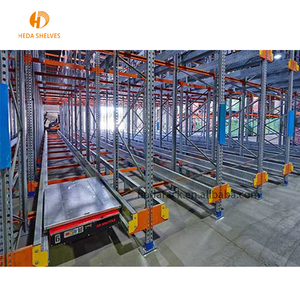
OEM High-Tech Radio Shuttle Pallet Rack Industrial Steel Automatic Warehouse Racking System For Storage
Send an Inquiry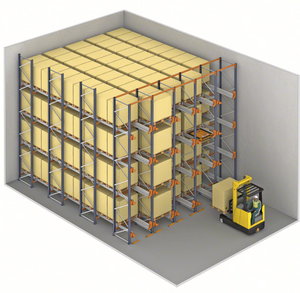
Intelligent Pallet Rack System 4 Way Shuttle Pallet Rack Automated Storage System Shuttle Rack
Send an Inquiry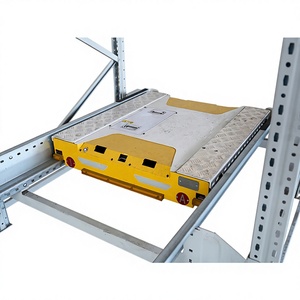
Pallet Shuttle Racking System Warehouse Rack Automatic 4-Way Shuttle Racking Four Way Cold Storage Shuttle Rack
Send an Inquiry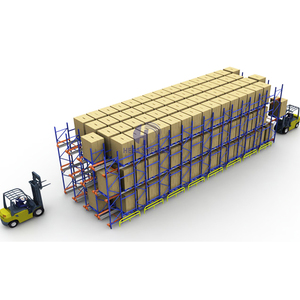
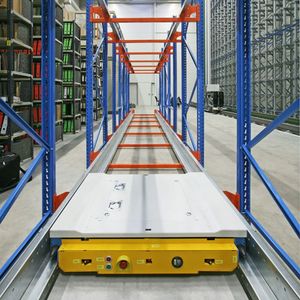
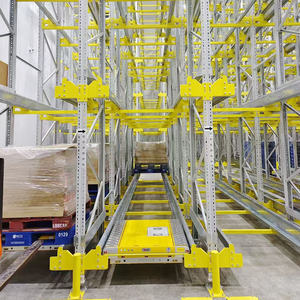
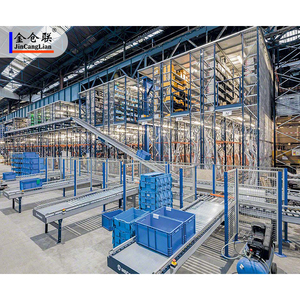
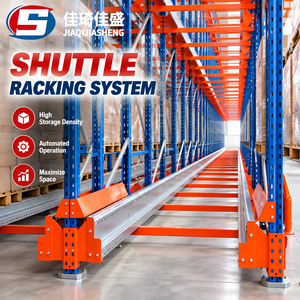
OEM ODM Custom Pallet Lane Design Project Planning Service Space Maximizing Intelligent Shuttle Rack for Multi-batch Goods Stock
Send an InquiryComprehensive Industry Whitepaper: Evaluating Top Pallet Shuttle Racking Manufacturers
Pallet shuttle racking systems represent the modern vanguard of high-density automated material handling. Unlike conventional static systems (such as selective pallet racks or drive-in racks), a motorized pallet shuttle travels autonomously along sub-level rails inside deep storage tunnels. By utilizing independently battery-driven shuttle carts controlled via high-frequency industrial radio or central Warehouse Management Systems (WMS/WCS), these systems eliminate the operational requirement for forklifts to enter storage lanes. Consequently, enterprise distribution centers, cold chain operators, and fast-moving consumer goods (FMCG) suppliers experience an immediate, measurable elevation in volumetric footprint utilization, worker safety, and SKU turnover throughput.
Key Engineering Metric: Modern radio and 4-way pallet shuttle systems routinely recover up to 85% of inactive warehouse cube space, while reducing forklift aisle navigation travel times by 40% to 65% when compared with conventional reach truck layouts.
Architectural Breakdown: Radio Shuttle (2-Way) vs. Fully Automated 4-Way Shuttle Systems
When selecting a qualified global manufacturer or primary OEM factory, technical procurement directors must determine whether a semi-automated 2-way radio shuttle or a continuous 4-way automated multi-directional shuttle platform fulfills their SKU dispatch matrix:
| Evaluation Parameter | Semi-Automated 2-Way Radio Shuttle | Intelligent 4-Way Shuttle ASRS | Conventional Drive-In Racks |
|---|---|---|---|
| Cube Utilization | 80% – 85% | 88% – 95% | 60% – 65% |
| Cart Mobility | Longitudinal (X-Axis depth only) | Full Matrix (X, Y horizontal + Z elevator) | None (Forklift enters lane) |
| Pallet Access Principle | Configurable FIFO or LIFO | Strict Dynamic FIFO & LIFO Sorting | Primarily LIFO |
| Operator Safety Profile | High (No forklift entering bays) | Unmanned (Total dark-warehouse capability) | Elevated Risk (Rack-upright collisions) |
| Cold Store Suitability (-30°C) | Standard Lithium/Heated Sensor Packs | Ultra-Low Temp Solid-State Busbars | Restricted by operator exposure |
| CapEx & Payback Period | Moderate (12 – 18 Months ROI) | Higher Capital (24 – 36 Months ROI) | Low Initial (High ongoing damage costs) |
Future Procurement Trends: Where Automated High-Density Storage Is Moving
Enterprise procurement methodologies for heavy-duty storage equipment are undergoing significant structural transformation. As industrial logistics centers face unprecedented pressures from real-estate inflation, energy consumption audits, and labor shortages, procurement strategies over the next five years will be shaped by the following trajectories:
Transition to Fast-Charging Lithium Titanate (LTO)
Traditional lead-acid and standard ternary lithium battery units are systematically being phased out. Enterprise procurement contracts now specify LTO cells capable of achieving an 80% charge in 15–20 minutes without battery removal, allowing 24/7 continuous warehouse operations with minimal buffer units.
Native IoT & WCS Telemetry Integration
Specifiers no longer accept standalone RF-remote shuttles. Production contracts mandate open-API architectures (OPC UA, MQTT, and RESTful protocols) directly communicating with warehouse management platforms for live telemetry, bearing thermal mapping, and predictive battery cycle analytics.
Modular Cold Chain Structural Engineering
With global cold chain logistics expanding, high-density shuttle racking is becoming the industry standard. Systems require structural steel formulations that withstand embrittlement down to -30°C, paired with non-condensing sensor enclosures and low-temperature polyurethane-coated running wheels.
Unified Hybrid Staging (Pallet + Carton Pick)
Warehouses increasingly integrate pallet-level deep lanes above with mezzanine or flow-rack manual order picking zones underneath. This consolidated approach maximizes floor-to-ceiling vertical clear heights without requiring distinct distribution facilities.
Standardized Seismic & Dynamic Load Validation
Due to the dynamic harmonic resonance introduced when multiple shuttle carts accelerate synchronously within racking channels, tier-one manufacturers must provide FEA structural deflection simulations confirming compliance with EN 15512 and RMI standards under full seismic conditions.
Lifecycle-Guaranteed OEM Support Contracts
Equipment buyers are pivoting from component-only purchasing to turnkey SLAs. Leading manufacturing agreements specify scheduled rail alignment audits, continuous shuttle firmware updates, and local spare parts consignments to eliminate costly downtime.
Manufacturing Excellence & Engineering Pedigree
Direct from our 30,000 m² modern manufacturing complex in Guangzhou, China. Over two decades of verified engineering trust for international supply chains.
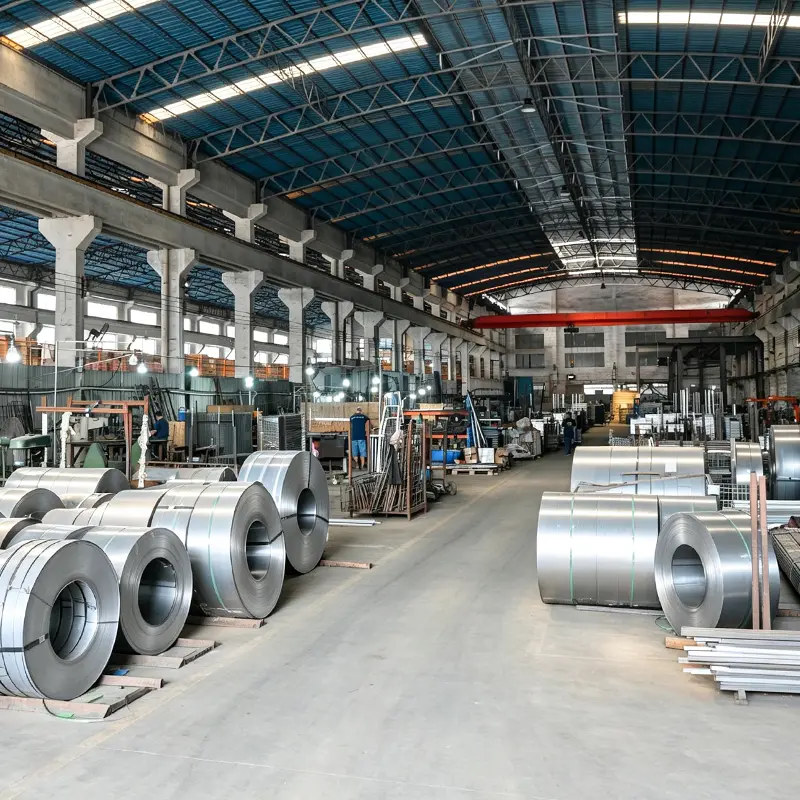
25+ Years Racking Expertise
Established in 2001, Guangzhou Heda Shelves Co., Ltd. has delivered over 10,000 successful warehousing and racking projects worldwide.
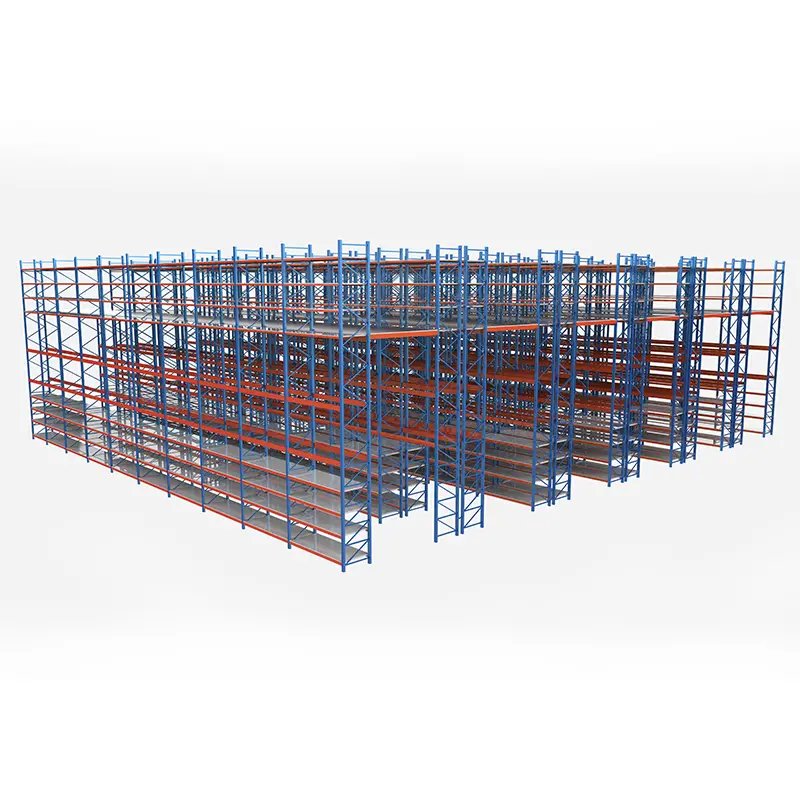
Free 3D & CAD Engineering
Our dedicated engineering group provides complete layout schematics, beam load deflection calculations, and 3D virtual walkthroughs within 24 hours.
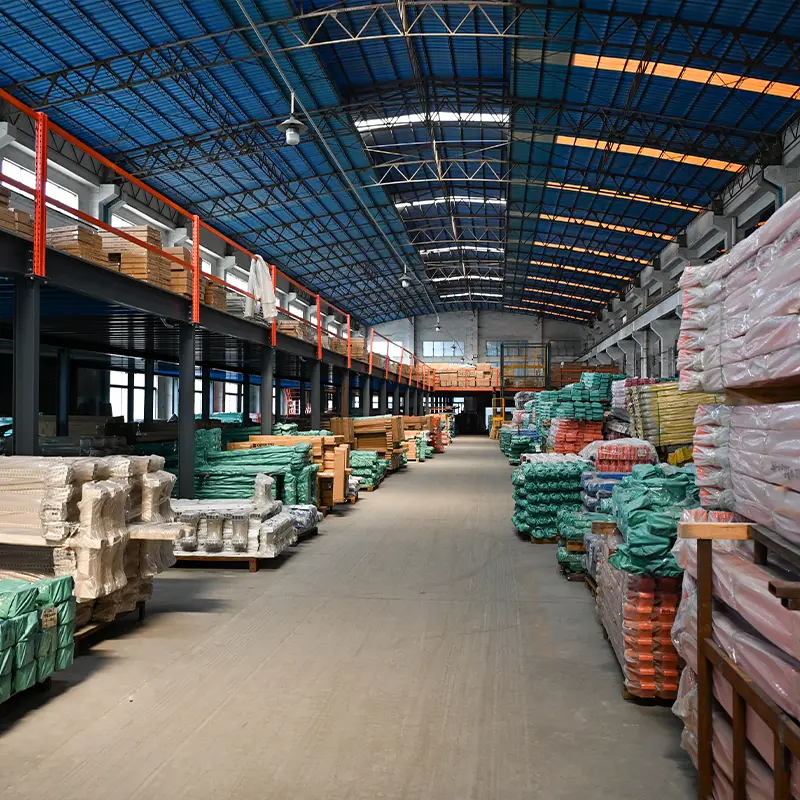
Verified Quality Standards
CE Certification (No. 2435-CPR-8605159) and ISO 9001:2015 accredited. Every batch undergoes ultrasonic weld and tensile testing prior to dispatch.
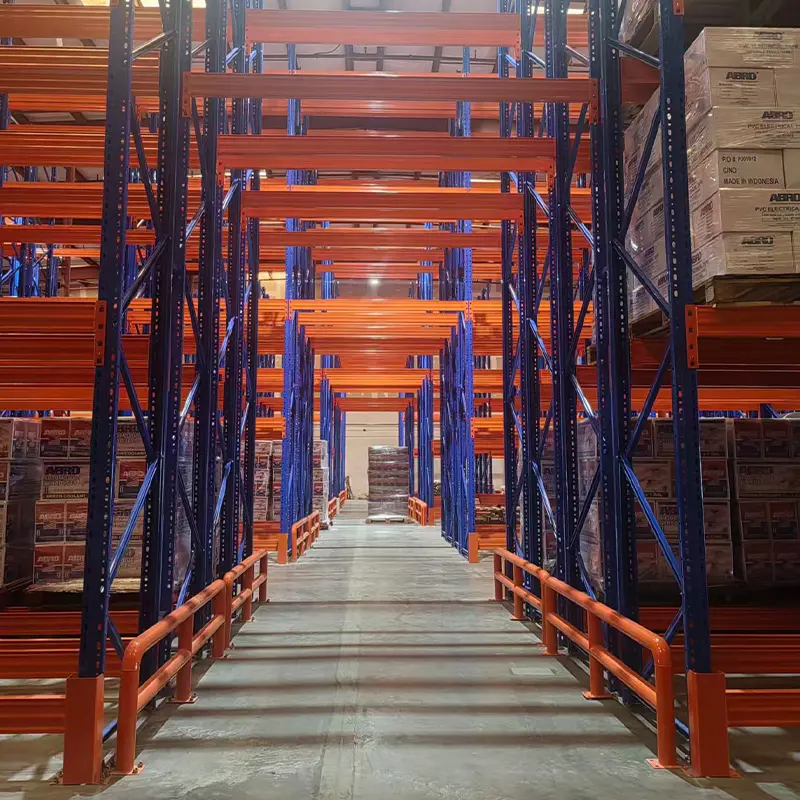
Full OEM/ODM Customization
Tailored lane depths, non-standard pallet configurations, custom powder colors, and integrated multi-tier mezzanine platforms engineered to exact project specifications.
Integrated 10-Stage Manufacturing Workflow
Precision is non-negotiable in pallet shuttle engineering. Because shuttles travel along running rails at speeds up to 1.2 m/s, rail tolerance deviations of even 1.5mm can trigger sensor interlocks or premature cart wheel degradation. Our ISO-managed Guangzhou plant enforces rigorous, in-line quality controls across all ten fabrication stages:
Raw Material Verification
Direct procurement of high-tensile structural steel coils (Q235B, Q355B). Mill test certificates (MTC) validated for tensile yield, chemical composition, and thickness tolerances.
CNC Slitting & Cutting
High-speed automated CNC decoiling and precision shearing guarantee profile blanks with zero edge-burr formation and micrometer-controlled strip widths.
Automated Pitch Punching
Heavy tonnage multi-die punching stations form precision pitch apertures (50mm/75mm) across entire upright lengths in a continuous, high-speed single pass.
Continuous Roll Forming
Dedicated roll-forming production lines with 18 to 24 progressive roll stages ensure optimal cold-work hardening and structural integrity for uprights and shuttle rail channels.
Robotic Laser & MIG Welding
Beam connectors and structural sub-plates are assembled via automated robotic welders, guaranteeing consistent penetration, uniform bead width, and exceptional cyclic fatigue resistance.
Surface Deburring & Polishing
Every profile undergoes mechanical deburring and shot blasting to eliminate surface impurities, micro-scale mill scale, and welding spatter before chemical washing.
Chemical Pickling & Phosphating
Comprehensive immersion pretreatment lines clean, acid-pickle, and phosphate steel components. This chemical substrate conversion ensures superior paint bond adhesion and rust protection.
Electrostatic Powder Coating
Automated Swiss Gema powder application guns deposit premium thermosetting polyester resins, delivering a resilient 70–90 micron scratch-resistant layer cured in 200°C convection ovens.
Shuttle Alignment Benchmarks
Factory-assembled test racks verify shuttle cart tracking, optical eye alignment, emergency stop tolerances, and remote telemetry handshake responsiveness prior to crating.
Pallet Shuttle Racking FAQ for Global Project Specifiers
Clear, technical explanations addressing the engineering, commissioning, and operational questions most commonly raised by warehouse architects and procurement executives.
How does a pallet shuttle rack differ mechanically from a drive-in rack?
In a drive-in rack system, the forklift driver must carefully steer the machine inside deep, narrow structural rack lanes to set down or retrieve each individual pallet, resulting in slow cycle times and frequent rack impact damage. Pallet shuttle racking places an autonomous motorized cart on specialized internal tracks within the lane. The forklift simply places the pallet onto the lane's entry point; the shuttle picks up the load and conveys it deep into the channel. This increases throughput by over 50% and protects the rack structure from forklift collisions.
Can a single shuttle cart be transferred between multiple racking levels and lanes?
Yes. In standard 2-way semi-automated configurations, standard counterbalanced or reach forklifts simply pick up the lightweight shuttle cart using their standard forks and transfer it between various levels and storage tunnels as needed. For large-scale 24/7 facilities with fast-moving inventory, multiple shuttle carts can operate simultaneously across different rack tiers, or an automated vertical lift system can transfer 4-way shuttles autonomously.
What are the critical warehouse floor slab specifications required for installation?
Because pallet shuttle racking creates high concentrated point loads beneath the base plates of its dense vertical uprights, warehouses typically require a reinforced concrete slab meeting minimum C25/C30 grade concrete specifications (minimum compressive strength of 25–30 MPa) with a depth of at least 150mm to 200mm. The floor must conform to DIN 18202 standards for surface flatness to ensure stability at higher elevations.
Can the shuttle system operate reliably in cold chain and deep-freeze environments?
Yes. Our cold chain shuttle units are engineered specifically for cold storage facilities down to -30°C. They utilize heated sensor housings to prevent frost build-up, cold-grade lithium or lithium titanate battery chemistry, specialized condensation-resistant electrical boards, and low-viscosity synthetic lubricants that remain smooth and functional in sub-zero conditions.
How are FIFO and LIFO inventory rotation strategies managed by the system?
Pallet shuttle racking adapts effortlessly to both stock management principles. For LIFO (Last-In, First-Out) operations, goods are deposited and picked from the same front face of the racking block, maximizing building space against walls. For FIFO (First-In, First-Out) operations, lanes are opened on both sides, allowing raw pallets to be loaded from the rear loading aisle while finished goods are retrieved from the opposite front face.
What international safety standards and quality certifications are maintained?
Our complete racking range meets European CE certification (Certificate No. 2435-CPR-8605159), ISO 9001:2015 quality management benchmarks, and RoHS environmental manufacturing standards. All structural load calculations strictly adhere to FEM 10.2.02 and EN 15512 specifications for static and dynamic steel storage racking.