Engineered Industrial Racking Systems
Precision-manufactured structural frames, roll-formed profiles, and custom heavy-duty storage configurations designed to handle extreme payload requirements and dynamic warehouse operations.
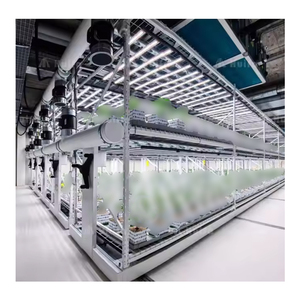
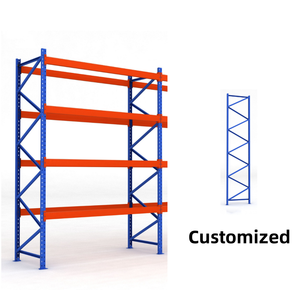
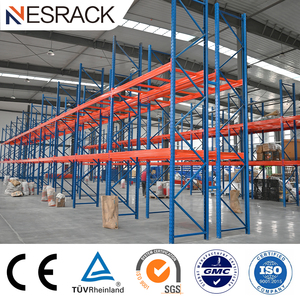
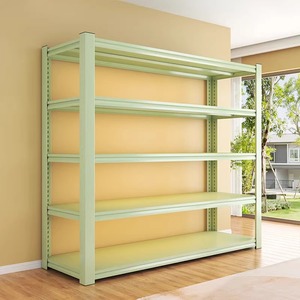
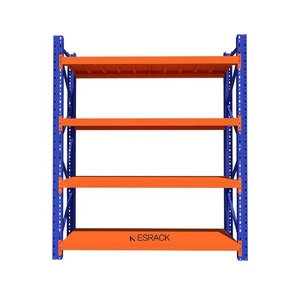
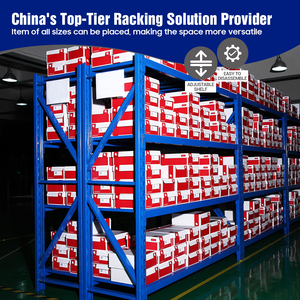
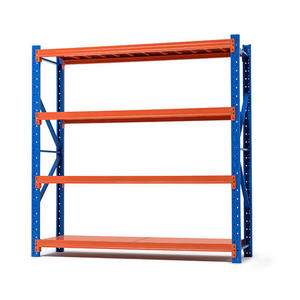
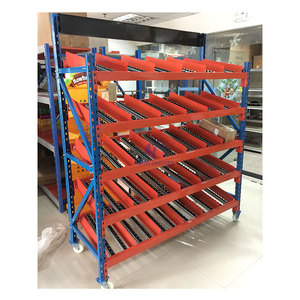
Evaluating the Global Landscape of Large Pallet Racking Suppliers
Modern distribution centers, automated material-handling nodes, and cold-chain cold stores operate under razor-thin margin profiles where structural reliability and volumetric storage density dictate overall logistical ROI. Sourcing from a tier-one large pallet racking factory requires moving beyond simple per-ton steel quotes into deep structural audits: tensile yield analysis of cold-rolled steel coils, finite element analysis (FEA) under dynamic seismic loads, surface phosphating and electrostatic epoxy powder adherence, and logistical dimensional optimization for ocean freight containers.
A high-capacity industrial rack is not merely an assembly of steel members; it represents an engineered civil structure erected indoors. Uprights and box beams must sustain dead, live, seismic, and accidental impact loads. Over two decades of supply chain data indicate that warehouses choosing verified manufacturing sources over secondary brokers experience a 63% reduction in ongoing beam deflection issues, drastically lower preventative maintenance expenditures, and full regulatory conformity with European CE EN15512, RMI (Rack Manufacturers Institute), and ISO 9001:2015 frameworks.
Structural Typology & Throughput Matrix
Analyze how varying racking topologies match your floor space, selectivity requirements, and mechanical material handling assets.
| Racking Typology | Direct Accessibility | Volumetric Density | Inventory Rotation | Optimal Operational Environments |
|---|---|---|---|---|
| Selective Pallet Racking | 100% (Instant) | Moderate (40–50%) | FIFO / Random | High-SKU 3PL facilities, retail distribution hubs, fast pick nodes |
| Drive-In / Drive-Through | Lane-Restricted | High (65–75%) | LIFO / FIFO | Cold storage facilities, seasonal agricultural storage, bulk goods |
| Radio Shuttle Automation | Automated Lane Access | Ultra-High (75–85%) | FIFO & LIFO Flexible | Refrigerated cold chains, pharmaceutical logistics, beverage bottling |
| Gravity Flow Racking | Pick-Face Pure Access | High (70–80%) | Strict FIFO | Perishable goods, food distribution, strict date-code control centers |
| Structural Steel Mezzanines | Multi-Tier Direct | Vertical Doubling | Manual / Conveyor | E-commerce sortation, parts storage, vertical assembly workfloors |
| Heavy Cantilever Racking | Open Front Linear | Optimized for Length | Open Access | Steel tubing, extrusion storage, structural timber, industrial piping |
Future Procurement Trends in Industrial Storage (2025–2030)
Global logistics managers are transitioning toward data-driven, risk-resilient racking procurement. Here are the core technical paradigms reshaping warehouse infrastructure purchasing.
1. High-Tensile Micro-Alloy Steels
Procurement contracts increasingly mandate Q355B and high-grade cold-rolled coils with calibrated yield strengths. Thinner, higher-tensile designs decrease static system weight by up to 14% without compromising deflection boundaries, driving down raw freight costs and carbon footprints.
2. Corrosion-Engineered Surface Treatings
Tropical climates, coastal logistical ports, and blast-freezer operations require aggressive anti-corrosion regimes. Advanced procurement demands pickling, automated phosphating, and electrostatic powder curing exceeding 500 hours in continuous salt spray testing, or hot-dip galvanization for sub-zero zones.
3. Automation-Ready Tolerance Engineering
With Autonomous Mobile Robots (AMRs), Automated Storage and Retrieval Systems (ASRS), and semi-automated shuttles replacing manual forklifts, racking tolerances must align with millimetric precision. Beam levels, deflections, and aisle clearances require laser-verified CNC roll-forming accuracy.
Guangzhou HEDA Shelves Production Excellence
Operating a modernized 30,000 m² heavy-machinery production campus in Guangzhou, HEDA Shelves translates raw certified steel coils into high-performance warehouse infrastructure with end-to-end quality control.
01. Raw Coils
Certified high-grade steel inspected for tensile strength, thickness uniformity, and metallurgical purity.
02. Precision Cut
High-speed automated CNC decoiling and slitting ensure zero edge distortion across production batches.
03. Auto Punch
Continuous hydraulic stamping produces uniform 50mm/75mm pitch diamond and teardrop column slots.
04. Roll-Forming
Multi-station cold rolling imparts optimized geometric stiffness to uprights, beams, and bracing.
05. Robotic Weld
Precision robotic welding stations fuse structural beam connectors with multi-claw high-load joints.
06. Edge Cleaning
Polishing and burr removal cycles ensure seamless interlock tolerances and on-site assembly safety.
07. Phosphating
Immersion pickling and acid phosphating eliminate all residual grease, preparing bare metal for adhesion.
08. Powder Coating
Automated electrostatic spray lines apply uniform thermoset polyester powder coats cured at 200°C.
09. Strict QC
Dimensional laser calibration, load deflection tests, and weld inspection before batch release.
10. Export Packing
High-density strapping, steel protective dunnage, and moisture-sealed wrap for marine containerization.
25+ Years Proven Track Record
Since 2001, supplying comprehensive warehouse layouts, mezzanine steel structures, and multi-tier picking towers to over 120 global regions.
Complimentary Engineering CAD
Our dedicated engineering department prepares customized 2D CAD architectural plans, load-bearing matrices, and 3D visual renderings within 24 hours.
Verifiable Global Certifications
Fully compliant with CE Certificate (No. 2435-CPR-8605159), ISO 9001:2015 Quality Management, and hazardous-free RoHS material compliance.
Direct Container Logistics
Engineered shipping schematics optimize 40HQ/20GP container fill rates, lowering landed freight costs directly into primary global port hubs.
Frequently Asked Questions: Industrial Pallet Racking Procurement
Clear, engineering-driven answers to structural calculations, environmental adaptations, compliance requirements, and turnkey delivery execution.
What engineering documentation is required to design an optimized warehouse racking layout?
How do manufacturers guarantee structural safety against seismic activity and dynamic vehicle collision?
What anti-corrosion measures protect steel racking in humid or refrigerated facilities?
Can rack systems be expanded or reconfigured as operational SKU profiles evolve?
What are the typical project turnaround timelines from design confirmation to container dispatch?
Request an Engineered Layout & Factory Quote
Provide your warehouse dimensions, pallet configurations, or project parameters. Our senior structural engineers deliver compliant 2D/3D CAD proposals and factory-direct pricing within 24 hours.