Industrial Solutions
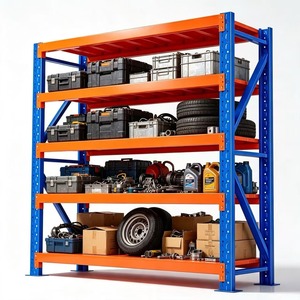
Engineered Warehouse Racking & High-Density Storage Systems
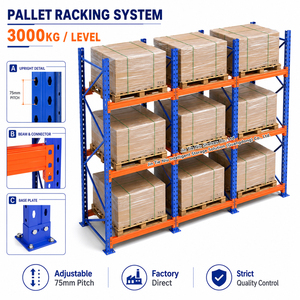
Direct from our 30,000 m² smart manufacturing center. Verified load metrics, robotic continuous welding, and structural durability certified under CE No. 2435-CPR-8605159 and ISO 9001:2015.
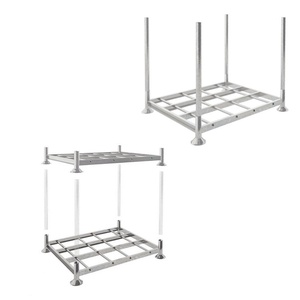
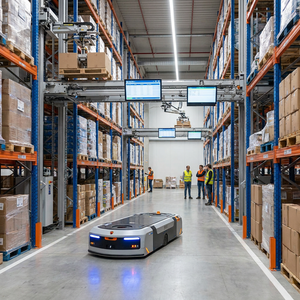
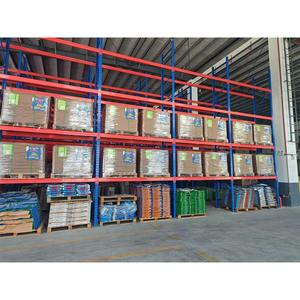
2001
Established Since
30,000 m²
Production Plant
30,000 T
Monthly Output
10,000+
Global Installations
Industry Whitepaper
Engineering Audit: What Defines the Top 10 Flow Rail Racking Factories?
Flow rail racking systems rely on gravity incline and precision low-friction channels to mobilize heavy pallet loads without internal aisle driving. Sourcing from top-tier original equipment manufacturers requires rigorous evaluation of metallurgical, structural, and mechanical competencies.
1. Certified Q235B / Q355 Cold Rolled Steel
Leading factories only procure primary carbon steel with verified mill test certificates. Uprights, box beams, and flow tracks must maintain exact yield strength under permanent dead-load and cyclical dynamic stresses, preventing progressive deflection across multi-tier bays.
2. Precision Flow Track & Roller Engineering
A legitimate flow rail plant houses automated CNC punching and cold roll-forming lines. The flow rails require low-friction steel or polyurethane-coated heavy-duty bearing rollers, engineered specifically with kinetic speed controllers to avert runaway pallet hazards.
3. Pickling & Phosphating Pretreatment
Before electrostatic powder coating, all components must endure chemical degreasing, pickling, and phosphating. This multi-tank process seals the steel micropores, delivering superior corrosion resistance in high-humidity, coastal, and refrigerated warehouse zones.
4. Finite Element Analysis (FEA) Modeling
Top producers maintain in-house structural engineering teams running full FEA simulation. They evaluate structural node stresses, seismic reactions, and point-load reactions on baseplates to eliminate structural failure under maximal continuous tonnage loads.
5. Container Packaging & Dunnage Optimization
International freight costs directly impact landed pallet position capital cost. Verified manufacturers calculate package profiles to achieve 98%+ volumetric container fill (20GP/40HQ) with heavy-duty steel dunnage that prevents transit twisting and maritime corrosion.
6. Traceable Quality Certifications
Tier-1 manufacturing plants possess auditable documentation including European Standard EN 15512 (Racking Design Principles), CE Declaration of Performance (2435-CPR-8605159), and ISO 9001:2015 Quality Management valid through verified international portals.
Engineering Matrix
Comparative Analysis: Flow Rail vs. Conventional Systems
Data metrics highlighting warehouse volume utilization, cycle speeds, and operational profiles across major industrial racking designs.
| Storage Racking Category | Inventory Rotation | Volume Utilization | Forklift Aisle Demand | Throughput Speed | Primary Application |
|---|---|---|---|---|---|
| Gravity Flow Rail Racking | Strict FIFO | 85% – 90% | Loading & Unloading Only | Exceptional (Auto-indexing) | Perishables, Cold Chain, Pharma, High-Volume FMCG |
| Push-Back Cart / Rail | LIFO | 75% – 82% | Single Front Aisle | High (2–6 Pallet Deep) | Medium Turnover, Seasonal SKUs, Raw Materials |
| Selective Pallet Racking | Any (100% Direct) | 40% – 50% | Aisles Every Row (3.2m–3.8m) | Standard | Multi-SKU E-Commerce, 3PL Distribution Centers |
| Drive-In Pallet Racks | LIFO | 70% – 80% | Internal Drive Lanes | Moderate (Risk of Rack Impact) | Uniform SKUs, Deep Cold Storage, Bulk Agro Goods |
| Semi-Automated Shuttle | FIFO / LIFO | 88% – 93% | Single Front/Back Aisle | Ultra-Fast (Battery Cart) | Large Scale Cold Stores, High-Value Controlled Goods |
Forward Analysis
Future Sourcing & Technology Trends in Flow Rail Storage
The industrial warehouse equipment sector is undergoing fundamental transformation. Procurement leaders must align procurement specifications with these five critical technological developments.
Self-Regulated Kinetic Brakes
Centrifugal eddy-current and internal mechanical brakes are replacing standard passive rollers. These units automatically calibrate friction in response to pallet weight, preventing speed spikes with loads up to 1,500 kg.
AGV & AMR Picking Integration
Modern flow rail pick-faces are engineered to interface directly with Autonomous Mobile Robots. Laser-aligned discharge stops and optical clearance sensors enable automated unmanned docking and extraction.
Structural IoT Health Monitoring
Fiber-optic and piezoelectric strain gauges embedded in critical load-bearing uprights now provide continuous structural health data. Fleet managers receive real-time alerts if a forklift collision exceeds structural tolerance.
Cryogenic Material Formulations
With global cold chain demand surging, flow rail bearings and composite wheels are formulated to retain flexibility down to -30°C. Standard polymers become brittle in sub-zero freezers; specialized cold alloys prevent track lock-up.
Nearshore & Modular Standardization
To mitigate international sea route disruptions, global engineering contractors demand standardized modular track configurations that accept interchangeable components, shortening replacement lead times across global depots.
Procurement Guidance
Frequently Asked Questions: Flow Rail & Warehouse Racking Procurement
Direct technical answers to questions commonly raised by project engineers, logistics planners, and sourcing managers.
Q: What is the operational difference between pallet flow and push-back rail systems?
Pallet flow racks work on a First-In, First-Out (FIFO) methodology: pallets are loaded on a higher rear lane and flow via gravity incline down to a distinct picking aisle on the opposite end. Push-back systems operate on a Last-In, First-Out (LIFO) protocol where single-aisle access is used: forklifts push deposited pallets up an inclined track on nested rolling carts, eliminating separate loading and unloading aisles and reducing aisle space.
Q: How is pallet flow velocity controlled to prevent product damage?
Quality flow rail systems incorporate mechanical centrifugal speed controllers spaced at calculated intervals along each bay lane. As pallets accelerate down the 2% to 4% gradient, internal brake rollers create frictional resistance that caps movement speed to roughly 0.2 to 0.3 meters per second, ensuring soft contact with terminal end stops and preceding pallets.
Q: What warehouse floor slab requirements are needed for heavy-duty racking?
Heavy-duty systems require reinforced concrete slabs capable of bearing point loads between 2,500 kg and 8,000 kg per upright baseplate without differential settlement. Slabs typically need a minimum compressive strength of 25 to 30 MPa (C25/C30 grade concrete) with thickness between 180mm and 250mm, leveled within tolerance standards like DIN 18202 or ASTM E1155.
Q: Can flow rails accommodate varying wooden and plastic pallet footprints?
Yes. Custom flow systems can be specified with multi-track roller arrangements or full-width staggered steel skate wheels. This distributes weight evenly regardless of whether bottom deckboards run parallel or perpendicular, allowing seamless flow of standard GMA (48x40 in), Euro (1200x800 mm), and industrial industrial pallets without jamming.
Q: How does surface pretreatment protect steel racking in humid and coastal warehouses?
Untreated steel rapidly corrodes under salt-laden or humid ambient conditions. Leading factories employ a multi-step pretreatment sequence: chemical degreasing, acid pickling to strip scale, and zinc phosphating to passivate the surface. This ensures that the subsequent electrostatic epoxy-polyester powder coating bonds molecularly, preventing blistering, rust migration, and structural degradation over decades of use.
Transform Your Warehouse Density & Throughput Today
Consult with our lead engineering team. Send your warehouse floor plan (DWG, CAD, or PDF) for a complimentary 3D layout design, finite structural load calculation, and factory-direct project quotation within 24 hours.
Contact Us