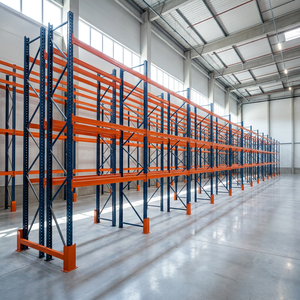
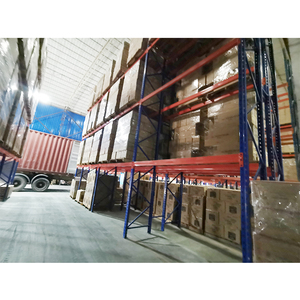
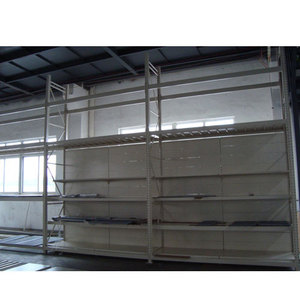
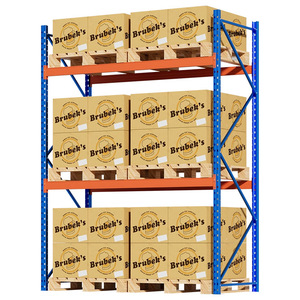
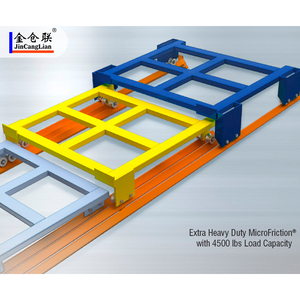
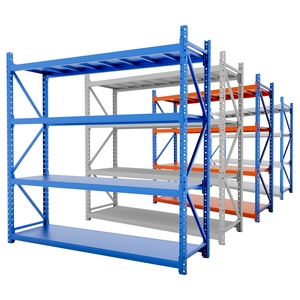
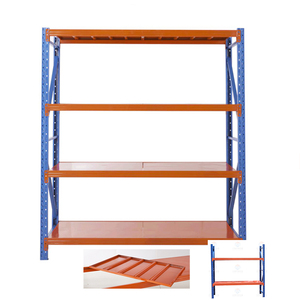
Garage Warehouse Rack Adjustable Storage Stacking Racks Heavy Duty Racking Factory Selective Rack Warehouse Storage Shelving
- Capacity: 1,000–4,000 kg/level
- Material: Q235B Cold-Rolled Steel
- Accessibility: 100% Direct Selective Access
Explore precision cold-formed steel racking, modular high-density drive-in/drive-through configurations, and high-load structural platforms engineered to European EN 15512 and FEM 10.2.02 standards.
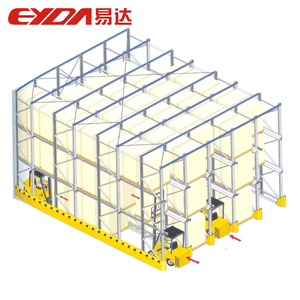
Drive-through pallet racking represents an advanced subset of high-density accumulative storage engineered specifically for operations prioritizing First-In, First-Out (FIFO) stock turnover alongside maximum volumetric cube utilization. Unlike conventional selective racking systems—which demand individual access aisles between back-to-back rack runs—drive-through racking consolidates floor space by eliminating intermediary aisles. Forklift operators steer directly into multi-level structural storage lanes from an entry transfer aisle, depositing unit loads onto continuous cold-rolled cantilevered support rails, and disembarking or picking from an independent exit aisle at the rear.
| Evaluation Parameter | Drive-Through Racking (FIFO) | Drive-In Racking (LIFO) | Selective Pallet Racking | Radio Shuttle Racking |
|---|---|---|---|---|
| Volumetric Space Utilization | 75% – 85% Warehouse Volume | 75% – 85% Warehouse Volume | 40% – 50% Warehouse Volume | 80% – 90% Warehouse Volume |
| Inventory Rotation Logic | Strict FIFO (First-In, First-Out) | Strict LIFO (Last-In, First-Out) | Random / Multi-Method FIFO & LIFO | Configurable FIFO & LIFO |
| Direct Pallet Selectivity | Low (Lane-based access) | Low (Lane-based access) | 100% Immediate Direct Access | Low to Medium (Lane-based) |
| Forklift Mast Encroachment | Yes (Truck drives into the rack) | Yes (Truck drives into the rack) | No (Truck operates strictly in aisle) | No (Radio cart traverses interior) |
| Structural Bracing Model | Top Horizontal & Overhead Portal Ties | Rear Vertical X-Bracing & Top Ties | Inter-Upright Frame Diagonal Bracing | Horizontal Frame Ties & End Bumpers |
| Best Suited Storage Dynamics | High-turnover perishables, dairy, pharma | Bulk homogeneous items, seasonal crops | High SKU variety, fast pick-face 3PL | Mass cold-storage, beverage mega-hubs |
Under European standard EN 15512 and the American Rack Manufacturers Institute (RMI MH16.1) specification, the design of drive-through upright frames demands meticulous load distribution analysis. Because the forklift enters the rack footprint, upright columns are exposed to continuous potential impacts. To withstand mechanical deflection without catastrophic failure, leading manufacturers incorporate reinforced column wraps, heavy-gauge structural baseplates anchored by multiple mechanical or chemical epoxy anchors, and low-profile floor-mounted guidance tracks that guide the forklift chassis safely through the narrow bay tolerances.
An authoritative international evaluation of structural steel fabricators, automated intralogistics providers, and export leaders specializing in heavy-duty drive-through storage infrastructure.
Founded in 2001, Guangzhou Heda Shelves operates a state-of-the-art 30,000 m² smart manufacturing plant producing over 30,000 tons of structural cold-formed racking monthly. Backed by CE (2435-CPR-8605159) and ISO 9001:2015 certifications, HEDA is globally acclaimed for turnkey engineering, offering free 3D/CAD structural design within 24 hours. Their drive-through and drive-in systems utilize Q235B high-tensile steel treated with proprietary 8-stage pickling, phosphating, and electrostatic epoxy coating, providing outstanding anti-corrosion protection in high-humidity and sub-zero cold chain logistics hubs across 120+ export markets.
Headquartered in Neunkirchen, Germany, SSI Schaefer is one of the world's preeminent intralogistics groups. Their drive-through racking configurations feature cold-rolled I-beam cantilever rails with high plastic deformation tolerance. Schaefer stands out for seamless integration between conventional heavy-duty structural steel and automated guided vehicle (AGV) systems, serving multi-national pharmaceuticals, chemical processors, and large-scale industrial automotive assembly lines across Europe, the Americas, and APAC.
Mecalux is a Spanish intralogistics powerhouse operating 11 manufacturing centers across Europe, North America, and South America. Mecalux drive-through configurations are noted for their proprietary pallet guide profiles, featuring flared lead-in mouths that ease forklift entry and lower collision incidence. Mecalux pairs its mechanical drive-through systems with proprietary Easy WMS software modules to optimize FIFO batch sequencing in high-volume food and beverage distribution warehouses.
Now operating under Gonvarri Material Handling, Dexion is a historic brand synonymous with industrial slotted-angle and pallet racking innovation. Dexion's drive-through systems feature heavy-duty arm brackets that hook seamlessly into pre-punched upright uprights without protruding hardware, reducing snag hazards for pallet corners. Their engineering units excel in high-density seismic calculations compliant with Eurocode 8 requirements.
Headquartered in Spiere-Helkijn, Belgium, Stow is one of Europe's top-tier producers of warehouse racking systems. Operating multiple automated rolling plants across Belgium, France, and Poland, Stow manufactures robust drive-through systems utilizing high-yield micro-alloyed steel. Stow systems are engineered for ultra-deep lane configurations and are extensively used by third-party logistics (3PL) providers requiring dependable First-In First-Out operations in cold storage facilities.
Renowned worldwide for electric forklift engineering, Hamburg-based Jungheinrich designs drive-through racking systems specifically engineered around vehicle kinematics. By optimizing clear bay widths, ground guide rail profiles, and overhead clearance intervals to the exact millimeter dimensions of their reach trucks and narrow-aisle stackers, Jungheinrich eliminates aisle-entry bottlenecks, reducing structural wear and maximizing operator safety.
Based in Bizkaia, Spain, AR Racking belongs to the Arania Group, an industrial conglomerate with over 80 years of steel processing history. AR Racking standardizes 100% pre-galvanized upright frames across its drive-through product catalog. Their in-house R&D technology center and structural laboratory conduct rigorous finite element analysis (FEA) to simulate extreme buckling and seismic shock, offering 5-year structural warranties on certified industrial racking installations.
Frazier is recognized as the leading American pioneer of 100% hot-rolled structural steel racking. While roll-formed steel dominates mass markets, Frazier's drive-through systems utilize hot-rolled structural channel steel (C-channel) columns. This provides immense resistance to heavy forklift collisions, making Frazier's drive-through systems a staple in brutal American food distribution environments, beverage bottling facilities, and heavy-duty cold storage warehouses across the Americas.
Osaka-based Daifuku is a premier global provider of material handling automation. In large-scale drive-through distribution environments, Daifuku pairs specialized high-precision racking frames with automated stacker cranes and rail-guided vehicles (RGVs). Daifuku drive-through structures adhere to Japan's rigorous seismic building standards, engineered to withstand intense horizontal acceleration without plastic structural dislocation.
BITO manufactures precision storage systems at its German headquarters in Meisenheim. BITO drive-through racking incorporates bespoke single-piece continuous support rails that ensure smooth, unobstructed transit for wooden Euro-pallets, plastic hygiene pallets, and industrial metal skid containers. BITO systems feature modular clip-on accessories and heavy-duty entry column protectors filled with impact-absorbing polyurethane foam.
Strategic supply chain shifts transforming high-density warehouse storage: from manual forklift handling to automated hybrid systems and sustainability-driven lifecycle procurement.
Traditional drive-through configurations depend on manual forklift operators driving into tight structural bays—a primary cause of racking upright deflection. Leading enterprise operators are standardizing automated guided vehicles (AGVs) and autonomous mobile robots (AMRs) equipped with LiDAR and 3D visual SLAM navigation. Racking manufacturers are re-engineering drive-through base anchorages, optical reflector brackets, and entry tracks to enable millimeter-level robotic traversal without collision hazards.
With industrial cold-storage electricity rates rising globally, energy expenditure per cubic meter has become a primary boardroom KPI. Drive-through racking maximizes pallet density by up to 85% of total building envelope volume, eliminating refrigeration loss in unused access aisles. Procurement specifications now mandate hot-dip galvanized steel finishes (compliant with ISO 1461) or specialized anti-peel electrostatic powder formulas capable of withstanding constant thermal cycles from 0°C to -30°C without micro-fracturing.
Modern cold-roll forming lines leverage advanced high-yield structural steels (such as Q355B and S355MC), achieving higher yield strengths with thinner profile gauges. Racking designers employ non-linear Finite Element Analysis (FEA) to calculate second-order torsional and sway bucklings across dual-access drive-through bays under seismic conditions. This structural optimization cuts total deadweight steel tonnage, significantly lowering ocean container freight costs and landed project budgets.
A growing trend among international logistics buyers is transforming traditional drive-through channels into semi-automated Radio Shuttle channels. By installing universal running rails along the cantilever arms, warehouses can utilize motorized battery-powered shuttle carts to shuttle pallets deep into the lanes. Forklifts remain strictly in the external transfer aisles, reducing pallet handling cycle times by over 40% and completely eliminating forklift impact hazards to inner upright columns.
Procurement teams are shifting away from fragmented FOB component buying toward turnkey Engineering, Procurement, and Construction (EPC) agreements. International buyers now mandate detailed shipping load plans that optimize 40HQ container space (reducing sea freight landed costs), alongside modular bolt-together structural sub-assemblies that minimize local contractor installation hours. Manufacturers that provide end-to-end engineering, third-party certification, and detailed video installation guides secure long-term global contracts.
Over 25 years of structural racking fabrication, certified European quality management, and rapid factory-direct engineering execution for international supply chains.
Fully compliant with European CE standard EN 1090 / EN 15512 (Certificate No. 2435-CPR-8605159), ISO 9001:2015 quality management (Certificate No. 18624Q00169R0M), and international RoHS environmental certifications.
Our dedicated team of 30+ structural engineers analyzes your building drawings, forklift turning radii, and seismic zone factors to deliver free, fully optimized 2D CAD layouts and 3D realistic project models within 24 hours.
From raw steel coil slitting and automated CNC column punching to robotic seam welding, 8-stage immersion pickling/phosphating, and continuous electrostatic thermoset powder curing, our manufacturing chain guarantees lifelong adhesion.
All long-span uprights and beams are bundled using protective foam buffers, heavy steel strapping, and custom dunnage designed for automated container offloading, maximizing 40HQ payload and eliminating transit abrasion damage.
Direct answers to the most common engineering, safety, and logistical questions asked by warehouse managers, supply chain directors, and EPC procurement specialists.
Because drive-through systems require open passageways at both ends to facilitate First-In First-Out (FIFO) stock rotation, traditional vertical back cross-bracing cannot be used. Structural engineers compensate by installing rigid top-tie beam networks across the bay tops, heavy portal ties along external rows, and high-moment baseplates anchored into the concrete slab. These components transfer horizontal dynamic and seismic loads through the frame columns down into the foundations.
Under EN 15620 guidelines, the standard design clearance between the forklift chassis (or outer edge of the pallet load) and the interior face of the support upright should be at least 75 mm to 100 mm on each side. Additionally, steel floor guide rails (either structural angle or rolled tube) are securely mounted to the slab to prevent the forklift from drifting off-center, protecting the columns from impact.
Yes, but it requires structural engineering review. Converting a drive-in system to drive-through requires removing the rear structural X-bracing to open the corridor, which reduces lateral rigidity. A structural engineer must re-evaluate the frame to calculate whether additional overhead portal ties, heavier-gauge top beams, or upgraded slab anchorages are required to meet local building codes.
Electrostatic epoxy powder coating is ideal for standard indoor ambient warehouses, providing an attractive, resilient finish with broad color customization. However, hot-dip galvanizing (HDG) per ISO 1461 is strongly recommended for deep-freeze cold storage (-20°C to -30°C), exterior semi-covered sheds, coastal environments, or fertilizer/chemical plants. HDG forms a metallurgical zinc-iron alloy coating that prevents moisture penetration and eliminates rust bleed even when scratched.
Due to the concentration of multiple pallet tiers across narrow structural uprights, drive-through systems exert high concentrated point loads. Concrete floors should be reinforced slabs with a minimum compressive strength of C25/30 or C30/37 (3,000 to 4,500 PSI) and a thickness of at least 150 mm to 200 mm. Floor flatness should meet DIN 18202 Table 3 Line 4 or ASTM E1155 F-min 50 standards to avoid forklift tilt at high lift elevations.
At Guangzhou Heda Shelves, standard fabrication cycles for standard or custom drive-through projects (1,000 to 5,000 pallet positions) run between 15 to 25 business days from CAD drawing approval. Ocean transit from South China ports (Nansha, Huangpu, Shenzhen) takes approximately 12–18 days to South Asia/Middle East, 22–30 days to Europe, and 18–25 days to the North American West Coast.
Send our senior engineering team your warehouse dimensions, clear ceiling height, pallet load specifications, and forklift models. We will provide a free 2D CAD layout, 3D structural rendering, and detailed bill of materials within 24 hours.