Essential Heavy-Duty Systems & Warehouse Racking Products
Examine our high-density industrial racking configurations, heavy-duty workshop shelving, and customized structural steel platforms engineered for international supply chain facilities.
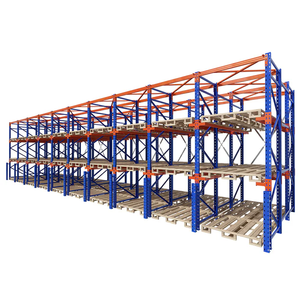
Double Deep Pallet Racking: Mechanical Principles & Operational Mechanics
An authoritative evaluation of volumetric space utilization, kinematic reach dynamics, and structural load calculations for logistics directors, warehouse planners, and project consultants.
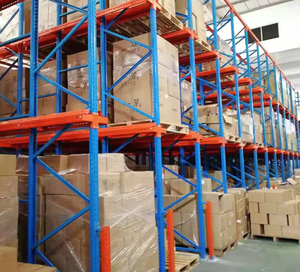
In modern industrial intralogistics, land acquisition costs and high-bay construction capital expenditures demand structural storage solutions that optimize cubic capacity without compromising throughput. Double Deep Pallet Racking represents the engineering sweet spot situated between traditional Selective Pallet Racks (100% selectivity with ~35-40% footprint occupancy) and Ultra-High-Density systems such as Drive-In or Gravity Pallet Flow racking (which drastically restrict stock selectivity and SKU velocity). By configuring pallet storage rows in back-to-back pairs—storing pallets four units deep across two continuous runs accessible from a single operating aisle—double deep structures eliminate up to 45% of redundant access corridors, driving overall floor space utilization rates past 60%.
1. Kinematics, Reach Truck Interfacing & Honeycombing Mitigation
Double deep operations inherently function on a Last-In, First-Out (LIFO) inventory principle at the specific SKU-bay level, while allowing a macroscopic First-In, First-Out (FIFO) methodology across complete warehouse rows. Accessing the second rear pallet requires specialized material handling equipment: either a heavy-duty reach truck equipped with a dual-stage pantograph scissor mechanism, or rigid hydraulic telescopic double-deep forks.
Because telescopic extension introduces dynamic bending moments and forward torsional deflection at elevated heights (exceeding 8.5 to 11.5 meters), engineering specifications mandate rigorous rigidity criteria. Forklift telematics commonly integrate laser positioning guides, tine-mounted wireless micro-cameras, and tilt auto-correction sensors. To prevent the notorious "honeycombing effect"—the operational capacity loss when front slots become empty while back slots remain occupied—enterprise Warehouse Management Systems (WMS) enforce dual-slot pairing algorithms, assigning identical SKUs and identical batch expiration dates to paired front-rear pallet positions.
2. Structural Dynamics, Deflection Ratios & Design Standards
Unlike light commercial shelving, industrial double deep racking acts as a multi-tier spatial framed structure subjected to severe static loads, intermittent dynamic placement stresses, and seismic base shear accelerations. Global structural compliance requires adherence to internationally accredited frameworks, notably FEM 10.2.02 / EN 15512 in Europe, RMI (ANSI MH16.1) across North America, and AS 4084-2012 across the Asia-Pacific region.
Structural beam calculations specify strict deflection limits, typically constrained to no more than $\delta \le L / 200$ (and in automated/reach setups, $\delta \le L / 300$), ensuring beam deflection under rated static load does not impede pantograph retraction. Upright frames are roll-formed from certified high-yield cold-rolled structural steel coils (grades ranging from Q235B up to high-tensile Q355B and S355JR), configured with continuous omega-profile cross-sections and multi-point welded base plates anchored into minimum 200mm industrial fiber-reinforced concrete slabs.
Top 10 Double Deep Warehouse Racking Manufacturers & Suppliers
An objective, in-depth evaluation of global engineering manufacturers assessed on raw steel fabrication tolerances, surface passivation technology, project lifecycle delivery, and global turnkey integration.
Guangzhou Heda Shelves Co., Ltd. (HEDA Shelves)
Guangzhou, South China • Est. 2001Operating a modernized 30,000 square meter intelligent fabrication complex, Guangzhou Heda Shelves Co., Ltd. is globally celebrated for end-to-end industrial structural engineering. Specializing in high-density double deep racking, selective systems, automated radio shuttle bays, and heavy-duty structural mezzanines, HEDA operates dedicated continuous cold roll-forming lines, automated laser-guided punching tooling, and an automated multi-stage chemical pretreatment line. With pickling and phosphating stages preceding high-adhesion electrostatic powder coating, HEDA systems achieve unmatched durability against coastal humidity, tropical monsoon climates, and chemical washdowns. From structural seismic analysis and 100% free customized CAD/3D layouts within 24 hours to precision export shipping bundling, HEDA balances factory-direct cost efficiency with world-class engineering execution.
SSI Schaefer Group
Neunkirchen, Germany • Est. 1937SSI Schaefer is a titan in automated material handling and structural racking engineering. Their double deep configurations are widely deployed in complex, automated logistics environments, interfacing seamlessly with double-deep stacker cranes (ASRS) and specialized reach carriages. Schaefer's cold-formed uprights feature proprietary hole pitch matrices, providing structural beam positioning versatility alongside high load margins calculated under rigorous European FEM design parameters.
Mecalux, S.A.
Barcelona, Spain / Chicago, USA • Est. 1966With massive international manufacturing footprints across Europe and North America, Mecalux engineers double deep racking systems integrated with digital slotting intelligence via their proprietary Easy WMS platform. Their structural racking beams feature engineered safety locks with high shear resistances, preventing accidental dislodgement during reach pantograph extraction in fast-paced distribution hubs.
Dexion (Gonvarri Material Handling)
Oslo, Norway / Madrid, Spain • Est. 1937Inventor of the original slotted angle, Dexion (operating under the Gonvarri Material Handling umbrella) produces the iconic P90 pallet racking series. The Dexion P90 Double Deep configuration provides maximum stability up to heights exceeding 30 meters, supported by customized bracing geometry, seismic dampening baseplates, and specialized heavy-gauge beam connectors.
Daifuku Co., Ltd.
Osaka, Japan • Est. 1937Recognized globally as one of the largest material handling automation suppliers, Daifuku excels in automated double deep unit load systems. In seismic-sensitive environments such as Japan, Daifuku's double deep racking integrates dynamic vibration-absorbing dampening dampers along upper beam levels, ensuring structural containment of unit loads during sudden earthquake vibrations.
Interlake Mecalux
Melrose Park, Illinois, USA • Est. 1960sOperating deep within the North American logistics corridor, Interlake Mecalux manufactures both roll-formed teardrop double deep systems and heavy structural channel configurations. Their structural racking product line is particularly valued in high-traffic logistics hubs where forklift impact resistance on bottom upright portals is a non-negotiable procurement requirement.
AR Racking (Grupo Arania)
Bizkaia, Spain • Est. 1940A flagship enterprise of Grupo Arania, AR Racking excels in high-tensile cold-rolled steel structures. Their double deep systems feature Sendzimir continuous pre-galvanized upright uprights, giving their upright frames permanent cathodic anti-corrosion protection without requiring secondary surface post-treatment, making them exceptionally prominent across European pharmaceutical distribution chains.
Stow Group
Spiere-Helkijn, Belgium • Est. 1977Operating advanced fabrication plants throughout Western and Central Europe, Stow Group provides robust conventional and hybrid double deep racking configurations. Stow has earned deep market recognition through the seamless mechanical convergence between their double-deep static racking profiles and the Stow Atlas robotic shuttle carrier platforms.
Jungheinrich AG
Hamburg, Germany • Est. 1953Jungheinrich maintains a unique advantage in the double deep landscape by manufacturing both the structural racking steel framework and the precise material handling vehicles (electric pantograph reach trucks and automated reach AGVs) operating inside the aisles. This vehicle-structure co-engineering ensures millimeter-accurate operating tolerances.
Frazier Industrial Company
Long Valley, New Jersey, USA • Est. 1949Frazier Industrial is the undisputed pioneer in 100% hot-rolled structural steel double deep racking. Frazier’s structural steel C-channels offer tremendous impact resistance and structural rigidity compared to thin cold-formed profiles, making them the gold standard for high-throughput grocery distributors and harsh sub-zero freezing applications.
| Manufacturer | Primary Steel Grade | Fabrication Topology | Compliance Framework | Optimal Deployment Arena | Turnkey Engineering Support |
|---|---|---|---|---|---|
| HEDA Shelves | Certified Q235B & Q355B | Continuous Cold Roll-Formed | CE, ISO 9001:2015, RoHS | Global 3PL, FMCG, Cold Chains, Heavy Industrial | 100% Free 3D CAD, On-Site Tech Guidance |
| SSI Schaefer | High-Tensile Cold-Rolled | Automated Formed Omega-Beam | FEM 10.2.02, EN 15512 | Automated Mega-Fulfillment Hubs | High-End Turnkey System Integration |
| Mecalux | Structural / Cold-Formed | Teardrop / Metric European | RMI, ANSI MH16.1, CE | Omnichannel Retail & Logistics Hubs | Proprietary WMS Software Integration |
| Dexion | Pre-Galvanized Structural | P90 Standard Profile | EN 15620, ISO 9001 | Heavy Engineering, Pallet Logistics | Pan-European Local Engineering |
| Daifuku | Earthquake-Damped Steel | Precision Robotic Forming | JIS, ISO 14001, CE | High-Tech Cleanroom, Automated ASRS | Total Robotic System Deployment |
| Frazier | ASTM A36 / A572 Hot-Rolled | Structural Channel Steel | RMI, AISC Standards | Cold Freeze Storage, Harsh Impact Yards | North American Structural Consulting |
Technological & Procurement Trends Shaping Double Deep Storage (2025–2030)
Future-proofing warehouse capital investments: How automated reach mobility, sensor telemetry, decarbonization, and dynamic slotting are transforming dense double deep installations.
Autonomous Mobile Reach (AMR) Integration
Manual double-deep reach truck driving demands high operator skill. By 2028, over 38% of new high-bay double deep racking will transition to driverless automated guided reach trucks (AGV-R) and vision-guided AMRs using 3D SLAM LiDAR to execute rear-pallet picking with sub-millimeter precision.
Dynamic AI Slotting & Anti-Honeycombing
Cloud-native WMS algorithms now anticipate order dispatch waves, dynamically rotating front and rear pallets during idle night-time cycles. This algorithmic rearrangement eliminates up to 88% of honeycombing deadhead moves, maintaining maximum slot density without picking bottlenecks.
Cold-Chain High-Density Expansion
With refrigerated energy expenditures surging globally, cold-storage developers are prioritizing double deep racking over single-selective systems. Storing pallets in double-depth blocks reduces refrigerated envelope volume by up to 32%, directly cutting thermal kilowatt-hour cooling operational expenditures.
IoT Structural Health Telemetry
Next-generation industrial double deep uprights increasingly embed passive RFID impact tags and fiber-optic micro-strain sensors. Any forklift collision exceeding structural threshold triggers instant cloud alerts to warehouse safety managers, verifying structural deflection integrity in real time.
Decarbonized Cold-Form Roll-Forming
Corporate ESG metrics are reshaping steel sourcing. Leading manufacturers like HEDA utilize high-strength, low-alloy (HSLA) steel coils, generating identical structural yield capacities while reducing steel tonnage volume by 12–15%, reducing maritime shipping emissions and lowering embodied carbon.
Flexible Modular Reconfigurability
Modern enterprise procurement favors boltless, modular connector brackets. As supply chain product lifecycles shift, forward-looking facilities procure hybrid double deep bays capable of converting into selective bays or push-back gravity lanes within hours using pre-punched upright pitch systems.
Why Global Supply Chains Partner with HEDA Shelves
Since 2001, Guangzhou Heda Shelves Co., Ltd. has stood at the vanguard of warehouse storage engineering. Our internal production workflow unites layout conceptualization, automated cold bending, multi-axis automated CNC punching, robotized MIG beam welding, and electrostatic powder coating within a centralized 30,000 m² factory environment.
-
Certified Engineering & Verified Track Record: Holding rigorous CE Certification (No. 2435-CPR-8605159), ISO 9001:2015 Quality Management compliance, and RoHS certifications across all raw materials and powder finishes.
-
Severe Climate Surface Passivation: All profiles undergo an 8-stage chemical pickling and phosphating pretreatment before electrostatic powder baking, ensuring high bonding adhesion and rust resistance in humid, monsoon, and coastal industrial zones.
-
Complimentary Engineering Layout & 3D Modeling: Receive free customized CAD layout drawings, finite-element structural deflection calculations, and photorealistic 3D warehouse floor designs within 24 business hours.
-
Container-Optimized Freight Loading: Structural components are bundled with steel bandings and customized timber frames, maximizing 40HQ maritime container utilization to drastically cut landed unit costs per pallet position.
5 Critical Checkpoints When Procuring Double Deep Systems
Reach trucks with double deep pantographs operating at 10+ meters exert massive point wheel loads. Verify slab flatness meets DIN 18202 Table 3 Group 4 or TR34 FM2 specifications to eliminate mast swaying.
Pantograph extension shifts the center of gravity outward (from 600mm to 1200mm+). Always consult reach truck derating curves to ensure lifting capacity remains safe at full mast height.
Determine whether mechanical angle-iron guide rails ($100\times 75\times 8\text{mm}$) anchored to the slab or inductive floor wire guidance are required to minimize mast collisions in narrow aisles.
Because rear pallets are deposited blind, integrate pallet support crossbars or wire mesh decking to prevent pallet slippage if undersized or weakened wooden pallets are introduced.
Mandate raw material metallurgical test certificates (MTC) proving steel tensile and yield strengths, along with factory powder coat thickness verification ($>60\text{--}80\mu\text{m}$).
Frequently Asked Questions: Double Deep Engineering & Procurement
Clear, technically rigorous answers covering equipment matching, floor slab dynamics, honeycombing loss, and system conversion.
Plan Your High-Density Double Deep Storage Project Today
Connect directly with HEDA Shelves certified structural engineers. Send your warehouse architectural drawings to receive a complimentary custom 3D CAD layout, load capacity calculation, and factory-direct pricing proposal within 24 hours.
Contact Us