Engineering the Modern Logistics Backbone: Back-to-Back Racking
In high-throughput distribution environments, Back to Back Racking (Selective Double-Row Configuration) remains the global industry benchmark, accounting for over 70% of total installed industrial pallet positions worldwide. Structurally designed by placing two standard single-entry selective racking runs back-to-back linked with rigid steel row spacers, this configuration optimizes forklift aisle ratios while maintaining 100% immediate selectivity to every SKU. This comprehensive technical guide analyzes the world’s elite racking manufacturers, evaluating steel grade metallurgy, roll-forming tolerances, structural finite element analysis (FEA), and seismic compliance to guide global procurement directors and warehouse engineers.
Engineered Heavy-Duty Racking & Specialized Storage Systems
Factory-engineered solutions conforming to international ISO 9001:2015 and CE certification standards, manufactured for rigorous cycle duties and heavy static loads.
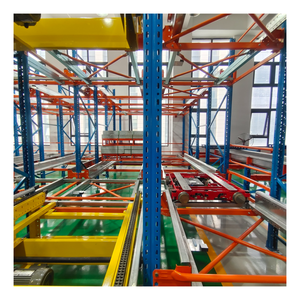 ASRS & Cold Room
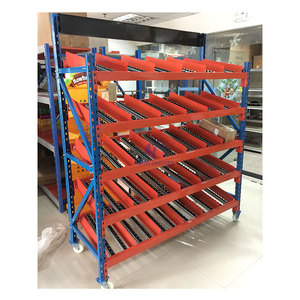 FIFO Dynamics
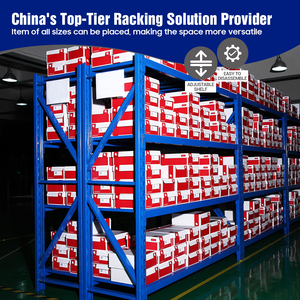 Commercial Duty
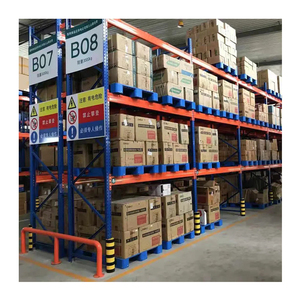 5,000 KG / Tier
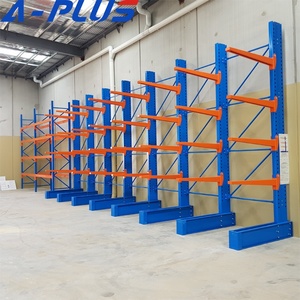 Cantilever Arm
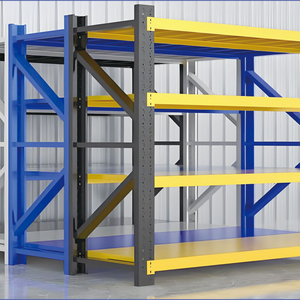 Longspan System
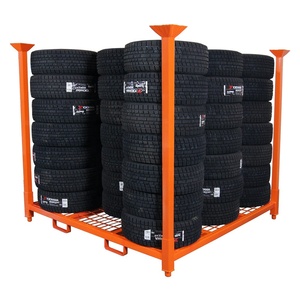 Stacking Rack
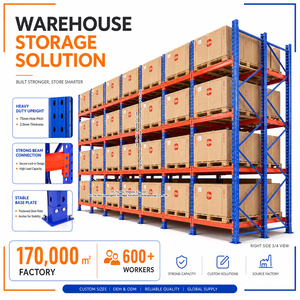 Factory Supply
The Top 10 Back-to-Back Racking Factories & Suppliers
To assist global procurement managers, logistics consultants, and supply chain directors, our engineering evaluation board conducted a rigorous audit of over 60 global manufacturers. Vendors were graded on cold roll-forming tolerances, certified steel yield strength (Q235B, Q355B, SS400, S355JR), adherence to EN 15512, RMI (ANSI MH16.1), and AS 4084 seismic parameters, automated epoxy electrostatic powder coating lines, and turnkey CAD/FEA engineering capabilities.
Guangzhou HEDA Shelves Co., Ltd.
Established in 2001, Guangzhou HEDA Shelves operates a state-of-the-art 30,000 m² smart fabrication plant producing over 30,000 tons of structural steel storage systems monthly. Specializing in engineered back-to-back pallet racking systems, HEDA utilizes continuous automated roll-forming lines, 10-stage pickling and phosphating pre-treatment tanks, and robotic welding stations. Holding CE (2435-CPR-8605159) and ISO 9001:2015 certifications, HEDA delivers turnkey CAD layouts, custom beam-to-frame finite element calculations, and container-optimized export packaging directly to over 120 countries.
SSI SCHAEFER Group
SSI Schaefer is an international benchmark for automated warehouse hardware and high-tolerance back-to-back selective racking. Known for extreme precision in cold-formed upright profiles and integrated shuttle-ready runs, their systems are frequently deployed in mega-distribution centers requiring integration with automated stacker cranes and complex AGV paths.
Mecalux, S.A.
Operating extensive roll-forming plants across Europe and the Americas, Mecalux is a dominant supplier of standard selective back-to-back configurations. Their proprietary connection clasps and bolted frame geometries offer balanced rigidity against lateral buckling forces, accompanied by proprietary warehouse control software suites.
Stow Group
Stow Group focuses heavily on heavy-duty industrial shelving and back-to-back structural racking designs. With multiple manufacturing facilities across Europe, Stow’s cold-rolled uprights are engineered with optimized hole pitch patterns for micro-adjustable beam elevations, minimizing vertical air wastage in high-cube facilities.
Dexion (Gonvarri Material Handling)
As one of the earliest pioneers of steel storage structures, Dexion’s modern selective pallet systems incorporate advanced safety lock pins and high-torsion upright profiles. They are widely recognized across EMEA for robust distribution center engineering and standardized cold storage racking implementations.
Daifuku Co., Ltd.
Daifuku is renowned for engineering racking frames capable of enduring extreme seismic activity. Their back-to-back installations throughout the Pacific Rim feature reinforced baseplates, specialized ductile anchor arrays, and damping row spacers designed to dissipate seismic wave energy during major tectonic events.
Frazier Industrial Company
Distinguished by their dedication to structural steel channel (C-channel) fabrication rather than roll-formed sheet steel, Frazier’s back-to-back systems are built for punishing environments such as high-velocity grocery distribution centers where heavy forklift impact abuse is an operational reality.
Interlake Mecalux Inc.
Interlake Mecalux is a standard setter for teardrop style back-to-back racking across North American distribution hubs. Their teardrop punch pattern provides universal interchangeability, rapid beam placement, and robust safety lock mechanisms popular in multi-tenant leased third-party logistics (3PL) properties.
BITO-Lagertechnik Bittmann GmbH
German engineering excellence distinguishes BITO’s pallet racking systems. Their back-to-back selective systems feature high-stiffness cold-formed profiles, tight deflection parameters under full rated tonnage, and integrated modular safety accessories such as heavy-duty corner crash barriers and mesh drop guards.
Jungheinrich AG
Jungheinrich delivers complete intralogistics packages where back-to-back and Very Narrow Aisle (VNA) racking systems are calibrated precisely to reach truck mast characteristics and automated guided vehicles (AGVs). Their steel engineering emphasizes high vertical stability and laser-guided floor level adjustments.
Structural Mechanics of Back-to-Back Pallet Racking
A back-to-back racking layout is created by coupling two runs of single selective pallet racks using rigid structural steel row spacers (typically spaced at 200 mm to 400 mm intervals). Structurally, this mechanical coupling increases the effective cross-aisle frame stiffness dramatically. When two frames are connected via bolted row ties, the effective buckling length (Lcr) in the cross-aisle direction is reduced, significantly upgrading the system's resistance to lateral wind, seismic shear forces, and asymmetric live loads.
According to international design standards including EN 15512 and RMI ANSI MH16.1, the permissible deflection limit for load beams under maximum rated static pallet loads is strictly limited to δ = L / 200 (or L / 300 for sensitive automated installations). Modern roll-forming mills, such as those at HEDA Shelves, form multi-bend upright omega columns that exhibit high moment-of-inertia values while reducing deadweight steel usage, achieving the ultimate balance between structural resilience and procurement cost efficiency.
System Architecture Decision Matrix
| Racking Typology | Pallet Selectivity | Storage Density | Operating Aisle Width | Stock Rotation | Cost Per Position |
|---|---|---|---|---|---|
| Back-to-Back Selective | 100% Immediate | Moderate (45-50% Floor Util.) | 2.8m - 3.4m (Standard Reach) | FIFO / LIFO Flexible | Lowest / Most Economical |
| Double Deep Racking | 50% Direct Access | High (55-65% Floor Util.) | 2.9m - 3.2m (Pantograph Reach) | Strict LIFO | Low - Moderate |
| Drive-In / Drive-Through | Low (Lane-by-Lane) | Very High (65-75% Floor Util.) | Forklift Enters Rack Lane | LIFO (Drive-In) / FIFO | Moderate |
| Radio Shuttle System | High within Dedicated Lanes | Maximum (75-85% Floor Util.) | Cart-Driven Channel Access | Semi-Automated FIFO / LIFO | High (CapEx in Shuttles) |
| Pallet Flow (Gravity) | Channel Face Selectivity | High (Dynamic Rotation) | Separate Charge & Pick Faces | Strict Guaranteed FIFO | Moderate - High (Rollers) |
Why Global Procurement Audits Choose HEDA Shelves
In an era of supply chain disruptions and inflated broker markups, Guangzhou HEDA Shelves Co., Ltd. provides direct Tier-1 factory control. With complete vertical integration—from structural steel slitting to robotic laser-welded beam connectors—we eliminate middlemen, reduce landed costs per pallet position, and guarantee compliance with strict international testing standards.
Certified Mill Coils
Prime Q235B and Q355B structural steel coils inspected for chemical composition, yield strength, and tensile ductility upon receipt.
Precision CNC Slitting
Automated shearing lines guarantee profile edge uniformity, eliminating burrs and structural micro-fractures prior to forming.
Automated Punching
High-speed CNC punch presses execute upright pitch holes (50mm or 75mm patterns) with sub-millimeter cumulative pitch tolerance.
Continuous Roll-Forming
24-station progressive cold roll-forming lines generate multi-flange omega uprights and heavy-duty interlocked box beams.
Robotic Welding
Multi-claw beam end connectors are welded using gas metal arc welding (GMAW) robots, guaranteeing 100% penetration and zero spatter.
Chemical Pre-Treatment
Full immersion 10-stage pickling, phosphating, and de-greasing baths prepare steel surfaces for maximum powder coat molecular adhesion.
Electrostatic Coating
Automated reciprocating spray booths apply environmental epoxy-polyester powder coats cured at 200°C for superior abrasion resistance.
Container Packing Optimization
Precision steel strapping, edge corner guards, and calculated pack sequences ensure maximum 40HQ container cube utilization without transit damage.
Future Procurement Trends in Industrial Pallet Racking
Warehouse design is moving away from static steel frames toward integrated, cyber-physical storage environments. Facility managers and system integrators must anticipate three major technological shifts when specifying back-to-back systems over the next decade.
AMR & AGV-Enabled Floor Geometries
As autonomous mobile robots (AMRs) and automated forklifts replace conventional reach trucks, back-to-back aisle spacing tolerances are shifting from human-operated allowances (3.2m+) down to ultra-precise robotic lanes (2.5m-2.8m). Bottom beam clearance levels are increasingly designed with integrated reflective fiducial targets, barcode matrix mounts, and under-pallet LiDAR guidance clearance.
Smart Strain-Gauge Sensor Integration
Future-proof warehouses are adopting structural health monitoring (SHM). Micro-electromechanical sensors (MEMS) attached to critical back-to-back row spacers and lower upright impact zones provide continuous telemetry regarding beam deflection, impact shock events, and localized slab settling, triggering predictive maintenance alerts in the WMS before catastrophic frame failure occurs.
Low-Carbon Green Steel & Eco-Coatings
Corporate ESG mandates across the EU and North America are transforming procurement specifications. Steel fabricators are transitioning to electric arc furnace (EAF) recycled scrap coils with audited carbon intensity scores. Furthermore, volatile organic compound (VOC)-free low-temperature curing powder coatings are replacing legacy systems to reduce the embodied carbon of large logistics facilities.
Frequently Asked Sourcing & Engineering Questions
Direct answers to the structural, operational, and commercial questions most frequently raised by international engineering consultancies and procurement officers.