Featured Heavy-Duty Racking & Modular Stacking Systems
Explore our foundational structural systems engineered with high-yield structural steel, robotic weldments, and corrosion-resistant powder finishes. All configurations are available for direct-factory OEM/ODM customization.
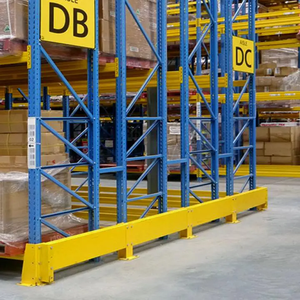
Warehouse Storage Metal Shelf Stacking Racks & Shelves Pallet Racking System Steel Shelving Vna Racking System Narrow Aisle Rack
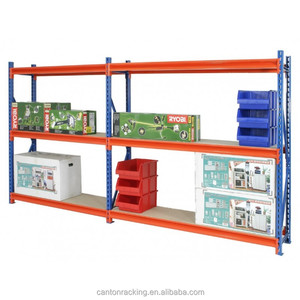
Long Span Shelving Optimizes Space with Durable Storage System. Perfect for Medium-duty Loads in E-commerce
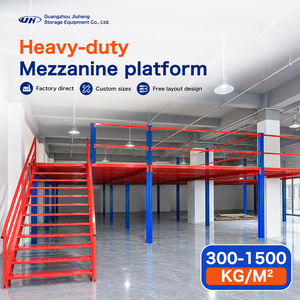
Multi Tier Warehouse Mezzanine Rack Heavy Duty Steel Storage Platform Industrial Shelving Space Saving Customized System
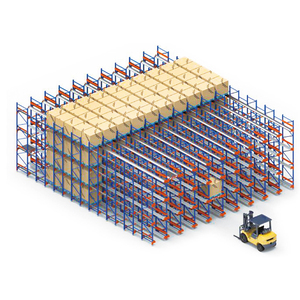
Industrial 5 Layer Cold Rolled Steel Shuttle Racking Intelligent High Efficiency Pallet Storage Solution for Logistics Warehouse
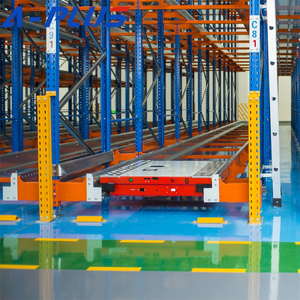
Warehouse Storage Automated Pallet Runner Shuttle Racking System
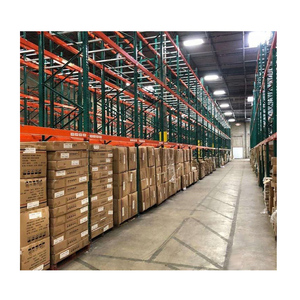
Heavy Duty Shelf Rack Pallet Racking Warehouse Storage Factory Equal to Dexion Industrial Pallet Racking System
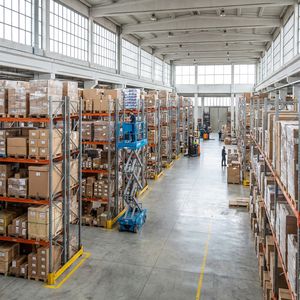
Heavy Duty Metal Storage Rack Industrial Warehouse Shelving Manufacturer
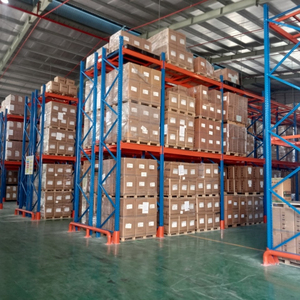
Wholesale Heavy Duty Selective Pallet Racking System Designed For Easy Pallet Access And Reliable Cold Storage Applications
Structural Anatomy of Heavy-Duty Stack Racks & Modular Nesting Systems
A comprehensive technical evaluation of dynamic load distribution, structural steel grades, and floorless warehouse optimization for modern supply chain architects.
In modern industrial logistics, facility operators face an unforgiving dilemma: permanent racking infrastructure locks warehouses into inflexible spatial footprints, while floor block-stacking risks catastrophic product crush damage and wastes immense overhead vertical cube space. OEM/ODM Stack Racks (also referred to across European and North American distribution channels as portable post pallets, nestable stack racks, and modular tire racks) solve this engineering challenge. By combining the high-density structural integrity of structural steel pallet frames with the spatial adaptability of a completely mobile, dismountable framework, stack racks convert open warehouse space into high-density vertical storage without requiring permanent concrete floor slab anchoring.
The core structural advantage lies in the cup-and-cone nesting design and precision-formed structural hollow sections (SHS). Each stack rack consists of a welded steel base frame engineered to accommodate dynamic 4-way forklift entry, four structural upright posts (either removable, folding, or permanently rigid), and high-precision target sockets. When laden, dynamic weights ranging from 1,000 kg up to 2,500 kg per unit transfer vertically through the interlocking posts directly into the base perimeter, completely isolating the packaged SKU from compressive stress. When inventory fluctuates, empty stack racks can be condensed down into nesting ratios of 4:1 to 7:1, recapturing up to 80% of prime distribution center staging area.
Custom OEM & ODM Specifications for Specialized Payload Profiles
Factory-direct engineering controls across raw material chemistry, post interlocking geometries, load-deflection thresholds, and protective surface metallurgy.
Metallurgical Selection (Q235B vs. Q355B)
We source certified hot and cold-rolled prime structural steel. For standard ambient logistics, Q235B steel delivers optimal yield-to-cost equilibrium. For ultra-heavy agricultural implements, industrial forging dies, and sub-zero cold chain deployments (-30°C), our engineers specify Q355B high-strength structural grade with superior impact toughness at low temperatures, preventing brittle weld fracture under heavy shock-loading.
Interlocking Stacking Cups & Sockets
Alignment geometry determines structural safety at 4-to-6 tier elevations. We fabricate deep-drawn cast steel cone-and-cup connectors and precision laser-punched guide collars. Even when forklifts stage loads from slight angles, our conical alignment design naturally seats the post base securely into the bottom receiver, ensuring structural plumbness and eliminating lateral sway under peak dynamic warehouse vibrations.
Surface Pretreatment & Finishing
Corrosion resistance starts with chemical conversion. Our fully automated line executes a rigorous 10-stage pickling and phosphating process to strip mill scale and optimize mechanical adhesion. Uprights and base frames then undergo robotic electrostatic powder coating (60–90 μm thickness) or complete Hot-Dip Galvanizing (HDG) per ASTM A123, ensuring 20+ years of rust immunity in humid marine, saline coastal, and cold-store environments.
Base Decking Variations
Custom OEM base layouts engineered around your specific unit loads: heavy-gauge wire mesh decking for fire sprinkler water penetration compliance (NFPA standards), ribbed sheet steel decks for heavy small-parts containers, or perimeter-only tubular runners optimized for standard wood/plastic GMA pallets and bulk textile rolls.
Post Modularity Engineering
Available in three distinct mechanical configurations: Demountable Post Pallets featuring removable corner tubes for dense return logistics; Collapsible / Folding Stack Racks utilizing self-locking heavy-duty drop-down hinges; and Unitized All-Welded Frames designed for extreme stability in aggressive heavy-industrial applications.
Dynamic Impact & Load Verification
Every custom OEM/ODM drawing undergoes rigorous structural analysis using Finite Element Analysis (FEA) software. We calculate critical buckling stress points, beam deflection under point-load and uniformly distributed load (UDL) scenarios, and execute physical prototype cyclic crush tests to verify structural integrity under real-world factory impacts.
Future Procurement Trends for Warehouse Stack Racks (2025–2030)
Strategic structural shifts shaping how global supply chain leaders, procurement officers, and third-party logistics (3PL) conglomerates invest in dynamic storage capital assets.
1. Agility-First Leased DC Strategy
Skyrocketing commercial industrial real estate lease costs have triggered a structural departure from fixed, bolted floor racking in leased facilities. Global 3PLs increasingly specify 100% modular stack rack infrastructure that can be disassembled, loaded into 40HQ ocean containers, and relocated across regions without leaving concrete floor remediation penalties upon lease termination.
2. Decarbonized Steel Procurement
Enterprise procurement mandates from North America and Europe now prioritize Low-Carbon Embedded Structural Steel and sustainable powder coat chemistry (zero VOC, heavy metal-free). Tier-1 manufacturers that substantiate raw material supply chain traceability and energy-efficient roll-forming protocols are capturing long-term master supplier agreements.
3. Reverse-Logistics Cube Efficiency
Global ocean and intermodal freight volatility requires stack racks with optimized nesting packing geometry. Advanced designs focus on maximizing nesting densities up to 7-to-1 ratios, allowing international importers to compress return-shipping tare volumes, slashing landed logistics overhead per pallet position by 35% compared to legacy rigid post pallets.
4. Standardization Across Tiered Networks
Instead of managing fragmented handling assets across localized regional hubs, multi-national distribution networks are harmonizing around standardized modular stack rack footprints. This standard allows cross-dock interchangeability between agricultural seed storage, tire distribution, cold-chain poultry buffers, and e-commerce peak season overflow facilities.
Technological Evolution: Smart, Automated & High-Yield Stacking Systems
How the convergence of automated material handling equipment (MHE), precision robotics, and metallurgy is reinventing the industrial stack rack from a passive frame into a high-precision smart node.
Automated Guided Vehicle (AGV) Interfacing
Traditional stack racks relied on forklift driver intuition to align stacking cups. The next frontier introduces chamfered optical target sockets and high-precision laser-cut forklift entry channels. These tight-tolerance profiles allow autonomous counterbalanced AGVs and automated reach trucks equipped with LiDAR vision systems to identify, lift, transport, and stack modular racks at multi-tier heights with sub-millimeter repeatable precision.
High-Strength Micro-Alloyed Steels
By leveraging ultra-modern thermo-mechanically rolled micro-alloyed structural steels, engineers can achieve equivalent yield strengths exceeding 460 MPa while reducing wall thickness by 15–20%. This technological leap significantly cuts empty frame tare weight—improving forklift battery operating cycles, decreasing freight logistics expenses, and enhancing warehouse operator manual handling safety without sacrificing dynamic payload load capacity.
IoT & RFID Embedded Inventory Tracking
Modern distribution complexes treat modular stack racks as trackable mobile storage pods. We engineer dedicated, recessed protective steel mounting pockets within the base tube profile for ruggedized passive UHF RFID tags, BLE (Bluetooth Low Energy) beacons, and 2D industrial barcode plates. This enables instant yard-management scanning, dynamic inventory reconciliation in WMS/ERP systems, and lifecycle maintenance logging.
Storage System Comparison: Stack Racks vs. Alternative Warehousing Systems
Engineering and economic trade-off analysis comparing Modular Stack Racks against traditional Selective, Drive-In, and Mezzanine structural platforms.
| Evaluation Parameter | OEM/ODM Stack Racks | Selective Pallet Racking | Drive-In Racking System | Rack-Supported Mezzanine |
|---|---|---|---|---|
| Spatial Layout Flexibility | 100% Dynamic / Mobile | Fixed Concrete Bolted | Fixed High Density | Semi-Permanent Platform |
| Concrete Anchor Dependency | Zero (Self-Supporting) | Mandatory Chemical/Sleeve Anchors | Heavy Floor Slab Sizing Required | High Column Footing Loads |
| Volumetric Storage Density | High (No Fixed Aisle Loss) | Medium (Aisles 2.8m - 3.5m) | Extremely High (Lane-Based) | High (Multi-Level Pick Faces) |
| SKU Selectivity & Access | Block-by-Block / Lot Control | 100% Immediate Direct Access | LIFO Lane Dependent | Direct Manual Bin Access |
| Return Shipping / Storage Volume | 4:1 to 7:1 Nesting Ratio | Static (Non-Condensable) | Static (Non-Condensable) | Static Multilevel System |
| Forklift Impact Resistance | High Yield (Absorbs Motion) | Vulnerable Uprights (Requires Guards) | High Hazard Inside Drive-In Lanes | High Hazard at Column Uprights |
| Capital Investment (TCO) | Low-to-Medium (Fast ROI) | Moderate Initial Capex | High Upfront Engineering Cost | High Architectural Capex |
| Primary Target Cargo Profile | Tires, Bagged Goods, Fabrics, Irregular SKUs | High-SKU Assorted Pallets, FMCG Hubs | Homogeneous High-Volume Commodities | E-commerce Small Parts, Manual Picking |
Guangzhou Heda Shelves Co., Ltd.
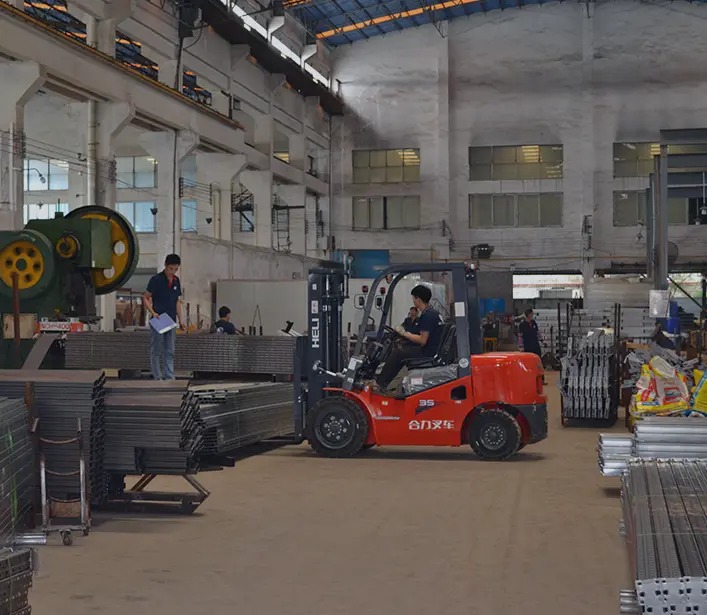
Founded in 2001, Guangzhou Heda Shelves Co., Ltd. is an internationally certified leader in the design, engineering, and OEM/ODM manufacturing of high-load warehouse racking, modular stacking frames, and industrial storage platforms. Operating out of a state-of-the-art 30,000 square meter automated manufacturing base with over 300 skilled technical personnel, we maintain a robust monthly output exceeding 30,000 metric tons of structural steel components.
We maintain end-to-end quality jurisdiction under one roof: automated steel uncoiling and precision slitting, continuous heavy-duty cold roll-forming lines, robotic multi-axis welding stations, automated laser tube profiling, and a proprietary 10-stage chemical pickling and electrostatic powder coating line. Our products are exported to over 120 countries across South Asia, North America, Europe, the Middle East, and Southeast Asia.
- CE Certified (No. 2435-CPR-8605159)
- ISO 9001:2015 Quality Verified (18624Q00169R0M)
- Free 24-Hour 3D CAD & Structural Layouts
- Full In-House Chemical Pickling & Coating
- FEM 10.2.02 & ANSI MH16.1 Compliance
- Direct Port Loading (Containerized Optimization)
B2B Procurement Deep-Dive: Stack Rack Engineering FAQ
Comprehensive engineering, safety, compliance, and supply chain answers addressing the technical queries of industrial buyers, facility planners, and structural consultants.
Q1: How do your engineers calculate safe stacking height and stack deflection under load?
We design stack racks per ANSI MH16.1 and FEM 10.2.02 structural standards. Stacking stability relies on the ratio between the base width and overall elevated height (typically restricted to a maximum 4:1 height-to-depth ratio for unanchored dynamic racks). Finite Element Analysis (FEA) verifies that under maximum dynamic load (e.g., 4 tiers high carrying 1,500 kg per level = 6,000 kg total base weight), horizontal frame deflection does not exceed L/200, preventing dangerous leaning and ensuring vertical load vectors remain centered within the base footprint.
Q2: What are the trade-offs between removable posts, folding uprights, and rigid welded frames?
Removable post systems offer the lowest unit production cost and highest empty packing density (saving substantial container freight), making them ideal for long-distance international export. Folding stack racks feature permanently hinged uprights that fold flat onto the base; this accelerates setup time and prevents loose components from going missing in busy distribution centers, albeit at a slightly higher fabrication cost. All-welded rigid frames deliver the ultimate structural rigidity for harsh outdoor industrial or heavy foundry use, but consume substantial shipping volume.
Q3: How do your finishes withstand coastal saline moisture and sub-zero cold chain condensation?
Standard paint finishes fail rapidly in humid marine hubs (like Chennai, Chattogram, and Karachi) or cold store staging areas due to thermal condensation cycle corrosion. HEDA Shelves utilizes a rigorous 10-stage chemical bath (hot alkaline degrease, acid pickling to de-scale, and iron phosphating) prior to robotic electrostatic application of thermosetting architectural-grade polyester powder (cured at 200°C for 20 minutes). For aggressive environments, we offer Hot-Dip Galvanizing (HDG) per ASTM A123 / ISO 1461, yielding an 85+ μm zinc barrier with self-healing sacrificial galvanic rust protection.
Q4: Can custom OEM stack racks be engineered for roll handling, tires, and irregular cargo?
Yes. OEM/ODM custom structural geometry is our primary core competence. For passenger and commercial TBR tire distribution, we fabricate specialized barrel-nesting base beams and post cradle arms that prevent tire tread sidewall deformation. For textile rolls and carpets, we engineer cradle-formed curved saddle decks. For heavy industrial casting engines or bulk agricultural super-sacks, we incorporate heavy wire mesh decks, side drop-gates, and lifting crane hoist lugs verified through destructive physical testing.
Q5: How do you ensure stack rack dimensional repeatability across high-volume production runs?
Repeatability is vital because a variance of just 2mm at the post base can magnify into a dangerous 25mm misalignment tilt at the 4th elevated tier. We eliminate manual variation by utilizing automated CNC tube-punching machines, dedicated heavy-gauge hydraulic clamping weld jigs, and automated robotic CO2 shielded welding cells. Every production batch is cross-checked against laser go/no-go gauges and subjected to a 100% test-fit interlocking trial before entering the chemical pretreatment and powder coating line.
Q6: How do stack racks perform in seismically active geographic zones without concrete floor anchors?
In high seismic zones (such as northern South Asia, parts of Southeast Asia, and the Pacific Rim), unanchored free-standing stack racks require careful engineering review. Because they are not rigidly anchored to the slab, they dissipate seismic wave energy differently than static pallet racking. Our structural engineering department reviews your local seismic acceleration data (PGA / Ss values) to specify broader base footprints, lower nesting tier limits, and reinforced interlocking cup depths (50mm–80mm socket depth) to prevent joint dislodgement during horizontal ground acceleration.
Q7: What documentation is provided for international procurement audits and customs clearances?
Every HEDA Shelves export shipment is accompanied by comprehensive documentation: Factory Material Test Reports (MTR / Mill Certificates conforming to EN 10204 Type 3.1) stating raw steel chemical composition and tensile/yield properties; Third-Party CE Certification (No. 2435-CPR-8605159); ISO 9001:2015 Quality Management System documentation; powder coating salt spray test reports; container packing plans; and detailed 3D step-by-step assembly and safety loading manuals.
Q8: How is container loading optimized to minimize landed cost per pallet position?
Shipping empty steel structures can result in paying for air if not meticulously planned. Our logistics engineers run parametric 3D container packing simulations for every custom order. Base frames are nested upright or interleaved horizontally, posts are banded into high-density steel-strapped bundles, and accessories are packaged in heavy-gauge steel cages. A standard 40HQ container typically accommodates between 140 to 280 complete heavy-duty stack rack units (depending on post style and base dimensions), drastically reducing ocean freight costs per unit.