Medium Duty
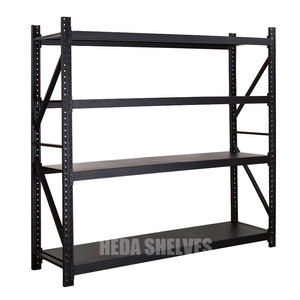
Engineered from prime cold-rolled steel coils with computerized continuous punching and roll-forming profiles. Select from our heavy-load pallet architectures or configure bespoke OEM/ODM dimensions for cold rooms, distribution centers, and manufacturing warehouses.
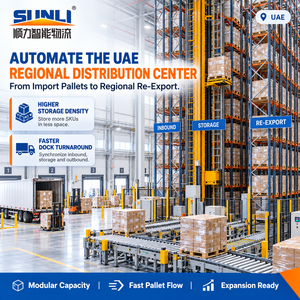
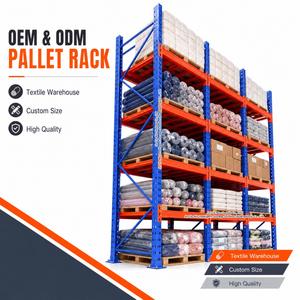
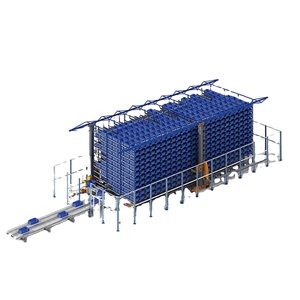
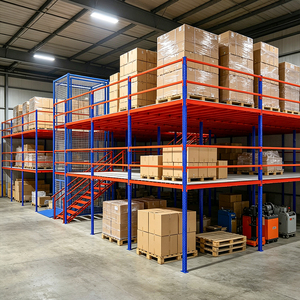
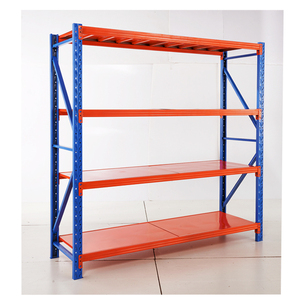
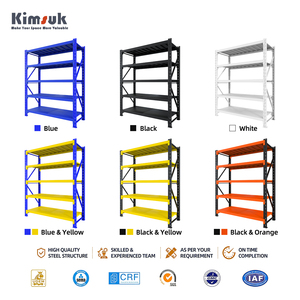
Radio shuttle racking represents the modern pinnacle of deep-lane semi-automated warehousing. Discover how specialized roll-formed rails, galvanized guide geometries, and synchronized electromechanical autonomous vehicles maximize cubic footprint utilization by up to 85% compared to conventional selective racking layouts.
In high-density radio shuttle configurations, structural uprights bear dynamic and kinetic forces alongside high static deadloads. Our OEM/ODM manufacturing facility standardizes on certified cold-rolled structural steel coils (grades Q235B and high-yield Q355B). Uprights undergo continuous cold roll-forming across 18 sequential roller stations to eliminate internal micro-stresses and maintain a profile linearity tolerance of less than 1:1000 along the entire length.
Unlike standard pallet racking that depends on basic horizontal box beams, our shuttle racking channels employ proprietary galvanized continuous-run guide rails engineered with a multi-bend Omega cross-section. These rails serve a dual functional role: they structurally tie opposing frame uprights across the depth of the bay while forming the ultra-stable, slip-resistant travel bed for the autonomous radio shuttle carriage. Because shuttles travel along lane depths of up to 40 pallets at speeds reaching 1.2 m/s unladen, channel width variations must not exceed ±1.0 mm, preventing wheel drift, side friction, or emergency e-stop sensor triggers.
Features high-torque brushless DC motors paired with four-point synchronous scissor or cam lifting mechanisms. Lifts pallets up to 1,500 kg in less than 1.8 seconds with ultra-smooth acceleration ramps that protect fragile cargo.
Redundant photoelectric arrays, physical collision buffers, and integrated laser time-of-flight (ToF) sensors detect lane blockages or misaligned pallets up to 3 meters in advance, initiating gradual decelerations.
Equipped with modular lithium-iron-phosphate battery packs supporting 8–10 continuous operating hours. Available with integrated heating blankets engineered to withstand deep-freeze environments down to -30°C.
Before issuing structural layout designs, industrial engineering teams assess operational trade-offs among floor area footprint, equipment capital expenditures, forklift fleet requirements, and stock rotation mechanics:
| Storage Architecture | Volumetric Density | Inventory Accessibility | Forklift Operating Danger | Throughput Velocity | Sub-Zero Cold Compatibility |
|---|---|---|---|---|---|
| Radio Shuttle System | Ultra-High (80-85%) | FIFO or LIFO Selectable | Near Zero (Trucks stay in main aisle) | Very Rapid (Auto-Cycle) | Superior (Specialized Shuttle) |
| Drive-In Racking | High (65-75%) | Strict LIFO (Limited FIFO) | High (Mast travels inside rack channels) | Slow (Cautious vehicle creeping) | Acceptable (High collision risks) |
| Push-Back Cart Racking | Moderate (55-65%) | LIFO Only (2-6 Pallets Deep) | Low (Aisle edge entry only) | Moderate (Gravity return control) | Moderate (Roller icing vulnerability) |
| Automated AS/RS (High-Bay) | Maximum (85-92%) | 100% Direct Computer Controlled | None (Fully autonomous crane aisle) | Continuous High Peak Output | Excellent (Dark warehouse execution) |
| Standard Selective Racking | Low (35-45%) | 100% Direct Access | Low-to-Medium (Standard aisles) | High (Limited by travel distances) | Expensive (Wasted refrigeration air) |
Procurement methodologies for automated racking systems are pivoting from standalone steel purchasing toward holistic Lifecycle Total Cost of Ownership (TCO). Discover the key shifts influencing enterprise requests for proposals (RFPs) across North America, Europe, the Middle East, and Asia.
While standard lithium batteries require off-lane swapping and dedicated charging stations, future shuttle fleet procurement is moving toward onboard supercapacitors and contact-rail opportunistic charging. Units charge in 15–30 seconds during forklift transfer or end-of-lane buffer staging, enabling 24/7 dark warehouse operations without human battery handlers.
Global supply chain EPCs require third-party structural finite element analysis (FEA) validated for local seismic classifications (such as IBC, Eurocode 8, or AS 4084). Procurement teams favor OEM exporters capable of dynamically calibrating upright cross-sections, baseplate anchoring, and spine back-bracing using parametric seismic simulation tools.
Refrigerated warehouse facilities consume substantial electrical energy chilling unused vertical space. Purchasing trends demonstrate that substituting selective racking with 30-pallet-deep radio shuttle systems drops refrigeration power overhead by up to 35% per stored pallet position, directly accelerating corporate ESG targets.
Firms are shifting away from rigid proprietary AS/RS commitments that disrupt active distribution center floors. Flexible procurement focuses on modular shuttle steelwork that installs seamlessly into existing selective or drive-in foundations, protecting original civil infrastructure investments and reducing capital paybacks.
Modern radio shuttle controllers must interface with third-party warehouse management systems. Specifiers mandate standardized RESTful APIs, MQTT messaging, or OPC UA industrial protocols, letting automated guided vehicles (AGVs) and autonomous forklifts place shuttles directly without human operators.
With aggressive microclimates in coastal ports, chemical storage facilities, and agricultural seed banks, standard electrostatic paint finishes are yielding to continuous hot-dip pre-galvanized uprights and zinc-aluminum-magnesium alloy coatings that survive 1,000+ hours of ASTM B117 salt spray exposure without oxidation.
Deep-lane automation is evolving from simple bidirectional shuttles toward fully omnidirectional 4D systems, autonomous layer-crossing lifts, and smart predictive maintenance ecosystems.
Traditional two-way radio shuttles travel forward and backward along single longitudinal channel depths, relying on manual forklifts or vertical stacker cranes to switch between lanes. The emerging generation of 4D shuttles features dual-axis wheel sets capable of turning 90 degrees at internal lane intersections.
This agility allows 4D shuttles to traverse both longitudinal storage lanes and lateral distribution cross-aisles independently. When coupled with dedicated high-speed vertical reciprocating conveyors (lifts), a coordinated swarm of 4D shuttles can reach any pallet position across multi-tiered racking blocks without human forklift intervention.
Modern radio shuttle fleets are smart IoT endpoints. Onboard edge computing modules monitor wheel-bearing vibration spectra, track motor drive currents, and calculate rail expansion tolerances in real time. Before rail misalignments or bearing friction cause an unscheduled channel stoppage, the warehouse management engine routes the shuttle to an extraction maintenance bay for preventative service.
Guangzhou Heda Shelves Co., Ltd. delivers direct factory engineering capabilities, high structural production capacities, and transparent global export logistics without intermediary markups.
Established in 2001, Guangzhou Heda Shelves operates an expansive 30,000 square meter primary production base with a dedicated engineering and manufacturing team of more than 300 professionals. Our monthly production capacity reaches 30,000 metric tons of finished structural steel framing, heavy pallet racking, automated AS/RS systems, and high-precision radio shuttle rail assemblies.
We manage the entire manufacturing cycle in-house: automated steel coil decoiling, computerized continuous multi-axis punching, CNC cold roll-forming, robotic MIG welding, 9-stage ultrasonic pickling and phosphating rust conversion, and dual-line electrostatic polyester powder coating. By keeping every stage under one roof, we guarantee complete raw material traceability and consistent dimensional tolerances across long containerized shipments.
01. Coil Metallurgy Analysis: Yield, tensile, and thickness testing upon delivery.
02. Computerized Slicing: High-speed sheet de-coiling and narrow slitting.
03. Automated Punching: Precision 50mm/75mm upright pitch tolerances.
04. Multi-Pass Roll Forming: 18 rolling passes for rigid Omega profiles.
05. Hydraulic Cutting: Burr-free length cuts to ±0.5mm structural accuracy.
06. Robotic Connector Welding: Double-bead MIG structural joint fusion.
07. Shot Blasting & Polishing: Removal of surface scale and sharp edges.
08. Chemical Pretreatment: 9-stage pickling, rinsing, and phosphating.
09. Electrostatic Powder Coat: Thermoset polymer cure at 200°C (60-80μm).
10. QC Bundling & Export Bracing: Steel band strapping with corner protectors.
Find answers to technical inquiries encountered by logistics managers, engineering consultants, and international EPC project contractors during shuttle racking selection and procurement.
For installations up to 10 meters tall, warehouse slabs should typically be at least 180mm–250mm thick with C25/30 or C30/37 reinforced concrete, supporting localized point loadings of 40–80 kN per upright baseplate. Floor levelness within the rack channels should conform to DIN 18202 Table 3 Group 3 or ASTM E1155 (FF 45 / FL 35) to prevent rail level variations and maintain accurate optical sensor readings.
Yes. OEM shuttles can be engineered with adjustable multi-sensor optical arrays to accommodate common standard sizes, such as Euro pallets (800x1200mm), Industrial/ISO pallets (1000x1200mm), and Asian pallets (1100x1100mm). The shuttle detects pallet boundaries automatically through photoelectric eye sensors. However, the steel racking lanes themselves must be designed to support the widest pallet footprint in the batch.
Cold-chain shuttle units incorporate food-grade, synthetic low-temperature lubricants that prevent viscosity thickening, IP65-sealed condensation protection, and specialized electronic drive components. Battery packs are enclosed in insulated thermal jackets with PTC heating elements that maintain core cell chemistry within optimal operating temperatures, preventing rapid capacity drop-off in frozen rooms.
A typical baseline is 1 radio shuttle per 400 to 1,000 pallet positions. However, this depends on hourly throughput needs: fast-moving SKU channels with high replenishment turnover require higher shuttle densities (or dedicated shuttles per level), while bulk long-term buffer storage can share one shuttle across multiple bays via forklift transport.
Shuttle systems feature multi-tier safety protocols. If battery charge reaches a critical 10% reserve threshold, the cart refuses new loading commands and automatically returns to the home picking face for retrieval. For mechanical issues, a recovery cart or a manual retrieval rod can be sent down the channel to latch and pull the unit back safely.
Every international export project is accompanied by EN 10204 3.1 steel mill test certificates, CE declaration of conformity dossiers (2435-CPR-8605159), ISO 9001 compliance sheets, powder coating dry-film thickness inspection reports, stamped structural calculation packages, and itemized container packing lists with CAD layout drawings.
In a LIFO (Last-In, First-Out) setup, loading and unloading occur from the same aisle face, which saves floor space by closing off the rear aisle. In a FIFO (First-In, First-Out) setup, an open loading aisle is maintained at one end and a dedicated picking aisle at the other. FIFO channels also incorporate safety stoppers and end-of-lane interlocks at both faces.
All framework members are labeled with color-coded, stamped reference tags matching the installation blueprints. We provide high-resolution 3D assembly models and step-by-step video instructions for local mechanical assembly contractors. For complex, large-scale projects, we can also dispatch senior site supervisors and commissioning engineers to manage alignment, rail leveling, and shuttle testing on-site.
Send us your warehouse dimensions, clear heights, pallet load weights, and SKU turnover targets. Our structural engineering team will deliver a comprehensive 3D CAD layout, finite-element safety assessment, and turnkey factory-direct quotation within 24–48 hours.