Engineered Industrial Racking & Pallet Systems
Manufactured from high-yield Q235B/Q355B structural steel, our heavy-duty warehouse racking solutions are custom roll-formed to optimize narrow aisle operational footprints and dynamic vertical cubic volume.
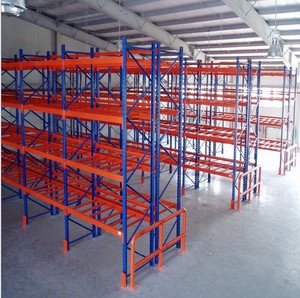
Heda HD-SR-02 Automated Pallet Runner Radio Shuttle Racking System (1067x1067mm)
Deep-lane radio shuttle platform designed for extreme sub-zero cold chain and high-velocity FMCG distribution centers.
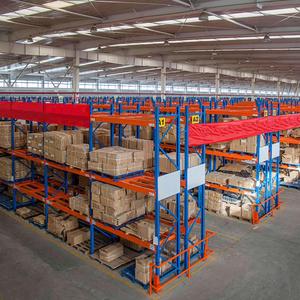
Peterack PT-HD Heavy Duty 5-Layer Steel Selective Pallet Rack Storage Shelves
Heavy-gauge beam-to-column interlocking storage rack with anti-corrosion electrostatic powder finish for 100% individual pallet selectivity.
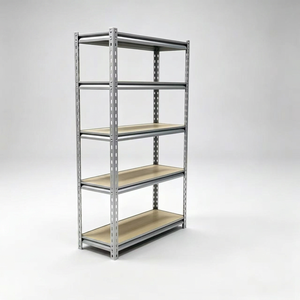
5 Tier Heavy Duty Boltless Shelving Unit Metal Storage Rack with MDF Board
Modular rivet shelving engineered for manual picking lines, archive storage, secondary buffer staging, and e-commerce sortation.
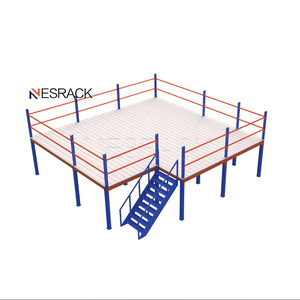
Attic Platform Heavy-Duty Storage Workshop Second Floor Steel Mezzanine System
Integrated structural platform doubling facility floor utilization for dual picking, pallet racking tiers, and administrative spaces.
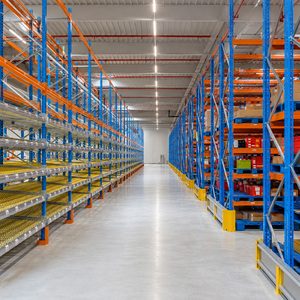
Warehouse Pallet Racking System Industrial Porta Paletes Q235B for 3PL Hubs
Heavy-duty roll-formed upright frames and box beams engineered to withstand intensive forklift impact in fast-moving third-party logistics.
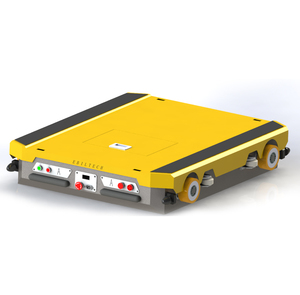
Heavy Duty Shuttle Pallet Racking System for Automated High-Density Sites
Laser-guided radio shuttle configuration minimizing operator aisle transit while boosting volume capacity up to 85% over standard racking.
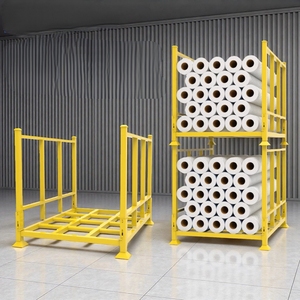
Removable Folding Stacking Rack Cloth Roll Stacking Metal Folding Pallet
Demountable post-pallet structure designed for cylindrical material handling, fabric rolls, tire storage, and dynamic temporary staging.
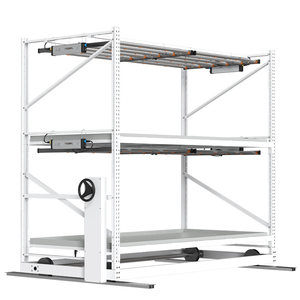
Hydroponic High Quality Ebb and Flow Vertical Multiple Tiers Growing Rack
Hot-dip galvanized, multi-layer high-density vertical propagation system engineered for commercial CEA urban agriculture and propagation chambers.
Narrow Aisle (VNA) Mechanical Principles & Floor Tolerances
Very Narrow Aisle (VNA) racking systems compress operating aisles down to 1,500 mm – 1,800 mm, recapturing up to 45% of floor space while enabling mast elevations above 15 meters. Operating at these extremes requires strict compliance with international structural codes and geotechnical flatness criteria.
Omega Upright Profile & Sectional Rigidity
Unlike standard wide-aisle storage, VNA upright frames experience elevated torsional moments caused by high-bay lateral acceleration. Our OEM/ODM factories utilize custom multi-bend continuous roll-formed Omega sections with 55mm / 75mm pitch.
- Optimized Moment of Inertia (Ix, Iy): Up to 18 cold-formed bends distribute compressive loads evenly along the web and flange.
- Interlocking 4-Claw / 5-Claw Connectors: High-tensile steel connectors secure box beams with zero longitudinal play, eliminating micro-sway.
- Deflection Limit (L/200 & L/300): Engineered to surpass ANSI MH16.1 and EN 15512 limits under static and dynamic seismic forces.
Floor Flatness Criteria (DIN 18202 & TR34)
When a turret truck or man-up VNA order picker operates at 14 meters, an unnoticeable 2 mm floor deviation translates to a catastrophic 40 mm tilt at the mast head. Floor engineering is inseparable from rack stability.
- Superflat Tolerances (VDMA 15307 / TR34 DM2): Requires defined-movement wheel tracks with strict transverse and longitudinal limits.
- Point Load Absorption: Heavy base plates distribute column foot loadings exceeding 180 kN to prevent localized concrete slab punch-through.
- Chemical Anchor Embedment: M12–M16 seismic-grade mechanical or resin anchor bolts drilled into 25–35 MPa cured concrete.
Wire Guidance vs. Mechanical Rail Systems
Guiding high-bay turret trucks safely along millimeter-precision corridors requires deliberate specification of either embedded inductive systems or mechanical barriers.
- Inductive Wire Guidance: 5–10 kHz low-frequency guide wire cut 15–20 mm into the floor slab, enabling faster transit and easier pallet handover.
- Structural Steel Guide Rails: High-profile 100×50×5 mm or 120×80×6 mm cold-drawn angle or channel rails bolted into the floor slab.
- End-of-Aisle Impact Protection: Heavy-duty cylindrical bollards and wraparound column protectors built to absorb 400 J kinetic hits.
| System Configuration | Aisle Width (Clearance) | Floor Space Utilization | Direct SKU Accessibility | Pick Rate (Pallets/Hour) | Max Mast Height |
|---|---|---|---|---|---|
| Narrow Aisle (VNA) Racking | 1,500 mm – 1,850 mm | 85%–90% | 100% (Individual Access) | 35 – 50 Pallets / hr | Up to 16.5 Meters |
| Standard Selective Racking | 3,200 mm – 3,800 mm | 45%–55% | 100% (Individual Access) | 25 – 35 Pallets / hr | Up to 9.5 Meters |
| Radio Shuttle High-Density | 2,800 mm (Feed Aisle) | 90%–95% | Lane Dependent (FIFO/LIFO) | 40 – 65 Pallets / hr | Up to 18.0 Meters |
| Drive-In Racking | Continuous Drive Lane | 75%–80% | Batch / SKU Restricted | 15 – 22 Pallets / hr | Up to 10.0 Meters |
Future Procurement Trends in High-Density Narrow Aisle Logistics
Warehouse construction costs, prime urban land scarcity, and labor constraints have fundamentally altered warehouse CAPEX priorities. Procurement managers are prioritizing adaptable automation-ready structural designs.
Hybrid AMR & VNA Turret Truck Operations
Modern layouts no longer separate automated guided vehicles from high-bay racking. Procurement demands VNA configurations with open cantilevered runouts and ground-level conveyor pass-through bays where autonomous mobile robots (AMRs) perform high-speed consolidation directly from turret pickers.
FEA Dynamic Modeling & Seismic Reliability
Global logistics REITs and multinational 3PL operators increasingly mandate Finite Element Analysis (FEA) dynamic simulation reports under regional seismic spectral acceleration (Ss, S1). Factory engineering teams must furnish digital twin deformation stress models before steel roll-forming begins.
Sub-Zero Cold Chain Densification
With refrigerated warehouse energy costs running 4 to 6 times higher than ambient facilities, retrofitting cold stores into automated VNA and shuttle runner profiles is essential. Demand has surged for pre-galvanized, low-temperature ductile steels that resist embrittlement at -30°C.
Decarbonized Steel & Eco-Coating Mandates
Cross-border supply chains face carbon accounting audits (CBAM and ESG scopes). Racking tenders now require documented Environmental Product Declarations (EPDs), scrap steel recycling rates above 85%, and heavy-metal-free electrostatic powder coatings cured in energy-recaptured ovens.
Direct OEM/ODM Manufacturing Infrastructure
Guangzhou Heda Shelves Co., Ltd. operates a 30,000 m² heavy-industrial manufacturing hub. We control the complete value chain in-house, from structural steel coil slitting and automated cold profile forming to automated powder coating and global container shipping.
10-Stage Precision Manufacturing Pipeline
Raw Material Chemical Analysis
Prime certified Q235B and Q355B carbon steel coils tested for yield, tensile, and elongation consistency.
Automated Continuous Hole Punching
High-speed CNC hydraulic punch lines ensuring exact 50mm / 75mm beam connector pitch tolerances within ±0.1mm.
Continuous Multi-Pass Cold Roll-Forming
Multi-stand profiling lines gradually shaping complex multi-flange Omega uprights without residual material tension.
Robotic Multi-Point Welding
Automated GMAW welding stations affixing multi-prong connector brackets to box beams with complete throat penetration.
7-Stage Pickling & Phosphating
Deep chemical immersion degreasing, descaling, and phosphating creating an impenetrable rust-resistant crystalline base.
Automated Electrostatic Powder Coating
Automated powder spray tunnels baking non-toxic thermoset polyester resin at 200°C for durable 80–120µm thickness.
Audited Quality Systems & Global Compliance
Every racking project is verified against international engineering norms. We support complete procurement audits and private label custom profile roll-tooling for system integrators and distributors.
Frequently Asked Questions by Supply Chain & Procurement Directors
Engineering, structural tolerances, manufacturing schedules, and custom OEM/ODM parameters answered directly by our factory design team.
How does an OEM/ODM narrow aisle racking manufacturer determine the required aisle width for turret trucks?
The clear aisle dimension ($W_a$) is calculated by taking the overall truck chassis width ($b_1$) or the pallet width ($b_{12}$) — whichever is greater — plus a defined safety clearance. For inductive wire-guided VNA trucks, the standard clear tolerance is pallet width + 200 mm (minimum 100 mm clearance per side). For mechanical steel-guided rail systems, the clear aisle is determined by the distance between the inside rail flanges, typically calculated as overall truck guide roller width + 50 mm. A final layout verification with the MHE manufacturer (Linde, Jungheinrich, Crown, Hyster) ensures zero turning sweep conflicts.
What is the structural distinction between Q235B and Q355B steel in tall narrow aisle upright frames?
Q235B possesses a nominal yield strength ($R_e$) of $235\text{ N/mm}^2$ and tensile strength of $370–500\text{ N/mm}^2$, making it ideal for standard beams and low-to-mid elevation uprights. In contrast, Q355B is a low-alloy, high-strength structural carbon steel with a yield strength of $355\text{ N/mm}^2$. In VNA systems exceeding 12 meters, Q355B is specified for bottom upright frames to resist high axial compressive forces without requiring excessively thick steel walls ($>3.0\text{ mm}$), lowering overall freight weight while guaranteeing compliance with EN 15512 safety load factors.
What concrete slab specifications and anchoring depths are required for VNA systems?
Narrow aisle high-bay installations require an engineered reinforced concrete floor with a minimum compressive strength of 25–30 MPa (C25/30) and slab thickness between 200 mm and 250 mm. Because point loads transmitted through the upright baseplates can exceed 150 kN to 200 kN, heavy-duty structural shims and enlarged steel baseplates ($200\times220\times10\text{ mm}$ or larger) are deployed. Anchoring is executed with high-performance ETA-approved M12 to M16 undercut mechanical expanding anchors or chemical resin injection systems embedded 120 mm to 160 mm into the solid slab, verified by on-site hydraulic pull-out testing.
Can HEDA Shelves manufacture proprietary profiles for OEM private labels and distributors?
Yes. As a full-service OEM/ODM manufacturer, we engineer custom roll-forming tooling dies tailored to private-label distributor specifications. Whether matching legacy teardrop configurations for North American markets, European 50mm metric boltless pitch patterns, or specialized Omega cross-sections, our in-house CNC tool-and-die center produces verified prototype sections within 25 business days. Private branding options include customized beam color matching (RAL standard), embossed corporate logos on upright caps, and serialized pallet load compliance plaques.
How does pre-treatment prevent coating peeling in humid coastal or cold storage conditions?
Surface adhesion failure in steel racking is caused by poor pre-treatment prior to powder coating. We route 100% of our roll-formed profiles through an automated 7-stage chemical conversion process: hot alkaline degreasing, twin water cascades, acid pickling to eliminate mill scale, surface conditioning, and zinc-iron phosphating. This chemically bonds a microscopically dense phosphate matrix to the steel, providing 500+ hours of continuous salt spray resistance (ASTM B117) and preventing rust creep even if the exterior paint surface is scuffed during forklift handling.
Request a Factory-Direct Engineering Consultation & CAD Layout
Collaborate directly with HEDA's senior structural engineers to design your narrow aisle storage facility. We deliver optimized CAD layout options, load calculation sheets, and transparent DDP/CIF landed cost estimates within 24 hours.
- Zero-cost preliminary CAD layout drawings and 3D isometric warehouse renderings.
- Engineering validation against EN 15512, ANSI MH16.1, and regional seismic zone factors.
- Factory direct volume tier discounts for system integrators, EPC contractors, and distributors.
Quick Project Initiation Checklist
Prepare these parameters to accelerate structural calculation and quote turnaround:
- Warehouse DWG/PDF plan showing clear height and column grids
- Pallet specifications (Width × Depth × Total Height including goods)
- Maximum unit load weight per pallet (kg)
- Forklift / Turret truck make, turning radius, and max lift reach
- Target discharge seaport (e.g., Nhava Sheva, Singapore, Rotterdam, Long Beach)