OEM/ODM Gravity Flow Pallet Racking Systems Factory & Suppliers
Precision-Engineered FIFO Dynamic Roller Lane Systems, Industrial Structural Racks, and Custom High-Density Logistics Solutions Certified to CE & ISO 9001:2015 Standards.
Factory Direct Supply
Engineered Dynamic Storage & Heavy-Duty Pallet Racking Systems
Custom OEM/ODM configurations manufactured with prime-grade cold-rolled structural steel. Optimized for high turnover, precise inventory rotation, and maximum volumetric utilization.
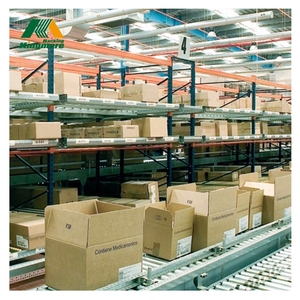
Custom engineered dynamic roller bed with high-impact polymer/steel rollers, dynamic slope calibration (2.5°–3.5°), and modular guide rails for swift carton and light pallet discharge.
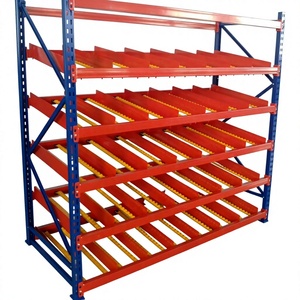
Ergonomic tilt-presentation shelf with cold-rolled steel channels. Guarantees uninterrupted FIFO order replenishment along manufacturing assembly lines and fulfillment centers.
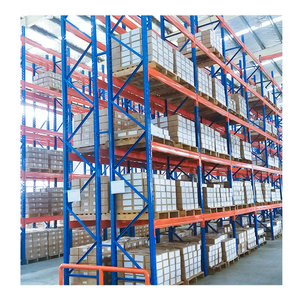
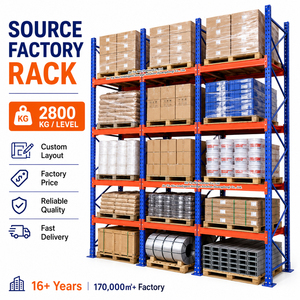
100% immediate pallet selectivity with interlocking uprights and safety load pins. Certified load capacity ranging from 1,000 kg to 4,500 kg per beam level under uniform distribution.
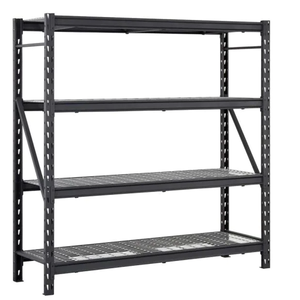
Rapid interlocking assembly requiring zero hardware bolts. Features cold-formed steel uprights with 50 mm pitch adjustability for diverse workshop and parts inventory setups.
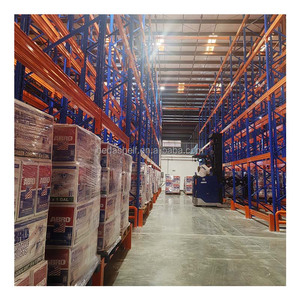
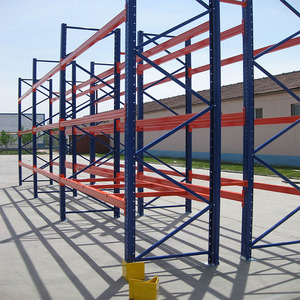
Rigid high-bay vertical storage up to 12 meters height. Structural column footplates and diagonal bracing resist seismic loading and high mechanical stresses during narrow-aisle lifts.
Tailor-made clear-span metal rack frameworks with anti-scratch epoxy powder coating. Designed to accommodate oversized timber, non-standard steel skids, and custom bin boxes.
Engineered with 304/316 grade stainless steel or heavy galvanization for hostile marine air, chemical handling zones, and pharmaceutical cold storage cleanrooms down to -30°C.
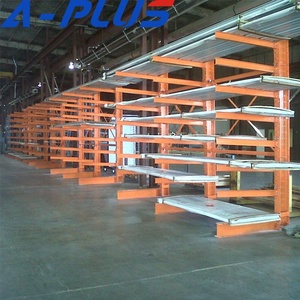
High-tensile structural arms engineered for long items, steel bars, timber profiles, and steel coils. Supports up to 3,000 kg per arm with single or double-sided upright configurations.
Technical Engineering White Paper
Gravity Flow Pallet Racking: Kinematics, Dynamics, and Structural Safety
Gravity flow pallet racking—commonly designated as live pallet storage or dynamic pallet flow racking—is a dedicated high-density intralogistics system utilizing inclined wheel tracks or roller beds set within rigid structural bays. Operating on pure gravitational potential energy, palletized unit loads automatically travel from the replenishment aisle (charge face) down to the retrieval aisle (discharge face). This mechanism fundamentally isolates forklift stocking maneuvers from order extraction, dramatically reducing equipment travel cycle times, warehouse footprint demands, and operational carbon footprints.
Fundamental Engineering Principle: Safe gravity pallet flow demands continuous velocity mitigation. By maintaining an inclination gradient precisely between 2.5% and 3.5% (approx. 1.5° to 2°), and embedding centrifugal brake rollers at dedicated 1-pallet intervals, unit loads accelerate smoothly without exceeding 0.3 m/s, preventing terminal impact damage.
1. Kinetic Speed Control and Centrifugal Braking Architecture
As pallet mass varies across real-world logistics applications (typically between 500 kg and 1,500 kg per skid), uncontrolled gravitational descent presents a critical safety hazard. Industrial gravity flow racking incorporates passive centrifugal brake rollers directly into the roller tracks. When a pallet moves over the brake roller, internal planetary gearing engages friction brake shoes against the outer drum casing. The resistive braking torque increases proportionally to the rotational speed, automatically clamping pallet velocity within the secure threshold of 0.15 m/s to 0.30 m/s regardless of whether the pallet is lightly or heavily laden.
2. Pallet Separation Mechanics at the Discharge Face
In dynamic lanes holding 10 to 20 pallets deep, the cumulative line pressure exerted on the front pallet by following pallets can exceed tens of kilonewtons. If an operator attempts to extract the front pallet while under this immense hydrostatic-like thrust, catastrophic rack binding, load tipping, or mast strain can occur. HEDA Shelves addresses this through mechanically linked automatic pallet separators (safety disconnect stops). When the first pallet docks at the pickup stop, the separation mechanism triggers a trailing latch that isolates all rear pallets 300 mm upstream. Only after the first pallet is lifted clear by the forklift does the trip arm reset, allowing the subsequent pallet to advance safely to the picking position.
3. Structural Upright & Beam Engineering Under Dynamic Impact
Unlike static selective racks where load forces are purely gravitational and stationary, dynamic flow systems must withstand continuous cyclical dynamic horizontal thrusts caused by pallets rolling and arresting. Uprights are fabricated from cold-rolled Q235B and Q355B structural steel, cold-formed with Omega (Ω) profiles that feature multiple stiffening ribs. Baseplates are oversized to distribute loads across slab joints, anchoring directly into reinforced concrete using dual mechanical wedge anchors or chemical resin capsules engineered against dynamic fatigue failure.
65%
Aisle Footprint Reduction
100%
Strict FIFO Compliance
0.3 m/s
Regulated Speed Limit
3,000 kg
Max Project Unit Capacity
Comparative Intralogistics Engineering Matrix
Storage System Type
Space Efficiency
Inventory Rotation
Forklift Travel Time
Mechanical Energy Req.
Ideal Application Scenario
Gravity Pallet Flow
Ultra-High (85%+)
Strict FIFO
Low (Dedicated Aisles)
Zero (Passive Gravity)
FMCG, Perishable Food, Cold Storage Buffers
Standard Selective
Moderate (40-50%)
Random Access
High (Aisle Congestion)
Zero
High-SKU, Low-Volume Distribution Hubs
Drive-In Racking
High (70-75%)
Strict LIFO
Very High (Drive Inside)
Zero
Seasonal Bulk Crop & Raw Material Stacking
Radio Shuttle Cart
Ultra-High (85%+)
FIFO or LIFO
Low (Aisle Interface)
High (Lithium Batteries)
Mega Deep-Lane Automation, Cold Vaults
Market Intelligence & Forecast
Future Procurement Trends in Gravity Flow & Dynamic Storage
How global supply chain volatility, land cost pressures, and warehouse automation are rewriting specifications for industrial racking procurement over the next decade.
Hybrid AMR & AGV Interfacing
Procurement teams are rapidly shifting away from manual forklift-only loading. Modern gravity flow tracks are increasingly built with precision dock funnels, laser reflector arrays, and optical sensors allowing Autonomous Mobile Robots (AMRs) and AGVs to execute sub-millimeter pallet drop-offs and retrievals directly at lane faces.
IoT Telemetry & Smart Rollers
Future specifications demand predictive maintenance. Instrumented roller beds with vibration monitors and infrared thermal sensors can now flag failing bearings or uneven line gradients before a lane binds, streaming telemetry to warehouse management systems (WMS) to prevent critical fulfillment halts.
Sub-Zero Cold Chain Resilience
With global demand for frozen food and biologics soaring, dynamic racking procurement requires certified low-temperature formulations. Roller bearings are packed with synthetic low-viscosity fluorinated lubricants rated to -35°C, eliminating brittle failure, grease freezing, and structural binding in walk-in freezers.
Circular Steel & Eco Pretreatment
ESG compliance is now a mandatory purchasing criterion among global enterprises. Modern factories must eliminate heavy-metal toxic baths. HEDA Shelves utilizes closed-loop pickling and silane-based conversion coatings, paired with 100% recyclable prime European/Chinese mill coils to meet strict corporate carbon targets.
Factory Prowess Since 2001
Enterprise Strengths of Guangzhou Heda Shelves Co., Ltd.
Direct manufacturing transparency, structural integrity verification, and end-to-end quality governance for high-stakes intralogistics infrastructure across 120+ export nations.
30,000 m² Mega Manufacturing Base
Located in Guangzhou, our production complex houses automated continuous roll-forming lines, automated laser pipe profilers, high-precision hydraulic punch presses, and multi-axis welding robots delivering up to 30,000 tons of structural steel storage equipment every month.
Certified Quality Control Infrastructure
All structural components comply with European CE Certification (No. 2435-CPR-8605159), ISO 9001:2015 Quality Management standards, and RoHS environmental directives. Our steel raw material certificates (MTC) confirm structural yield points before cutting begins.
10-Stage Anti-Corrosion Finishing
To endure high coastal humidity and monsoon climates across export territories, every steel profile undergoes high-pressure degreasing, ultrasonic rust removal, pickling, phosphating, electrostatic powder coating, and 200°C curing, delivering salt-spray resistance far exceeding ordinary paints.
Container-Optimized Logistics Packing
Components are pre-bundled with protective interleaving, heavy-duty strapping, and designated fork entry channels to maximize 20GP/40HQ shipping container volume utilization. This lowers ocean landed freight costs per pallet location to major global hub ports.
Free Comprehensive 3D & CAD Layouts
Our senior structural engineering team prepares tailored layout drawings, 3D renderings, and seismic calculations within 24 to 48 hours. We factor in your exact forklift turning radius (AST), clear roof truss heights, floor slab load capacities, and fire sprinkler clearances.
End-to-End Installation Supervision
Every overseas shipment contains full-detail 3D exploded assembly schematics, numbered element stickers, and structural fastener checklists. For large distribution centers, HEDA deploys certified field project managers for on-site commissioning and contractor supervision.
Procurement Guidance
Frequently Asked Technical Questions (FAQ)
Actionable answers to complex engineering, safety, and logistical queries frequently evaluated by project engineers, procurement officers, and third-party warehouse consultants.
What pallet quality is necessary for safe gravity flow operation?
Gravity flow racking requires pallets with sound, uninterrupted bottom runners oriented in the direction of roll. Pallets with warped deck boards, missing skids, protruding nails, or deflection exceeding 1/200th of span will cause friction jamming. For plastic or steel skids, roller diameters and center-to-center pitches are customized to prevent dynamic sag.
How is slope gradient calculated for varying pallet weights?
A standard gradient of 2.5% to 3.5% (approx. 30 mm to 40 mm vertical drop per linear meter) is mathematically modeled based on product weight distribution, roller bearing coefficient of rolling resistance, and pallet bottom smoothness. For lanes handling mixed loads from 400 kg to 1,200 kg, heavier spacing of centrifugal brake rollers is calibrated to govern top speed safely.
Can gravity pallet flow racking operate in deep-freeze environments?
Yes. For freezer rooms running between -18°C and -35°C, HEDA engineers specify stainless steel or hot-dip galvanized roller housings, polyurethane rollers with hardened steel centers, and non-congealing synthetic grease bearings. This prevents moisture-induced freeze-lock and maintains uniform kinetic rotation.
What parameters do you need to generate a free layout & quotation?
To produce an engineering proposal, we require: (1) Warehouse architectural drawings in CAD or PDF highlighting column grids, heights, and doors; (2) Pallet dimensions (Width x Depth x Height including cargo overhang); (3) Minimum and maximum unit weights; (4) Forklift model, mast collapsed height, and max lifting height; and (5) Project environmental data (indoor temp, seismic zone).
How do you handle floor slab load limitations?
Dynamic high-density racks exert heavy concentrated point loads at base plates. HEDA calculates upright footplate dimensions and thicknesses (typically 6 mm to 12 mm thick high-tensile plate) to keep soil and slab bearing pressures within your structural slab capacity (e.g., 50 kN/m²). For cracked slabs, heavy-duty spreader channels are engineered into the base design.
What are the typical project lead times for international delivery?
Standard OEM/ODM production runs take 15 to 25 business days from structural sign-off and deposit receipt. Shipping transit from Guangzhou / Nansha / Shenzhen ports takes roughly 12 to 25 days depending on the destination port (Nhava Sheva, Chennai, Chittagong, Colombo, Jebel Ali, Rotterdam, or Long Beach). Express project scheduling is available for emergency expansions.
Request an Engineered Layout & Factory Quote
Connect directly with HEDA Shelves structural engineers. We provide full CAD architectural layouts, 3D renderings, and detailed price schedules tailored to your facility's operational throughput—typically delivered within 24 hours.