Heavy Duty
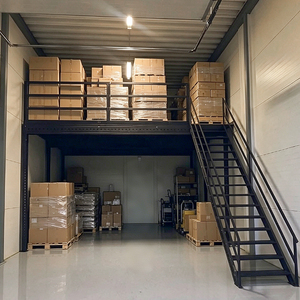
Discover our flagship export-ready heavy-duty warehouse racking solutions. Manufactured from premium Q235B/Q355B structural steel, our integrated platforms span from gravity-driven flow lines to multi-tier mezzanine floors.
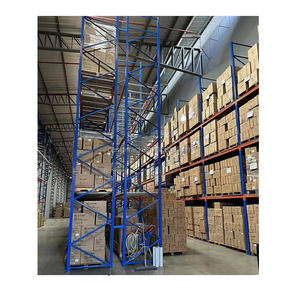
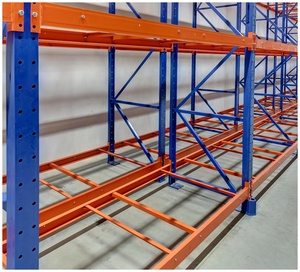
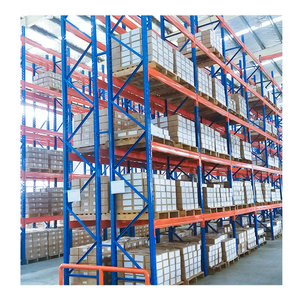
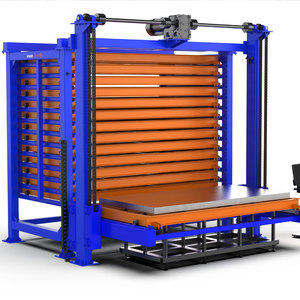
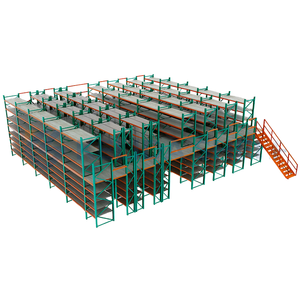
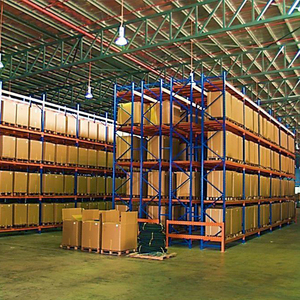
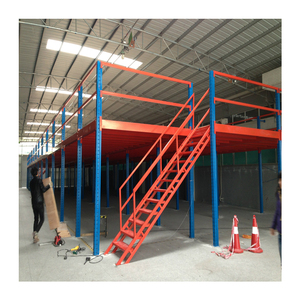
A deep technical analysis of dynamic First-In, First-Out (FIFO) live roller storage systems for global logistics hubs, cold-storage facilities, and high-velocity manufacturing supply chains.
"Dynamic gravity feed pallet racking systems eliminate up to 60% of forklift travel paths, condensing storage footprints by converting horizontal transit aisles into high-density accumulative dynamic gravity lanes. Operating strictly on potential gravitational energy, they provide zero-emission, fail-safe stock rotation."
Gravity feed pallet racking—widely recognized across logistics engineering as Pallet Flow Racking or Live Storage—represents the pinnacle of mechanical density for fast-moving consumer goods (FMCG), pharmaceutical buffer reserves, and high-turnover cold chain logistics. By leveraging an engineered decline gradient (typically between 2.8% and 4.0%), continuous cylindrical roller tracks allow pallets to glide under their own gravitational mass from the charging (loading) aisle to the discharging (picking) face.
Unlike static selective racks or deep push-back cart configurations, gravity feed mechanisms deliver strict, autonomous First-In First-Out (FIFO) inventory compliance without relying on electrified automated guide rails or onboard battery carriers. The core engineering complexity of pallet flow beds lies in kinetic energy regulation: managing acceleration, rolling friction, dynamic trajectory deviation, and pallet stopping impact over long multi-pallet channels (often up to 16 to 22 pallet depths).
An industrial gravity feed bed is not merely a pitched shelf; it is an integrated mechanical machine comprising precision sub-components engineered to absorb severe cyclical dynamic forces:
Strategically calibrated brake rollers incorporate internal planetary gears and viscous centrifugal clutch shoes. When a descending pallet approaches safe terminal velocity (>0.25 m/s to 0.3 m/s), centrifugal friction expands, applying proportional counter-torque to maintain uniform travel speeds regardless of pallet mass.
Heavy pallet trains behind the picking face create severe dynamic backpressure. Automatic mechanical load separators decouple the lead pallet from upstream followers, disengaging line pressure. This guarantees smooth, low-effort extraction by counterbalanced lift trucks or automated AGV forks without binding.
Full-width impact bumpers at the unload station absorb kinetic deceleration forces. Entry funnel guides at the charge end center incoming pallets, mitigating structural rack frame collisions while ensuring pallets sit squarely along the steel roller tracks.
Evaluating mechanical throughput, capital allocation per pallet position, volumetric space utilization, and operational safety metrics.
| Racking Architecture | Stock Rotation | Volumetric Density | Handling Cycles | Forklift Aisle Ratio | Suitability & Application |
|---|---|---|---|---|---|
| Gravity Feed (Pallet Flow) | Strict FIFO | Very High (85-90%) | Continuous Fast Flow | 2 Aisles Only (In/Out) | Perishable food, cold storage, pharmaceutical validation, cross-docking |
| Selective Pallet Racking | Any (Random) | Low (40-50%) | 100% Direct Selectivity | High (Aisle per Row) | General multi-SKU retail distribution centers, spare parts, low turnover |
| Double Deep Pallet Racking | LIFO | Moderate (60-65%) | Dual-Reach Truck Dependent | Reduced Aisles | Identical batch buffering, dry grocery wholesale, medium SKUs |
| Drive-In / Drive-Through | LIFO / FIFO | High (75-80%) | Slow (Mast Enters Rack) | Single Face (LIFO) | Homogeneous bulk raw materials, seasonal agricultural commodities |
| Radio Shuttle System | FIFO or LIFO | Maximum (85-92%) | Semi-Automated Battery Cart | Flexible Loading Lanes | Large volume deep-freeze cold chains, high SKU homogeny |
How international supply chains, sustainability mandates, and automated warehouse material handling equipment are transforming pallet flow procurement.
Global logistics hubs are upgrading charging and picking faces to accommodate driverless laser-guided vehicles (LGVs) and high-reach AMRs. Gravity flow systems are being procured with precision inductive sensor arrays, optical pallet position monitors, and millimeter-accurate docking guides to enable seamless, human-free material transfers.
Cross-border buyers in Europe, North America, and Australasia now demand verified Environmental Product Declarations (EPDs). Procurement specifications favor electric arc furnace (EAF) low-carbon recycled steel coils, non-toxic heavy-metal-free zinc phosphatizing, and ultra-low VOC electrostatic thermosetting powder coatings.
Cold-chain investment is surging across South Asia, the Middle East, and Latin America. Buyers are shifting from standard carbon steel bearings to cryo-greased sealed bearings and hot-dip galvanized roller housings, preventing brittle failure and moisture condensation jamming during rapid temperature cycling.
Addressing pallet bottom quality inconsistencies, variable freight weight profiles, and wear lifecycles with advanced materials science.
Traditional friction-pad brake rollers suffer from abrasive wear and particulate generation in cleanroom or food operations. Modern developments deploy copper-rotor permanent-magnet eddy-current controllers that generate dynamic opposing electromagnetic resistance directly proportional to pallet velocity without mechanical contact, offering near-infinite service life.
Standard zinc-plated steel tubes can cause excessive slip or slivering on soft wooden or plastic skids. Dual-compound rollers featuring impact-absorbing polyurethane outer tires deliver enhanced traction coefficients, dampening dynamic vibration while preventing runner split under 1,500 kg concentrated line loads.
Before cold-roll steel forming commences, OEM/ODM engineering teams utilize kinematic physics simulations. By modeling pallet warpage, bottom runner deflection, moisture absorption, and load center-of-gravity offsets, our engineers calibrate roller pitch and incline angles virtually, preventing costly on-site lane re-pitching.
Every upright post, dynamic flow bed rail, and structural beam connector manufactured in our facility undergoes rigorous verification aligned with CE (EN 15512) and ISO 9001:2015 standards.
Spectrometric tensile verification of certified Q235B/Q355B coils.
High-speed rotary decoiling & slitting to tight profile tolerances.
Continuous automatic punching of 50mm/75mm teardrop/diamond pitch.
Multi-station cold rolling forming 12-fold rigid Omega uprights.
Automated robotic MIG welding of beam lugs & nested box sections.
Mechanical surface descaling to Sa 2.5 profile for supreme adhesion.
Multi-stage acid pickling & silane anti-corrosion pre-treatment.
Electrostatic robotic powder deposition baked at 200°C (60-80μm).
Bench testing roller friction, brake calibration, and separator timing.
Steel-strapped, moisture-proof dunnage packing for ocean freight.
Direct answers to technical queries frequently posed by supply chain directors, structural consultants, and project procurement teams.
The industrial benchmark incline generally ranges from 3.0% to 3.5% (approx. 1.7° to 2.0°). For lightweight plastic pallets or cold store setups with frozen condensation, gradients may increase to 4.0%. For dense payloads exceeding 1,200 kg per pallet, gradients are frequently trimmed to 2.8% to 3.0% to prevent excessive kinetic force against the end discharge buffer.
Braking intensity is governed by internal centrifugal controllers. Lighter pallets (e.g., 300 kg) generate less rotational speed and encounter negligible drag from the brake rollers, allowing free movement. Heavier pallets (e.g., 1,200 kg) accelerate faster, triggering immediate centrifugal resistance that holds velocity below the critical 0.3 m/s threshold.
Full-perimeter wooden pallets (GMA 48x40 inch, Euro 800x1200 mm, Asian 1100x1100 mm) with solid bottom runner boards aligned in the travel direction are ideal. Pallets with warped, split, or missing bottom runners can stall. For steel containers, plastic skids with irregular ribs, or multi-directional runners, full-width triple steel roller tracks or specialized wheel beds are customized.
Our engineering calculations align with EN 15512 (European Specification for Steel Static Storage Systems), FEM 10.2.02 (Racking Design Code), ANSI MH16.1 (Specification for the Design, Testing and Utilization of Industrial Steel Storage Racks by RMI), and AS 4084-2023 for Australasia. Project designs are backed by formal static and dynamic seismic calculation packages.
Gravity flow systems involve delicate cylindrical rollers, springs, and bearings. We crate all roller tracks into reinforced wooden stillages with corner edge protectors and moisture-barrier film. Heavy structural upright frames and box beams are bundle-nested with PET straps and custom dunnage timber to achieve >95% container volume utilization without in-transit shear.
Due to localized point loads from accumulated pallet weights, concrete slabs typically require a compressive strength of ≥25 to 30 MPa (C25/30) and a minimum slab thickness of 200 mm to 250 mm with double-layer reinforcement. Base plates are precision laser-cut and anchored with heavy-duty chemical or wedge anchors evaluated against seismic shear requirements.
Since 2001, providing integrated warehouse storage engineering, cold roll fabrication, OEM/ODM private label production, and worldwide export distribution.
Founded in 2001, our engineering team has engineered over 10,000 completed warehouse installations spanning pharmaceutical cold stores, e-commerce mega-hubs, and heavy manufacturing distribution centres.
Operating dedicated workshops equipped with automated CNC slitting lines, continuous roll formers, automated robotic welding cells, and electrostatic powder coating spray tunnels delivering 30,000 tons monthly capacity.
Independently verified certifications including CE (No. 2435-CPR-8605159), ISO 9001:2015 Quality Management System (No. 18624Q00169R0M, valid to 2027), and RoHS environmental compliance.
Complimentary warehouse layout design, static calculation packages, 3D structural visual renders, and seismic floor anchor stress analysis provided within 24 hours of receiving site floor dimensions.
Connect directly with our senior structural racking engineers. Submit your warehouse CAD architectural drawing, pallet specifications (dimensions and gross weight), and target throughput velocity to receive a fully engineered proposal.
Get a Quote