Engineering Dynamics of Flow-Through (Gravity Flow) Pallet Racking
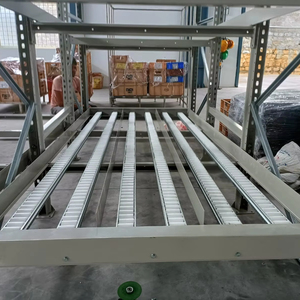
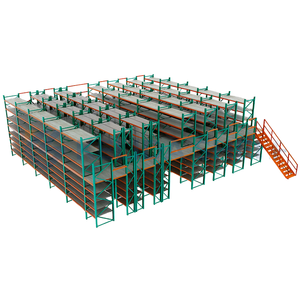
Flow-through pallet racking—universally designated across intralogistics engineering as pallet flow racking or gravity flow systems—represents the highest operational tier of non-powered, high-density warehouse storage. Functioning strictly on the First-In, First-Out (FIFO) logistical principle, these systems use gravity-driven roller beds inclined along structural channels. Pallets are fed into the loading face (charging end) and safely descend under gravity to the picking face (discharging end).
For large-scale fast-moving consumer goods (FMCG), third-party logistics (3PL) cross-docks, pharmaceutical temperature-controlled cold stores, and central distribution hubs, pallet flow racking eliminates excessive internal forklift transit. Unlike conventional selective racks that demand up to 60% of floor space for driving aisles, or drive-in racks that enforce Last-In, First-Out (LIFO) inventory queues, a correctly engineered flow-through racking system compresses storage density while automating physical pallet rotation without consuming a single kilowatt of electrical propulsion power.
Structural Reliability Guarantee: As an OEM/ODM manufacturing factory spanning 30,000 m², Guangzhou Heda Shelves Co., Ltd. fabricates every flow-through component—from 14-fold omega upright profiles to roll-formed galvanized roller channels—to exceed FEM 10.2.02, RMI MH16.1, and EN 15512 structural specifications.
Kinetic Friction, Brake Rollers, and Deceleration Physics
The primary engineering challenge in high-bay, long-run gravity flow racking (often extending 4 to 20 pallets deep) is kinetic energy management. Without precisely matched deceleration hardware, downward pallet acceleration can cause dangerous picking-face collisions, structural buckling, load shifting, or runaway impacts on the discharge stop.
Our engineering division addresses this via four coordinated design principles:
- Bed Inclination Profiling: We calculate dynamic slope gradients between 3.0% and 4.2% (approximately 1.7° to 2.4°) based on specific pallet attributes: bottom runner configuration (GMA 9-block, Euro two-way, perimeter four-way, or plastic skid), total weight variance, and contact friction coefficients.
- Centrifugal Speed Controller Rollers (Brake Rollers): Precision planetary centrifugal brakes are integrated directly into the roller tracks at calculated intervals (typically every 1 to 2 pallet depths). As pallet speed reaches 0.25 m/s, the centrifugal shoes expand against the internal brake drum casing, converting excess kinetic momentum into controlled friction without surface wear on the pallet base.
- Mechanical Ramp Separators (Back-Pressure Relievers): In deep-lane storage systems, the accumulated static back-pressure of 10 descending pallets weighing 1,200 kg each can exceed 1,500 kg of lateral force on the lead pallet. Our mechanical ramp separator disengages and holds back the subsequent pallet train until the front pallet is completely lifted clear by the forklift operator, eliminating fork pinch and load binding.
- Entry Guides and Visual Centering Cues: Heavy-gauge galvanized funnel guides ensure forklift operators dock loads dead-center, preventing skewing, diagonal drifting, or rail-jamming along long transit lanes.
Engineering Comparison: High-Density Storage Racking Systems
Selecting the correct high-density storage infrastructure demands balancing structural investment, operating speed, SKU velocity, and warehouse spatial geometry. The table below details key parameters verified across our OEM manufacturing deployments:
| System Type |
Inventory Protocol |
Spatial Footprint Utilization |
Pallet Access Velocity |
Energy / Drive Mechanism |
Seismic & Structural Duty |
| Flow-Through (Pallet Flow) |
Strict FIFO (First-In, First-Out) |
85% - 90% (Ultra High) |
Fastest (Decoupled Loading/Picking) |
Gravity Fed / Passive Centrifugal |
Heavy / Seismic Resilient Base |
| Push-Back Pallet Racking |
LIFO (Last-In, First-Out) |
70% - 78% (High) |
Moderate (Single Aisle Cart Push) |
Operator Forklift Thrust |
Medium to Heavy Duty Carts |
| Drive-In Racking System |
LIFO (Last-In, First-Out) |
75% - 85% (Very High) |
Slow (Mast Enters Rack Bays) |
Operator In-Lane Travel |
Extreme Upright Column Bracing |
| Radio Shuttle Automation |
FIFO or LIFO Selectable |
88% - 92% (Maximum) |
High (Automated Internal Runner) |
Lithium Battery Shuttle Drive |
Precision Laser Tolerances |
| Selective Pallet Racking |
100% Direct Selectivity |
40% - 50% (Aisle Intensive) |
Direct / Non-Buffered Pick |
Standard Forklift Travel |
Standard Column Sizing |
Future Procurement Trends in Industrial Flow Racking (2025–2030)
The global warehousing market is shifting toward automated, carbon-neutral, and modular dynamic storage. Sourcing directors and supply chain planners are moving away from catalog-bought static shelving toward customized, OEM-fabricated kinetic steel systems:
AGV & AMR Interface Compatibility
Traditional flow racks were designed for manual counterbalanced forklifts. Modern high-volume facilities specify narrow tolerances (±1.5mm) on loading and discharging decks, integrating optical sensors and automated guide tracks for autonomous mobile robots (AMRs).
Zero-Emission Passive Cold-Chain Logistics
Cold storage facilities operate under high energy footprints. Flow-through racking achieves ultra-dense cube utilization, reducing air-conditioned space per pallet by up to 55%. This drastically slashes refrigeration energy use without complex automated shuttle electronics.
Galvanic & Duplex Atmospheric Protection
With massive supply chain expansions across coastal, humid, and chemical-heavy regions, standard wet paints fail prematurely. Procurement orders require multi-stage pretreated surfaces, high-micron zinc electro-galvanizing, or continuous hot-dip galvanized finishes.
Industrial Evolution: From Primitive Gravity Chutes to Dynamic Intralogistics
The early generations of flow racking developed during the late 20th century were plagued by frequent pallet hangs, inconsistent roller spin speeds, premature bearing seizure, and structural sagging under sustained dead loads. Early implementations relied on basic stamped skate wheels that cracked under cold temperatures or heavy impact loads.
Today, Guangzhou Heda Shelves Co., Ltd. incorporates cutting-edge mechanical engineering to resolve historic dynamic-flow bottlenecks:
- Full-Width Cylindrical Steel Rollers: Rather than frail skate wheels, our heavy-duty flow channels feature precision cold-drawn steel rollers mounted on spring-loaded hexagon axles, distributing concentrated line loads evenly across pallet runners.
- Magnetic Eddy-Current Non-Contact Brake Systems: For advanced pharmaceutical cleanrooms and high-cycle chemical plants where brake dust from centrifugal shoes cannot be tolerated, we offer non-contact eddy-current magnetic retardation rollers, ensuring wear-free speed stabilization.
- Seismic Ductility Optimization: Using finite element analysis (FEA), we calculate dynamic harmonic forces during earthquakes. Our slotted, heavy-gauge base plates and diagonal structural X-bracing prevent localized beam dislodgement under high gravity-sway stresses.
Enterprise Capabilities: Why Procure Direct from Our Guangzhou Factory
With an operational legacy dating back to 2001, Guangzhou Heda Shelves Co., Ltd. is not a middleman or trading house. We are a heavy-engineering production factory with complete end-to-end manufacturing oversight across our 30,000 square meter plant:
Capacity 01
30,000 m² Facility
Continuous roll-forming lines, automated punching machines, robotic seam welders, and precision powder-coating lines running at scale.
Quality 02
Certified Integrity
Strict structural adherence audited by CE (No. 2435-CPR-8605159), ISO 9001:2015 (No. 18624Q00169R0M), and comprehensive RoHS material testing.
Finishing 03
10-Stage Treatment
Advanced pre-treatment including automatic pickling, phosphating, electrostatic powder spraying, and curing for zero-blister rust defense.
Logistics 04
Direct Sea Freight
Direct containerized bundling from Guangzhou to major world ports, including JNPT, Mundra, Chennai, Chattogram, Karachi, and Colombo.