Custom Engineering Heavy-Duty Pallet Flow, Dynamic Gravity Lanes, and Automated High-Density Shuttle Storage Systems Built to FEM 10.2.02, RMI, & EN 15512 Structural Standards
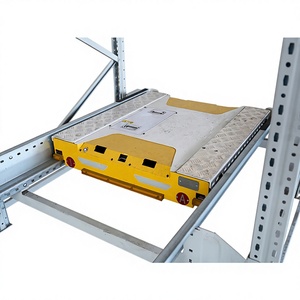
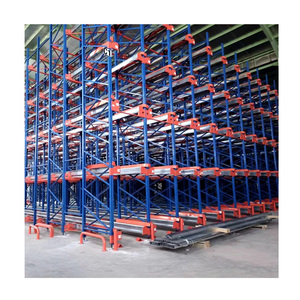
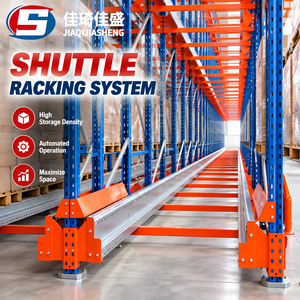
Multi-directional automated FIFO cold chain storage engineered for operations down to -30°C. Minimizes forklift travel while maximizing pallet cube density.
Temp: Down to -30°C4-Direction TravelPayload: Up to 1,500 kg
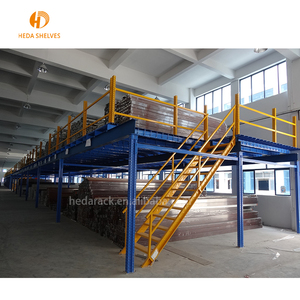
Integrated mezzanine platforms engineered on heavy-duty upright frames. Multiplies overhead cubic space for dual-level carton flow or high-density parts picking.
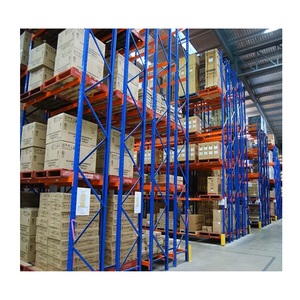
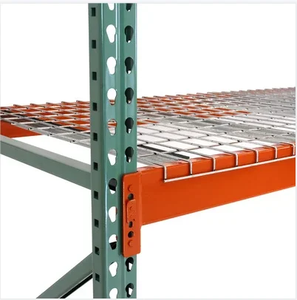
Engineered upright frames built with heavy gauge steel coils for dynamic gravity roller integration. Features rigid column footings and cross-bracing geometry.
Upright: Up to 120mmSurface: 70-90µm PowderHigh Dynamic Load
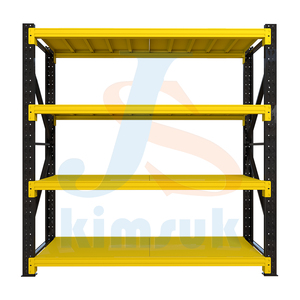
Custom-tailored lane architectures designed for multi-batch goods stock. Integrates WMS/WCS protocol interfaces for real-time FIFO stock rotation audits.
Bespoke Rail ExtrusionsAutomated Position LockOEM Private Labeling
Kinematics, Structural Mechanics & Physics of FIFO Storage Systems
In contemporary high-throughput supply chains, First-In, First-Out (FIFO) dynamic storage serves as the mechanical baseline for operational risk mitigation. From food and beverage handling to active pharmaceutical ingredients (APIs), the failure to control perishable lot sequences leads directly to inventory shrinkage, regulatory infractions, and lost capital. An optimized FIFO racking system replaces unguided human operator decisions with gravity-driven or electro-mechanically managed pallet lanes.
Gravity Gradient & Incline Physics
Pallet flow lanes rely on continuous gravitational gradients, typically calibrated between 2.8% and 3.5% (approx. 1:30 slope). Insufficient slope causes pallet stall; excessive slope results in runaway acceleration and impact loads at discharge stops. Brake roller placement must absorb kinetic mass safely.
Centrifugal Braking & Dynamic Damping
Our heavy-duty roller lines integrate internal centrifugal gear brakes calibrated to keep pallet velocity below 0.3 m/s regardless of pallet load variations (e.g., from 300 kg to 1,500 kg per position). Damping mechanisms prevent hydroplaning or structural racking fatigue over millions of continuous duty cycles.
Automatic Pallet Separators
Line pressure in deep lanes can reach thousands of kilograms against the front pallet. Our proprietary mechanical separator locks rear pallets 400mm back from the picking face, enabling the forklift operator to extract the primary pallet unencumbered by forward inertia.
Selecting the ideal FIFO equipment architecture requires weighing SKU density, SKU depth, building clear height, initial CAPEX, and automation compatibility. The following matrix illustrates the performance parameters of common system options.
System Classification
Access Methodology
Storage Density Index
Throughput Speed
Floor Footprint Utilization
Recommended Applications
Gravity Pallet Flow
Continuous Gravity Roller Track
Very High (up to 25 pallets deep)
Immediate gravity feed
Up to 80% clear area saving
FMCG, cold stores, fast-expiring foods, dairy
Automated Radio Shuttle
Semi-Automated Wireless Cart
Maximum (up to 60m lane depth)
Shuttle travel ~ 0.8–1.2 m/s
Up to 85% volumetric gain
Beverage buffering, raw material staging, deep freezers
Future Trends in FIFO Racking: 2025–2030 Procurement Outlook
Technological convergence, ESG mandates, and warehouse real estate costs are radically reshaping global equipment purchasing parameters. Discover the structural shifts directing capital allocations.
Hybridization: Gravity Lanes + Autonomous Mobile Robots (AMRs)
The traditional divide between fixed gravity flow and mobile robotics is dissolving. Procurement tenders increasingly specify dynamic FIFO gravity buffers integrated directly with picking AMRs and automated guided vehicles (AGVs), demanding millimeter-exact tolerances on structural discharge guides.
Metallurgical Longevity & Eco-Coatings
Procurement departments are replacing simple solvent finishes with low-carbon, zero-VOC electrostatic polyester powder coats, coupled with zinc-phosphated continuous immersion. Galvanized beam options are now mandatory across sub-zero automated cold chains to prevent micro-fissuring and coating delamination.
Digital Twin & FEA Load Simulation
Tier-1 EPC contractors and global 3PL operators no longer accept static capacity charts. Procurement contracts now demand full finite element analysis (FEA) under dynamic seismic conditions (RMI / Eurocode 3 / AS4084) and digital 3D BIM integration models (Revit/STEP) before sign-off.
25+
Years Engineering Mastery (Since 2001)
30,000 m²
State-of-the-Art Factory Floor
30,000 T
Monthly Manufacturing Capacity
120+
Countries Exported Globally
Guangzhou Heda Shelves Co., Ltd.
OEM/ODM Racking Manufacturing Prowess Tailored for Project Contractors
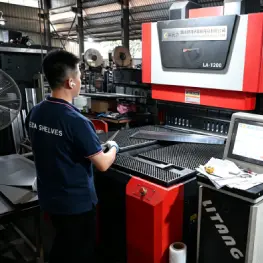
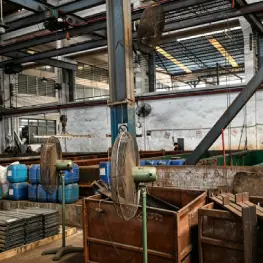
For more than two decades, Guangzhou Heda Shelves Co., Ltd. has stood at the forefront of structural storage manufacturing. Operating out of our expansive 30,000 square meter production facility in Guangzhou, China, our team of over 300 experienced engineers, structural technicians, and roll-forming operators executes complete turnkey racking solutions.
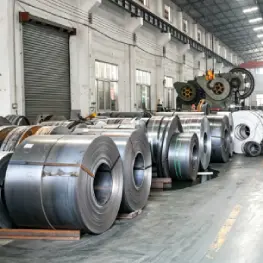
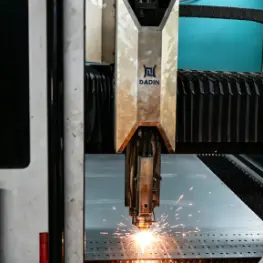
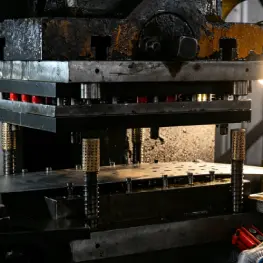
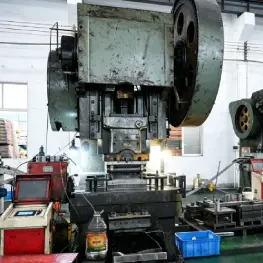
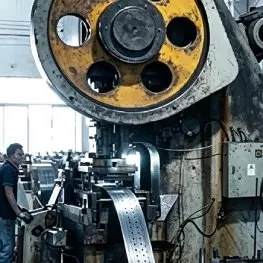
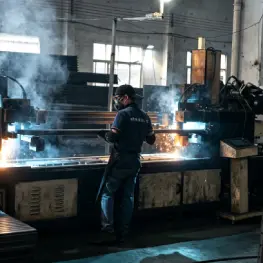
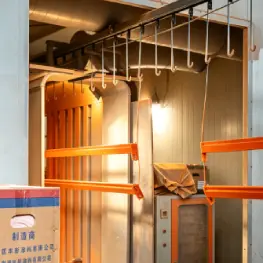
Unlike trading intermediaries, we govern every production phase in-house: high-precision coil slitting, continuous progressive hole punching, proprietary cold-roll forming, robotic laser cutting, submerged arc welding, multi-stage acid pickling with zinc phosphating, and automatic electrostatic powder coating.
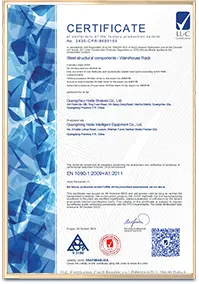
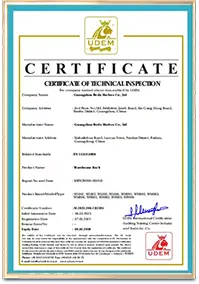
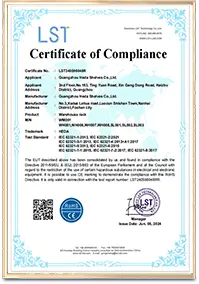
CE CertificationNo. 2435-CPR-8605159 verified
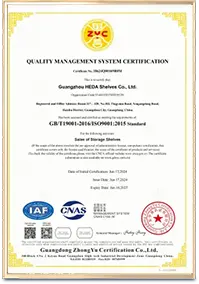
ISO 9001:2015 RegisteredCertificate No. 18624Q00169R0M
10,000+ Completed ProjectsProven in high-seismic and harsh climates
Free Engineering CAD / 3D BIMFull layout & static calculation in 24 hrs
Our 10-Stage Precision Steel Manufacturing Process
Every beam, upright column, dynamic roller bed, and anchor plate adheres to stringent metallurgical specifications and dimensional tolerance checks from raw coil to final container stowage.
Crucial engineering considerations, dimensional criteria, seismic certifications, and logistics insights for racking project directors, logistics engineers, and global procurement managers.
What concrete slab specifications are needed for heavy-duty FIFO pallet flow and shuttle installations?
Standard dynamic FIFO racking requires an engineered reinforced concrete slab with a minimum compressive strength of 25–30 MPa (C25/30 or 3,500–4,000 psi). Floor slab thickness should generally be at least 150mm to 200mm, engineered without joint interferences beneath upright footplates. For high-density radio shuttle and narrow-aisle gravity lanes, floor flatness should meet DIN 18202 Group 3 or ASTM E1155 F-min 50–75 ratings to avoid dynamic tilt oscillations.
How does pallet quality and bottom runner geometry influence gravity flow lane operation?
Gravity flow performance depends heavily on pallet bottom construction. Full perimeter or 3-to-5 bottom runner wooden pallets (GMA, Euro 800x1200mm, or ISO 1000x1200mm) run smoothly when runners travel parallel to roller tracks. Plastic pallets with irregular bottom grids or perimeter skids require multi-track cylindrical roller arrays or customized runner guides to prevent sagging. Pallet bottom deflection under maximum load must not exceed L/100 to eliminate track binding.
What surface finishes and metallurgy are required for FIFO systems operating in sub-zero cold rooms (-25°C to -30°C)?
Standard powder coatings risk brittleness and micro-cracking in severe low-temperature environments. For cold chain applications, we recommend cold-resistant low-temperature impact-grade steel (e.g., Q355D or Q355E) with certified Charpy impact testing at -20°C or -40°C. Structural uprights and guide rails can be specified with continuous hot-dip galvanization (minimum 60–80 microns coating thickness conforming to ISO 1461) to eliminate corrosion driven by refrigeration condensation cycles.
What international design codes and engineering safety margins are implemented in your OEM designs?
Our structural racking engineering follows the design parameters of FEM 10.2.02 (European Federation of Materials Handling), EN 15512 (Steel Static Storage Systems), RMI ANSI MH16.1 (Rack Manufacturers Institute), and Australian Standard AS 4084. Frame capacities feature a minimum safety factor of 1.65 to 1.95 against structural yield, with calculated beam deflection limits strictly kept within L/200 or L/300 under full design capacity.
What container loading strategies are deployed to minimize overseas shipping costs on dynamic FIFO equipment?
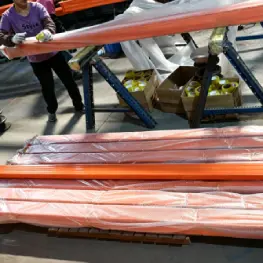
Ocean freight costs can significantly impact total landed project budgets. We bundle roll-formed upright frames into custom interlocking nests strapped with heavy-gauge steel bands and protective corner dunnage. Beams, roller channels, and structural pallet flow modules are palletized into container-depth units engineered to utilize over 95% of the volumetric payload within 40ft High Cube (40HQ) maritime containers, preserving component straightness while maximizing ton-per-cube efficiency.
Can HEDA Shelves engineer customized upright profiles and beam brackets for OEM brand distributors?
Yes. Through our comprehensive ODM/OEM program, we regularly develop custom roll-forming tooling for proprietary upright punch patterns (including teardrop, hex-hole, speedlock, and bespoke rectangular pitches at 50mm, 75mm, or 76.2mm). We can apply private branding stamps, customized component load labels, non-standard RAL epoxy color combinations, and custom component packaging to support distributor brand programs across North America, Europe, Southeast Asia, and South America.
Ready to Engineer Your Next High-Density FIFO Warehouse Project?
Send us your warehouse CAD drawings, pallet dimensions, operational loads, and temperature parameters. Our senior structural engineering team will deliver a comprehensive 2D layout, 3D rendering, and static calculation proposal within 24 hours.