High Selectivity
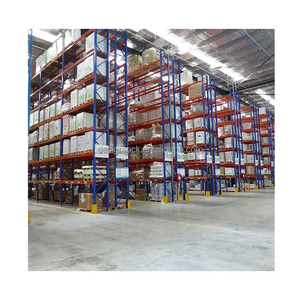
Engineered to international load benchmarks including FEM 10.2.02, RMI MH16.1, and EN 15512. Fully customizable roll-formed profiles manufactured from high-yield Q235B and Q355B structural steel.
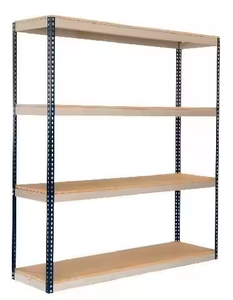
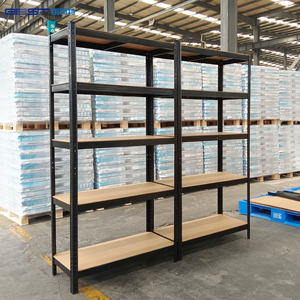
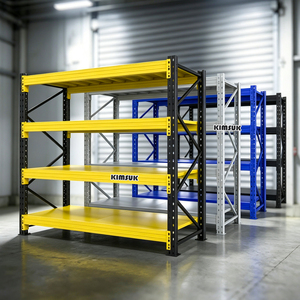
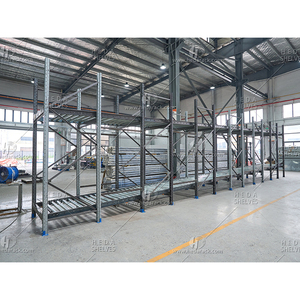
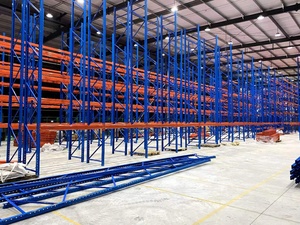
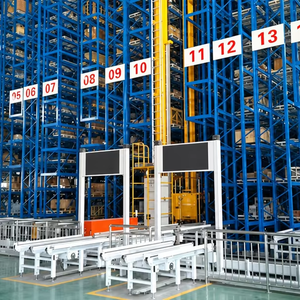
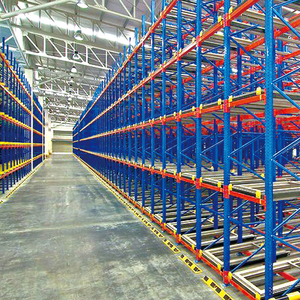
Combining 25+ years of metallurgy engineering with vertically integrated manufacturing, certified structural steel QA protocols, and global export packaging systems.
We engineer custom upright cross-sections, Omega profiles, hook-in connector geometries, and specific punch-hole pitches (50mm, 75mm, 76.2mm / 3 inches). Private-label branding, customized component colors (RAL matched), and tailored packaging fit your distribution catalog.
Equipped with high-speed automated continuous roll-forming lines, automated CNC multi-station punching presses, robotic CO₂ shielded welding clusters, and multi-stage powder coating systems, yielding over 30,000 metric tons per month with short production lead times.
Our quality management systems are certified under ISO 9001:2015 (Certificate No. 18624Q00169R0M, valid to 2027) and CE Structural Factory Production Control (CE Certification No. 2435-CPR-8605159). Rigorous chemical composition analysis and tensile testing are standard.
To resist industrial moisture, coastal salt air, and cold-chain condensation, all steel parts undergo an automated 8-stage pre-treatment cycle including chemical degreasing, ultrasonic acid pickling, and zinc phosphating before curing epoxy powder coating at 200°C.
With thousands of containers shipped annually to major ports (Nhava Sheva, Mundra, Chattogram, Colombo, Rotterdam, Los Angeles, Jebel Ali), we employ steel-dunnage banding, corrugated corner protectors, and computer-modeled nesting that optimizes 40HQ container load cubes.
Our in-house design team provides full structural analysis, aisle optimization, clear height calculations, and pallet load matrices within 24 hours. We evaluate building column grids, floor slab capacity, seismic zones, and forklift mast specifications before fabrication.
Industrial pallet racking is not merely a steel shelving framework; it is an unbraced or partially braced structural skeleton subjected to high dead loads, dynamic forklift impacts, and potential seismic ground accelerations. In modern high-bay facilities exceeding 12 meters in height, calculating second-order structural effects ($P-\Delta$ and $P-\delta$ moments) is essential to eliminate frame instability.
Guangzhou Heda Shelves utilizes prime cold-rolled structural steel coils sourced directly from large state-owned mills. Uprights and heavy-duty load beams are roll-formed from cold-rolled steel conforming to standard grade Q235B (yield strength $f_y \ge 235 \text{ N/mm}^2$, tensile strength $370\text{–}500 \text{ N/mm}^2$) or grade Q355B (yield strength $f_y \ge 355 \text{ N/mm}^2$, tensile strength $470\text{–}630 \text{ N/mm}^2$), comparable to European S235JR / S355JR and ASTM A36 / ASTM A572 Grade 50.
Design Insight: For high-bay AS/RS systems and seismic zone installations, utilizing high-tensile Q355B steel allows for thinner wall thicknesses without sacrificing structural moment capacity, reducing total frame deadweight while enhancing elasticity under dynamic load shifts.
Under international standards (such as FEM 10.2.02 and RMI MH16.1), the maximum permissible vertical deflection of a pallet rack beam under design safe working load (SWL) must not exceed $L/200$, where $L$ is the clear span distance between upright columns. For precision automated AS/RS facilities, our engineers design to an even more stringent $L/300$ or $L/400$ threshold to ensure robotic shuttle and crane sensor alignment.
| Racking Type | Standard Yield Grade | Deflection Limit ($\delta_{max}$) | Standard Beam Factor of Safety | Primary Application Environment |
|---|---|---|---|---|
| Selective Pallet Rack | Q235B / Q355B | $L / 200$ | $\ge 1.65$ (FEM / RMI) | General warehousing, fast SKU rotation, 3PL hubs |
| Drive-In / Drive-Through | Q355B High-Tensile | $L / 250$ | $\ge 1.80$ (Heavy dynamic) | Cold storage, beverage bulk, uniform seasonal SKU |
| Gravity / Pallet Flow | Q235B Structural | $L / 250$ | $\ge 1.65$ | Fast-moving consumer goods (FMCG), FIFO perishables |
| AS/RS Automated High-Bay | Q355B Precision Rolled | $L / 300 \text{ to } L / 400$ | $\ge 1.95$ | Lights-out automated warehouses, pharmaceutical DCs |
| Push-Back Cart Rack | Q235B / Q355B Hybrid | $L / 200$ | $\ge 1.70$ | Medium SKU counts, cold storage buffers, LIFO consolidation |
The structural capacity of an upright under axial compression is governed by local buckling, distortional buckling, and flexural-torsional buckling. Heda engineers employ multi-bend cold-roll profiling with integrated stiffener return lips (up to 12-bend continuous cold-roll forming). This cross-sectional geometry significantly shifts the shear center and amplifies the torsional moment of inertia ($J$) and warping constant ($C_w$), providing superior load resistance compared to simple open-channel profiles.
Shifting supply chain dynamics, regional supply chain hubs, and automated warehousing dictate how global procurement directors, 3PL logistics managers, and EPC contractors source structural steel racking.
Procurement teams are shifting away from nominal ex-works factory pricing to Total Landed Cost (TLC) calculations. With volatile ocean freight and local import tariffs, manufacturers providing high container cubic packaging density (exceeding 85% volumetric stuffing in 40HQ containers) yield substantial per-pallet savings upon customs clearance.
Warehouses are increasingly seeking future-proof modular racking. Buyers avoid rigid proprietary installations in favor of selective and drive-in frameworks that can be retrofitted with autonomous radio shuttles, AGV path guides, or elevated mezzanine picking decks without replacing base structural columns.
Global environmental mandates (including CBAM in the EU and corporate ESG commitments) require verified low-carbon steel sourcing, high scrap-recycled steel billets, and non-toxic, TGIC-free electrostatic powder coatings that eliminate VOC emissions during baking and long-term storage operation.
Enterprise tenders demand direct batch traceability from the steel coil origin to each dispatched beam bundle. QR-coded component labeling, ultrasonic non-destructive weld testing, and pre-shipment structural inspection dossiers have become standard procurement requirements.
The convergence of material science, robotics, and computational structural modeling is transforming industrial steel racking into advanced intralogistics infrastructure.
Eliminating conventional warehouse exterior construction, rack-clad buildings utilize the steel storage frame as the main structural support for external roof and wall cladding. This cuts structural steel erection timelines by up to 35% and optimizes building footprint density up to 40+ meters high.
Modern engineering employs finite element analysis (FEA) and non-linear pushover simulations to model frame behavior under seismic events (UBC, IBC, Eurocode 8). Heavy baseplate anchors and flexible top beam dissipators absorb ground shear without catastrophic progressive collapse.
Sub-zero cold storage facilities down to -30°C demand specialized steel chemistries to prevent brittle fracture phenomena. Advanced micro-alloyed steels combined with continuous hot-dip galvanizing prevent micro-cracking and corrosive peeling under freeze-thaw cycles.
Embedding wireless load sensors, tilt monitors, and impact alert nodes into upright base assemblies allows logistics managers to detect forklift collisions, beam overloading, and foundation settlement in real time, preventing warehouse racking collapses before failure occurs.
Clear, direct engineering answers to help you navigate project scoping, technical compliance, shipping logistics, and custom OEM manufacturing.
To deliver an optimized 2D layout and 3D architectural rendering within 24 hours, our engineering office requires: (1) Warehouse architectural drawings indicating clear height below the lowest obstruction, column grids, and dock doors; (2) Concrete slab thickness, grade, and reinforcement; (3) Pallet specifications (width, depth, overall height including cargo, and maximum gross weight); (4) Stored SKU turnover rates; (5) Forklift fleet specifications (turning radius, maximum mast reach, and outrigger constraints).
All cold-rolled steel profiles undergo an automated 8-stage pre-treatment line: alkaline hot degreasing, clean water rinse, rust-stripping acid pickling, surface conditioning, zinc-iron phosphating, and final passivating demineralized rinses. This produces an inert crystal micro-layer that bonds with electrostatic thermoset epoxy-polyester powder applied at 80–120 microns and baked at 180–200°C. For marine port storage or coastal installations, we provide optional hot-dip galvanizing conforming to ISO 1461.
Guangzhou Heda Shelves Co., Ltd. holds CE certification No. 2435-CPR-8605159, ISO 9001:2015 quality management system certification No. 18624Q00169R0M, and RoHS green compliance. For international tenders, we issue Mill Test Certificates (EN 10204 Type 3.1) detailing steel chemical composition (C, Si, Mn, P, S) and mechanical yield/tensile metrics, alongside factory batch deflection inspection reports verified under FEM 10.2.02 and EN 15512 guidelines.
Yes. As a primary OEM and ODM manufacturer, our factory possesses adjustable tooling and CNC multi-station hydraulic punching dies. We regularly fabricate teardrop punching (standard North American 2-inch pitch), European standard 50mm and 75mm diamond or keyhole patterns, and specialized 76.2mm (3-inch) pitch geometries. Upright cross-sections, beam connector lugs, safety pin systems, and corporate color schemes (RAL matching) can be custom-tooled to your brand's specifications.
All upright frames and beams are nested and bundled utilizing high-tensile steel strapping over heavy-duty corrugated board corner protectors and wooden support blocks. Components are wrapped with waterproof shrink film to prevent sea moisture intrusion. Small hardware components, baseplates, shims, and safety locking pins are packed in reinforced wooden crates or heavy-gauge corrugated cartons secured on pallets. Each bundle is tagged with weatherproof barcodes corresponding to the container packing list.
Drive-In racking is a Last-In First-Out (LIFO) system where forklifts drive directly into storage lanes, offering maximum pallet density but lower throughput and higher risk of forklift impact. Push-Back racking utilizes nested rolling carts on an inclined track (LIFO) operating from a single aisle, eliminating forklift entry into the rack for faster handling. Gravity Flow racking uses full-depth roller beds inclined at 3–4% to deliver strict First-In First-Out (FIFO) movement, ideal for date-sensitive perishable goods and high-velocity picking buffers.
Using structural FEA software, our engineering team determines the maximum axial compressive load ($N_{Ed}$) and overturning base moment ($M_{Ed}$) exerted by the upright frame onto the floor slab under dead load, live load, forklift impact, and seismic combinations. Baseplate thickness (typically 6mm to 20mm) and surface contact area are sized to ensure concrete bearing pressures remain below permissible limits, while heavy-duty mechanical expansion or chemical wedge anchors (e.g., M10 to M16) are selected to resist combined tension and shear pullout forces.
Every international shipment includes a complete installation dossier: general arrangement plans (GA drawings), detailed section blowups showing beam connector locking configurations, anchor installation torque specifications, and step-by-step assembly guides. For large distribution centers and complex mezzanine systems, our engineering office provides remote video support and can dispatch certified commissioning supervisors to oversee local installation crews.
Consult with our structural engineering team today. Submit your warehouse floor plan and storage volume targets to receive a free, professional 2D CAD layout, 3D architectural rendering, and itemized factory-direct quote within 24 hours.