[email protected] Serving India · Bangladesh · Pakistan · Sri Lanka · Nepal
English (South Asia)
Global Manufacturing & Turnkey Engineering Excellence

OEM/ODM Back To Back Pallet Racking Manufacturer & Exporter

Precision-Engineered Heavy Duty Storage Architectures, Advanced Cold-Form Metallurgy, and High-Throughput Warehouse Optimization for Global Logistics Hubs

Engineered Storage Portfolio

Mission-Critical Industrial Racking Solutions

Designed to FEM 10.2.02 and ANSI MH16.1 specifications. Explore our factory-direct heavy-duty racking systems deployed across 120+ countries for distribution hubs, 3PL logistics facilities, and cold storage chains.

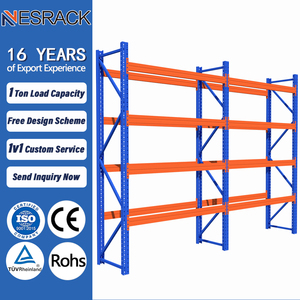
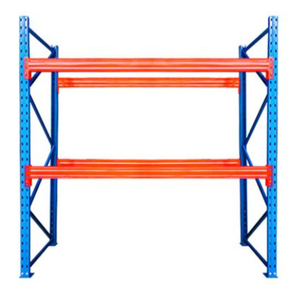
Q235B Certified Custom Warehouse Beam Racking Selective Pallet Rack System Q235 Carbon Steel Pallet Storage Racking Selective Pallet Rack

Custom Warehouse Beam Racking Selective Pallet Rack System

  • 100% Direct pallet accessibility
  • Adjustable 50mm / 75mm beam pitch
  • Load rating: 1,000–4,500 kg/tier
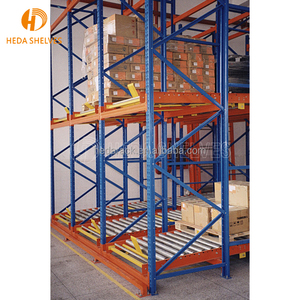
FIFO Flow Factory Industrial Steel Gravity Flow Roller Racking Systems Corrosion Resistant FIFO Carton Flow Racks For Warehouse

Industrial Steel Gravity Flow Roller FIFO Racking System

  • First-In, First-Out rotation control
  • High-durability galvanized steel rollers
  • Separation of loading & picking aisles
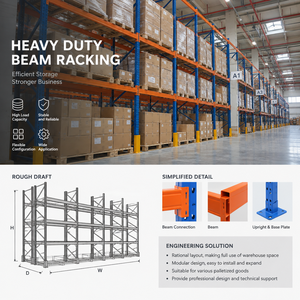
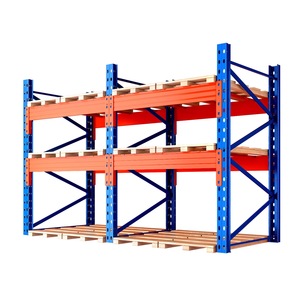
Heavy-Duty Industrial Steel Beam Rack Heavy Load Pallet Racking For Logistics Warehouse Storage Shelf Rack

Industrial Steel Beam Heavy-Load Logistics Pallet Rack

  • Engineered box-beam structural profile
  • Multi-claw locking connectors for safety
  • Up to 5,000 kg/tier uniform load
Multi-Tier Heavy Duty Warehouse Shelving Industrial Steel Storage Rack With 5 Layers Racks for Warehouse Goods

Heavy Duty 5-Layer Industrial Steel Goods Shelving

  • Reinforced cold-rolled steel decking panels
  • Boltless quick-assembly modular slots
  • Ideal for manual picking & carton storage
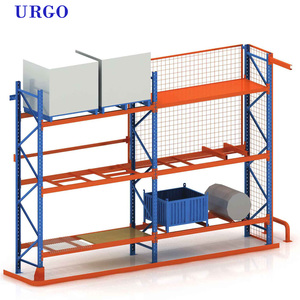
Picking Hybrid Pallet Racking System Warehouse Shelves Heavy Duty, Warehouse Picking Shelves Rack

Warehouse Picking & Heavy Pallet Combination Rack

  • Upper tiers palletized; lower tiers manual
  • Integrated wire mesh or timber shelf decking
  • Designed for rapid omnichannel distribution
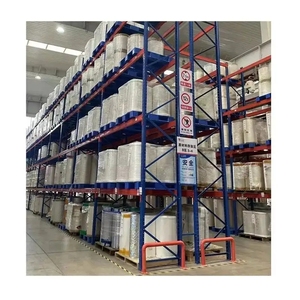
High Density Heavy-Duty Beam-Type Steel Industrial Warehouse Drive-In Storage Racks Detachable Thickened Multi-Tier

Heavy-Duty Thickened Multi-Tier Drive-In Storage Rack

  • Eliminates working aisles for 80% density
  • Continuous pallet support rails
  • Primary choice for cold storage & beverage
Adjustable Metal Racking Adjustable Heavy Duty Rack System Warehouse Storage Steel Warehouse Pallet Shelving

Adjustable Metal Pallet Racking & Heavy Warehouse Shelving

  • Universal modular profile compatibility
  • Epoxy powder coat with salt-spray resistance
  • Fast re-profiling for seasonal SKU shifts
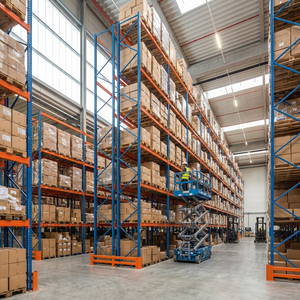
VNA Space Saver Very Narrow Aisle Pallet Rack / VNA Heavy Duty Racking System

Very Narrow Aisle (VNA) Heavy Duty Racking System

  • Aisle width compressed to 1.6m–1.8m
  • Reaches up to 15m–18m vertical height
  • Magnetic floor wire or guide rail steering
Technical White Paper

Structural Engineering Architecture of Back-to-Back Pallet Racking Systems

In modern industrial logistics, the Back-to-Back (B2B) pallet racking configuration represents the undisputed industry standard for combining high selective throughput with superior footprint efficiency. By placing two single rows of selective pallet racks back-to-back, warehouse operators immediately eliminate unnecessary operating aisles, reclaiming up to 40% of horizontal surface area while retaining 100% individual pallet selectivity.

From a structural mechanics standpoint, a back-to-back configuration is not simply two standalone racks placed in proximity; it operates as an interdependent, hyper-stabilized structural module. Upright frames are rigidly linked across the longitudinal flue space by precision-engineered, heavy-gauge steel row spacers. These spacers serve two vital engineering roles: they maintain mandated NFPA 13 longitudinal flue spaces (typically 150mm to 300mm / 6" to 12") for vertical fire sprinkler water penetration, and they transform the cross-aisle slender frame profiles into an interconnected truss framework with drastically reduced effective buckling lengths.

30,000T
Monthly Manufacturing Capacity
30,000m²
State-of-the-Art Production Base
25+ Yrs
OEM/ODM Engineering History
100%
Traceable High-Tensile Steel

Advanced Cold-Formed Steel Metallurgy & Structural Design Standards

The core structural members of our back-to-back racking systems are cold-roll-formed from premium certified structural carbon steel grades, predominantly Q235B (yield strength $f_y \ge 235 \text{ MPa}$) and Q355B / S355JR (yield strength $f_y \ge 355 \text{ MPa}$). Cold-forming provides work-hardening advantages, elevating tensile properties along profile bend radiuses and delivering an optimum strength-to-weight ratio compared to hot-rolled structural sections.

Our upright columns feature an engineered omega or multi-faceted perforated profile designed through Finite Element Analysis (FEA) to counter local, distortional, and global flexural-torsional buckling. Calculated strictly in accordance with EN 15512:2020 (Steel static storage systems – Adjustable pallet racking systems – Principles for structural design) and the American ANSI MH16.1:2012 (Specification for the Design, Testing and Utilization of Industrial Steel Storage Racks), horizontal beam deflection under maximum working design load is maintained well within strict limits ($\delta \le L / 200$, or optionally $\delta \le L / 250$ for fragile or automated goods handling).

Engineering Comparison: Warehouse Storage Topology Matrix

To assist procurement directors and facility planners in selecting the appropriate storage framework, the matrix below benchmarks the Back-to-Back selective configuration against alternative high-density topologies across essential operational parameters.

Storage Topology Pallet Selectivity Footprint Density Forklift Compatibility Throughput Speed Relative CapEx / Pallet
Back-to-Back Selective Rack 100% Direct Medium (40-45%) Standard Counterbalance / Reach Maximum (Rapid) Lowest Baseline
Double-Deep Pallet Rack 50% Direct (LIFO) High (55-60%) Deep-Reach Pantograph Truck Moderate Low (+15%)
Very Narrow Aisle (VNA) 100% Direct High (60-65%) Specialized Turret / Order Picker High Moderate (+40%)
Drive-In / Drive-Through Low (Batch / LIFO) Very High (75-80%) Standard Counterbalance inside bay Slow to Moderate Moderate (+30%)
Radio Shuttle Automation Lane Selective (FIFO/LIFO) Maximum (85%+) Standard Forklift + Autonomous Cart High Automation Capital Intensive

Seismic Engineering & Subfloor Anchor Load Transmission

A critical blind spot in industrial pallet rack procurement is the mechanical interaction between upright column baseplates and the concrete floor slab. Under seismic events (governed by Eurocode 8 EN 1998, ASCE 7, or regional codes like IS 1893), dynamic lateral accelerations induce intense cyclical moments and axial tension/compression couples into the rack uprights.

As a seasoned OEM/ODM manufacturer, our engineering team supplies complete structural calculations for every project. We calculate the exact seismic shear, overturn moments, and uplift reactions, tailoring heavy-duty enlarged seismic footplates and engineered mechanical wedge anchors or chemical epoxy capsules. Whether your facility features an unreinforced mass concrete slab, a fiber-reinforced design, or post-tensioned floors with strict drilling depth limits, our custom layout engineering ensures that the foundation remains uncompromised under full static and seismic load combinations.

Enterprise Manufacturing Authority

Why Global Supply Chains Trust Our Production Floor

Operating since 2001, Guangzhou Heda Shelves Co., Ltd. combines rigorous quality control systems, in-house roll forming lines, and expansive export engineering to guarantee structural safety and landed project cost-effectiveness.

Verifiable International Accreditations

Full CE certification (No. 2435-CPR-8605159), ISO 9001:2015 quality assurance (No. 18624Q00169R0M), and RoHS compliance for strict international audit compliance.

Full OEM/ODM Custom Profiling

Customization across all parameters: upright profiles from 80mm to 140mm face widths, beam gauges from 1.5mm to 2.5mm, bespoke row spacer spans, and custom corporate RAL coatings.

Massive Industrial Scale & Capacity

Our 30,000 square meter intelligent manufacturing base supports over 300 experienced engineers and technicians, delivering more than 30,000 tons of structural steel storage equipment every month.

Maritime Container Space Optimization

Specialized bundled framing algorithms maximize 20GP/40HQ stuffing density, preventing transit deformation and driving down CIF landed logistics costs per pallet location.

Automated Factory Lifecycle

The 10-Stage High-Precision Manufacturing Flow

From raw chemical mill test verification to final protective container stuffing, every structural component undergoes rigorous in-line quality gates to ensure dimensional fidelity and surface longevity.

Stage 01
Steel Mill Inspection

Spectral chemical and mechanical tension testing of incoming prime hot-rolled coils.

Stage 02
CNC Slitting & Cutting

High-speed slitting lines maintaining strip width tolerances within ±0.1mm for roll tooling.

Stage 03
Continuous Punching

Multi-ton automated mechanical press lines punching pitch holes with zero cumulative pitch drift.

Stage 04
Precision Roll Forming

Multi-stand continuous roll forming stations cold-forming uprights with residual stress control.

Stage 05
Box Beam Profiling

Continuous twin-C seam crimping and interlocking for maximum horizontal beam moment capacity.

Stage 06
Robotic Connector Weld

Automated MIG/MAG robotic welding cells joining heavy 3-claw or 4-claw beam end connectors.

Stage 07
Deburring & Polishing

Automatic edge radiusing and slag removal preventing micro-cracking and installer injury.

Stage 08
8-Step Pretreatment

Immersion degreasing, acid pickling, and phosphating creating an iron-phosphate anti-corrosion barrier.

Stage 09
Thermoset Powder Coat

Electrostatic application of epoxy-polyester powder baked at 200°C for a 60–90µm durable coat.

Stage 10
QC Audit & Packaging

Cross-hatch adhesion testing, ultrasonic thickness gauge inspection, and steel strapped bundling.

Strategic Sourcing Intelligence

Future Procurement Trends in Industrial Storage Racking

As automated logistics, sustainability criteria, and supply chain volatile shocks reshape global operations, enterprise buyers are redefining technical procurement mandates.

AGV & AMR Autonomous Integration

Modern back-to-back installations are being engineered for direct interoperability with Autonomous Mobile Robots (AMRs) and automated forklifts. This demands tighter plumbness tolerances (under 1:1000) and elevated floor-level beam clearances for robotic undercarriage docking.

Decarbonization & Scope 3 Audits

Multinational warehouse developers are evaluating racking suppliers based on environmental product declarations (EPDs). Sourcing from facilities leveraging energy-efficient continuous roll forming lines and scrap-recirculation protocols has shifted from a novelty to a contractual scoring metric.

IoT Structural Impact Telemetry

Procurement frameworks are rapidly adopting digital-twin ready racking. Smart baseplates with embedded piezoelectric strain sensors and telemetry gateways alert facility managers via cloud dashboards whenever forklift collisions exceed yield thresholds, averting progressive progressive collapses.

Climate-Resilient Galvanic Protection

With massive supply chain expansions across high-humidity coastal zones (India, Bangladesh, Southeast Asia, GCC), buyers are shifting from basic single-coat powder treatments to hot-dip galvanized uprights (ASTM A123) and multi-metal zinc-nickel coatings to withstand monsoon condensation.

Procurement Engineering FAQ

Technical Dilemmas & Engineering Specifications Solved

Detailed answers to the critical structural, regulatory, and logistics questions asked by warehouse project engineers, 3PL procurement heads, and structural consultants.

How do you determine the quantity and vertical position of row spacers in Back to Back racks?

Row spacer sizing and positioning are dictated by the overall frame height and structural slenderness ratio. According to FEM and RMI standards, row spacers must be installed at upright frame node points (where horizontal and diagonal bracing struts meet the column). Typically, a frame up to 6,000mm in height requires at least 2 to 3 row spacers per frame pair: one near the bottom (above the lower beam elevation), one near the top, and one centrally located. For racks exceeding 9 meters or in high-seismic zones, rigid lattice portals replace standard tube spacers to resist differential twisting.

What is the minimum longitudinal flue space required between back-to-back rack rows?

Per NFPA 13 (Standard for the Installation of Sprinkler Systems), a continuous longitudinal flue space of at least 150mm (6 inches) is mandatory between pallets in back-to-back configurations to allow rapid ceiling-sprinkler water penetration during a fire. If your pallets overhang the beams by 50mm on each side (a total 100mm overhang into the flue), the physical steel row spacer must measure at least 250mm to 300mm to preserve the clear 150mm air channel. We engineer row spacers from 150mm up to 450mm based on your exact pallet overhang parameters.

How do you verify paint adhesion and corrosion resistance for coastal or high-humidity ports?

We perform continuous batch testing conforming to ASTM D3359 Method B (cross-hatch adhesion tape test), ensuring a 5B rating with zero flaking. Corrosion resistance is verified via ISO 9227 neutral salt spray testing exceeding 500 hours without red rust development. For aggressively humid environments (like Chattogram, Chennai, Karachi, or Colombo), our chemical pretreatment includes an enhanced 8-stage immersion degreasing and zinc-phosphating sequence before the electrostatic application of high-durability architectural polyester powder.

What safety factors are applied to the calculated beam and frame load capacities?

Under EN 15512 and ANSI MH16.1, our structural calculations apply partial material safety factors ($\gamma_M \ge 1.1$ to $1.2$) and load combination factors ($\gamma_G = 1.35$ for permanent dead loads, $\gamma_Q = 1.5$ for variable pallet loads). Horizontal beams are sized so that working loads do not exceed the design elastic bending resistance divided by 1.5, with maximum mid-span deflection strictly capped at $1/200$th of the clear span. Every rack design ships with stamped load notice plaques detailing permissible compartment loads.

Can Back-to-Back racking be converted to Double-Deep or Drive-In racking at a later date?

Yes. Because we manufacture utilizing standardized modular roll-formed uprights (50mm/75mm hole pitch), a Back-to-Back selective installation can be converted into a Double-Deep system by swapping standard reach forklifts for deep-reach pantograph trucks and realigning row depths. Uprights can also be integrated into multi-tier pick towers or rack-supported mezzanine floors using our standard structural splice plates and engineering adapter brackets.

What container packing methodologies do you utilize to protect finished steel components?

We employ custom nesting bundling jigs. Upright frames are either knock-down packed (bolted on-site to reduce freight volume by up to 60%) or pre-assembled in protective timber-cushioned bundles. Beams are strapped in interlocking layers with heavy-gauge PET banding, isolated by corner edge protectors and wrapped with water-resistant stretch film. Container floors receive high-weight wood dunnage and heavy strapping to prevent cross-container shifting during turbulent sea voyages.

How do sub-zero cold storage warehouses affect steel ductility and powder coating?

In cold storage environments operating from 0°C down to -30°C, structural carbon steel is susceptible to ductile-to-brittle transition. For deep-freeze facilities, we supply Q235D or Q355D steel grades, which are tested for Charpy V-notch impact toughness down to -20°C / -40°C. Standard powder coating is replaced by specialized low-temperature flexible epoxy powders or hot-dip galvanizing, preventing coating embrittlement and micro-cracking caused by cyclical thermal contraction.

What critical dimensional data is required to generate an optimized CAD layout within 24 hours?

To deliver an accurate 2D CAD layout and 3D architectural rendering, our design team requires: (1) Warehouse building footprint with internal column grid lines and door locations; (2) Clear height to underside of haunch/sprinklers; (3) Pallet dimensions (Width x Depth x Height, including load overhang); (4) Maximum gross pallet weight; (5) Forklift model, minimum aisle turning radius, and maximum reach height; and (6) Project destination city to calculate regional seismic anchoring forces.

Direct Factory Collaboration

Initiate Your Custom Warehouse Engineering Solution

Whether you require a standard back-to-back selective pallet rack layout, a high-density automated shuttle integration, or custom-profile OEM/ODM steel fabrication, our engineering team is ready to assist your project planning.

  • Free 2D CAD floor plan layouts & 3D visualization models
  • Full structural calculation reports compliant with EN 15512 & ANSI MH16.1
  • Transparent container packing plans for direct seaport logistics

Connect with an Application Engineer

Instant consultation on project dimensions, custom profiling, and FOB/CIF pricing.

Get a Quote