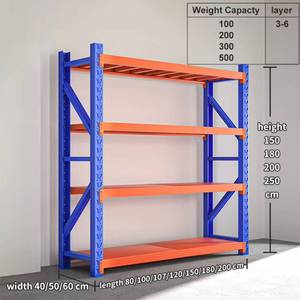
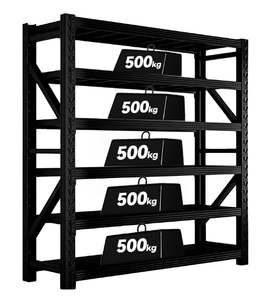
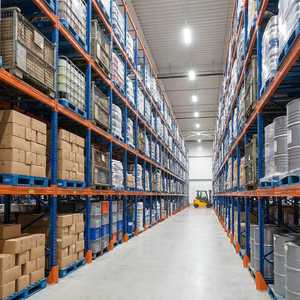
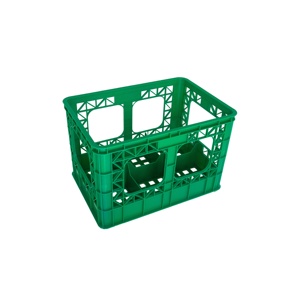
Over two decades of OEM/ODM industrial racking leadership.
Automated cold roll-forming lines and robotic welding bays.
Scaled metallurgical production supporting global megaprojects.
Full customs compliance for North America, Europe & Asia.
High-Performance Custom OEM Warehouse Rack Bins: Metallurgical & Structural Architecture
In modern omnichannel distribution facilities, automated fulfillment hubs, and heavy industrial manufacturing centers, storage hardware is no longer considered passive steelwork. Instead, custom warehouse rack bins, stackable metal stillages, and heavy-duty modular picking boxes serve as foundational assets directly dictating storage density, picker pick-face accessibility, structural safety factors, and robotic compatibility. Sourcing directly from an established original equipment manufacturer (OEM) allows procurement teams to calibrate yield strengths, surface treatment chemistries, and geometric tolerances to precise operating profiles.
Our facility utilizes premium-grade Shanghai Baosteel certified Q235B cold-rolled structural steel, delivering balanced ductility with a guaranteed minimum yield strength ($R_{eH}$) of 235 MPa and tensile strength ($R_m$) ranging from 375 to 500 MPa. When fabricating modular rack storage containers, wire mesh pallet cages, and stillage bins, metallurgical integrity prevents catastrophic dynamic fatigue caused by high-cycle forklift impacts, uneven seismic loading, and cyclical thermal contraction in sub-zero cold-storage facilities (-30°C).
Parametric Engineering Comparison: Warehouse Bin Architecture
| Storage System Type | Primary Material & Grade | Dynamic / Static Load | Optimal Warehousing Environment | Handling Interface |
|---|---|---|---|---|
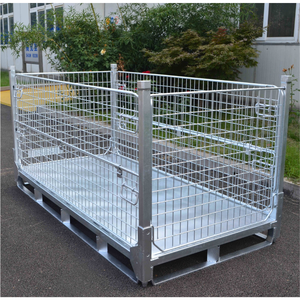
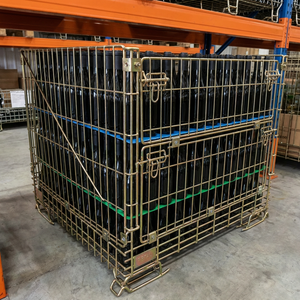
| Collapsible Wire Mesh Cages | Q235 High-Tensile Steel Wire (Ø 5.8–6.2mm) | 800 kg – 1,500 kg | High-throughput 3PL, auto components, reverse logistics | 4-way forklift & pallet jack entry; 4-high stacked |
| Heavy-Duty Stillage Bins | Q235B Formed Steel Plate (2.0–3.5mm thickness) | 1,200 kg – 2,500 kg | Foundries, heavy casting storage, raw metal stamping | Heavy counterbalanced forklift; crane hoist lugs |
| Stackable Tool & Parts Bins | High-Impact Copolymer Polypropylene (PP) | 30 kg – 80 kg | Electronic assembly, hardware fulfillment, shelf picking | Manual hand-pick, louvered wall panels, conveyor lines |
| Corflute & Poly Picking Bins | Extruded Polypropylene Twin-Wall (4.0–6.0mm) | 15 kg – 35 kg | Apparel DCs, fast-fashion sorting, light e-commerce SKU | Modular shelf inserts, carton flow gravity lanes |
| Galvanized Auto-Parts Racks | Hot-Dip Galvanized Structural Tube / Steel Mesh | 1,000 kg – 2,200 kg | Automotive Tier-1 assembly, outdoor bonded holding yards | Automated Guided Vehicles (AGV), reach trucks |
Emerging Procurement Trends Shaping Industrial Storage Bins
The global warehousing landscape is undergoing unprecedented transformation driven by micro-fulfillment densification, rapid SKU proliferation, stringent carbon footprint legislation, and deep integration with artificial intelligence. Procurement directors and logistics infrastructure developers must evaluate container assets not merely as static unit costs, but through the lens of long-term total cost of ownership (TCO) and operational agility.
Circular Metallurgy & Decarbonization
Enterprise buyers are actively replacing single-use wooden pallets and disposable corrugated cartons with reusable, 100% recyclable steel stillages and closed-loop polyolefin containers. Hot-dip galvanization and VOC-free electrostatic thermoset powder coatings provide an operational lifespan exceeding 12–15 years, significantly lowering Scope 3 supply chain carbon outputs and ensuring zero hazardous environmental leeching.
AS/RS & AMR Navigational Interfaces
As Autonomous Mobile Robots (AMR) and Automated Storage and Retrieval Systems (AS/RS) replace conventional manual forklifts, container bottom dimensional stability is critical. Precision-engineered guide slots, flat anti-slip runner bars, and optical fiducial-marker recess indentations are integrated directly into OEM container bases to eliminate optical sensor misalignment during rapid robotic docking.
Smart Sensor & RFID Asset Traceability
Industrial storage bins are rapidly evolving into intelligent data nodes. Modern OEM production designs accommodate protected embedded RFID transducer housings, BLE tracking pockets, and laser-etched 2D DataMatrix serial codes. This facilitates continuous real-time inventory geolocation across geographically dispersed distribution hubs without requiring manual line-of-sight scanning.
Structural Engineering & Workflow Ergonomics
Optimizing warehouse storage efficiency is inherently a multi-dimensional spatial challenge. The strategic alignment between selective pallet racking, multi-tier mezzanine floors, and localized picking containers directly affects worker pick velocity and musculoskeletal safety. According to industrial ergonomics studies, pick-face reach depths exceeding 650mm or pick bins lacking frontal half-drop gates decrease worker productivity by up to 28% while escalating repetitive strain hazards.
Drop-Gate Accessibility
Equipped with spring-assisted swing latches, ergonomic half-drop gates enable warehouse operators to retrieve heavy castings, machined components, and packaged SKUs without de-stacking bins or reaching awkwardly over rigid sidewalls, maintaining peak pick efficiency during high-volume shifts.
Seismic Stability & Locking Feet
When bins are vertically stacked four-high under heavy loads (4 × 1,500 kg), localized center-of-gravity shifts can cause structural tipping during seismic disturbances. Our proprietary cupped stacking feet and heavy interlocking corner posts direct dynamic lateral forces evenly into the foundation slab.
4:1 Collapsible Reverse Logistics
Freight volume minimization governs secondary distribution profitability. Our collapsible wire mesh and sheet-metal folding containers achieve an industry-leading 4:1 collapse ratio, allowing freight carriers to return empty storage assets with 75% fewer road transport container loads, reducing overhead.
Why Enterprise Brands Partner With HEDA Shelves
With a corporate legacy extending back to 2001, Guangzhou Heda Shelves Co., Ltd. operates as a vertically integrated tier-one manufacturer of industrial storage racking, mezzanine platform structures, and heavy-duty steel rack containers. Unlike regional trading intermediaries or assembly workshops, every component leaving our 30,000 square meter manufacturing center undergoes rigorous mechanical, metallurgical, and chemical validation.
Full control spanning CNC coil slitting, high-precision roll forming, automated robotic welding, 9-stage chemical pre-treatment, and automated electrostatic powder curing.
Certified CE Factory Production Control (2435-CPR-8605159), ISO 9001:2015 Quality Management (18624Q00169R0M), and fully compliant RoHS environmental certifications.
Dedicated design engineers deliver parametric warehouse space planning, structural deflection simulations, and 3D visual renderings within 24 hours of specification submittal.
Specialized export strapping and high-cube sea-container packing optimization, delivering direct to major global ports across North America, Europe, the Middle East, and South Asia.
Industrial Buyer Technical FAQ
Direct engineering answers addressing critical questions asked by procurement executives, supply chain engineers, and logistics project managers.
Accelerate Your Intralogistics Efficiency With Custom OEM Solutions
Connect directly with our senior racking and storage container structural engineering team. Submit your warehouse floor plan, SKU load criteria, or bespoke dimensional specifications to receive a complimentary 3D CAD layout, structural calculation report, and competitive factory-direct quote within 24 hours.