Engineered Stainless Storage Assemblies
Precision-fabricated stainless steel shelving systems engineered for cleanrooms, commercial kitchens, pharmaceutical compounding suites, cold storage logistics, and high-load distribution centers.
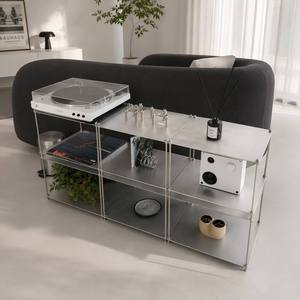
Modern Stainless Steel CD Rack Vinyl Record Storage Shelf Modular Media Player Stand Hifi Equipment Display Rack Wholesale
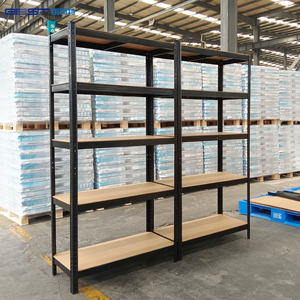
Powder-coated Stainless Steel Warehouse Shelves Detachable Upright Garage Shelves Heavy Duty Shelving for Garage Warehouse
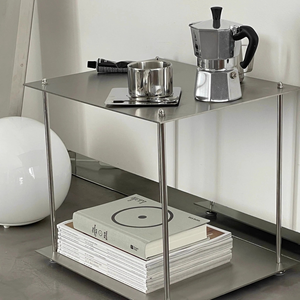
Stainless Steel Floor-Standing Multi-Tier Storage Rack Modular Bookshelf And Display Rack For Living Room Bedroom Study Room
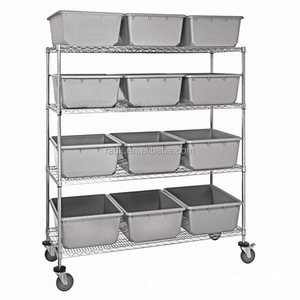
Multi-Use Storage Shelf 4 Layer Industrial Stainless Steel Wire Rack with Wheels for Restaurant Hotel Kitchen
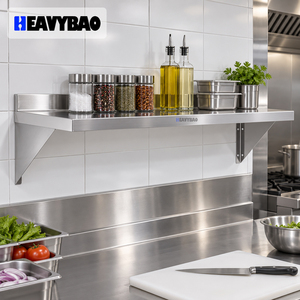
Heavybao Commercial Heavy Duty Brushed Stainless Steel Solid Wall Shelf Restaurant Kitchen Rack Wall Mounted Floating Shelving
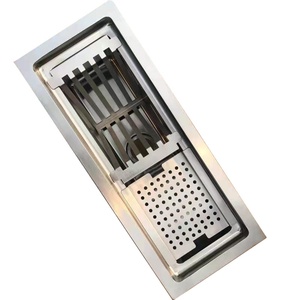
304 Stainless Steel Built in Dish Racks Drying Rack Display Racks for Kitchen
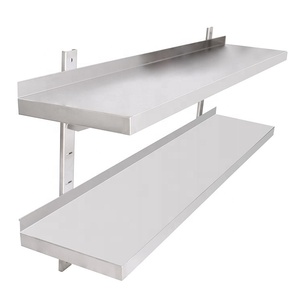
Wall Shelf Commercial Shelf Stainless Steel Shelf Kitchen Storage Rack Stainless Steel Shelving
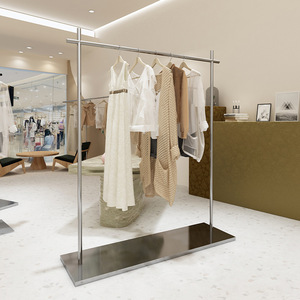
Net Red Custom Stainless Steel Floor Hanger Women's Clothing Store Display Rack Selling Clothes Shelf Nakajima Display Rack
Material Metallurgy: Selecting Austenitic, Ferritic, and Duplex Stainless Steel for Critical Racking Operations
When procurement teams evaluate industrial stainless rack shelving exporters, the primary failure mode in cross-border deployments does not originate from structural load calculations; it stems from chemical micro-environment misjudgments. Specifying custom stainless racking requires a deep understanding of chromium depletion, carbide precipitation during welding, and pitting resistance indices.
Custom OEM stainless racking systems operate in the most demanding micro-climates on earth: pharmaceutical aseptic cleanrooms with periodic chlorine dioxide vaporization, sub-zero cold-storage distribution hubs subject to thermal shock cycles, and coastal seafood processing complexes with hyper-saline humidity. In these conditions, generic mild steel with powder coating quickly deteriorates once impact abrasions break the surface barrier. In contrast, true industrial stainless steel forms an instantaneous, regenerative chromium-rich oxide passive film (Cr₂O₃) that prevents progressive substrate oxidation.
| Alloy Grade | Nominal Composition | PREN Value | Corrosion & Stress Tolerance | Optimal Industrial Deployment |
|---|---|---|---|---|
| AISI 304 / EN 1.4301 | 18% Cr - 8% Ni | 18.0 - 20.0 | High resistance to atmospheric humidity, washdowns, and organic acids. Sensitive to hot saline environments. | Commercial food service, warehousing, retail display fixtures, ambient cleanrooms. |
| AISI 316L / EN 1.4404 | 16% Cr - 10% Ni - 2% Mo | 23.0 - 25.5 | Superior resistance to chloride pitting, sulfuric vapors, and frequent chemical sanitation CIP washdowns. | Pharmaceutical production, biotech cleanrooms, coastal cold chain storage, chemical logistics. |
| AISI 201 (Custom Low-Ni) | 15% Cr - 1% Ni - 7% Mn | ~16.0 | Moderate indoor corrosion protection; elevated tensile strength due to nitrogen and manganese additions. | Dry storage retail racks, cost-optimized indoor commercial shelving, structural consumer stands. |
| AISI 430 / EN 1.4016 | 16% Cr - 0% Ni (Ferritic) | ~16.0 | Magnetic; zero stress corrosion cracking risk, low acid resistance. Highly cost-effective for dry zones. | Secondary non-critical food dry shelving, internal backing panels, magnetic tool fixture racks. |
As a leading custom OEM stainless rack shelving exporter, our engineering facilities implement precision quality audits to assess every raw coil batch. The pitting resistance equivalent number, defined mathematically as PREN = %Cr + 3.3(%Mo) + 16(%N), serves as the gatekeeper for projects where equipment is exposed to halogen cleaning agents. For standard dry logistics, 304-grade shelving is standard; however, for life science cleanrooms or coastal warehouses located within 5 km of seawater, we engineer all upright uprights, boxed beams, and wire deck meshes from certified low-carbon 316L stainless steel to eradicate post-weld intergranular corrosion.
Passivation & Surface Finish
Beyond mechanical polishing, components undergo fully automated chemical pickling and ASTM A967 nitric acid passivation. This strips exogenous free-iron contaminants and drives passive chromium layer thickness to over 2.5 nm, ensuring 1000+ hours in ASTM B117 salt spray tests without pit initiation.
Zero-Harborage Sanitary Joints
In accordance with EHEDG (European Hygienic Engineering & Design Group) and NSF/ANSI Standard 2, our custom OEM racks utilize seamless continuous automated TIG welding. We eliminate open fissures, rolled lip crevices, and exposed threads where microbial biofilm or moisture can stagnate.
Boltless Knock-Down Modularity
High-cube container ocean freight economics require maximum cubic packing density. We engineer patented keyhole and teardrop slot configurations cold-stamped directly into stainless upright profiles, allowing toolless site assembly while achieving rigid beam-to-column moment resistance.
Tailored Structural Formats Across Mission-Critical Applications
Industrial stainless shelving is not a monolithic product category. Structural engineering, deck design, and load distributions vary drastically across distinct supply chain vertices:
Pharmaceutical & Biotechnology Cleanrooms
Cleanroom environments classified under ISO 14644-1 (Class 3 to Class 7) require strict particulate emission controls. Painted or electro-galvanized steels are strictly disqualified due to peeling, flaking, and zinc outgassing.
- Electropolished 316L finishes reaching surface roughness Ra < 0.4 µm.
- Perforated stainless shelf panels providing 40% laminar airflow pass-through.
- Anti-static conductive grounding terminals to eliminate ESD hazards.
Cold Chain, Blast Freezing & Food Logistics
Blast freezers operating between -30°C and -45°C induce embrittlement in standard structural carbon steels (such as Q235B or ASTM A36) as temperatures drop past the ductile-to-brittle transition point.
- Austenitic stainless alloys maintain ductile impact energy without low-temperature fracture.
- High-ventilation stainless wire mesh prevents frost accumulation and thermal bridging.
- Sanitary floor anchoring using sealed stainless chemical drop-in capsule bolts.
Future Industry Trends Transforming Stainless Storage Sourcing
Supply chain executives and procurement directors are no longer sourcing stainless steel racking on a simple "price per metric ton" metric. Over the next five years, four dominant technological and structural developments will redefine the total cost of ownership (TCO) in stainless rack acquisition.
1. IoT Sensor Integration & Dynamic Load Telemetry
Next-generation stainless racks are transforming into active nodes within warehouse execution systems (WES). In automated cleanrooms, structural uprights are increasingly fitted with strain gauges and acoustic emission sensors that detect unbalanced shelf loads, thermal stress shifts, and seismic deflection in real time. Our OEM engineering department is actively developing integrated structural channels that shield fiber-optic sensing cables without compromising washdown accessibility.
2. Low-Carbon Metallurgy & Circular Scope-3 Tracking
Global multi-national corporations are mandating Environmental Product Declarations (EPDs) for factory equipment. Since stainless steel is 100% recyclable, procurement tenders now favor suppliers utilizing scrap-fed Electric Arc Furnaces (EAF) with over 75% recycled content. Our production chain optimizes raw coil sourcing to lower embedded carbon footprints while retaining full mechanical yield strengths (Rp0.2 > 230 MPa).
3. Antimicrobial PVD & Nanostructured Coatings
In high-end architectural, institutional, and clinical sectors, Physical Vapor Deposition (PVD) titanium plating is replacing conventional electroplating. PVD produces a scratch-resistant, molecularly bonded ceramic film in luxury champagne, matte black, or bronze tones without emitting hazardous hexavalent chromium. Simultaneously, nano-copper ion doping is demonstrating measurable 99.9% reductions in bacterial colonization on high-touch stainless surfaces.
4. High-Cube Nested Knock-Down Logistics
International ocean freight rates emphasize structural geometry optimization. Conventional welded stainless racks consume excessive volumetric container space. Our engineering focus prioritizes fully knock-down, nested roll-formed profiles where a single 40ft High Cube (40HQ) container holds upwards of 420 linear meters of 4-tier heavy-duty shelving—reducing per-unit logistics freight costs by over 45%.
Frequently Asked Procurement & Engineering Questions
Direct answers from our Senior Structural Metallurgists and Export Operations Team regarding custom OEM stainless steel shelving specification, certification, and shipping.
Manufacturing Infrastructure & Technical Capabilities
Combining two decades of metallurgical forming expertise, precision computerized automation, and international structural validation.
30,000 m² Integrated Facility
Headquartered in Guangzhou with end-to-end manufacturing control: automatic uncoiling, high-precision fiber laser slicing, CNC multi-station punching lines, high-rigidity roll forming, and automated ultrasonic cleaning baths.
Certified Compliance Standards
Verified with European CE Certification (No. 2435-CPR-8605159), ISO 9001:2015 Quality Management (Certificate No. 18624Q00169R0M), and strict RoHS chemical restriction compliance for global project deployment.
Free 2D/3D CAD Engineering
Our in-house design office provides free architectural floor plan layouts, CAD drawings, static structural deflection load calculations, and full 3D photorealistic renderings within 24 hours of receiving site blueprints.