Heavy-Duty Warehouse Roller & Pallet Storage Solutions
Explore our factory-direct industrial racking systems. Every system is custom roll-formed from cold-rolled steel, load-tested to international structural codes, and optimized for global container logistics.
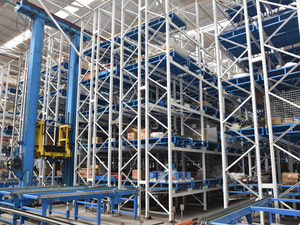
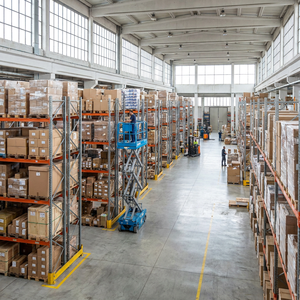
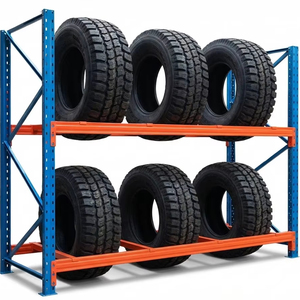
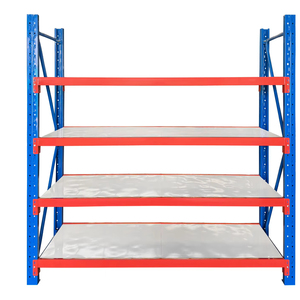
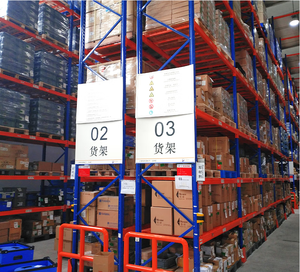
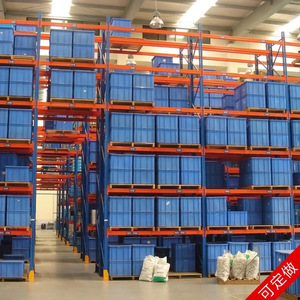
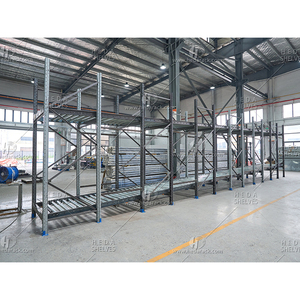
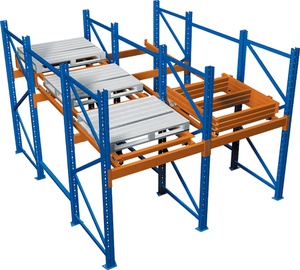
The Mechanics of Custom OEM Roller Racking Systems
Dynamic gravity roller storage (pallet flow racking) represents the premier intersection of zero-power gravity energy and strict First-In, First-Out (FIFO) material handling. Understanding the kinematic tolerances and structural metallurgy is vital for high-throughput operational safety.
Kinematic Slope Calibration
Roller track gradient determines terminal gliding velocity. Standard lanes are manufactured with an exact 3.0% to 4.5% gradient (approx. 1.7° to 2.5°), balanced against pallet base deflection to avoid stall points or runaway acceleration.
- Light Plastic Pallets: 3.0% - 3.5%
- Euro/GMA Timber Pallets: 3.5% - 4.0%
- Defective/Softwood Runners: 4.0% - 4.5%
Centrifugal Speed Retarders
Direct-contact centrifugal speed controller brake rollers govern descent speeds below 0.3 m/s. As kinetic energy escalates, internal planetary centrifugal shoes expand against drum walls, delivering mechanical braking without electricity.
- Rated load: 200kg to 1,500kg/pallet
- Continuous speed damping at ≤0.28 m/s
- No external power cabling required
Separation & Load Decouplers
Hydro-mechanical and spring-loaded pallet separators isolate the discharge-face pallet from the accumulated line pressure behind it. When the first pallet is picked, the separator unlocks the next load smoothly, eliminating mast shock.
- Relieves back-pressure up to 20 pallets
- Prevents mast binding on retrieval
- Engineered for high-bay reach trucks
Structural Steel Metallurgy
Roll-formed from certified high-tensile structural cold-rolled steel coils (Q235B & Q355B equivalent to S235JR & S355JR). Profile upright sections feature continuous multi-bend roll forming for high torsional resistance and deflection limits ≤ L/200.
- Continuous CNC 50mm / 75mm hole pitch
- Automatic robot MIG stitch welding
- Heavy-duty welded baseplates with anchor bolts
Comparative System Architecture: Dynamic vs. Static High-Density Storage
Reviewing core performance indicators to benchmark Custom OEM Roller Racking against Drive-In, Push-Back, and Radio Shuttle automation before committing capital expenditure.
| Engineering Parameters | Roller Racking (Gravity Flow) | Radio Shuttle Racking | Drive-In Racking System | Push-Back Cart System |
|---|---|---|---|---|
| Stock Turnover Rule | Strict FIFO (100%) | Configurable FIFO / LIFO | Strict LIFO | Strict LIFO |
| Storage Density Efficiency | Exceptional (>85% Floor Use) | Maximum (>90% Floor Use) | High (70% - 75%) | Moderate (65% - 75%) |
| Forklift Travel Distances | Short (Dedicated Loading/Picking) | Short (Lane Head Only) | Long (Drives inside lanes) | Medium (Lane Head Only) |
| Operational Energy Cost | Zero (100% Gravity Powered) | Battery Charging Stations | Zero (Pure Lift Truck) | Zero (Gravity Return) |
| Lane Depth Capability | 2 to 25+ Pallets Deep | 2 to 50+ Pallets Deep | 3 to 10 Pallets Deep | 2 to 6 Pallets Deep |
| Maintenance Profile | Low (Lubricated Sealed Rollers) | Medium (Motors, Sensors, Li-Ion) | High (Frequent Column Collisions) | Low (Cart Bearing Checks) |
Future Procurement & Technological Trends in Roller Racking
As enterprise warehousing transitions into automated, low-emission, and ultra-dense fulfillment, procurement teams are shifting how custom roller racking is specified, engineered, and purchased.
Cryogenic Cold-Chain Optimization
Global pharmaceutical mandates and frozen food expansions are driving unprecedented demand for cryogenic-rated roller tracks. Modern OEM designs feature specialty low-viscosity bearing greases operable down to -35°C without gumming, paired with hot-dip galvanized uprights and thermal isolation shims preventing slab frost heave transfer.
AMR & AGV Pick-Face Synergy
The traditional human-operated forklift pick face is rapidly yielding to Autonomous Mobile Robots (AMRs) and Automated Guided Vehicles (AGVs). OEM roller racking systems are now designed with precise mechanical pallet centering guides, optical sensor clearance windows, and dampened dynamic discharge stops that present pallets with sub-millimeter positional repeatability.
Modular Split-Roller Cartridges
Supply chains increasingly process diverse pallet formats (Euro, ISO/GMA, half-pallets, and plastic export skids) across the same facility. Next-generation procurement favors three-track split roller assemblies over continuous full-width steel rollers, dramatically reducing raw steel consumption while allowing modular lane re-pitching without replacing frame structures.
Digital Twin & Dynamic FEA Modeling
Engineering validation has moved from static capacity calculations to high-fidelity dynamic Finite Element Analysis (FEA). Before production begins, OEM manufacturers simulate the dynamic impact loads of a descending 1,500kg pallet colliding with the front stop during full seismic horizontal ground acceleration, optimizing steel gauge thickness.
Decarbonized Powder Coating & Green Steel
Multinational 3PLs and corporate procurement policies now prioritize carbon accounting in warehouse infrastructure. Tier-1 manufacturers use blast furnaces utilizing scrap-supplemented steel, 10-stage zero-effluent pickling systems, and low-VOC thermosetting polyester powders with zero heavy-metal formulations compliant with RoHS and REACH.
Total Cost of Ownership (TCO) Procurement
Savvy logistics directors evaluate purchases based on 10-year lifecycle economics rather than initial invoice price. By eliminating the electrical energy, software licensing, and battery replenishment associated with shuttles, gravity roller systems consistently demonstrate a payback horizon under 18 months in fast-moving consumer goods (FMCG) distribution hubs.
Why Global Logistics Leaders Source from HEDA Shelves
Headquartered in Guangzhou, South China, Guangzhou Heda Shelves Co., Ltd. has stood at the vanguard of heavy-duty industrial storage engineering since 2001, providing complete OEM/ODM production and project delivery across 120+ countries.
Full-Chain In-House Industrial Fabrication
We do not outsource critical components. From precision uncoiling and continuous roll forming of uprights and beams to CNC punching, automatic robotic welding, and electrostatic powder coating, every stage is executed within our 30,000 m² factory under rigorous ISO 9001:2015 traceability.
Our dedicated engineering department provides free 2D CAD layouts, structural 3D BIM models, and site-specific seismic load calculations. Whether routing through Nhava Sheva, Mundra, Chennai, Chattogram, Karachi, Colombo, Rotterdam, or Long Beach, our container-maximized packing protocols prevent in-transit scratching and maximize ocean freight cubic efficiency.
300+ Skilled Specialists
Veteran structural engineers and certified production technicians.
Pre-Treatment Phosphating
10-stage immersion pickling guaranteeing anti-corrosion bonding.
Free 3D & CAD Layouts
Project design, structural calculations, and quotation in 24 hours.
Global Port Logistics
Seamless CIF shipping with complete export documents and clearance support.
Auditable Global Certifications
CE Construction Products Regulation
Certificate No. 2435-CPR-8605159 (EN 15512 Compliance)Quality Management System
Certificate No. 18624Q00169R0M (Valid through 2027)Eco-Safe Materials Restriction
Heavy-metal-free thermosetting epoxy powder polymer coatingInternational Load Verifications
Engineered in compliance with FEM 10.2.02 and RMI guidelinesFrequently Asked Questions by Procurement Directors & Logistics Engineers
Clear, authoritative technical answers addressing physical installation, operational parameters, safety redundancies, and international procurement of custom OEM roller racking.
Q1: How do you prevent pallet stalling or excessive impact speed in long gravity flow lanes?
Proper flow velocity is governed by three coordinated factors: a calibrated track gradient (typically 3.5% to 4.0%), high-durability zinc-plated rollers with low-friction sealed precision bearings, and speed-damping brake rollers distributed every 2 to 3 pallet positions. The centrifugal brake rollers automatically increase resistance when descent velocity exceeds 0.3 m/s, ensuring gentle, controlled travel irrespective of lane depth.
Q2: Can plastic, metal, and irregular wooden pallets be used on the same roller racking system?
Yes, provided the roller track type and roller spacing are specified accordingly. Standard wooden Euro pallets (with 3 bottom runners parallel to travel) operate seamlessly on standard 2-track or 3-track roller beds. For plastic pallets with cross-runners, perimeter bases, or steel skids with ribbed undersides, we configure full-width steel rollers or specialized 3-lane split-roller channels with closer roller centers (50mm–75mm pitch) to eliminate sagging.
Q3: What information is required to generate a free CAD layout and structural proposal?
To produce an engineered proposal within 24 hours, our design team requires: (1) Warehouse architectural drawings (CAD or PDF) indicating column spacing, clear height, and obstacles; (2) Pallet specifications (Length × Width × Height, bottom board configuration, and maximum load weight); (3) Stock velocity and SKU count; (4) Forklift model, turning radius, and maximum reach height; (5) Site location for seismic and floor slab evaluation.
Q4: How does HEDA Shelves protect steel components against tropical humidity and coastal corrosion?
Prior to electrostatic powder coating, all roll-formed steel components undergo an intensive multi-stage chemical pretreatment comprising alkaline degreasing, acid pickling to eliminate mill scale, and zinc phosphating to create a dense crystalline conversion barrier. We then apply high-molecular thermosetting polyester epoxy powder cured at 180°C–200°C. For aggressive coastal air, cold stores, or outdoor sheds, hot-dip galvanization is available.
Q5: What are the standard lead times for custom OEM container orders?
Standard fabrication cycles range from 20 to 30 business days following final approval of engineering CAD drawings and initial deposit, depending on project tonnage. Our Guangzhou factory delivers a massive 30,000-ton monthly capacity, enabling us to run multiple roll-forming lines concurrently for large multi-hundred-ton distribution center rollouts.
Q6: Do your roller racking and high-bay structures comply with fire sprinkler requirements (NFPA/ESFR)?
Yes. In deep gravity flow blocks, internal flue spaces are mandatory for in-rack sprinkler penetration and thermal updraft detection under NFPA 13 regulations. We engineer designated transverse and longitudinal flue openings between roller beds and integrate heavy-gauge galvanized wire mesh decking or open-profile roller supports that maximize vertical water distribution from ceiling ESFR heads.
Q7: How does a pallet separator mechanism protect lift trucks during the pick process?
In a 10-pallet deep lane, the cumulative gravity back-pressure exerted on the front pallet can exceed 5,000 kgf, which can pinch forklift forks or cause uncontrolled forward surging when the front pallet is hoisted. Our mechanical time-delay pallet separator latches onto the second pallet, holding the entire queue back by 150mm–200mm. Only after the lead pallet has completely cleared the pick face does the separator release the line.
Q8: What on-site installation and assembly assistance is provided for international buyers?
Every shipment is packed with numbered structural bundles matching a color-coded 3D installation blueprint and step-by-step assembly manual. All column frames, beams, and roller track cartridges are pre-punched for bolt-together erection requiring zero on-site cutting or welding. Additionally, we provide video walkthroughs and can dispatch experienced site commissioning engineers to supervise local installation crews.
Accelerate Your Intralogistics with Custom Gravity Flow Engineering
Partner directly with an ISO 9001:2015 & CE-certified factory manufacturer. Connect with our engineering specialists today to receive a free 2D CAD layout, structural capacity report, and factory-direct project quotation.