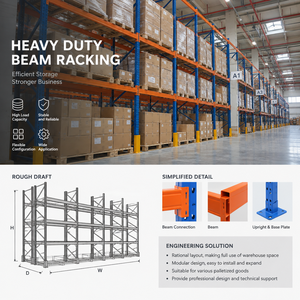
High-Density Material Handling
Precision-Engineered Industrial Pallet Racking & Storage Systems
Explore our core export catalogue of certified storage structures engineered for multi-SKU warehousing, automated throughput, dynamic replenishment, and heavy bulk payloads.
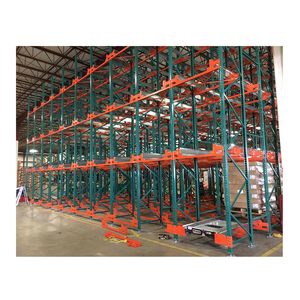
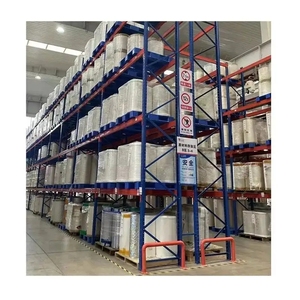
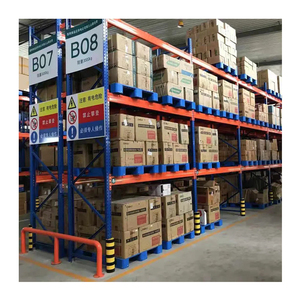
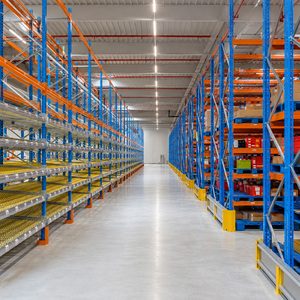
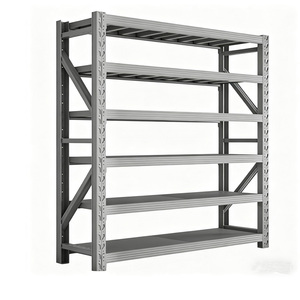
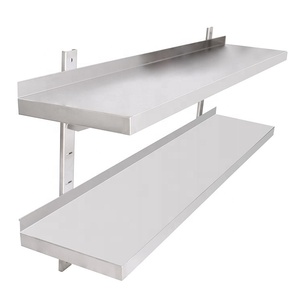
Custom OEM Push Back Pallet Racking: Kinematics, Dynamics & Structural Topologies
In modern supply chain engineering, balancing high-density storage footprint with operational accessibility remains paramount. Push back pallet racking systems solve this paradigm by utilizing an inclined rail architecture housing nested, rolling carts. Operating on a Last-In, First-Out (LIFO) dynamic flow, pallets are placed by conventional counterbalanced or reach forklifts on the topmost carriage. When the subsequent pallet is positioned, the forklift gently pushes back the previous unit, exposing the secondary cart beneath. With lane configurations spanning 2, 3, 4, 5, and 6-deep variations, custom push back racks achieve up to 75% higher volumetric utilization than standard selective racking while entirely removing forklift lane traversal hazards common in drive-in racking.
Gravitational Flow Kinematics
Fabricated with precision-calibrated incline gradients (typically 2.5% to 3.5%), our nesting carts employ sealed flanged bearings and low-friction alloy rollers, guaranteeing controlled descent speeds without excessive gravitational momentum or pallet jamming.
Structural Steel Metallurgy
Exclusively formed from premium Q235B and Q355B certified structural carbon steel. Uprights, box-welded beams, and telescopic nesting chassis undergo cold-roll forming to yield high rigidity, resilient yield limits, and exceptional fatigue performance under cyclic loading.
Dual Safety & Anti-Lift Architecture
Every dynamic carriage layer integrates fail-safe mechanical stops, anti-lift interlocks, and pallet catch hooks. Even in the event of uneven pallet placement or sudden operational impacts, the carts remain securely tethered to structural side guide channels.
Push Back Racking vs. Alternative High-Density Systems Matrix
| Evaluation Parameter | Push Back Racking (Nested Cart) | Drive-In / Drive-Through Rack | Pallet Flow Rack (Gravity Roller) | Radio Shuttle Racking |
|---|---|---|---|---|
| Inventory Discipline | LIFO (Select SKU Batches) | LIFO or Strict FIFO Channels | Strict FIFO (First-In, First-Out) | Flexible FIFO / LIFO Automation |
| Storage Density Efficiency | High (70% - 75% Floor Utilization) | Very High (75% - 85% Utilization) | Maximum (80% - 90% Utilization) | Maximum (85% - 92% Utilization) |
| Forklift Mast Encroachment | Zero (Loads Picked at Aisle Face) | Complete Entry into Rack Bays | Zero (Aisle Loading/Discharge) | Zero (Automated Shuttle Transits) |
| Throughput Pick Velocity | Fast (Dedicated Lane Selectivity) | Slow (Prone to Bottlenecks) | Fast (Continuous Gravity Feed) | Very Fast (Semi-Automated) |
| Damage Frequency to Racks | Minimal (Outer Frame Protected) | High (Frequent Collision Contact) | Low (Static Exterior Beams) | Very Low (Guided Track Protection) |
| Operating Temperature Suite | -30°C Cold Store to +50°C Ambient | -30°C to Ambient | -20°C to Ambient | -25°C to Ambient (Battery Limited) |
Verified Manufacturing Credibility
Why Tier-1 3PLs & Industrial EPCs Partner With Us
Combining 25+ years of production expertise, certified cold-chain execution, and state-of-the-art engineering intelligence to deliver factory-direct storage infrastructure worldwide.
2001
Established Year
30,000+
Tons Monthly Capacity
30,000 m²
Factory Floor Space
10,000+
Global Projects Installed
Certified Compliance
CE Certification (No. 2435-CPR-8605159) and ISO 9001:2015 accredited QA frameworks ensure every structural column conforms strictly with European EN 15512 and US RMI MH16.1 specifications.
Free CAD & 3D Modeling
Our veteran structural design teams generate comprehensive AutoCAD floorplans, 3D BIM structural models, stress simulations, and load-distribution analyses within 24–48 hours at zero cost.
10-Stage In-House Quality
From automated roll-forming and CNC high-precision column punching to rigorous pickling, phosphating, and electrostatic powder coating, we ensure zero corrosion in coastal and humid climates.
Custom OEM/ODM Packaging
Tailored column profiles, cart track geometries, private labelling, and ocean container-optimized bundling that safeguards high-gloss powder finishes while lowering landed CIF costs per pallet position.
Strategic Sourcing & Procurement Forecast: The Future of Push Back Systems
As industrial land prices surge across global manufacturing and distribution zones, logistics managers face escalating warehousing lease rates. Procurement of custom push back racking systems is pivoting from basic off-the-shelf catalog configurations toward tightly engineered, application-specific structural assets. Industry whitepapers indicate three overarching technological trends dictating procurement strategies for the upcoming decade:
Cold Chain Hybridization
Sub-zero food and pharmaceutical storage facilities carry staggering operational refrigeration expenses. Modern push back procurement trends mandate galvanized or heavy-duty powder coatings resilient down to -30°C, combined with specialized low-temperature, grease-free stainless bearings to prevent roller freezing and cart seizure.
Multi-Depth Cart Modularity
Warehouses are ditching rigid lane designs. Next-generation push back systems leverage modular nesting rails allowing conversions between 3-deep, 4-deep, and 5-deep cart setups using interchangeable structural cassettes, giving operators agility when handling changing pallet dimensions (EUR, GMA, AUS standard pallets).
IoT & Dynamic Weight Sensing
The convergence of smart warehousing and gravity systems has initiated integration of low-profile RFID tracking, optical aisle sensors, and real-time rail sensors. Push back systems now interface directly with enterprise Warehouse Management Systems (WMS) to track lane occupancy and monitor dynamic balance automatically.
Knowledge Base & Technical Due Diligence
Frequently Asked Questions by Industrial Sourcing Directors
Comprehensive technical and commercial clarification addressing engineering design, freight packing, international certification, and on-site assembly.
What specific engineering parameters are required to calculate a custom push back racking proposal?
To produce a finite CAD layout and structural stress calculation, our design engineers require: (1) Accurate architectural building drawings noting column placements and obstacle clearances; (2) Finished pallet specifications including width, depth, height, and maximum load rating; (3) Operational lane depth preference (typically 2 to 6 pallets deep); (4) Floor slab concrete thickness, reinforcement schedule, and compressive strength rating; and (5) Forklift mast lift capacity and collapsed profile dimensions.
How does push back racking mitigate the risk of pallet cart derailment or jamming during operation?
Our OEM push back systems feature precision cold-formed nested chassis constructed with side thrust guides, anti-lift safety tabs, and heavy-duty front rubber stops. Furthermore, each cart wheel is manufactured with dual-flanged hardened steel rollers riding on precision-inclined structural channels, ensuring that even if a damaged or non-standard pallet is placed unevenly, the cart remains strictly on its intended trajectory.
What surface finishing options are provided for aggressive, humid, or refrigerated warehouse environments?
Every steel profile passes through a standardized 10-stage preparation sequence comprising ultrasonic degreasing, hot acid pickling, and micro-crystalline phosphating prior to electrostatic polyester powder coating. For cold storage facilities (-30°C) or coastal installations exposed to high salinity, we supply hot-dip galvanized uprights, rails, and carts guaranteeing long-term corrosion resistance exceeding 1,000 hours salt-spray testing.
How are components packed to prevent transport damage and minimize container shipping costs?
Upright frames and horizontal beams are nested and bundled with protective corner boards, stretch wrapping, and corrugated separators to prevent surface abrasions during ocean transit. Delicate components—such as dynamic wheel bearings, guide rails, and nesting carriages—are crated in custom reinforced wooden cases engineered for optimal 40ft High Cube (40HQ) container cubing, reducing ocean freight costs per pallet position.
Request an Engineered Layout & Direct Factory Quotation
Send your warehouse dimensions and pallet storage matrix. Our senior design engineers will model custom CAD floor plans, load capacities, and structural calculations within 24 hours.