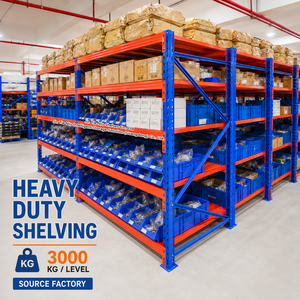
 Heavy Duty
3000KG Custom Steel Deck Storage Rack for Plastic Bins And Small Parts Warehouse Shelves Racking System
3000 kg UDL Load
Reinforced Steel Deck
Bin Integration
Every warehousing environment requires custom-specified structural decking profiles—from heavy solid steel deck panels to reinforced wire mesh decks engineered for fire sprinkler compliance, cold chain resilience, and extreme point loads.
Heavy Duty
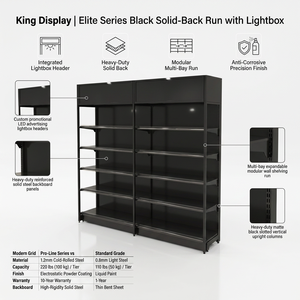 Retail & Hub
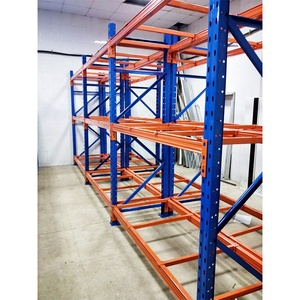 Boltless Modular
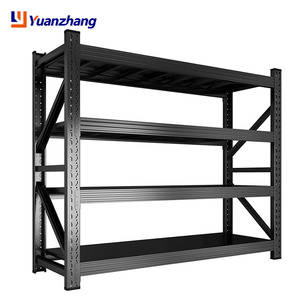 Long Span
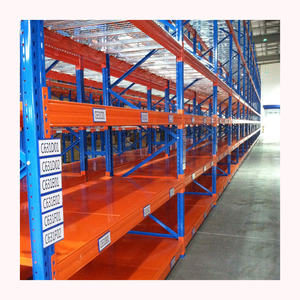 Medium-Heavy
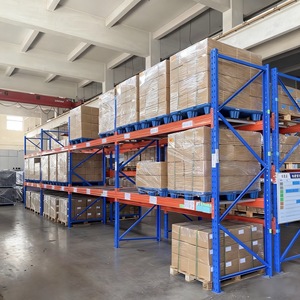 Shuttle & Beam
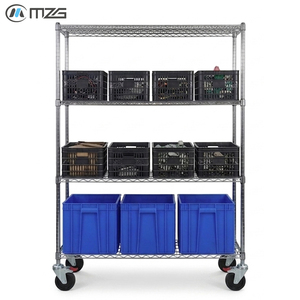 Mobile Wire
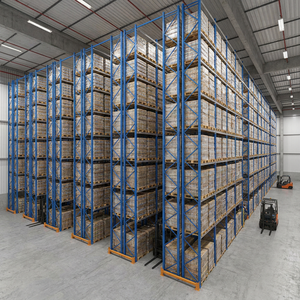 DC Logistics
Pallet rack decking serves as the critical horizontal safety foundation across modern logistics infrastructure. While beams sustain primary bending moments, the decking redistributes palletized weights, stabilizes split or fractured skids, protects warehouse personnel against catastrophic falls, and acts as the decisive interface between material handling machinery and static structural racking. In specialized warehouse operations—spanning refrigerated cold storage, automated distribution centers (AS/RS), chemical production, and e-commerce picking mezzanines—off-the-shelf deck panels frequently fail under concentrated point loads or run afoul of municipal fire compliance mandates. Sourcing directly from an integrated custom OEM pallet rack decking factory allows project engineers to specify exact material grades, steel thicknesses, structural stiffener geometries, and surface treatments tailored to micro-climatic and mechanical loading stresses.
OEM fabrication protocols segment pallet rack decking into four core metallurgical and structural classifications:
Procurement directors must balance fire safety ratings, point-load deflection thresholds, visual illumination penetration, and total lifecycle corrosion mitigation. The following matrix contrasts fundamental performance characteristics across four major OEM decking topologies:
| Deck Architecture | Typical Steel Grade | Standard Load (UDL) | NFPA 13 Fire Sprinkler Open % | Point-Load Tolerance | Best Warehouse Application |
|---|---|---|---|---|---|
| Standard Waterfall Wire Mesh | Q235B Low Carbon Wire | 800 kg – 1,500 kg | > 70% Open Area | Moderate (Pallet runners required) | General 3PL, FMCG, Box Selective Racking |
| Heavy-Duty Inverted Channel Wire | Q235B + 14Ga Stiffeners | 1,500 kg – 2,500 kg | > 65% Open Area | High (Reinforced Channel Stiffeners) | Automotive Parts, Chemical Drums, Machinery |
| Perforated Galvanized Steel Deck | DX51D+Z / Q235 Cold-Rolled | 1,000 kg – 3,000 kg | 50% – 55% Open Area | Very High (Resists localized crushing) | High-Bay Distribution Centers, Tooling Dies |
| Solid Corrugated Steel Decking | Hot-Rolled / Cold-Rolled Q355B | 2,000 kg – 4,500 kg | 0% (Requires in-rack sprinklers) | Extreme (Direct dynamic contact load) | Heavy Die Molds, Bulk Liquid Storage, Bins |
Established in 2001, Guangzhou Heda Shelves Co., Ltd. is an internationally certified enterprise delivering complete warehouse racking systems, structural steel mezzanine platforms, and custom OEM decking fabrications across 120+ countries worldwide.
From high-speed precision uncoiling, automated multi-tool punching, cold profile roll forming, robotic MIG/resistance welding, to computerized shearing—we manage every manufacturing stage with zero subcontractor degradation.
Fully compliant with international procurement standards, holding verified CE Certification (No. 2435-CPR-8605159), ISO 9001:2015 Quality Management (No. 18624Q00169R0M), and strict European RoHS material compliance.
Components undergo an automated 10-stage immersion pickling and phosphating pretreatment before electrostatic polyester powder application. Tested against severe ASTM B117 salt spray standards for humid monsoon and coastal zones.
Our in-house design engineering team supplies complete 2D warehouse layouts, 3D parametric renderings, and finite element stress simulations within 24 hours, optimizing pallet spacing, aisle widths, and slab load distribution.
We bundle beams, uprights, and deck panels with high-density interlocked dunnage to maximize 20GP/40HQ cube utilization. Direct export routes to Nhava Sheva, Mundra, Chennai, Chattogram, Karachi, Colombo, and global gateway ports.
Complete flexibility across custom punch profiles, wire mesh spacing, channel flanges, color coding per warehouse zone, hot-dip galvanization for outdoor yards, and white-label distributor packaging.
The global transition toward high-density automated intralogistics is reshaping how custom OEM pallet rack decking is engineered. As warehouses invest in multi-tier shuttle systems, Autonomous Mobile Robots (AMRs), and micro-fulfillment centers, industrial decking must evolve from passive safety shelves into technologically integrated, sensor-compatible structural components.
Traditional decking relies on thick-gauge low-carbon Q235 steel to achieve load thresholds, increasing dead weight and freight costs. Emerging OEM production integrates micro-alloyed, high-yield dual-phase steels (such as Q355B or high-strength low-alloy HSLA). By re-engineering the structural moment of inertia through stepped hat-channels and ribbed stamping, our factory achieves a 15% tare-weight reduction while enhancing localized static puncture resistance by up to 30%.
Automated shuttle bots and under-pallet AGVs demand extremely low tolerance variance on deck transition edges. Standard waterfall wire lips can impede optical guidance cameras and magnetic sensor strips. Modern OEM manufacturing produces flush-seated, laser-cut recessed steel decks featuring precision alignment locating pins and non-conductive electrostatic-discharge (ESD) powder coatings to safeguard delicate robotic electronic circuits.
High-bay seismic warehouses in active geological zones increasingly require structural health monitoring (SHM). Pioneer custom OEM decking frameworks are integrating embedded strain gauges and low-power passive RFID deformation chips directly into critical center support channels. Any dangerous structural sag exceeding L/200 triggers automatic warning notifications in the Warehouse Execution System (WES) prior to structural failure.
Global decarbonization initiatives push manufacturers away from heavy phosphate sludge. Our production lines deploy zirconium-based nanotechnology pretreatments. This delivers superior atomic bonding for powder coats, cuts chemical wastewater discharge by 80%, and yields a dense cross-linked barrier capable of enduring sub-zero temperatures down to -35°C without coating embrittlement.
Procurement directors and supply chain engineers are systematically altering their global purchasing methodologies. Over-reliance on third-party distribution intermediaries is being phased out in favor of direct collaboration with original manufacturing plants. Five strategic trends dominate industrial pallet rack decking procurement heading into the next decade:
Clear, engineering-driven answers to the most frequent inquiries from project directors, structural consultants, and warehouse operations managers.
The decision hinges on beam geometry and operational scanning procedures. Flanged waterfall decks wrap securely over standard box beams or step beams, preventing lateral displacement when fork tines pull pallets. However, if your facility relies on continuous barcode scanning, laser AGV guidance, or LED pick-to-light hardware attached directly to the beam face, choose flush inside-drop-in decks which rest strictly on the step recess, leaving the front beam profile completely unobstructed.
Under NFPA 13 and local municipal building codes, warehouses with high-density vertical storage exceeding 12 feet must ensure ceiling sprinkler water can penetrate freely to lower pallet levels. Solid shelving traps heat and acts as an umbrella, deflecting water away from internal flames. Welded wire mesh decks provide 50% to 70%+ open area, allowing rapid water dissipation and eliminating the costly requirement for dedicated in-rack sprinkler pipe installations.
UDL assumes a rigid, standard pallet evenly distributes its entire mass across all deck support channels and wire contact points. A Point Load (concentrated load) occurs when point-contact items—such as heavy metal container feet, small skids, or machinery castings—concentrate hundreds of kilograms onto a tiny surface area between stiffeners. Point loading requires customized decks engineered with thicker wire gauges (5.5mm+), tighter grid matrices (e.g., 25×100mm), and heavy-duty 14-gauge structural hat channels welded directly beneath the loading zones.
Prior to electrostatic coating, all steel components pass through a computerized multi-stage chemical pretreatment line consisting of degreasing, hot acid pickling to eliminate mill scale, and zinc phosphating. This chemically etches the micro-surface, enhancing mechanical bonding. An exterior-grade thermosetting polyester powder coating is electrostatically applied and baked at 200°C. For sub-zero cold stores or open seaside docks, we provide hot-dip galvanization (HDG) delivering minimum 60–85 micron zinc barriers resistant to ASTM B117 salt spray testing.
Yes. As a direct OEM factory, we manufacture custom tooling dies for perforated deck panels, stamped channel stiffeners, and proprietary beam connectors. We support private-label distributor programs, offering custom laser-cut corporate logos, custom RAL color formulations to match corporate branding, and specialized packaging barcode labels ready for immediate cross-dock delivery.
To produce an authoritative structural proposal and complimentary CAD layout within 24 hours, our engineering office requires: (1) Warehouse architectural drawings indicating clear ceiling heights, column grids, and floor slab load ratings; (2) Pallet specifications (width, depth, overall height, and maximum gross weight); (3) Storage selectivity preferences (Selective, Double Deep, Drive-In, Shuttle, or Mezzanine); and (4) Forklift specifications including mast lift height and turning aisle radius.
Whether designing a brand-new 50,000 m² distribution hub, refitting an existing selective rack layout, or requiring custom OEM white-label decking manufacturing—speak directly with our Guangzhou technical team today.
Send an Inquiry