Factory-Engineered Warehouse Racking & Shelving Solutions
From standard high-density logistics configurations to custom hot-rolled cantilever profiles, our ISO 9001:2015 and CE-certified structural steel facilities produce high-safety coefficient warehouse systems manufactured precisely to customer design specifications.
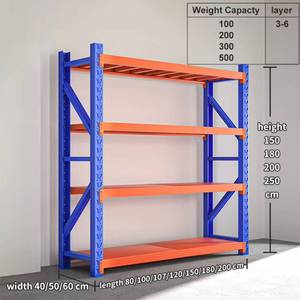
Customizable Industrial Steel Metal Shelving Shelves Adjustable Bolts Garage Warehouse Rack for Pallet Stacking Racks Shelves
- High-grade Q235B Cold-Rolled Steel
- Bolt-adjusted tier flexibility
- Modular post-pallet stacking profile
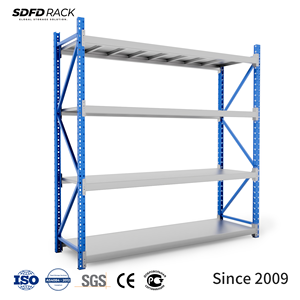
Custom 200kg 300kg 500kg Adjustable Pallet Racks Steel Heavy Duty Shelf Long Span Warehouse Shelving for E-commerce Storage
- 200kg – 500kg dynamic per-shelf rating
- Stepless pitch connector brackets
- Optimized for manual parcel picking
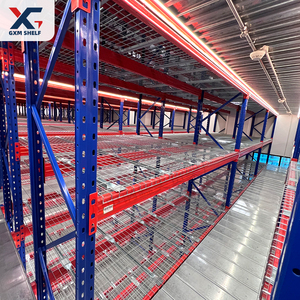
Warehouse Pallet Rack Shelving Industrial Rack System Heavy Duty Pallet Racking Three-dimensional Warehouse Heavy Storage Rack
- 3D High-Bay vertical space maximization
- Upright load capacity up to 24,000kg
- Integrated column foot anchor plates
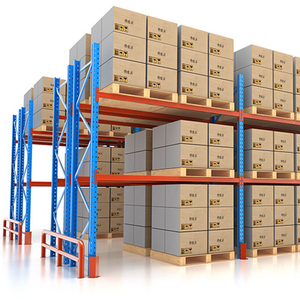
Heavy Duty Steel Single-Depth/Double-depth Selective Pallet Racks CE Certified Corrosion Protection Standard Wide Aisle Full
- Single & Double-deep layout options
- CE Certificate No. 2435-CPR-8605159
- 100% pallet pick accessibility
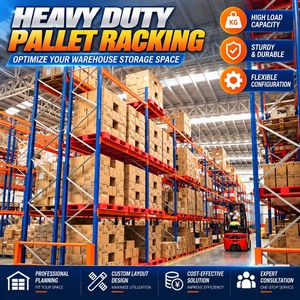
Heavy Duty Selective Steel Pallet Racks with Powder-Coated Finish for Industrial Warehouse
- Automated 10-stage phosphating finish
- Anti-abrasion electrostatic powder coat
- Heavy beam connector safety locks
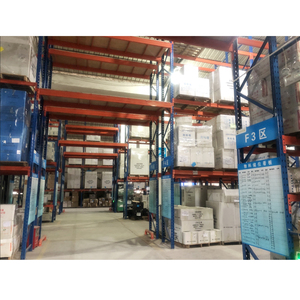
Custom Size Industrial Selective Beam Racking System Multi Layer Adjustable Steel Rack E-commerce Warehouse Storage Solution
- Interlocking box-beam roll profiles
- Tailored beam lengths up to 3900mm
- High lateral deflection resistance
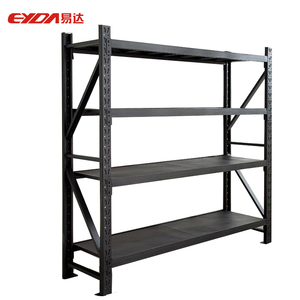
Supermarket Warehouse Light-Duty 4 Tier Steel Storage Rack 5 Boltless CE Certified Corrosion Protection Pallet Rack Low Price
- Rapid slot-in rivet assembly
- Certified zinc corrosion protection
- 150kg – 300kg uniform distributed load
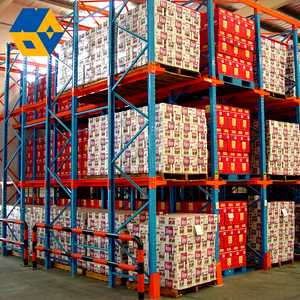
NOVA Customized Warehouse Shelf, Q235 Cold Rolled Steel Drive-in Pallet Racking System Rack/ Industrial Storage Racking Systems
- Ultra-high volume LIFO density
- Heavy duty cantilever pallet guide rails
- Eliminates operating aisle wastage
Heavy Duty Cantilever Racking: Structural Mechanics & Physics
Unlike conventional pallet racking systems that rely on front-facing vertical columns to establish closed load-bearing bays, cantilever systems rely on unconstrained horizontal load arms extending from a rigid central vertical tower. Storing irregular, long-span cargo demands strict adherence to dynamic torsional calculations, moment connection limits, and finite element stress modeling.
Bending Moment & Eccentric Point Loads
Cantilever arms act as pure structural cantilever beams subject to combined bending and shear forces: M = (w × L²) / 2 for uniformly distributed loads (UDL). When cranes or fork trucks place heavy steel billets at the arm's unsupported extremity, point-load bending moments surge, requiring our engineering division to calculate section modulus (Z) with a standard minimum 1.5 safety factor under FEM 10.2.09 and ANSI MH16.2 standards.
Tapered Column Dynamics & Deflection
Under heavy single-sided loading, column shafts experience severe unbraced eccentric tension. Our structural cantilever uprights feature continuously welded hot-rolled wide flange I-beams (IPE, HEA, or standard W-sections) with engineered base plates. Column shafts are fabricated with a compensatory backward incline (camber) of 0.5° to 1.0°, guaranteeing that maximum dynamic arm deflection (limited to L/250 to L/300) brings the loaded plane into precise horizontal equilibrium.
Rigid Joint Moment Connections
The junction between arm collar and column face is the critical point of failure in poorly engineered racks. HEDA utilizes heavy Grade 8.8 or Grade 10.9 high-tensile structural through-bolts with integrated locating pins or interlocking CNC-machined bracket tongues. This design distributes mechanical shear through the neutral axis of the upright flange, completely preventing localized arm throat tearing.
For capacities below 1,000 kg per arm storing plastic extrusions, PVC conduit, or light timber, cold-roll-formed C/C profiles provide an economical, lightweight footprint. However, for continuous heavy engineering environments (steel coils, precast concrete slabs, oil country tubular goods), hot-rolled structural steel (Q235B / Q355B / ASTM A572 Grade 50) is required to resist impact loads from heavy counterbalance forklifts and side-loaders.
Custom Heavy-Duty Cantilever Architectural Matrix
All systems are manufactured via dedicated CNC beam-drilling, automatic profiling, and robotic submerged-arc welding jigs. The parameters below serve as standard baselines for custom OEM project fabrication.
| Structural Parameter | Light-Medium Duty System | Heavy-Duty Industrial System | Extra Heavy-Duty Structural Series |
|---|---|---|---|
| Column Section Profile | Roll-formed C-Channel / Double C-Profile (200 × 60 × 2.0–2.5mm) | Hot-Rolled IPE 240 – IPE 330 / W10x33 Structural Flange | Hot-Rolled IPE 400 – IPE 600 / Heavy HEA/HEB Structural Sections |
| Arm Section Profile | Tapered Box Section / Inverted Channel Profile | Hot-Rolled IPE 120 – IPE 180 Tapered Profile | Heavy IPE 200 – IPE 270 with Welded Flange Stiffeners |
| Arm Load Range (UDL) | 200 kg – 600 kg per arm | 800 kg – 2,000 kg per arm | 2,500 kg – 5,000+ kg per arm |
| Maximum Column Height | 2,000 mm – 4,500 mm | 3,500 mm – 8,000 mm | 6,000 mm – 15,000 mm (High-Bay Clad Systems) |
| Arm Usable Lengths | 500 mm – 1,000 mm | 800 mm – 1,800 mm | 1,200 mm – 2,500 mm |
| Pitch Adjustment Increment | 75 mm or 76.2 mm | 100 mm or 101.6 mm | 100 mm / 150 mm High-Tensile Bolted Spacing |
| Design Code Compliance | FEM 10.2.02, EN 15512 | ANSI MH16.2, EN 15620, AS 4084 | AISC 360-16, Eurocode 3, ASCE 7 Seismic |
| Surface Protection Finishes | Electrostatic Powder Coat (60–80μm) | Thermoset Polyester Powder Coat (80–100μm) | Hot-Dip Galvanized to ISO 1461 / ASTM A123 (65–110μm) |
Guangzhou HEDA Shelves: Engineered Storage Since 2001
Combining an expansive 30,000 square-meter advanced manufacturing facility with more than two decades of global storage systems engineering. We deliver turnkey, OEM-certified industrial racking across five continents with verifiable quality standards.
Verifiable Compliance Certifications
Enterprise procurement teams require documented, traceable structural certs. HEDA operates under CE Certification No. 2435-CPR-8605159 and ISO 9001:2015 Quality Management System No. 18624Q00169R0M (valid through 2027), ensuring steel batch chemistry, weld penetration depth, and load certificates are verified for third-party engineering audits.
10-Stage Surface Treatment Line
Industrial yards face harsh environments from coastal sea salt to tropical monsoon humidity. Our automated prep line features continuous degreasing, ultrasonic rust removal, acid pickling, zinc phosphating, high-temperature multi-rinse cycles, and dual-layer electrostatic polyester powder baking. Outdoor racking can be specified with hot-dip galvanization for long-term corrosion protection.
Complimentary CAD/BIM & FEA Design
Our 30+ member structural engineering team produces detailed 2D CAD layouts, 3D structural BIM models, and Finite Element Analysis (FEA) deflection reports within 24 hours. We evaluate customer slab compressive strength, anchor pullout limits, forklift aisle widths, and seismic acceleration factors before steel is cut.
Heavy Duty Cantilever Storage Trends: 2025–2030
The industrial warehousing sector is transitioning from static manual storage to dense automated integration. Logistics operators must account for evolving machinery interfaces and changing environmental mandates.
Automated Crane-Serviced Cantilever Towers
As warehouse ceiling heights reach 15 to 25 meters, side-loading forklifts are increasingly replaced by automated stacker cranes (AS/RS) mounted on precision guide tracks. Automated cantilever systems feature high-accuracy laser positioning sensors and anti-bounce arm stabilizers designed to process 6-ton steel tube cassettes with sub-millimeter repeatable accuracy.
Rack-Clad Outdoor Cantilever Enclosures
Industrial real estate expansion costs have accelerated the demand for self-supporting, rack-clad cantilever structures. In these installations, the heavy-duty cantilever columns serve as the load-bearing skeleton for the facility's roof trusses and exterior wall paneling, reducing foundation footprint requirements and avoiding standalone civil building costs.
RFID Load Cell Monitoring & Smart Arrays
Industrial safety regulators are driving demand for dynamic load monitoring. Advanced heavy-duty cantilever installations now integrate digital strain-gauge load cells and passive RFID tags within individual arm pockets. These units report real-time loading patterns to warehouse control systems, alerting plant safety supervisors before cumulative arm moments exceed yield limits.
Lumber & Engineered Wood
Continuous shelf deck attachments bridge cantilever arms, eliminating sagging in flexible MDF, plywood packs, and hardwood bundles.
Piping, Tubing & Bar Stock
Removable heavy steel end-stop pins (round or square hollow section) keep round stock from rolling forward during high-speed crane picks.
Extrusion & Conduit Racks
Custom cantilever uprights with plastic or rubber arm cushions protect fragile powder-coated aluminum architectural shapes from metal marring.
Vehicle Scrap & Machinery
Extra heavy-duty structural steel cantilever systems engineered for automotive recyclers to directly store scrap engine assemblies and chassis frames.
Frequently Asked Technical & Procurement Questions
Clear engineering and logistics guidance for warehouse plant managers, civil structural consultants, and project procurement teams.
Accelerate Your Warehouse Capacity with Custom Engineering
Upload your building drawings, load requirements, and material profiles. Our licensed structural storage team will deliver a complimentary CAD layout design, static deflection calculation, and project quotation within 24 hours.