Featured Industrial Warehouse Storage Systems
Engineered by Guangzhou Heda Shelves Co., Ltd. from certified high-tensile structural steel, our specialized heavy-duty racking portfolio integrates seamlessly with high-density automated and semi-automated distribution centers worldwide.
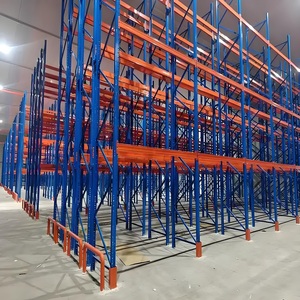
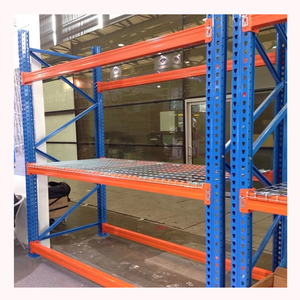
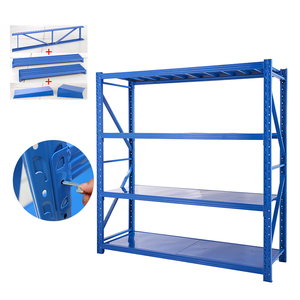
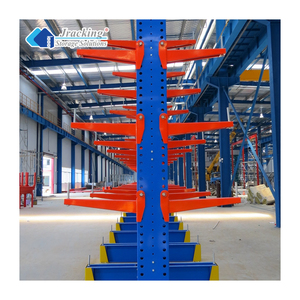
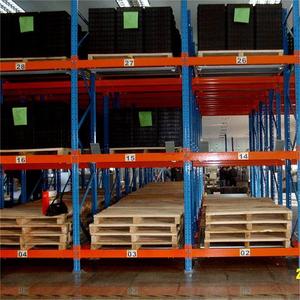
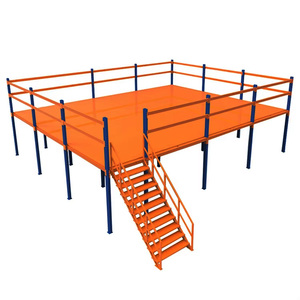
Custom Heavy Metal Interlayer Two-Level Platform Storage Racks Durable Steel Shelving System For Warehouses
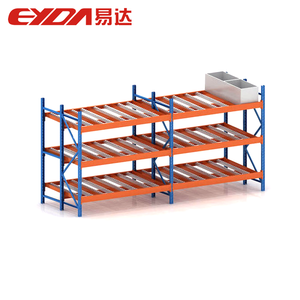
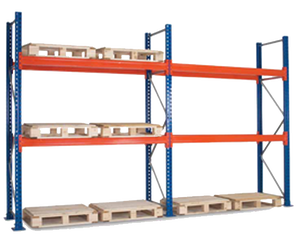
Industrial Storage Racks Heavy Duty Equipment Conventional Pallet Racking Steel Racks for Warehouse
Guangzhou HEDA Shelves Co., Ltd. Structural Authority
Established in 2001, Guangzhou Heda Shelves Co., Ltd. has developed into one of China's most trusted manufacturers and exporters of heavy-duty pallet racking systems, automated storage solutions, and multi-tier mezzanines.
Precision Manufacturing Engineered for Extreme Heights
Very Narrow Aisle (VNA) systems require significantly tighter deflection tolerances than standard selective racking. Operating at heights up to 18 meters with operational clearances of just 150mm on either side of the turret truck demands uncompromising roll-forming precision and stringent structural calculation. At HEDA Shelves, we manage the complete quality value chain in-house.
-
Certified Prime Steel Coils Only Direct procurement of Baosteel and Shougang certified Q235B and Q355B structural steel with verified yield strength.
-
Automated 10-Stage Surface Pretreatment Continuous immersion degreasing, ultrasonic rust removal, pickling, and phosphating prior to 180°C thermo-cured powder coating.
-
Global Certification Audit Compliance Verified CE Certification (No. 2435-CPR-8605159), ISO 9001:2015 Quality Management, and full compliance with EN 15512 and FEM 10.2.02.
Turnkey Project Engineering Deliverables
Every international wholesale project is managed by our dedicated structural engineering department, delivering verified design documentation prior to fabrication:
VNA System Architecture & Superflat Floor Tolerances
Understanding the structural mechanics, truck guidance methodologies, and civil floor dynamics required to deploy Very Narrow Aisle (VNA) pallet racking without risking operational downtime or structural failure.
Volumetric Space Optimization
Standard wide-aisle pallet racking requires aisle operating widths ranging from 3.2m to 3.8m to accommodate counterbalanced or standard reach forklifts. VNA systems compress aisle widths to between 1,500mm and 1,850mm. By eliminating dead maneuvering space and extending vertical clear heights up to 16-18 meters, volumetric cubic storage capacity increases by 40% to 50% on the exact same warehouse footprint.
Floor Flatness Dynamics (DIN 15185)
When a turret truck operates at an eye level of 14 meters, a floor level deviation of just 2mm between truck wheel tracks is magnified into a dangerous dynamic mast sway of over 40mm at the top beam level. Consequently, VNA installations demand adherence to DIN 15185, VDMA 15251, or Concrete Society TR34 (Superflat category DM1/DM2), ensuring safe mast clearances under full rated capacity.
Guidance Technology Comparison
Turret trucks within VNA corridors rely on either low-profile mechanical steel guide rails (anchored angle iron 100x75x10mm or C-channels with impact lead-in horns) or inductive wire guidance. Wire guidance involves cutting a 4x10mm slot in the slab center, embedding a low-frequency AC copper antenna loop, freeing the floor from trip hazards and expediting pallet ingress.
| Storage Architecture | Aisle Operating Width | Clear Height Limits | Floor Flatness Req. | Direct SKU Access | Relative Pallet Density |
|---|---|---|---|---|---|
| Very Narrow Aisle (VNA) | 1,500 mm – 1,800 mm | Up to 18.0 Meters | DIN 15185 / DM1 | 100% Direct Access | 90% – 95% Very High |
| Selective Pallet Racking | 3,200 mm – 3,800 mm | Up to 11.5 Meters | Standard Industrial (FM3) | 100% Direct Access | 50% – 60% Moderate |
| Double Deep Racking | 3,000 mm – 3,400 mm | Up to 11.0 Meters | Standard Industrial (FM2) | 50% Direct (LIFO Buffer) | 70% – 75% High |
| Drive-In Pallet Racking | Lane Dependent | Up to 10.0 Meters | Standard Industrial (FM3) | Lane Only (LIFO Accumulation) | 80% – 85% High |
| Automated Radio Shuttle | Transfer Aisle Only | Up to 24.0 Meters | Standard Industrial (FM2) | Semi-Automated Channel | 95% – 98% Ultra High |
Future Procurement & Technological Trends in VNA Systems
As industrial warehousing shifts from manual forklift operations to cyber-physical intralogistics ecosystems, procurement officers and supply chain directors must evaluate these four defining trends before locking in multi-year capital equipment contracts.
Autonomous Mobile Turret Trucks (AGV/AMR Synergy)
VNA aisles are moving away from manual man-up or man-down turret operators toward driverless Automated Guided Turret Trucks. Modern VNA rack designs must incorporate laser reflectors, optical QR markers, and millimeter-precise end-of-aisle docking stops to accommodate autonomous fleet integration without human intervention.
Green Steel Sourcing & Low-VOC Polyurethane Coatings
Major global 3PL operators and Fortune 500 retail clients are mandating ISO 14040/14044 Life Cycle Assessment (LCA) declarations. Steel exporters in China are transitioning to electric arc furnace (EAF) low-carbon steel coils, combined with ultra-durable heavy-metal-free, zero-VOC electrostatic powder coatings that withstand humid tropical and sub-zero cold-chain conditions.
Dynamic Seismic Damping & Real-Time IoT Health Monitoring
In seismically active global zones (such as South Asia, the Mediterranean, and the Pacific Rim), high-bay VNA racks are increasingly specified with base-plate elastomeric shock dampers and wireless piezoelectric acceleration sensors. These sensors detect micro-deflections, unauthorized forklift impact strikes, and structural fatigue before catastrophic collapses occur.
BIM Integration & Digital Twin Commissioning
International engineering tenders now routinely require native Autodesk Revit / IFC BIM models. Importers utilize digital twins to simulate crane acceleration, beam deflections under variable live pallet loads, and sprinkler discharge patterns through perforated steel decking prior to shipping containers from Chinese ports.
Frequently Asked Questions for B2B Importers & Procurement Directors
Straightforward engineering and logistics answers addressing concrete tolerances, customs duty classifications, container packing optimization, and structural safety verification.
What clear aisle width must be designed for turret trucks in a VNA layout?
The exact aisle width is dictated by the specific material handling equipment (MHE) manufacturer (such as Linde, Jungheinrich, Crown, or Hyster). Typically, the aisle clearance equals the truck chassis or load width (whichever is wider) plus 150mm–200mm of total operational side clearance. For standard 1,000x1,200mm EUR/ISO pallets, clear aisle dimensions range between 1,650mm and 1,850mm.
How does floor levelness affect VNA safety at 14+ meter top beam levels?
At extreme lift heights, any slight transversal or longitudinal slope in the warehouse slab is amplified exponentially along the mast. According to DIN 15185 and VDMA 15251 guidelines, floor flatness along the truck wheel paths must not exceed 1.5mm to 2.0mm across a 2-meter straightedge. Failure to meet these criteria can lead to severe mast scraping, premature drive wheel wear, and dangerous emergency stops.
What is the international HS Code for customs clearance of steel pallet racking?
Pallet racking components (uprights, beams, bracing, and row spacers) fall globally under Harmonized System (HS) Code 7308.90.00 ("Structures and parts of structures of iron or steel"). Depending on the importing territory (such as South Asia, Europe, or the Americas), our documentation specialists supply certified Form E, Certificate of Origin (CO), commercial invoices, and packing lists to optimize preferential tariff rates.
How are high-bay upright frames packed into 40ft High Cube containers?
Since 40HQ maritime shipping containers have an internal length limit of 11.95 meters, VNA uprights exceeding 11.5 meters are precision-manufactured in two sections and connected on-site using heavy-gauge internal column splices (joint sleeves). Beams, frame trusses, and accessories are strapped in banded steel cradles with protective polyfoam interleaves to prevent surface friction and marine moisture damage during ocean transit.
What structural engineering design codes does HEDA Shelves follow?
Our engineering team calculates structures according to European standard EN 15512:2020 (Steel static storage systems – Adjustable pallet racking systems – Principles for structural design) and FEM 10.2.02. For North American and Oceanic projects, designs are calibrated against RMI MH16.1 and Australian Standard AS 4084:2023, factoring in site-specific dead load, live load, seismic coefficients, and wind uplift if integrated into rack-clad buildings.
How do mechanical floor guide rails compare with inductive wire guidance?
Mechanical steel guide rails provide positive structural containment, guarding the bottom upright tiers against accidental truck collisions and allowing rapid installation without cutting concrete. Inductive wire guidance eliminates physical steel curbs on the floor, simplifying cross-aisle traffic and manual picking cart movement, though it requires specialized floor slotting and oscillator transmitters.
Request a Complete VNA Engineering Calculation & Layout
Collaborate directly with Guangzhou Heda Shelves Co., Ltd.'s structural engineering team. Provide your building dimensions, clear heights, pallet specifications, and preferred MHE models to receive an uncompromised 2D/3D project proposal within 24 hours.