Factory Engineered Catalog
Primary Wholesale Warehouse Shelving & Racking Configurations
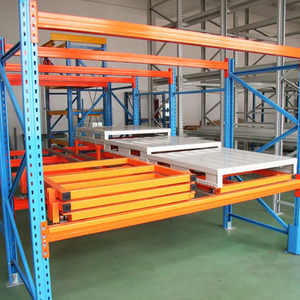
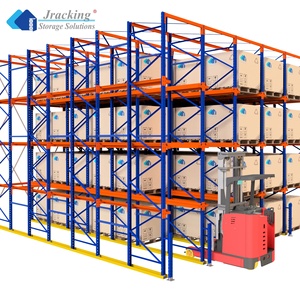
Direct manufacturer output manufactured in compliance with international seismic, deflection, and load distribution benchmarks (AS 4084, FEM 10.2.02, and RMI MH16.1).
- Material: High-Grade Q235B Steel
- Lane Depth: 2 to 6 Pallets Deep
- Payload: Up to 1,500 kg / pallet
- Access Logic: LIFO High Density
System Specifications
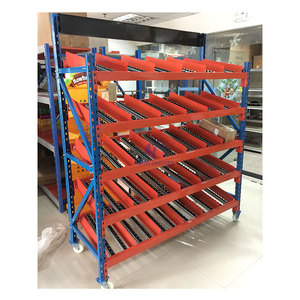
- Track: Galvanized Steel / Aluminum
- Application: Assembly Lines & Picking
- Incline Angle: 3°–5° Self-Regulated
- Stock Logic: Strict FIFO Turnover
System Specifications
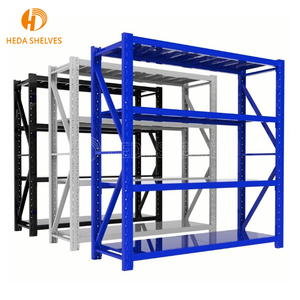
- Upright Pitch: 50mm Butterfly / Diamond
- Deck Options: Steel / Plywood / Mesh
- Payload: 200–800 kg / level
- Finish: Powder Coat RAL Custom
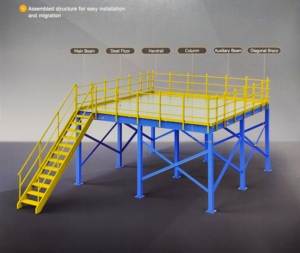
System Specifications
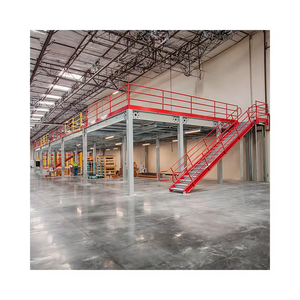
- Floor Rating: 300–1,000 kg/sqm
- Levels: 2 to 4 Tiers Elevated
- Decking: Perforated Anti-Skid Q235
- Access: Integrated Stairs / Hoist
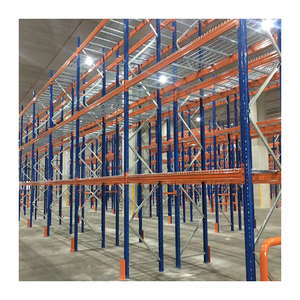
System Specifications
- Beam Profile: Twin-C Welded Box Beams
- Certification: CE 2435-CPR-8605159
- Payload: 1,000–4,500 kg / pair
- Colors: RAL 5015 Blue / 2004 Orange
System Specifications
- Configuration: Drive-In / Drive-Through
- Space Gain: Up to 75% Floor Utilization
- Bracing: Top & Back X-Tension Rods
- Slab Anchoring: High-Tensile Chemical M12
System Specifications
- Upright Depth: 800mm to 1200mm Custom
- Adjustment: 75mm / 50mm Pitch Options
- Accessories: Column Guards & Pallet Supports
- Standard: EN 15512 / ISO 9001
System Specifications
- Structure: Hot-Rolled H-Beams + Q235B
- Clear Height: Custom up to 12 Meters
- Fire Rating: Sprinkler-Compatible Perforations
- Integration: Direct Conveyor Feed Compatible
System Specifications
Strategic Sourcing & Supply Chain Economics
The Engineering Economics of Sourcing Direct from China Shelving Factories
Procuring warehouse storage systems—spanning heavy-duty selective pallet racks, automated radio shuttle bays, gravity carton-flow systems, and multi-tier structural mezzanines—involves evaluating significant capital expenditures against lifetime operational safety and seismic reliability. Sourcing directly from tier-1 Chinese shelving manufacturers bypasses three to four layers of domestic intermediaries, regional distributors, and brand re-labelers. This reduction in transaction layers translates to a 28% to 42% decrease in capital expenditure (CAPEX) per pallet position. However, capturing this economic arbitrage requires engineering-led technical evaluation rather than transactional buying.
Critical Sourcing Realization for Logistics Engineers:
The true cost of warehouse storage does not end at the factory FOB bill. It includes the structural yield strength of the raw coil, precision of the cold roll-forming process (tolerances below ±0.5mm), the chemical pretreatment cycle preventing sub-surface oxidation, and container cubic-meter packing optimization. Buying directly from an integrated manufacturer provides project-specific engineering calculations, verifiable mill test certificates (MTC), and bespoke roll-formed profiles engineered to local floor slab bearing capacities.
China’s manufacturing landscape for industrial storage equipment is primarily concentrated across three key industrial clusters: the Greater Bay Area (Guangzhou, Dongguan, Foshan), Jiangsu Province (Nanjing, Suzhou), and Shandong Province. The Pearl River Delta cluster in Guangzhou, anchored by major manufacturing hubs like Guangzhou Heda Shelves Co., Ltd., offers substantial logistical and metallurgical advantages. Direct access to high-grade cold-rolled steel coils from tier-1 mills (such as Baosteel and Shougang), co-located heavy electrostatic powder-coating supply chains, and immediate proximity to the container shipping terminals of Guangzhou Port, Shenzhen (Yantian/Shekou), and Hong Kong streamline global ocean freight and optimize procurement cycles.
Mill-Direct Raw Material Control
Direct sourcing contracts with tier-1 mills ensure certified Q235B and Q355B cold-rolled structural steel. Certified yield strengths ($f_y \ge 235\text{ MPa}$ to $355\text{ MPa}$) eliminate the structural embrittlement risks associated with re-melted scrap steel commonly used by unverified fabrication workshops.
In-House Roll Forming Precision
Dedicated automated rolling lines featuring up to 24 roll-station sequences progressively profile heavy steel strip into complex omega-shaped uprights. Continuous roller forming limits internal residual stresses and guarantees hole-pitch accuracy within $\pm0.15\text{mm}$.
Container Cubing & Freight Engineering
Industrial pallet rack uprights and box beams present distinct freight challenges due to long profiles. Engineering bundle geometry to the exact millimeter dimensions of standard 40-foot High Cube (40HQ) ocean containers drives shipping fill factors above 92% volume utilization.
Engineering Specifications & Metallurgy
Material Science: Cold-Formed Steel Grades, Weld Integrity, & Surface Treatment
When evaluating high-bay shelving and racking systems from Chinese manufacturers, procurement directors must review the physical metallurgy of the steel profiles. The predominant steel standard utilized is Chinese National Standard GB/T 700 grade Q235B, which corresponds functionally to European EN 10025 S235JR and American ASTM A36. For seismic installations, dynamic high-bay systems, or cold-storage environments operating below -25°C, higher yield micro-alloyed structural steels like Q355B (equivalent to S355JR / ASTM A572 Grade 50) are required for upright columns to prevent catastrophic plastic deformation under combined axial compression and bending moments.
| Steel Grade & Norm |
Yield Strength ($f_y$ min) |
Tensile Strength ($R_m$) |
Elongation ($A_5$ min) |
Chemical Composition Max ($C / Si / Mn$) |
Structural Application Profile |
GB/T 700 Q235B
EN 10025-2 S235JR |
$\ge 235\text{ MPa}$ |
$370\text{--}500\text{ MPa}$ |
$\ge 26\%$ |
$C\le0.20\%, Si\le0.35\%, Mn\le1.40\%$ |
Standard Selective Rack Beams, Bracing, Light/Medium Shelves |
GB/T 1591 Q355B
EN 10025-2 S355JR |
$\ge 355\text{ MPa}$ |
$470\text{--}630\text{ MPa}$ |
$\ge 22\%$ |
$C\le0.20\%, Si\le0.55\%, Mn\le1.60\%$ |
High-Bay / AS/RS Uprights Heavy Mezzanine Columns, Drive-In Arms |
Hot-Dip Galv Coil Q235
ASTM A653 / G90 |
$\ge 235\text{ MPa}$ |
$370\text{--}500\text{ MPa}$ |
$\ge 20\%$ |
$Zn \ge 275\text{ g/m}^2\text{ (Dual-Sided)}$ |
Cold Stores / Wet Zones Chemical Yards, Outdoor Marine Storage |
In addition to base steel metallurgy, the durability of an industrial racking system in high-throughput distribution centers depends heavily on surface preparation and chemical bonding. Tier-1 manufacturers implement a comprehensive multi-stage automated pretreatment process prior to electrostatic coating.
1. Degreasing & Descaling
Hot alkaline spray wash cleans all organic drawing lubricants and mill oils accumulated during roll-forming and stamping stages.
2. Acid Pickling Cycle
Inhibited acid immersion dissolves micro-scale surface oxidation and microscopic rust blooms down to bare base steel.
3. Zinc Phosphating
Generates a uniform, non-conductive, crystalline zinc-phosphate conversion layer that increases mechanical coating adhesion.
4. Powder Curing Line
Automated Swiss Gema electrostatic guns deposit 60–90 microns of thermoset polyester powder, baked at 180°C–200°C for 20 minutes.
Strategic Market Outlook
Future Procurement Trends: Where Warehouse Racking Technology is Heading
Industrial supply chain infrastructure is undergoing a technological transition driven by land cost escalation, rapid e-commerce SKU proliferation, warehouse floor robotics, and carbon-accounting mandates. Procurement officers can no longer evaluate static shelving simply as structural steel; racks must now be designed as modular, digitally enabled intralogistics backbones. Over the next five years, four central procurement trends will redefine how global supply chain operators source warehouse shelving and racking from China.
1. Hybrid High-Density Automation (Radio Shuttle & AS/RS Ready)
Traditional selective racking consumes 60% of warehouse floor footprint solely for forklift transit aisles. Forward-thinking third-party logistics (3PL) operators and cold-storage facilities are shifting their factory orders to hybrid high-density systems. By integrating semi-automated four-way radio shuttles directly into roll-formed dynamic lanes, facilities achieve up to 80% footprint volume utilization. Chinese manufacturers are engineering rails with strict deflection tolerances ($\le L/500$) to interface with autonomous mobile robots (AMRs) and AGV reach trucks.
2. Structural Decarbonization & Green Steel (CBAM Preparedness)
With the phased implementation of the European Union’s Carbon Border Adjustment Mechanism (CBAM) and corporate ESG reporting in North America, the carbon intensity of structural steel racking has become an active purchasing metric. Tier-1 Chinese exporters are shifting upstream procurement to steel mills utilizing Electric Arc Furnaces (EAF) powered by renewable electricity. They provide verifiable Environmental Product Declarations (EPD) and standardized greenhouse gas calculation sheets that mitigate future border carbon adjustment tariffs.
3. Prefabricated Multi-Tier Structural Mezzanines
As urban zoning constraints and lease costs restrict warehouse footprint expansions, facilities are turning to vertical cubic airspace. Modern mezzanine designs incorporate roll-formed high-tensile cold-formed C/Z purlins alongside heavy structural H-beams to create multi-tier floor platforms (2 to 4 levels) supporting 500–1,000 kg/m² floor loads. Prefabricated components feature pre-punched mounting plates, snap-lock safety handrails, and modular kickplates that assemble on-site without hot work permits or structural welding.
4. Specialized Tropicalized & High-Salinity Corrosion Resistance
Global supply chains expanding into coastal logistics corridors (e.g., Southeast Asia, the Middle East, and Latin American maritime ports) face high relative humidity and airborne salt concentrations. Leading Chinese factories have shifted standard finishes from simple cosmetic coatings to specialized zinc-rich primers paired with hybrid epoxy-polyester architectural powder coats. These configurations provide over 500 to 1,000 hours of continuous salt-spray resistance under ASTM B117 standards.
Technological Evolution Roadmap
From Static Storage to Intralogistics Ecosystems: The Technological Development Path
The industrial shelving and warehouse racking industry has advanced across four distinct engineering generations. Understanding this development trajectory allows procurement directors to avoid investing in obsolete, rigid storage systems and instead implement flexible, forward-compatible material handling infrastructures.
GEN 1.0 (1980–1995)
Static Slotted Angle & Structural Channel
Manual nut-and-bolt angle shelving and heavy structural hot-rolled channels. Labor-intensive installation, rigid load levels, and limited vertical building integration.
GEN 2.0 (1996–2010)
Standard Cold Roll-Formed Selective
Standardization of continuous roll-formed upright omega profiles with boltless teardrop or diamond adjustable beam connectors (50mm/75mm pitch), enabling rapid vertical reconfiguration.
GEN 3.0 (2011–2022)
Dynamic & Semi-Automated Racks
Push-back carts, roller gravity beds, carton flow systems, and battery-powered radio shuttles. Floor space footprint utilization increased from 40% to 75%.
GEN 4.0 (2023–Present)
Robotics & AS/RS High-Bay Structures
Ultra-tight tolerance profiles ($\pm0.2\text{mm}$) supporting automated crane loads, rack-clad building architectures, integrated IoT load sensors, and dynamic seismic damping devices.
Enterprise Fabrication Competence
Why Partner with Guangzhou Heda Shelves Co., Ltd.?
Established in 2001, Guangzhou Heda Shelves Co., Ltd. has grown from an industrial roll-forming workshop into a modern, integrated racking and shelving manufacturing base. Operating from an advanced 30,000-square-meter production compound in Guangzhou, South China, we employ more than 300 experienced engineers, CNC machine technicians, certified robotic welders, and international logistics specialists.
30,000 m²
Manufacturing Compound
30,000 T
Monthly Steel Output
120+
Export Destination Nations
Our manufacturing lines maintain rigorous compliance across domestic and international safety standards. With verified CE certification (Certificate No. 2435-CPR-8605159), ISO 9001:2015 quality management accreditation (Registration No. 18624Q00169R0M, certified through June 2027), and verified RoHS environmental standard compliance, our storage solutions are designed and fabricated for technical audit acceptance by tier-1 global insurance and municipal structural inspectors.
Full In-House Industrial Process
We control every phase: raw coil slitting, high-speed automated hydraulic CNC punching, precision cold roll-forming, Panasonic robotic welding, multi-stage immersion pickling, phosphating, and powder curing.
Free CAD Layout & 3D Finite Element Analysis
Our engineering department delivers comprehensive 2D CAD floor plans, 3D structural perspective renderings, and structural loading calculations within 24 hours of receiving warehouse drawings and pallet parameters.
Turnkey Global Project Delivery
From ocean container loading calculations that protect components from transit abrasion to detailed component labeling, step-by-step 3D assembly guides, and optional on-site installation supervision worldwide.
Direct Sourcing FAQ
Frequently Asked Technical & Commercial Sourcing Questions
Clear answers on technical parameters, structural standards, factory audit protocols, and international shipping mechanics.
How can international buyers verify that a Chinese shelving factory uses genuine Q235B steel instead of substandard scrap?
Verification requires demanding authentic EN 10204 Type 3.1 Mill Test Certificates (MTC) traced to the specific steel coil batch numbers stamped on incoming coils. The MTC must verify chemical composition (Carbon $\le 0.20\%$, Manganese $\le 1.40\%$, Silicon $\le 0.35\%$) and mechanical properties showing yield strength $f_y \ge 235\text{ MPa}$ and elongation $A_5 \ge 26\%$. International procurement teams should also contract third-party inspection firms (e.g., SGS, Bureau Veritas, TÜV) to perform independent spark emission spectrometry and tensile coupon tests on cold roll-formed upright samples cut directly from the production line.
What minimum warehouse floor slab structural data is required before designing heavy pallet racks?
Our structural engineering department requires three core parameters: 1) Concrete compressive cylinder strength (typically Grade C20/25 or minimum 3,000–4,000 PSI); 2) Slab thickness and reinforcement design (e.g., 150mm–250mm thickness with single/double rebar mesh or steel fiber reinforcement); and 3) Maximum permissible point load capacity (e.g., 40–80 kN per baseplate point). In seismic zones, site acceleration spectra ($S_s, S_1$) and soil classification must also be provided to properly dimension baseplates and mechanical or chemical anchor embedment depths.
How do teardrop, diamond, and butterfly punch hole patterns differ in industrial shelving?
Punch patterns dictate how beam connector brackets interlock with upright columns. The American Teardrop pattern uses gravity-assisted wedging pins, allowing toolless replacement and compatibility with various North American brands. The Diamond and Hexagonal patterns, standard across Europe and Asia, utilize multiple tapered interlocking hooks that distribute rotational shear moments and vertical cantilever loads across a larger surface area on the upright profile. Butterfly punches are primarily used in medium-duty boltless hand-loaded shelving (200–500 kg/level) to enable rapid shelf level adjustment at 50mm increments.
What are the international standards compliance benchmarks for warehouse racking exported from China?
Shipments must adhere to the destination market's governing structural code. For the European Union, the governing standard is EN 15512 (Steel static storage systems – Adjustable pallet racking systems – Principles for structural design) alongside EN 15620 and EN 15635, validated under CE Construction Products Regulation (CPR). For the United States, structural compliance falls under ANSI/RMI MH16.1 (Specification for the Design, Testing and Utilization of Industrial Steel Storage Racks). For Australia and New Zealand, installations must comply with AS 4084:2023. Tier-1 manufacturers like HEDA Shelves calculate, fabricate, and test load tables to these specific national annexes.
How is container stuffing and ocean transport damage mitigated for long upright frames and beams?
Uprights and beams require specialized container stuffing protocols to prevent transit damage during ocean freight. Upright frames are typically shipped pre-assembled or flat-packed as knocked-down (KD) uprights, nested with corrugated card spacers, bundled with high-tensile PET plastic strapping, and anchored with heavy-duty timber dunnage to prevent shifting within 40HQ containers. Step and box beams are cross-stacked with protective foam interlayers to prevent finish scuffing, with palletized small hardware packed in labeled export crates.
What is the typical production lead time and minimum order quantity (MOQ) for custom warehouse projects?
For custom roll-formed pallet racking or mezzanine platforms, standard factory production lead time ranges from 15 to 25 business days from CAD drawing approval and deposit receipt. The standard minimum order quantity (MOQ) for fully customized roll-formed profiles is typically one 20-foot general container (approx. 12–15 tons of structural steel) or one 40-foot High Cube container (approx. 22–26 tons). Consolidation runs for standard stocked profiles can accommodate smaller trial orders.
Request Your Customized Warehouse Layout & Factory-Direct Quotation
Connect with our structural engineers today. Provide your warehouse architectural drawings, clear building heights, pallet dimensions, and target inventory volumes to receive a comprehensive 2D/3D CAD layout, load capacity calculation, and detailed itemized factory-direct quotation within 24 hours.
Send an Inquiry