Engineered Storage & Dynamic Handling Systems
Factory-engineered for ultra-high space efficiency, pallet-level throughput optimization, and heavy industrial load duty cycles.
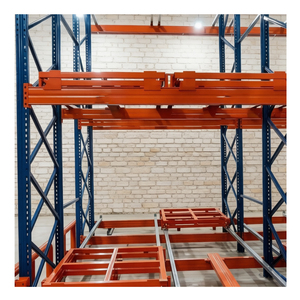
DJ High Density Storage Push Back Pallet Racks
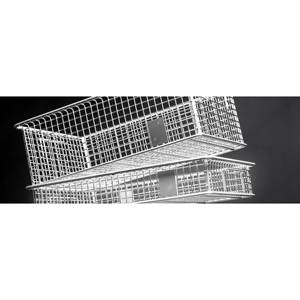
Food Industry Metal Wire Rack Grids
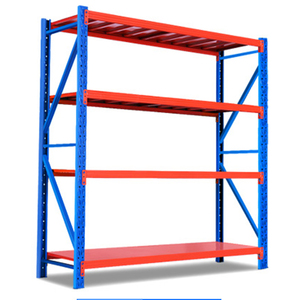
HUAWU 200kg Boltless Steel Storage Rack
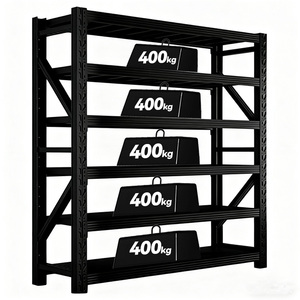
Adjustable Industrial 400kg Steel Shelf
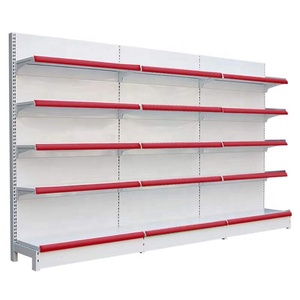
Medium Duty Long Span Steel Shelving
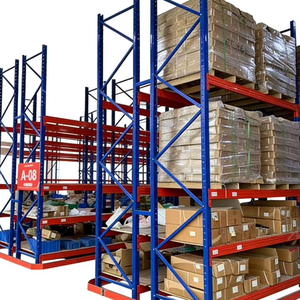
Heavy-Duty Epoxy Coated Warehouse Racks
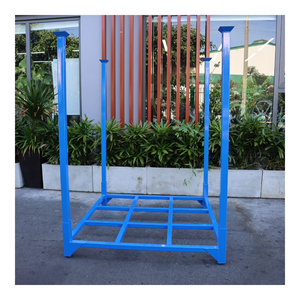
Foldable Stackable Heavy Steel Pallets
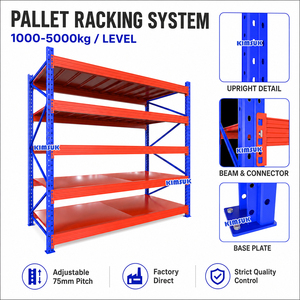
Heavy Duty Laminated Industrial Storage Rack
Comprehensive Engineering Whitepaper: Gravity Pallet Flow & Dynamic Live Storage
In modern industrial logistics, static storage represents an increasingly expensive compromise. Facility managers, supply chain architects, and 3PL enterprises face mounting real estate rates, labor shortages, and aggressive order delivery deadlines. To resolve these challenges, professional procurement teams are transitioning toward dynamic gravity racking systems—commonly known in materials handling engineering as pallet flow racks or live storage gravity systems. By utilizing pure gravitational energy along continuous inclined roller beds, these systems establish true First-In, First-Out (FIFO) stock circulation without reliance on electricity, onboard traction motors, or deep-aisle forklift traffic.
As one of China's premier heavy-duty warehouse racking manufacturers based in Guangzhou, Guangdong, HEDA Shelves provides full OEM/ODM manufacturing capability for high-density pallet flow systems. With over two decades of metallurgical precision, CNC roll-forming accuracy, and internationally audited compliance (ISO 9001:2015 and CE Mark Certification No. 2435-CPR-8605159), our factory delivers turnkey racking configurations engineered to endure intense operational throughput.
Kinematics & Component Anatomy of Industrial Pallet Flow Systems
A high-performance gravity flow lane must accommodate varying pallet weights, wood deflection parameters, and ambient operating temperatures without system jams or runway velocity dangers. When sourcing directly from specialized China wholesale factories, verifying internal roller kinematics and mechanical tolerances is essential:
- Full-Width Cylindrical Steel Rollers vs. Split Skate-Wheels: While light carton-flow beds utilize staggered polymer wheels, heavy pallet flow racks require continuous cylindrical steel rollers manufactured from structural cold-drawn pipe (minimum wall thickness ≥ 2.0 mm to 3.25 mm). Each roller features sealed precision bearings, zinc galvanization or durable passivated zinc plating to resist tropical humidity and low-temperature cold-storage condensation.
- Centrifugal Speed Governor (Brake Rollers): Left unchecked, a 1,200 kg pallet accelerated by gravity over a 20-meter deep lane would attain destructive velocity. Precision-machined internal brake rollers utilize planetary gearing and centrifugal friction shoes that engage proportionally to rotational speed, restricting the maximum pallet velocity to a safe crawl of 0.25 to 0.30 meters per second.
- Mechanical End-Stop Pallet Separator Systems: At the unloading face, the lead pallet absorbs continuous forward pressure from subsequent trailing loads. Integrated foot-pedal or mechanical rocker-arm separators mechanically isolate the first pallet from the trailing queue by a clearance gap of 150 mm to 200 mm. This eliminates hydraulic backpressure on forklift forks during extraction, preventing structural damage and load tipping.
- Entry Self-Centering Guides & Ramp Stops: Spring-loaded, flared entrance guides align misaligned pallets upon forklift insertion, ensuring true tracking along the longitudinal axis of the roller bed. Heavy-duty bolted stop beams lined with shock-absorbing polyurethane buffers catch and arrest the lead pallet at the picking face safely.
Technical Decision Matrix: High-Density Warehouse Systems Compared
Selecting the optimal storage typology requires balancing selectivity, volumetric cube utilization, SKU velocity, and operational capital expenditure. The table below outlines how engineered gravity pallet flow compares against alternative high-density topologies produced at our factory:
| System Architecture | Inventory Logic | Floor Space Efficiency | Forklift Aisle Demand | Throughput Velocity | Capital Investment Index |
|---|---|---|---|---|---|
| Gravity Pallet Flow | Strict FIFO | Up to 80% Cube Utilization | Only 2 Dedicated Aisles | Ultra-High (Simultaneous In/Out) | Medium-High (Mechanical Rollers) |
| Push-Back Cart Racking | LIFO | Up to 70% Cube Utilization | Single Loading/Retrieval Aisle | Moderate (Interleaved Cycles) | Medium (Nested Trolleys) |
| Radio Shuttle Automation | FIFO / LIFO | Up to 85% Cube Utilization | Single or Dual Aisles | High (Battery Shuttles) | High (Mechatronics + Steel) |
| Drive-In / Drive-Through | LIFO (Drive-In) | Up to 65% Cube Utilization | Truck Enters Storage Lanes | Low (Aisle Bottlenecks) | Low-Medium (Static Frames) |
| Selective Pallet Racks | 100% Direct Access | 40% - 45% Cube Utilization | Aisles Every Rack Row | High (Direct Pick) | Lowest (Baseline Standard) |
Enterprise Advantages: Why Global Integrators Source from HEDA Shelves
Direct wholesale procurement from a specialized Tier-1 Chinese racking manufacturer provides exceptional cost-to-performance metrics, provided the factory maintains rigorous metallurgical and fabrication standards. Headquartered in Guangzhou, Guangzhou Heda Shelves Co., Ltd. serves as a reliable global manufacturing partner, offering clear operational advantages:
Integrated 30,000 m² Facility
We eliminate subcontractor margin stacking. All profiling, CNC punching, robotic beam welding, and surface treatment occur within our Guangzhou complex with 30,000 metric tons monthly capacity.
Free Engineering CAD & 3D Modeling
Our in-house structural logistics engineers calculate warehouse aisle constraints, seismic load vectors, and beam deflection limits to produce complimentary, site-specific CAD floor plans within 24 hours.
Audited CE & ISO Credentials
Strict structural adherence to FEM 10.2.02 and EN 15512 codes. Backed by CE Certificate 2435-CPR-8605159, ISO 9001:2015 registration, and environmental RoHS compliance testing.
Container-Optimized Logistics
Export packaging engineered to maximize 40HQ ocean container cubic fill. Bundled profiles with surface-protecting wraps reduce landed ocean freight costs per pallet position worldwide.
10-Stage Surface Pretreatment
Pre-treatment includes immersion pickling, degreasing, and phosphating prior to electrostatic epoxy coating, providing high scratch, chip, and humidity resistance across tropical and marine facilities.
Clear Installation Support
Comprehensive CAD layout schematics, component numbered tags, step-by-step video walk-throughs, and available on-site supervisory engineering support ensure rapid project commissioning.
Future Procurement Trends for Dynamic Warehouse Racking
Global distribution operators are actively adjusting equipment procurement strategies to respond to economic shifts, changing labor markets, and green building directives. Corporate buyers should monitor these four key trends:
1. Integration of Autonomous Mobile Robots (AMRs) with Gravity Pick-Faces
Modern distribution hubs are phasing out manual forklift travel across picking zones. Instead, facilities deploy gravity flow systems as physical decoupling buffers: heavy counterbalance forklifts feed bulk pallets onto the charging lanes from external delivery bays, while automated guided vehicles (AGVs) or AMRs retrieve individual pallets or order totes along the discharge aisle. Specifying gravity flow tracks with sub-millimeter positional end-stops and sensor brackets is now essential for seamless robotic docking.
2. Cold-Chain Energy Optimization Demands Extreme Volumetric Density
With refrigerated and blast-freezer warehouse construction costs reaching three to five times the cost of ambient facilities, wasting refrigerated air on wide forklift aisles is economically unsustainable. Gravity flow racking concentrates high thermal mass within dense pallet blocks, reducing refrigeration escape and lowering kilowatt-hour consumption per ton stored. B2B buyers in frozen food, dairy, and biopharma cold chains are increasingly standardizing on customized low-temperature lubricants and specialized cold-formed steel alloys (Q355D/E) that remain ductile below -30°C.
3. Circular Lifecycle Economics & Decarbonized Steel Transparency
Enterprise ESG targets require tier-1 suppliers to provide transparent documentation of embodied carbon. Procurement contracts increasingly evaluate certified low-carbon electric arc furnace (EAF) steel sourcing, solvent-free electrostatic powder finishes, and modular assemblies designed for disassembly, expansion, and end-of-life recycling without down-cycling scrap penalties.
4. High-Cube Ocean Freight Packing & Landed Cost Engineering
Global sea freight fluctuations emphasize the importance of container space optimization. Sophisticated China factories utilize nested upright profile designs and flat-pack knockdown roller frame beds, avoiding unbolted factory pre-assemblies that ship empty container volume. Sourcing systems that fit cleanly into standard 40-foot High Cube containers can reduce landed freight costs by 18% to 35% per pallet position.
Technological & Design Evolution in Gravity Flow Engineering
While the fundamental mechanism of gravity flow is mechanically elegant, component-level materials science continues to advance. Emerging innovations adopted by our manufacturing lines include:
- Magnetic Non-Contact Eddy Current Braking: Traditional centrifugal brake rollers rely on internal friction pads that naturally wear down over millions of roller rotations. Next-generation installations are adopting non-contact magnetic eddy-current brake rollers. These units generate magnetic opposing torque proportional to pallet velocity, providing lifelong maintenance-free deceleration without brake dust contamination—a significant advantage in food and pharmaceutical distribution.
- Dual-Durometer Hybrid Polyurethane Rollers: To resolve the high startup friction of heavy pallets combined with noise dampening requirements, advanced roller beds pair steel core durability with dual-durometer poly tread compounds. This limits ambient warehouse noise below 65 dB during active gravity discharge while preventing flat-spotting during prolonged static dwell times.
- Configurable Multi-Track Universality: Because global trade involves varying pallet standards (GMA 48x40" in North America, EUR-1 800x1200 mm in Europe, and 1100x1100 mm in Asia-Pacific), modern gravity lanes employ modular 3-track or 4-track roller assemblies. Split roller designs allow central clearance for four-way wooden bottom runner boards or metal skid runners without binding.