Engineered FIFO & Heavy-Duty Storage Configurations
Source certified industrial pallet racks, dynamic gravity rollers, automated electric stackers, and smart sheet-metal storage systems directly from our Guangzhou manufacturing facility.
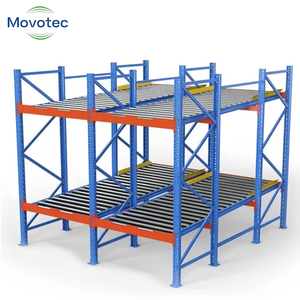
Warehouse Storage Racks Shelving Systems Pallet Rack Gravity Roller Flow Racking Movotec MTG100 1 Year Warranty
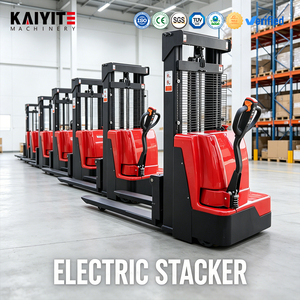
Industrial Electric Stacker 1Ton 2Ton Pallet Stacking Truck 3500mm Lift Height For Racking System
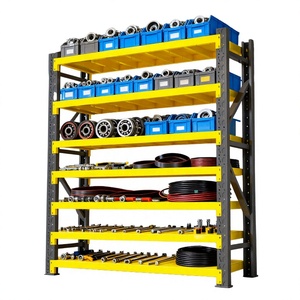
Low Price Durable 7-layer Anti Rust Heavy Duty Adjustable Metal Shelf And Racks Warehouse Storage Rack Shelf Longspan Shelf
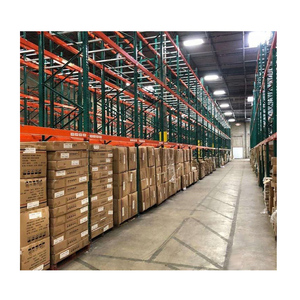
Heavy Duty Shelf Rack Pallet Racking Warehouse Storage Factory Equal to Dexion Industrial Pallet Racking System
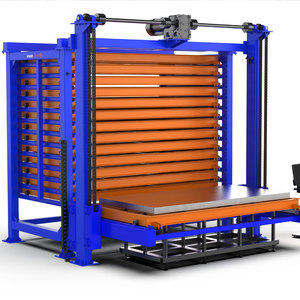
Fully Automatic Sheet Metal Warehouse Rack High Density Smart Storage With Loading Robot
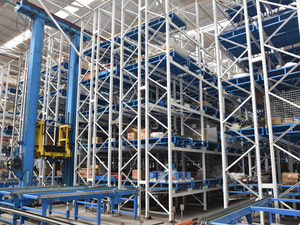
New Heavy Duty Double Deep Steel Pallet Racking Warehouse Storage Rack with Shuttle Drive-in for Restaurant & Home Use Cold Room
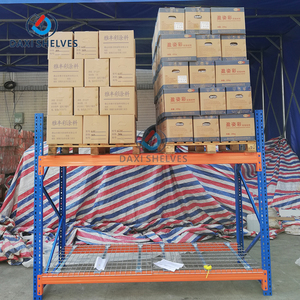
Second Hand Heavy Duty Iron Metal Mobile On-Track Pallet Racking Systems Supermarket Shelves
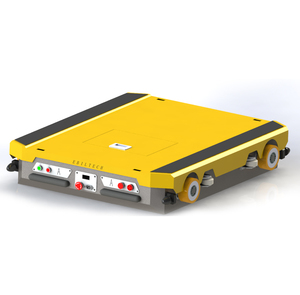
Heavy Duty Shuttle Pallet Racking System For Automated Warehouse Site
Structural Mechanics of High-Density FIFO Pallet Flow Racking
A First In, First Out (FIFO) racking system is a specialized, high-density dynamic storage methodology engineered specifically for rapid turnover warehouses, perishable inventory hubs, cold chain facilities, and pharmaceutical logistics centres. Unlike traditional static selective pallet racking or Last In, First Out (LIFO) drive-in systems, FIFO architectures utilize dedicated replenishment and picking faces. By loading pallets onto the infeed aisle and discharging them at the picking aisle, inventory moves progressively through the storage block without material handling vehicles ever entering the internal rack structure.
The core operating mechanism of a dynamic FIFO system relies on three synchronized mechanical subsystems: precision-engineered gravity roller beds, centrifugal brake rollers, and pallet separation separators. Pallets travel down a precisely calculated slope—typically maintained at a gradient between 2.5% and 3.5% (roughly 1.5° to 2.0° declination)—relying solely on natural gravity. This zero-energy physical propulsion drastically reduces operational carbon footprints while delivering unmatched inventory cycle predictability.
Critical Engineering Parameter: Controlled Descent Velocity
To eliminate pallet collision hazards and mechanical structural shock loads, our Guangzhou factories integrate internal planetary gear centrifugal speed controllers at intervals of every two to three pallet depths along each lane. These rollers modulate pallet speed to an invariant safe speed of 0.25 to 0.30 metres per second, irrespective of whether the pallet weighs 300 kg or reaches our maximum heavy-duty specification of 1,500 kg.
Full Infeed Separation
Equipped with a mechanical foot-release or automatic weight-actuated pallet separator at the discharge face. This isolates the lead pallet from the static hydraulic line-pressure of following pallets, enabling forklift operators to extract the load cleanly without binding.
Cold-Formed High-Yield Uprights
Roll-formed from certified Q235B and high-strength Q355B structural steel coils. Uprights feature continuous omega profiles with 50mm or 75mm teardrop/diamond punch pitches, allowing millimetre-precise gradient and elevation adjustments.
Dual-Bearing Galvanized Rollers
Roller barrels are fabricated from heavy-gauge galvanized steel tubing (Ø 50mm or Ø 60mm) equipped with precision CNC-machined steel end-caps and sealed deep-groove ball bearings, resistant to moisture condensation, industrial dust, and cold room brine.
FIFO Pallet Flow vs. Alternative High-Density Systems
Selecting the optimal pallet storage configuration requires balancing floor space density, material handling travel cycles, inventory shelf-life risk, and initial capital investment. The table below delineates the structural and operational tradeoffs between FIFO Gravity Pallet Flow and alternative industry configurations.
| Storage Topology | Inventory Rotation | Floor Space Utilization | Forklift Cycle Times | Stock Damage Vulnerability | Capital Expenditure (CapEx) |
|---|---|---|---|---|---|
| FIFO Gravity Pallet Flow | Strict 100% FIFO | Up to 80% Cube Fill | Fastest (Dedicated Faces) | Near Zero (Self-Contained Run) | Moderate to High (Passive Roller ROI) |
| Radio Shuttle FIFO Lane | Dual FIFO / LIFO | Up to 85% Cube Fill | Automated Internal Transit | Ultra Low (Cart Handled) | High (Batteries + AGV Shuttle) |
| Drive-In / Drive-Through | LIFO (Drive-In) / FIFO (Drive-Thru) | 60% – 70% Cube Fill | Slow (Mast Enters Structure) | High (Upright Collision Exposure) | Low (Minimal Moving Parts) |
| Push-Back Cart Racking | Strict LIFO | 65% – 75% Cube Fill | Moderate (Incline Counter-force) | Low to Moderate (Nested Carts) | Moderate |
| Standard Selective Racking | Arbitrary FIFO/LIFO | 35% – 45% Cube Fill | Standard (Aisle-Dependent) | Minimal (Open Aisle Flanking) | Lowest Baseline |
Future Procurement Trends for Industrial FIFO Racking (2025–2030)
Global supply chain executives, Third-Party Logistics (3PL) conglomerates, and mega-fulfilment planners face shifting macroeconomic conditions. Rising real estate prices, soaring industrial electricity tariffs, and tighter inventory freshness SLAs are fundamentally altering how procurement teams evaluate Chinese racking manufacturers. Five structural procurement vectors are reshaping factory contracts:
1. Zero-Energy Passive Decarbonization
With corporate ESG commitments and volatile power grid costs, automated cranes and high-draw conveyors are facing scrutiny for simple buffer operations. Gravity FIFO racking consumes precisely 0 kWh of electricity during operation, offering supply chains immediate Scope 1 and Scope 2 carbon mitigation dividends.
2. Cold Chain Thermal Inertia Densification
In sub-zero frozen logistics facilities (-25°C to -30°C), empty cubic air space represents thermal inefficiency. Procurement directives increasingly mandate compact deep-lane FIFO designs (15 to 30 pallets deep) that condense cold air volumes, curtailing refrigeration runtime by up to 28%.
3. Factory Modularization & Quick Retrofitting
Global warehouse tenants operating on 3- to 5-year lease horizons avoid cast-in-place or welded structures. Sourcing requirements now focus heavily on bolted, drop-in roller track assemblies that can be stripped from standard selective pallet racks and reconfigured into FIFO lines within 48 hours.
Technological Frontiers in Dynamic Storage System R&D
Chinese industrial racking manufacturers are no longer merely raw steel converters. Continuous investments in automated roll forming, robotic weldments, and IoT smart-sensing components have elevated Chinese suppliers to premier global engineering partners. Several breakthrough engineering vectors are entering commercial production:
Smart IoT Telemetry Rollers
Integration of low-energy Bluetooth (BLE) self-powered speed rollers. As pallets glide across the rollers, micro-dynamos generate internal power to transmit velocity data, identifying mechanical lane obstructions, uneven pallet bases, or stalled pallets directly to the central Warehouse Execution System (WES).
Robotic AMR & AGV Infeed Docking
Standard FIFO racks are historically built for human-operated counterbalanced forklifts. Advanced R&D has developed precision self-centering funnel entry guides and robotic optical alignment targets, allowing Autonomous Mobile Robots (AMRs) to dock and drop pallets into gravity lanes with sub-3mm precision.
Hybrid Cold-Room Polyurethane Rollers
Traditional hard steel rollers can deform low-grade wooden or plastic pallets under sustained freezing temperatures. Newly formulated thermoplastic polyurethane (TPU) roller compounds retain high elasticity down to -35°C, ensuring continuous friction contact with zero roller flat-spotting.
Why Tier-1 Global Contractors Source From Guangzhou Heda Shelves Co., Ltd.
Two decades of certified precision manufacturing, engineering excellence, and complete supply chain transparency from our South China manufacturing facilities.
30,000 m² Manufacturing Facility
Operating out of our fully integrated Guangzhou base, our factory runs automated roll-forming lines, automated punching equipment, and CNC bending stations capable of outputting over 30,000 metric tons of certified racking steel monthly.
10-Stage Surface Coating
All structural members undergo automated chemical degreasing, ultrasonic rust removal, pickling, and zirconium phosphating before electrostatic epoxy-polyester powder curing at 200°C for exceptional humidity and scratch resistance.
Free 24h 3D & CAD Layouts
Our veteran in-house engineering team of 300+ professionals utilizes finite element analysis (FEA) software to provide full static/seismic load calculations, AutoCAD footprints, and 3D architectural models within 24 hours of inquiry receipt.
CE & ISO 9001:2015 Accredited
Fully verifiable international credentials: CE Certification No. 2435-CPR-8605159, ISO 9001:2015 Certificate No. 18624Q00169R0M (valid through June 2027), and verified European RoHS non-toxic compliance across all powder coatings.
Frequently Asked Questions on FIFO Racking Procurement
Clear, technical, and commercial answers compiled by our chief structural engineers for international procurement teams and warehouse operations managers.
Transform Your Warehouse Throughput with Factory-Direct FIFO Engineering
Connect with our Guangzhou structural engineering team today. Send us your facility CAD drawings, ceiling clearance profiles, pallet dimensions, and SKU throughput velocity—we will formulate a fully engineered proposal, structural calculation sheet, and 3D rendering within 24 hours.