Engineered Heavy-Duty Industrial Racking & Shelving Systems
Certified Chinese steel structural fabrication tailored to international warehouse design codes (FEM 10.2.02, RMI, EN 15512). Select the optimal structural configuration for your volume and throughput.
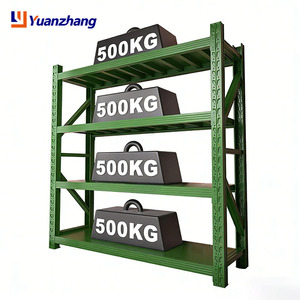
Boltless Adjustable Heavy Duty Load-Bearing 300kg/Layer Steel Racks Industrial Shelving System
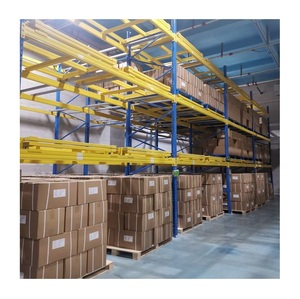
High Storage Density and Efficiency Industrial Push Back Racking System for Pallets
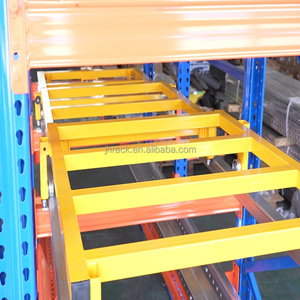
Wholesale Push Back Heavy Duty Shelving Warehouse Storage Facilities Pallet Racking Unit
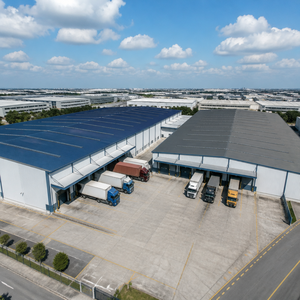
Large Scale Steel Warehouse Building High Bay Pallet Racking Steel Frame Structure Design
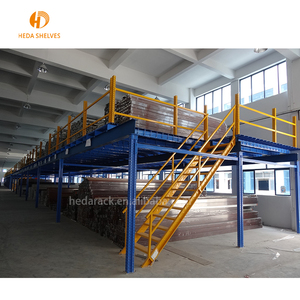
Warehouse Rack Supported Mezzanine Floor System Multi-Level Steel Platform CE ISO9001
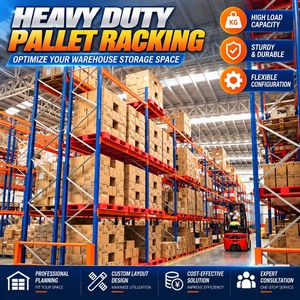
Heavy Duty Selective Steel Pallet Racks with Powder-Coated Finish for Logistics Hubs
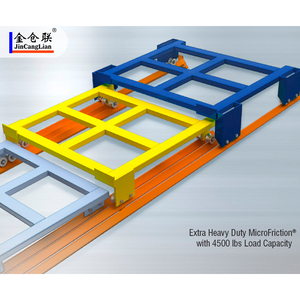
Customized Pallet Rack High Density Push-Back Racking with 2~5 Nested Movable Carts
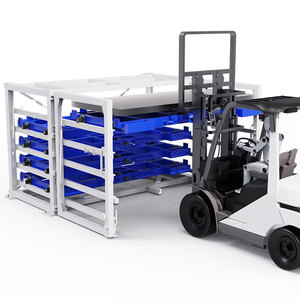
Sliding Shelf Stacking Sheet Metal Storage Rack Anti-Rust Foldable 6-Layer Industrial Unit
Guangzhou Heda Shelves Co., Ltd.: Heavy Storage Structural Integrity
Established in 2001, Guangzhou Heda Shelves Co., Ltd. has grown from an industrial roll-forming workshop into one of China's primary engineering hubs for structural storage systems, automated pallet racking, and specialized warehouse platforms. Operating from an integrated 30,000 square meter production complex staffed by more than 300 experienced engineers, structural technicians, and certified welders, HEDA maintains an unyielding focus on metallurgical quality, precision dimensional tolerance, and structural safety.
Global supply chain leaders face volatile operational stresses: rising land values, densified SKU profiles, and strict international occupational safety mandates. To meet these demands, our engineering department designs every selective rack, push-back lane, and rack-supported mezzanine to exceed rigorous global standards, notably CE certification (No. 2435-CPR-8605159), ISO 9001:2015 Quality Management Certification (No. 18624Q00169R0M), and European EN 15512 design parameters.
Full-Chain Quality Governance
Unlike trading intermediaries or localized assemblers, HEDA controls the entire industrial manufacturing lifecycle. In-house engineering guarantees that column uprights, box beams, load ties, and base assemblies interface with sub-millimeter precision.
- ✓ Automated CNC Continuous Punching: Hole-pitch consistency ±0.1mm.
- ✓ Robotic CO2 Shielded Welding: Deep weld penetration for beam connectors.
- ✓ 9-Stage Pre-Treatment: Hot-alkaline degreasing, pickling & phosphating.
- ✓ Gema Electrostatic Coating: Uniform 60-90µm thermoset epoxy finish.
The 10-Stage Heavy Racking Fabrication Methodology
How raw steel strip coils are converted into structural warehouse installations verified for 10–25 year lifecycle durations under full rated dynamic loads.
Certified Coil Slitting
Hot-rolled coils inspected for gauge uniformity, yield limit, and chemical carbon content.
CNC Automated Punching
High-speed continuous presses punch teardrop/diamond holes along upright axes at 50/75mm increments.
Continuous Roll Forming
Multi-stand precision roll-forming lines shape omega-profile columns and stepped box beams without internal micro-cracks.
Hydraulic Precision Cutting
Flying hydraulic shears cut uprights to exact layout specifications within tight ±1.0mm axial tolerances.
Robotic Connector Welding
Automated robotic welders fuse 3-claw and 4-claw stamped end connectors to interlocking box beams.
Mechanical Shot Blasting
Components undergo abrasive descaling to remove all mill scale, surface oxides, and oil residues.
9-Stage Phosphating Wash
Chemical acid pickling and nano-ceramic zinc phosphating establish an anti-corrosion barrier.
Electrostatic Powder Cure
Thermoset polyester epoxy powder applied in automated booths, cured at 180°C–200°C for scratch resistance.
Destructive QC Deflection
Full-bay mockups subjected to static overload tests to confirm L/200 deflection compliance under maximum load.
Container Nesting & Bundling
CAD-assisted bundling utilizing corrugated edge guards and steel banding to maximize 40HQ container cube volume.
Industrial Racking Comparative Matrix: Density vs. Selectivity
System selection determines operational throughput, building footprint capitalization, and equipment compatibility. Compare primary configurations against critical operational key performance indicators.
| Racking Architecture | Space Utilization | Direct Selectivity | Handling Dynamic | Forklift Compatibility | Cost / Pallet Position | Ideal Inventory Vertical |
|---|---|---|---|---|---|---|
| Selective Pallet Racking | 40% – 50% | 100% Immediate | FIFO / LIFO Any | Standard Counterbalance, Reach | $ Low Baseline | 3PL, Multi-SKU Retail, FMCG Distribution |
| Push-Back Racking (2-6 Deep) | 70% – 75% | Lane Face Only | LIFO (Gravity Cart) | Standard Counterbalance, Reach | $$ Moderate | Cold Storage, Food Processing, Mid-SKU |
| Drive-In / Drive-Through | 75% – 85% | Low (Batch Access) | LIFO / FIFO | Narrow Mast Counterbalance | $ Low – Mid | Bulk Raw Materials, Agricultural Crops |
| Radio Shuttle Automation | 85% – 90% | Semi-Automated Lane | FIFO or LIFO Selectable | Standard Forklift (Rack Exterior) | $$$ High (ROI Fast) | Deep Freeze Chains, Beverage Bottlers, Pharma |
| Rack-Supported Mezzanine | 100% Vertical Gain | 100% Manual Picking | Floor-by-Floor Batch | Forklift to Gate, Hand Trucks | $$ Value-Engineered | E-Commerce Fulfillment, Auto Spare Parts, Apparel |
| AS/RS High-Bay Clad Rack | 90% – 95% | 100% Automated | Dynamic Algorithmic | Automated Stacker Cranes | $$$$ High Capital | Mega-Hub Logistics, Finished Goods Silos |
*Note: Cost per pallet position includes structural steel, connection anchors, hardware, and surface treatment. Final calculations depend on geographic seismic category and soil bearing capacity.
Global Warehouse Procurement Trends: Navigating 2025–2030
Industrial supply chains face structural realignments. Macro-economic shifts, rising labor costs, and higher building heights demand that engineering procurement specialists adapt early.
1. High-Density Automation Pivot
With industrial land prices up 35-50% across major logistics corridors, greenfield projects are building upward rather than outward. Procurement is pivoting from basic selective racking to semi-automated radio shuttle and push-back systems that reduce internal operating aisles from 3.2m to zero inside storage blocks.
2. Direct-from-Source Factory Partnerships
Escalating tariff complexities and third-party markup margins drive engineering EPCs and enterprise logistics directors to deal directly with Chinese original equipment manufacturers. Factory-direct sourcing yields 25–40% CAPEX savings while providing unmediated access to structural design teams.
3. Decarbonization & Green Metallurgy
Multinational tenders now routinely mandate Scope 3 carbon footprint evaluations. Leading manufacturers utilize electric-arc furnace (EAF) steel recycled fractions and zero-VOC heavy thermoset powders to comply with CBAM (Carbon Border Adjustment Mechanism) and international LEED green building protocols.
4. Demountable Mezzanine Asset Flexibility
Due to uncertain lease terms in rented logistics real estate, companies avoid poured concrete intermediate floors. Rack-supported and structural bolt-together mezzanine platforms are classified as movable capital equipment rather than permanent real estate, accelerating depreciation cycles and allowing relocation.
5. Containerized Nesting Engineering
Ocean freight volatility makes shipping cube optimization paramount. Forward-thinking suppliers design profile geometry specifically to fit standard ISO containers, utilizing nested C-sections and pre-assembled upright trusses that drive container space utilization up to 92%.
Technological & Structural Innovations in Heavy Warehouse Shelving
Modern racking is no longer static ironmongery. Advanced metallurgical profiles, digital engineering simulations, and automated integration make industrial storage high-performance structural infrastructure.
FEM & Finite Element Structural Analysis (FEA)
Before steel coils enter roll-forming stands, engineering assemblies undergo three-dimensional finite element analysis (FEA). HEDA engineers model non-linear dynamic interactions, simulating maximum torsional shear, beam-to-column connector semi-rigidity, and frame buckling modes. By anticipating stress risers under heavy cyclic pallet drops, structural profiles deliver high strength-to-weight ratios that cut steel tonnage without compromising structural safety.
Sub-Zero Metallurgy for Cold Chain Logistics
Conventional carbon steel experiences a ductile-to-brittle transition when exposed to sub-zero temperatures (-25°C to -30°C in blast freezers), risking sudden structural failure under dynamic forklift impact. Our cold-chain racking employs low-carbon, manganese-alloyed steel formulations with verified Charpy V-notch impact toughness down to -40°C, combined with specialized anti-freeze epoxy primers that prevent micro-flaking and moisture corrosion.
AMR / AGV Robotic Ecosystem Compatibility
As autonomous mobile robots (AMRs) and automated guided vehicles (AGVs) enter modern warehouses, shelving tolerances have narrowed dramatically. HEDA manufactures specialized racking with floor-level optical docking targets, low-profile guide channels, and high-precision baseplates anchored with epoxy chemical bolts. These systems ensure autonomous pallet jacks pick and deposit within tight ±3.0mm navigational envelopes.
Frequently Asked Questions: Global Industrial Shelving Procurement
Technical answers to questions frequently raised by EPC contractors, procurement directors, and warehouse operations teams.