Engineered Heavy-Duty Pallet Racking Portfolios
From ultra-dense automated deep-lane storage to 100% selective rapid-dispatch systems, our structural racking configurations are roll-formed from certified high-tensile steel, offering uncompromised payload safety and global code compliance.
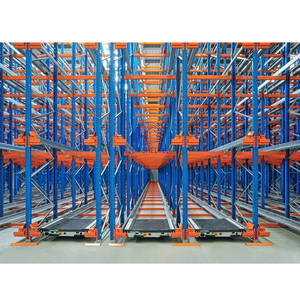
Warehouse High-Density Shuttle Rack System ASRS 4-Way Shuttle Racking
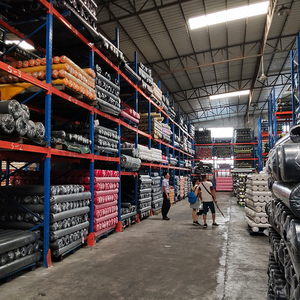
Highly Customizable Free Design Storage Rack for Heavy-Duty Storage
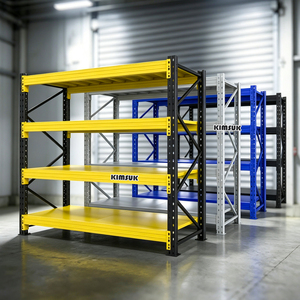
Heavy Duty Industrial Warehouse Selective Storage Pallet Rack
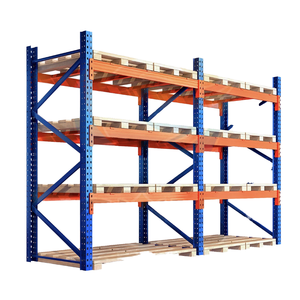
Warehouse Supermarket Heavy-Duty Shelving & Bulk Display Racks
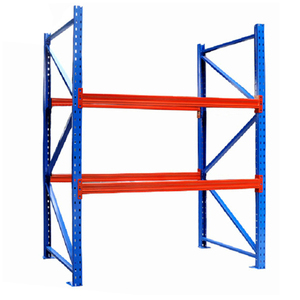
Adjustable Steel Selective Beam Pallet Rack with Powder Coated Surface
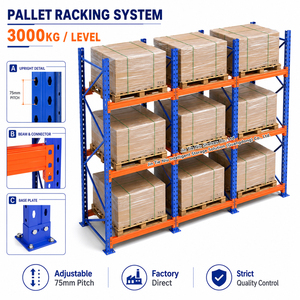
3 Pallet Levels Heavy Duty Steel Warehouse Selective Pallet Racking System
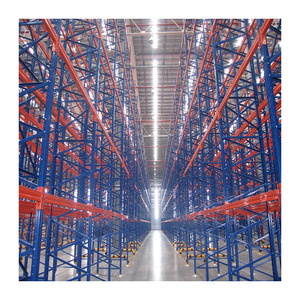
Heavy Duty Industrial Palletized Storage Racking System Solutions
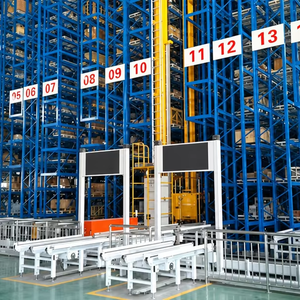
AS/RS Automated Storage Retrieval System High Bay Heavy Duty Pallet Rack
Why Tier-1 Global Operators Partner With Our Factory
Operating since 2001 from our specialized 30,000 square meter industrial manufacturing base in South China, our full-process production guarantees metallurgical integrity, strict cross-sectional tolerances, and direct export logistical compliance.
Full In-House Industrial Fabrication
We execute the entire metallurgical cycle under one roof: automated coil de-coiling, CNC progressive punching, continuous multi-stage roll forming, robotic welding, and automated shot-blasting, eliminating third-party subcontractor variance.
Rigorous Certifications & FEA Calculations
Verified under official CE Marking (Cert. No. 2435-CPR-8605159), ISO 9001:2015 quality management (No. 18624Q00169R0M), and RoHS compliance. Every layout includes finite element analysis structural certification matching local seismic acceleration codes.
10-Stage Climate-Resilient Finish
To resist corrosive maritime transit and tropical monsoon warehouse moisture, our steel passes chemical acid pickling, multi-phase phosphating pretreatment, and electrostatic powder coating cured at 200°C, offering superior salt-spray hours.
40HQ Container Space Optimization
Exporting structural steel requires intelligent cubing algorithms. Our custom wood-crate cradling, nested upright bundles, and beam interlocking ensure complete container utilization (up to 26.5 MT per 40HQ), driving down landed freight cost per pallet position.
Future Trends in Pallet Racking & Intralogistics Procurement
Industrial supply chains are transitioning from static structural racking toward dynamic, automated, and digitally traceable asset matrices. Forward-thinking procurement officers must evaluate systems through holistic engineering criteria.
Convergence with Autonomous Systems
The procurement of static warehouse racks is rapidly declining in favor of hybrid-ready frameworks capable of retrofitting 4-way autonomous pallet shuttles and Autonomous Mobile Robots (AMRs). Modern uprights are engineered with higher sectional rigidity to tolerate dynamic acceleration vectors without harmonic structural resonance.
High-bay installations (exceeding 24 meters) utilize automated guided stacker cranes (AS/RS), demanding tighter beam deflection tolerances (down from L/200 to L/300 or L/500), where beam deflection cannot exceed 2-3mm under total gross rated capacity.
Micro-Grade Steel & Decarbonization
Global environmental mandates and European CBAM (Carbon Border Adjustment Mechanism) are altering steel sourcing metrics. Leading Chinese manufacturers are pioneering electric arc furnace (EAF) processed micro-alloyed steels, reducing embodied carbon per metric ton by up to 35% without degrading tensile yield points.
The transition from generic commercial steels to high-grade Q355B (with yield strength ≥ 355 MPa) enables thinner wall gauges while providing equivalent buckling resistance, reducing dead-weight loads on structural warehouse foundation slabs.
Seismic Telematics & TCO Sourcing
Procurement criteria have transitioned from "lowest purchase price per beam" to "Total Cost of Ownership (TCO) across 15-year lifecycle". Sophisticated operators are adopting European FEM 10.2.02 and US RMI MH16.1 specifications that demand finite baseplate anchoring and upright protection collars.
Emerging tier-1 smart facilities integrate IoT-based wireless tilt sensors and acoustic emission impact monitors directly inside upright Omega profiles, instantaneously reporting forklift collision micro-fractures to warehouse management systems.
Comparative Racking System Engineering Criteria
Select the optimal racking typology based on SKU density, retrieval velocity, handling equipment capital allocation, and structural building envelope constraints.
| Storage Typology | Pallet Selectivity | Volumetric Density | Handling Fleet Required | Standard Payload Range | System Architecture |
|---|---|---|---|---|---|
| Selective Pallet Racking | 100% Direct (1:1) | Baseline (40%) | Standard Counterbalance / Reach | 500 - 4,000 kg / level | Adjustable teardrop or Omega pitch beams |
| Double-Deep Racking | 50% Direct (1:2) | High (+30% vs Sel.) | Deep-Reach Pantograph Forklift | 1,000 - 3,000 kg / level | Paired consecutive rack bays |
| Drive-In / Drive-Through | Lane Dedicated (LIFO/FIFO) | Maximum (Up to 75%) | Narrow-Chassis Counterbalance | 1,000 - 2,500 kg / pallet | Continuous cantilevered support rails |
| Radio 4-Way Shuttle Racks | Deep-Lane High Throughput | Ultra-Dense (Up to 85%) | Standard Forklift + Autonomous Shuttle | 500 - 2,000 kg / pallet | Precision roll-formed shuttle running tracks |
| AS/RS Automated High-Bay | Automated System Driven | Maximum Vertical (Up to 90%) | SRM Stacker Cranes / Automated Hoists | 1,000 - 3,000 kg / pallet | Self-supporting or rack-clad building structures |
| Heavy-Duty Cantilever | 100% Linear Clearance | Custom Variable | Side Loader / Multi-directional Truck | 500 - 5,000 kg / arm | Free-standing upright columns with tapered arms |
Frequently Asked Technical & Export Questions
Critical engineering, international shipping, metallurgical validation, and safety compliance answers for warehouse executives and supply chain procurement managers.
What structural steel grades are utilized, and how is yield strength certified?
We source prime hot-rolled coil stock predominantly in certified Q235B (yield strength ≥ 235 MPa, ultimate tensile 370-500 MPa) and heavy-capacity Q355B (yield ≥ 355 MPa, tensile 470-630 MPa), equivalent to European S235JR and S355JR under EN 10025. Every production batch is accompanied by genuine 3.1 Mill Test Certificates (MTC) documenting chemical ladle analysis (Carbon, Silicon, Manganese, Phosphorus, Sulfur) and mechanical Charpy V-notch impact testing.
How do you calculate structural safety against seismic activity and floor slab settlement?
Our structural engineering division employs ANSYS finite element modeling conforming to FEM 10.2.02, RMI MH16.1, and AS4084 standards. We account for regional ground acceleration coefficients (Ss, S1), second-order P-Delta overturning effects, and dynamic beam-column joint stiffness. Slabs are verified against localized punching shear stress beneath baseplates, with custom-engineered widened spreader plates provided where concrete compressive strength (f'c) is below 25 MPa.
What surface protection options exist for cold-storage and high-humidity facilities?
For standard distribution centers (+5°C to +40°C), our high-adhesion electrostatic polyester powder coating delivers 60-80 microns of dry film thickness (DFT). For deep-freeze environments (-25°C to -30°C) where condensation and micro-cracking threaten steel surfaces, we provide continuous hot-dip galvanizing (HDG) conforming to ISO 1461 / ASTM A123 with a minimum coating thickness of 65-85 μm, preventing internal structural oxidation across decades.
How are export components packed to eliminate container sea-transit damage?
Uprights are assembled or nested into rigid rectangular bundles banded with high-tension PET strapping, isolated by protective composite foam corners, and mounted onto custom timber saddles designed for rapid unloading via side-clamp forklifts. Beams are palletized in matched pairs with connector ears shielded inside interlocking corrugated spacers, ensuring zero paint abrasion and zero dimensional skewing upon ocean arrival.
What is the standard production lead time and global shipping documentation support?
Standard containerized orders (2-5 x 40HQ) require 15 to 22 working days from CAD engineering approval and structural sign-off. As experienced exporters, we supply comprehensive CIF/FOB documentation including Form E, Form RCEP, Generalized System of Preferences (GSP), Chamber of Commerce certified commercial invoices, and third-party pre-shipment inspection sign-offs from SGS, Bureau Veritas, or TÜV Rheinland.
Initiate Your Warehouse Engineering Review
Collaborate directly with senior structural racking engineers. Submit your building layout parameters, floor slab specifications, and pallet throughput requirements for a zero-cost 3D CAD proposal and structural calculation summary.
- Free 2D/3D DWG Layout Design
- Certified Finite Element Load Audits
- Optimized CIF/FOB Container Packing