Industrial Storage Systems & Racking Catalog
Explore precision-engineered heavy-duty steel pallet racks, automated shuttle platforms, pick-to-light systems, and structural mezzanines direct from China's leading manufacturing hub.
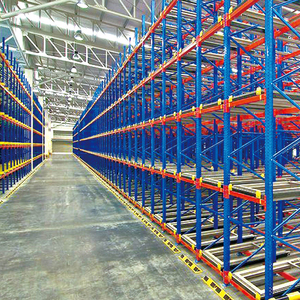
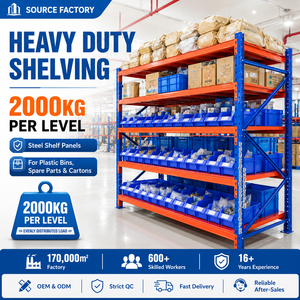
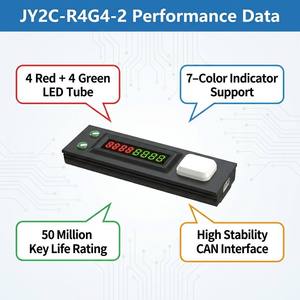
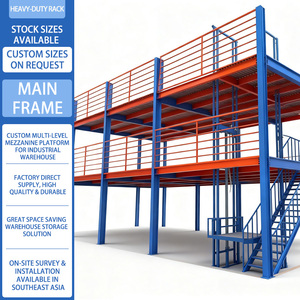
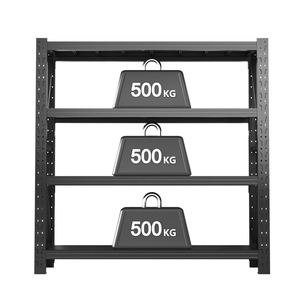
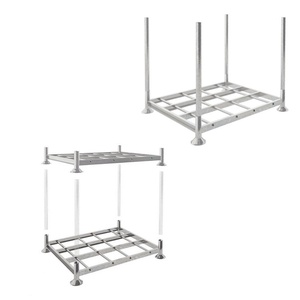
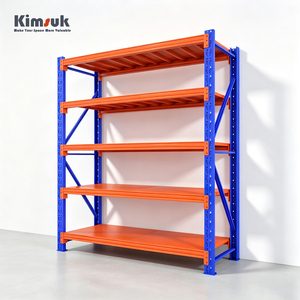
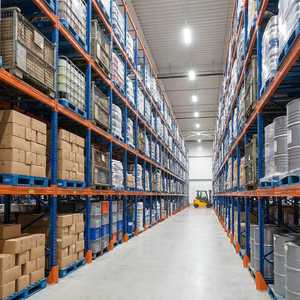
Guangzhou Heda Shelves Co., Ltd.: Global Racking Authority
For over two decades, Guangzhou Heda Shelves Co., Ltd. has established itself as a premier OEM/ODM manufacturer of structural warehouse storage racks, serving tier-1 logistics enterprises across 120+ nations.
Full In-House Manufacturing Control
Unlike trading suppliers, HEDA Shelves manages the complete fabrication chain in Guangzhou—from precision cold-roll profiling, automated multi-punching, and robotic arm welding to automatic powder line coating. Every upright frame and beam carries total material traceability back to certified Q235B/Q355B coil steel batches.
International Structural Accreditations
Our pallet racking systems strictly comply with European FEM 10.2.02 and EN 15512 standards, American RMI codes, and hold official CE Certification (No. 2435-CPR-8605159), ISO 9001:2015 Quality Management Certification (No. 18624Q00169R0M), and RoHS environmental testing verification.
Free Engineering CAD & 3D Layout Simulation
Our senior warehouse structural engineers formulate zero-cost optimized floor plans within 24 hours. We evaluate your floor slab load rating, ceiling clear height, forklift turning radius, and seismic zone parameters to engineer rack layouts that maximize cubic storage efficiency by up to 250%.
Engineering Sourcing Guide: Sourcing Heavy-Duty Pallet Racks from China
A technical analysis of structural steel selection, load deflection thresholds, roll-forming tolerances, and anti-corrosion surface treatments for enterprise procurement officers.
1. Steel Grade Selection & Yield Strength Criteria
The structural stability of heavy-duty pallet racking begins with high-grade carbon structural steel. Chinese tier-1 racking factories primarily utilize Q235B (Yield Strength ≥ 235 MPa) and high-tensile Q355B (Yield Strength ≥ 355 MPa, equivalent to European S355). While budget suppliers often substitute low-grade hot-rolled strip steel, high-performance racking requires prime cold-rolled steel coils from top-tier mills (such as Baosteel or Shougang).
Key Technical Insight: Uprights manufactured from cold-rolled Q355B steel allow thinner wall profiles without compromising structural load margins, reducing total freight shipping weight while maintaining safety deflection factors below the strict L/200 standard.
2. Cold-Roll Forming Mechanics & Cross-Sectional Geometry
An upright frame’s load bearing capacity depends heavily on the continuous multi-station cold-roll forming process. High-precision forming machinery rolls steel strips through 12 to 18 progressive stations to shape complex profile columns with up to 13 bending edges. This geometric complexity enhances structural moment of inertia and torsional resistance against forklift impact.
| Racking Category | Standard Steel Grade | Safety Deflection Limit | Typical Load Capacity | Recommended Warehouse Application |
|---|---|---|---|---|
| Selective Pallet Racking | Q235B / Q355B | L / 200 | 1,000 kg – 4,000 kg / Beam Level | High-SKU multi-item logistics hubs, 3PL centers, retail distribution. |
| Drive-In / Drive-Thru Racking | Q235B Heavy Section | L / 250 | 1,000 kg – 1,500 kg / Pallet Position | Homogeneous high-volume storage, cold rooms, beverage bottling plants. |
| Push-Back Cart Racking | Q355B Structural Carts | L / 200 | 1,200 kg / Cart Position | Medium-SKU bulk buffers requiring automated gravity cart loading. |
| Radio Shuttle Automation Rack | Q355B Precision Profile | L / 300 | 1,500 kg / Pallet Position | Deep-lane high-density automated cold chain and pharmaceutical vaults. |
| Heavy-Duty Cantilever Racks | Q235B / Q355B H-Beam | L / 180 | 500 kg – 3,000 kg / Arm Level | Long materials, steel pipes, timber, PVC piping, and metal sheets. |
3. Surface Pretreatment & Anti-Corrosion Finishing Technology
Corrosion is the leading cause of silent structural fatigue in humid or cold-storage environments. Premier Chinese factories employ an automated 10-stage surface pretreatment line prior to powder spraying:
- Degreasing & Descaling: Removes machine oils and atmospheric oxides from raw profiles.
- Acid Pickling & Neutralization: Chemically strips micro-rust particles from laser-cut holes and punched slots.
- Zinc Phosphating Pretreatment: Forms a dense, non-metallic crystalline phosphate layer, enhancing powder coating adhesion and rust barrier longevity by up to 300%.
- Electrostatic Epoxy-Polyester Powder Coating: Applied at 60–80 microns thickness and baked at 180°C–200°C for high impact scratch resistance.
Future Warehouse Racking Procurement Trends (2025–2030)
As global logistics demands shift toward rapid fulfillment and automated operations, international industrial procurement teams must align with key emerging supply chain trends.
Transition from Static Racks to Hybrid Shuttle Racks
Industrial buyers are rapidly transitioning away from standard low-density selective systems. Procurement orders for Radio Shuttle Racking and Automated Storage and Retrieval System (AS/RS) hybrid rack structures are projected to grow by over 18% annually, driven by soaring industrial land lease costs worldwide.
Demands for Modular, Scalable Architectural Designs
Modern e-commerce and omnichannel fulfillment demand flexible warehouse layouts. Future procurement specs prioritize completely boltless, highly adjustable upright pitch systems (e.g., 50mm or 75mm beam adjustment steps) that allow rapid multi-tier mezzanine conversion as order volumes scale.
Green Steel Manufacturing & Decarbonized Logistics
Corporate ESG mandates are influencing global procurement criteria. Leading Chinese pallet rack suppliers are adopting zero-emission solar-powered factory facilities, water-recycling closed-loop phosphating systems, and lightweight high-yield steel profiles to reduce embodied carbon footprint per pallet position.
Technological Development Trends in Pallet Racking Systems
Smart warehousing technology is transforming structural steel racks into intelligent, sensor-integrated logistics nodes.
Smart Pick-to-Light & Digital Direction Systems
Integrating digital LED light modules directly into pallet rack beam profiles streamlines inventory retrieval. Operators are guided visually to exact SKU shelf locations, enabling order picking throughput speeds to increase by over 40% while mitigating language barrier errors in international distribution hubs.
IoT Structural Strain & Impact Monitoring
Next-generation heavy-duty pallet racks incorporate embedded IoT strain gauges and wireless vibration sensors on vulnerable base plates. These sensors transmit real-time alerts to facility management dashboards if a forklift collision exceeds structural tolerance or if local beam overload occurs.
Advanced Anti-Seismic & Cold-Chain Metallurgy
Structural dynamic simulation software (FEA) now dictates custom frame bracing patterns suited to specific geographical seismic zones (e.g., Zone 4 seismic resistance). Furthermore, low-temperature micro-alloy steel formulations prevent embrittlement fractures down to -30°C in specialized cold storage facilities.
Frequently Asked Questions (FAQ)
Direct technical answers to common questions raised by logistics directors, structural engineering consultants, and import procurement managers when sourcing pallet racks from China.
Why should I source heavy-duty warehouse pallet racks directly from Chinese manufacturers like HEDA Shelves?
Sourcing directly from established Chinese manufacturers provides significant cost advantages without sacrificing quality. Top-tier factories like Guangzhou Heda Shelves Co., Ltd. leverage fully integrated supply chains, automated roll-forming infrastructure, and certified Q235B/Q355B structural steel to reduce unit costs per pallet position by 30% to 50% compared to local resellers. Additionally, you receive customized CAD designs, direct engineering oversight, and official international quality certifications (CE, ISO 9001:2015).
How do Chinese factories calculate pallet rack load safety factors and deflection compliance?
Reputable racking manufacturers design all systems strictly in accordance with European FEM 10.2.02 / EN 15512 codes or American RMI safety guidelines. Structural calculations ensure that under maximum rated load, maximum beam deflection does not exceed L/200 (where L is the beam length). The overall frame structure carries a minimum structural safety factor coefficient of 1.5 to 1.65, protecting against accidental load surges or dynamic movement during loading.
What key information is required to receive an accurate CAD layout design and fast price quotation?
To engineer an accurate warehouse racking proposal, please provide: (1) Warehouse building floor plan drawings (CAD or PDF) showing column locations and ceiling clear height, (2) Pallet dimensions (Length x Width x Height including cargo overhang), (3) Maximum weight per loaded pallet, (4) Operating forklift specification (turning radius and maximum lift height), and (5) Ambient temperature requirements (e.g., standard dry, humid coastal, or sub-zero cold room).
How are heavy steel racking components protected against ocean shipping damage and tropical humidity?
HEDA Shelves utilizes specialized export packaging engineering. Uprights and box beams are tightly bundled using heavy-duty steel strapping over protective plastic corner guards. Wooden pallets or custom steel frame skids elevate steel bundles off container floors, while multi-layer moisture-proof stretch film wraps all polished and powder-coated surfaces to prevent abrasion, saltwater air corrosion, or shift damage during sea transit in 20GP or 40HQ containers.
What is the typical production lead time and international shipping timeline for bulk pallet racking orders?
Standard custom racking orders (e.g., 2 to 5 container loads) require a production cycle of approximately 15 to 20 business days following technical CAD layout approval. Ocean freight transit varies by destination port (e.g., Southeast Asian ports: 7–12 days; South Asian ports like Nhava Sheva or Colombo: 14–18 days; European/Middle Eastern ports: 22–30 days). Expedited production schedules are available for time-sensitive facility fit-outs.
Can HEDA Shelves support local installation and site engineering installation guidance?
Yes. Every container shipment includes detailed component assembly drawings, numbered part identification manifests, and step-by-step video installation tutorials. Local contractors can easily complete assembly using basic bolt-assembly techniques. For large-scale multi-tier mezzanines or automated shuttle installations, HEDA Shelves can dispatch experienced structural installation engineers to supervise erection and conduct final structural load compliance testing on-site.
Transform Your Warehouse Space Efficiency Today
Connect directly with senior structural racking engineers at Guangzhou Heda Shelves Co., Ltd. Download our comprehensive engineering catalog, review detailed technical drawings, and receive a free optimized CAD layout proposal within 24 hours.