25+
Years Engineering Expertise
30,000T
Monthly Manufacturing Capacity
120+
Countries Exported Worldwide
10,000+
Completed Warehouse Layouts
Factory Direct Portfolio
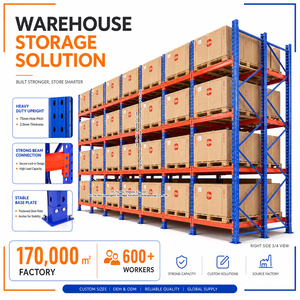
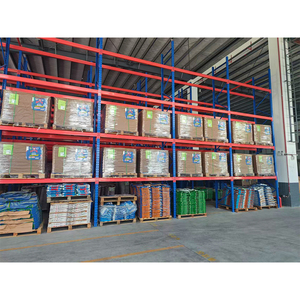
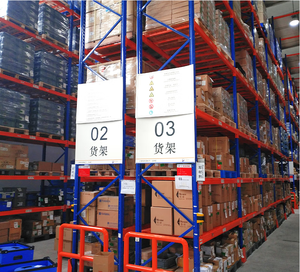
Engineered Warehouse Racking & Gravity Roller Storage Systems
Precision-fabricated cold-rolled steel storage frameworks engineered for heavy loading, rapid picking throughput, and maximum dynamic volumetric storage density.
Engineering Deep Dive
Roller Racking & Dynamic Pallet Flow Mechanics
Why Tier-1 supply chains choose gravity flow roller bed mechanics over static selective racking for high-turnover inventory hubs.
Strict FIFO Automatic Stock Rotation
In a roller racking system (often referred to as Pallet Flow Racking or Gravity Roller Racks), pallets are introduced at the upper loading ramp and descend under carefully calculated gravitational force down an incline of roughly 3% to 4%.
This physical architecture inherently enforces a strictly verified First-In, First-Out (FIFO) inventory discipline. For cold-chain agricultural, pharmaceutical, and high-frequency FMCG distribution facilities, this passive kinematic execution eliminates expired batches, prevents stock obsolescence, and simplifies automated lot traceability.
Volumetric Density & Travel Minimization
Traditional selective configurations require dedicated access aisles for every double-row set, capping volumetric floor utilization at approximately 35% to 40%. Roller racking condenses lanes into contiguous deep-lane beds, driving utilization past 75% to 85% of total cubic warehouse capacity.
By segregating loading operations to the replenishment face and picking workflows strictly to the discharge face, material handling equipment (MHE) traffic conflicts drop to zero. Forklift transit routes are reduced by over 40%, cutting equipment wear, battery cycles, and personnel transit hours.
Dynamic Speed Control & Safety Engineering
The core technological differentiator within premium Chinese factory manufacturing lies in the centrifugal brake roller subsystems and separation mechanisms embedded along the roller beds.
As pallet mass increases (frequently reaching 1,000 kg to 1,500 kg per pallet), uncontrolled terminal descent speed creates unacceptable collision impact. Factory-calibrated magnetic or friction brake rollers restrict descent speed to a controlled 0.2 to 0.3 m/s regardless of total load, while mechanical pallet separators isolate the lead pallet from lane line pressure at the pick face.
Engineering Matrix
Comparative System Performance Matrix
Benchmark data comparing roller racking system parameters against alternative high-density warehouse systems.
| System Architecture | Inventory Principle | Floor Utilization | Throughput Speed | Forklift Lane Penetration | Primary Application Profile |
|---|---|---|---|---|---|
| Roller Racking (Gravity Flow) | Strict FIFO | 80% – 85% | High (Dedicated pick face) | Zero (Perimeter only) | Perishables, FMCG, fast moving pallets |
| Selective Pallet Racking | FIFO / LIFO | 35% – 45% | Moderate (Aisle reliant) | 100% Lane Travel Required | High-SKU low-volume retail distribution |
| Drive-In Pallet Racking | Strict LIFO | 65% – 75% | Low (Slow deep ingress) | Complete internal mast entry | Homogenous bulk raw material buffer |
| Radio Shuttle Racking | FIFO / LIFO Flexible | 80% – 88% | Very High (Automated carrier) | Zero (Cart shuttles pallet) | High-density cold stores & beverage hubs |
| Push Back Racking | LIFO Only | 60% – 70% | Moderate (Push back force) | Zero (Face access only) | 2-5 pallet depth medium velocity lines |
Factory Heritage & Quality
Guangzhou Heda Shelves Co., Ltd. Manufacturing Authority
Founded in 2001, Guangzhou Heda Shelves Co., Ltd. has grown from a specialized metal processing unit into an international powerhouse in warehouse storage engineering. With an advanced 30,000 square meter standardized production base in South China, Heda integrates continuous automated cold roll-forming lines, computerized multi-stage punching grids, robotized robotic welding cells, and comprehensive non-destructive ultrasonic weld joint inspection.
Every roller racking track, upright profile, and load beam is produced from certified high-tensile Q235B or Q355B cold-rolled structural steel coils. Prior to automated electrostatic epoxy powder coating, all components undergo a strict 10-stage pickling and phosphating surface treatment. This chemical immersion removes oxidation scale, builds an anti-corrosion barrier, and ensures maximum coating adhesion—vital for facilities located in high-humidity monsoon zones, coastal logistics hubs, and sub-zero refrigerated rooms.
- CE Certified (2435-CPR-8605159)
- ISO 9001:2015 Registered
- 30,000 Tons Monthly Output
- Complete OEM/ODM Production
Structural Engineering Parameters
Steel Specification
Q235B / Q355B High-Yield Cold Rolled
Upright Column Profiles
80×60, 90×70, 100×70, 120×95 mm
Roller Wheel Material
Galvanized Steel / Impact Polycarbonate
Roller Load Rating
150 kg – 350 kg per individual roller
Brake Mechanism
Internal Centrifugal Magnetic / Mechanical
Track Incline Angle
1.5° – 2.5° (Calibrated per pallet spec)
Surface Finishing
Automated Dual Epoxy-Polyester Powder Coat
Quality Verification
FEM 10.2.02 / EN 15512 Structural Check
Market Forecast
Future Sourcing & Technological Trends in Roller Racking (2026–2030)
Strategic structural shifts and material engineering advances changing how global enterprise buyers procure dynamic gravity flow systems.
Hybrid Gravity-AGV Automation Nodes
The traditional gravity roller rack is rapidly moving beyond isolated manual forklift interfaces. Emerging procurement tenders mandate AGV/AMR compatible pick-and-drop face architectures.
Chinese factories are currently standardizing sensor-integrated discharge stops that interface directly with autonomous mobile robots and Automated Storage and Retrieval Systems (ASRS). Optical tracking sensors embedded in the roller beds communicate lane fill levels directly to warehouse management software (WMS), triggering automatic batch replenishment without human driver intervention.
Modular Zero-Emission Cold Chain Form Factors
Rising electrical power tariffs across refrigerated warehousing have transformed rack procurement into a thermal management calculation. Roller racking eliminates cooled volumetric dead-space, allowing cold storage operators to scale storage capacity inside existing chilled envelopes.
Future engineering trends focus on low-temperature synthetic lubrication and cryogenic polymer roller bearings guaranteed to perform without stiction or thermal cracking down to -30°C. Factories are increasingly standardizing hot-dip galvanizing alongside cold-formed profiles to completely prevent rust under continuous condensating freeze-thaw cycles.
Factory-Direct Finite Element Structural Auditing
International industrial logistics real estate developers (e.g., Prologis, Goodman, ESR) no longer accept generic catalogue capacity tables. Procurement now mandates project-specific 3D Finite Element Analysis (FEA) structural validation.
Chinese manufacturers must now provide certified simulation models that demonstrate beam deflection limits (L/200), upright buckling safety factors under full dynamic live loads, and regional seismic compliance based on local building codes (such as EN 15512, RMI, or IS 1893). This shift favors fully integrated factories with in-house structural engineering teams over commercial trading intermediaries.
Procurement Due Diligence
Frequently Asked Questions (FAQ) for Global Buyers
Direct technical and operational answers to address common engineering, quality verification, and shipping challenges.
What pallet quality standards are required for reliable roller racking operation?
Unlike selective racking where pallets rest securely across rigid box beams, gravity flow roller racks require consistent contact between the pallet bottom and the roller tracks. Pallets must have sound bottom runners (three-runner or perimeter base configurations) without broken, missing, or protruding boards. Weak or heavily deflected pallets create excessive rolling resistance, resulting in lane stalls. For plastic pallets or non-standard wooden skids, our engineering team can test and calibrate roller spacing and pitch using physical sample pallets at the factory before full-scale manufacturing begins.
How does the factory prevent pallet impact damage at the picking face?
We install two critical safety mechanisms: speed controllers (brake rollers) and mechanical time-delay pallet separators. Brake rollers are strategically spaced along the lane to maintain a uniform rolling speed between 0.2 m/s and 0.3 m/s. At the discharge face, a heavy-duty mechanical separator automatically isolates the first pallet from the trailing line of pallets. When the lead pallet is lifted away by a forklift, the separator unlocks after a brief time delay, allowing the remaining pallets to glide safely forward. This completely eliminates backpressure on the first pallet and protects operator equipment from structural collision forces.
How does Heda Shelves optimize containerization and export freight costs?
Racking structures, particularly heavy-duty upright frames and roller beds, are dense and volumetric. Heda optimizes containerization by nesting upright columns, packing beams in banded bundles with protective corner angles, and crating precision roller track assemblies to fit 40-foot high-cube (40HQ) containers with near 100% volumetric and payload utilization. By manufacturing all roll-formed profiles and structural brackets in-house, we control packaging dimensions, drastically lowering landed freight costs per pallet location at destination ports worldwide.
Can the system be customized for non-standard warehouses or seismic zones?
Yes. As a primary manufacturer, every installation is engineered to site-specific parameters. Customers provide warehouse CAD drawings, ceiling clearances, slab thickness, and local seismic acceleration values. Our structural engineering department performs finite element checks, selects appropriate base plate thicknesses, and incorporates heavy vertical and horizontal structural bracing to resist dynamic lateral loads and seismic shears. Detailed installation drawings and step-by-step video installation packages are provided for straightforward, accurate on-site erection.