Industrial Storage Systems & Material Handling Equipment
Engineered to comply with international FEM 10.2.02, EN 15512, and ANSI MH16.1 standards. Manufactured with automated cold-roll forming, robotic laser cutting, and electrostatic micro-powder finishes.
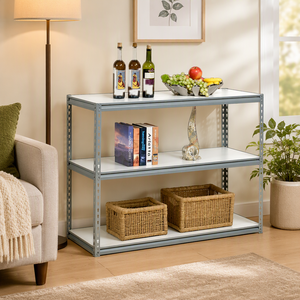
3-Tier Slotted Angle Storage Shelving Unit, Adjustable Metal Frame Home Display Rack
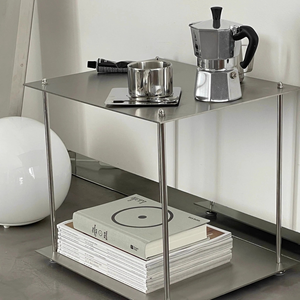
Stainless Steel Floor-Standing Multi-Tier Modular Bookshelf & Display Rack
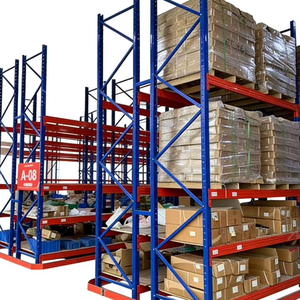
Heavy-Duty Cold Rolled Steel Epoxy Coated Warehouse Logistics Storage Shelves
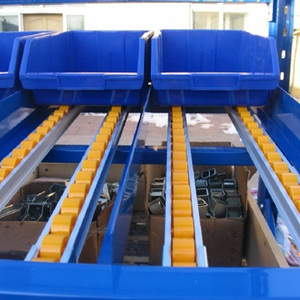
Carton Flow Rack Sliding Roller Shelf System Slide Warehouse Rack
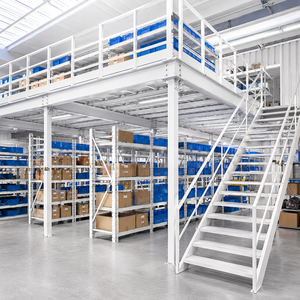
Multi-Level Storage Platform Steel Mezzanine Warehouse Racking System
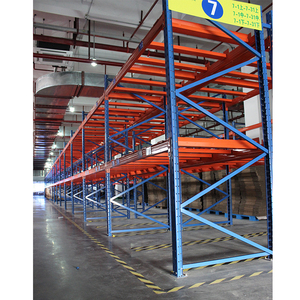
Custom Warehouse Racking System Steel Storage Solutions for Logistics
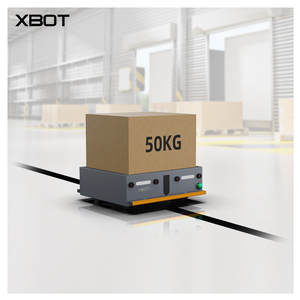
XBOT-AGV50 Designated Docking Station Warehouse Automation Robot System
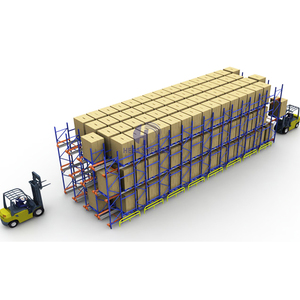
Automatic Four-Way Shuttle Pallet Racking System High-Density Storage
The Evolution of Global Intralogistics: From Static Racks to Automated High-Density Ecosystems
Industrial land costs across Europe, North America, Southeast Asia, and the Middle East have experienced unprecedented increases. Modern warehouse engineering can no longer rely on conventional low-density floor-level storage.
As modern supply chain nodes face rapid SKU proliferation, heightened fulfillment velocity demands, and severe labor constraints, industrial storage racking has transitioned from simple warehouse hardware into mission-critical structural systems. Procurement teams and engineering consultants must evaluate racking systems through the lens of structural resilience, dynamic deflection tolerances, micro-metallurgy, and long-term total cost of ownership (TCO).
Guangzhou Heda Shelves Co., Ltd. leads this transition by bridging heavy structural steel engineering with automated intralogistics robotics. Utilizing structural Q235B and high-yield Q355B cold-rolled coiled steel from tier-one Chinese steel mills, each racking component undergoes precision continuous roll-forming. This structural profiling produces cold-work hardening across the flanges and web radii, drastically augmenting section modulus and load-to-weight efficiency.
Industrial Racking Systems Selection & Comparison Guide
Selecting the correct storage topology requires balancing floor density, pallet selectivity, material handling equipment (MHE) capital costs, and operational cycle times.
| Storage Topology | Direct Selectivity | Space Density | Stock Rotation | Aisle Clear Width | Primary MHE Required | Target Industries |
|---|---|---|---|---|---|---|
| Selective Pallet Racking | 100% Direct | Moderate (40-50%) | FIFO / LIFO Flexible | 3.0 m – 3.8 m | Standard Counterbalance / Reach | 3PL, FMCG, Multi-SKU Distribution |
| Drive-In Racking | Low (Lane Basis) | High (70-80%) | Strict LIFO | Lane Access Only | Narrow Counterbalance | Cold Storage, Beverage, Seasonal Agri |
| Carton Flow / Pallet Flow | Dedicated Face | High (75-85%) | Strict FIFO (Gravity) | Loading / Picking Aisles | Standard Reach / Hand Cart | Pharma, Food Expiry Control, Assembly |
| 4-Way Radio Shuttle ASRS | High Automated | Ultra-High (85-92%) | Programmed FIFO/LIFO | Eliminates Forklift Aisles | Automated Shuttles + Vertical Lifts | Cold Chain Mega-Hubs, High-Bay DCs |
| Heavy-Duty Cantilever | 100% Direct Front | Linear Optimized | Unrestricted Access | Dependent on Arm/Load Depth | Side Loader / Multi-Directional | Structural Steel, Timber, PVC Pipes |
| Multi-Tier Mezzanine | 100% Walkable | 200% - 300% Multiplied | Manual Batch / Conveyor | Internal Walkways (1.0 - 1.5m) | Conveyors, Dumbwaiters, AGVs | E-commerce Sorting, Apparel, Auto Spares |
Emerging Trends Shaping Global Warehouse Racking Procurement
Infrastructural investments made today must remain resilient over a 15-to-25 year operational lifecycle. Industry forward-planners are prioritizing automation compatibility, modularity, and decarbonized materials.
1. Convergence of Steel Structures with Robotics (AMRs & AGVs)
Traditional static racking layouts are engineered with wide forklift corridors to accommodate vehicle turning radii. Future procurement is pivoting toward robot-native architectures where structural racks incorporate precision-machined guide rails, QR navigation grids, docking interfaces, and overhead transfer points for autonomous mobile robots.
2. Cold Chain Optimization & Sub-Zero Metallurgy
Global frozen food, dairy, and biopharmaceutical cold chains demand high thermal-efficiency storage. Racking in sub-zero environments (-25°C to -40°C) requires specialized low-temperature impact-tough steel alloys, modified micro-alloying elements (Vanadium/Niobium), and blast-resistant zinc-rich coatings to avoid brittle fracture failures under dynamic loading.
3. Vertical Volumetric Densification (Clear Heights > 15m)
Rather than acquiring additional land, logistics developers are expanding vertically. High-bay racking frameworks integrated with stacker cranes and rack-supported building structures (Clad-Rack Buildings) utilize the rack steel as the building's main load-bearing envelope, significantly reducing construction time, foundation footprint, and steel tonnage.
4. IoT-Integrated Digital Twins & Dynamic Load Telemetry
Smart uprights equipped with strain-gauge sensors and wireless micro-accelerometers enable 24/7 structural health monitoring. System operators receive immediate alerts for localized forklift impacts, overloaded beam bays, floor settlement tilts, or seismic resonance, preventing progressive structural collapses.
5. Decarbonized Steel & Zero-VOC Powder Pretreatment
ESG compliance and carbon footprint auditing are becoming mandatory across tier-one corporate tenders. Manufacturers are adopting Electric Arc Furnace (EAF) low-carbon steel, heavy metals-free nano-zirconium conversion layers, and ultra-durable TGIC-free polyester powder coatings cured under biomass or natural gas closed-loop systems.
6. Fast-Track Containerized Engineering & Modular Shipping
With shipping rate volatility and tight site installation windows, procurement contracts demand container-optimized racking fabrication. Modular beam lengths, nesting upright post profiles, knocked-down bracing panels, and pre-sorted hardware packages ensure 98%+ volumetric container load efficiency, lowering landed costs per pallet location.
Why Global Supply Chains Partner with Guangzhou Heda Shelves
Established in 2001, Guangzhou Heda Shelves Co., Ltd. operates a vertically integrated 30,000 m² heavy industrial production base in Guangzhou, delivering traceable, precision-engineered storage racking systems worldwide.
Full-Cycle In-House Fabrication
We execute the complete manufacturing cycle under one roof: uncoiling, automated multi-head punching, continuous CNC cold roll-forming, robotic pulse MIG welding, acid pickling, phosphating, and electrostatic epoxy coating.
Verifiable International Certifications
Fully certified and audited under CE Marking (Standard No. 2435-CPR-8605159), ISO 9001:2015 Quality Management Systems (Certificate No. 18624Q00169R0M), and full RoHS hazardous material compliance.
Free 24-Hour CAD / 3D Layout Service
Our senior structural engineering team converts building architectural drawings, column grids, forklift operating envelopes, and fire sprinkler clearances into optimized CAD layouts, load calculations, and 3D renderings within 24 hours.
Global Port Direct Container Logistics
Optimized container bundling and loading protocols guarantee cargo arrival without transit abrasion or bending. We service direct container shipments to Europe, North America, Southeast Asia, South Asia (Nhava Sheva, Chennai, Chittagong, Karachi), and the Middle East.
Strict 10-Stage Precision Production & Quality Control Architecture
Every production heat-lot follows an uncompromising inspection protocol: incoming coil tensile testing, continuous laser dimension profiling (±0.1 mm hole pitch tolerance), ultrasonic weld penetration evaluation, pre-treatment chemical titrations, and dry-film cross-hatch adhesion testing (ASTM D3359 Class 5B).
Frequently Asked Questions by Industrial Sourcing Directors
Direct technical and commercial answers addressing structural safety, international building codes, logistics planning, and customized steel engineering.
What core parameters are required for an engineered racking layout design?
We require the warehouse architectural drawing (CAD or detailed PDF) indicating clear height beneath joists/sprinklers, structural column grid coordinates, floor slab thickness and concrete compressive strength (e.g., C25/30 or 3000 PSI), pallet outer dimensions (Width × Depth × Height including cargo overhang), gross pallet load weights, and your forklift mast lifting height and minimum aisle turning radius.
How does HEDA ensure rack structural integrity under seismic conditions?
Our structural engineers calculate racking arrays based on the specific seismic zone coefficient and Peak Ground Acceleration (PGA) of your project site. We design heavy-duty enlarged base plates, high-tensile wedge anchor bolt configurations, reinforced back-to-back row spacers, and horizontal/vertical cross-bracing systems complying with EN 16681 seismic design codes and RMI standards.
How are steel components protected against maritime corrosion and high-humidity environments?
All cold-rolled steel profiles pass through a thorough 7-stage chemical pre-treatment process: degreasing, acid pickling, water rinsing, and zinc phosphating/nano-ceramic conversion. We apply a durable 70–90 μm electrostatic thermoset epoxy-polyester powder coating cured at 200°C, offering salt spray resistance exceeding 500 hours. For extreme moisture or cold storage conditions, hot-dip galvanized (HDG) finishes are available.
Can we integrate automated 4-way shuttles or AGVs into existing conventional racking?
Conventional racking cannot directly host shuttle automation without modification. 4-way shuttle systems require specialized high-precision cold-formed guide rails, stringent leveling tolerances (±1 mm per bay), dedicated longitudinal tie-beams, and exact vertical transfer lift shafts. However, we routinely engineer hybrid systems or retrofit specific warehouse zones into fully automated shuttle blocks.
What is the lead time for export orders and how are components packed for ocean freight?
Standard project production schedules range from 15 to 25 days depending on overall steel tonnage. For maritime shipping, upright frames and box beams are wrapped in air-bubble cushioning, reinforced with corrugated edge-protectors, and bundled with heavy-duty PET/steel strapping onto custom dunnage. This optimizes container cube utilization (20GP, 40GP, 40HQ) and avoids transit damage.
Do you provide on-site installation supervision and international engineering support?
Yes. Every container shipment is accompanied by comprehensive 3D assembly shop drawings, numbered part tags, structural bolt torque specifications, and step-by-step video installation guides. For major distribution centers and multi-tier mezzanines, we dispatch experienced project engineers on-site to direct and supervise local contractor installation teams.