Heavy-Duty Warehouse Storage Solutions
Engineered for structural durability, optimal cubic utilization, and seamless material handling. Fully compliant with CE, ISO 9001:2015, and global industrial storage codes.
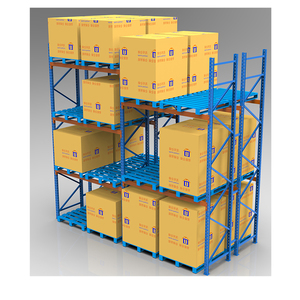 100% Selectivity
Single Deep Selective Rack Factory Metal Heavy Duty Industrial Racking Systems Pallet Racking
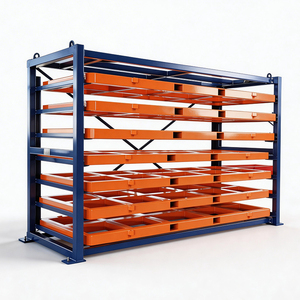 CE Certified
 Industrial Warehouse Steel Shelving System Heavy Duty Storage Racks Metal Racking Durable Cargo Shelves
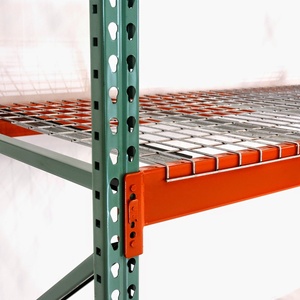 RMI Standard
Warehouse Selective Storage Teardrop Pallet Rack
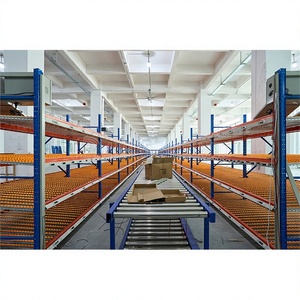 Gravity FIFO
Automated Carton Flow Gravity Racking FIFO Steel Roller Warehouse Storage System Heavy Duty Pallet Live Rack
 Cleanroom Grade
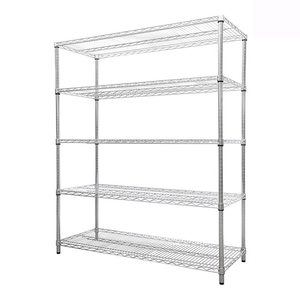
Heavy Duty 5 Tier Chrome Metal Storage Wire Shelf chrome wire shelving unit
 Fast Assembly
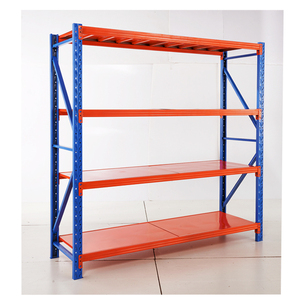
Racking Adjustable Metal Boltless Shelf and Racks Warehouse Storage Medium Duty Metal Rack Shelf
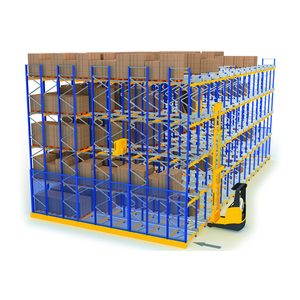 Automated AS/RS
 Cylindrical Cargo
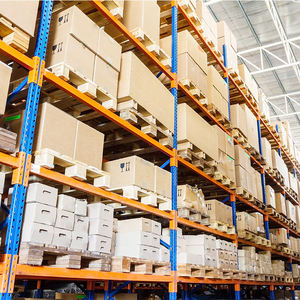
Heavy Duty Steel Fabric Roll Pallet Warehouse Racking Systems Steel Pallet Industrial Racks Nepal, Bhutan, Bangladesh
Engineering White Paper: Kinematics, Structural Design, and Physics of Push-Back Racking Systems
In modern intralogistics engineering, Push-Back Racking (also categorized as dynamic nested-cart accumulation storage) represents the optimal compromise between extreme storage density and intermediate selectivity. While traditional single-deep selective racking yields 100% immediate pallet access at the cost of 60% floor footprint dedicated to forklift travel aisles, and drive-in systems increase floor storage density by eliminating aisles but severely compromising pick rates and risking forklift mast impact against vertical uprights, push-back racking introduces a gravity-assisted, nested rolling platform that keeps forklift operators strictly within the perimeter of the primary handling aisle.
1. The Kinematics and Geometry of Nested Carts
Push rack assemblies operate on an inclined structural rail system sloping gently from front (entry/exit face) to back at an engineered gradient—typically calibrated between 1.5% and 2.2% (approximately 1° to 1.3°). The mechanical architecture incorporates a series of nested rolling carts configured in a low-profile telescoping stack.
When the lane is empty, the first pallet is deposited directly onto the top nested cart by a counterbalance or reach forklift truck. When the second pallet is introduced, the forklift operator pushes the first pallet backward along the incline, revealing the secondary carriage underneath. This sequence repeats for 3-deep, 4-deep, 5-deep, and up to 6-deep configurations. The final pallet rests directly onto the structural carrier rails themselves.
2. Comparative Engineering Analysis: High-Density Methodologies
To evaluate how push-back storage compares against alternative high-density warehouse solutions, the following matrix benchmarks critical structural, capital expenditure (CapEx), operational expenditure (OpEx), and logistical parameters:
| Storage System Architecture | Storage Density (Cubic) | Throughput / Pallet Access Speed | Stock Rotation Logic | Forklift Collision Risk Index | Maintenance & Electrical Load |
|---|---|---|---|---|---|
| Nested Cart Push-Back | LIFO (Lane Independent) | Zero Power (Passive Gravity) | |||
| Selective Pallet Racking | FIFO / Random Access | Low (Standard Aisles) | Zero Power (Static) | ||
| Drive-In / Drive-Through | Strict LIFO / Batch FIFO | Zero Power (Static) | |||
| Pallet Live / Gravity Flow | Strict FIFO | Brake Rollers & Separators | |||
| Automated Radio Shuttle | FIFO & LIFO Software Driven | Battery Charging & Wi-Fi PLC |
3. Future Procurement Megatrends (2025–2030)
Global supply chain resilience, escalating land acquisition costs in primary logistics hubs (e.g., Shanghai, Rotterdam, Chicago, Nhava Sheva, Dubai), and rigorous carbon footprint scrutiny are transforming industrial procurement behaviors:
Hybrid AGV / Push-Back Workcells
Logistics engineers are migrating from manual forklift push operations toward automated guided vehicles (AGVs) equipped with calibrated push-ram sensors. By combining passive gravity push carts with laser-guided AGVs, warehouses eliminate operator errors while slashing energy costs compared to fully automated AS/RS stacker cranes.
Cold-Chain Energy Density Optimization
Refrigerated and blast-freezer warehouses incur power costs up to 400% higher than ambient facilities. Push-back racks allow multi-lane consolidation inside sub-zero environments (-25°C to -35°C), preventing refrigeration loss from oversized aisles while avoiding the sensitive electronic failures often plaguing automated robotics in freezing humidity.
Low-Carbon Certified Steel Procurement
Multinational EPCs demand Environmental Product Declarations (EPDs). Leading China factories now utilize high-yield, cold-rolled structural sheet coils from certified blast-furnace or electric-arc-furnace steel mills, cutting structural steel weight by 14% while retaining full compliance with EN 15512 safety deflection thresholds (L/200).
4. Critical Structural Failure Modes and Prevention Engineering
Unlike static racks, dynamic push-back systems are subjected to constant cyclical loading, kinetic impact forces, and vibratory stresses during everyday push-and-release cycles. Engineering audits must address four critical failure modes:
A. Pallet Binding & Rail Derailment: In lower-tier systems, loose manufacturing tolerances cause nesting carts to rack diagonally, inducing wheel flange friction against the side channels and stalling the cart halfway along the lane. HEDA Shelves engineers overcome this by integrating CNC-machined anti-lift guide lugs and flanged hardened-steel wheels (Rockwell C 58-62) that track along rigid heavy-duty structural steel c-channels.
B. Front Stop Beam Dynamic Impact Fatigue: When a forklift withdraws a front pallet, the rear pallets roll forward under gravitational acceleration. At the end of the stroke, the kinetic energy must be absorbed. Standard welded plates often shear off after 12-18 months of intensive cycling. Our design integrates bolted elastomeric poly-dampers coupled with reinforced 4.5mm cold-formed frontal safety stops that absorb peak impact decelerations without transferring shock directly to the upright frame.
C. Upright Column Twist from Eccentric Loading: If a pallet is placed off-center on a 4-deep nested cart, asymmetric torsional forces are transferred into the supporting cross beams. To counteract this, upright frames are roll-formed with a multi-bend Omega (Ω) profile, exhibiting significantly higher torsional rigidity and section modulus (Wx, Wy) compared to standard open C-sections.
Why Global Supply Chains Specify HEDA Shelves
Originating in 2001, Guangzhou Heda Shelves Co., Ltd. has developed from a precision engineering workshop into an international logistics equipment manufacturer, delivering turn-key storage infrastructure across Europe, the Americas, the Middle East, Southeast Asia, and South Asia.
Full In-House Manufacturing
Complete chain control across our 30,000 m² factory: high-precision coil uncoiling, automatic continuous CNC punching, high-speed roll-forming, robotic MIG welding, 10-stage automated pickling-phosphating, and continuous electrostatic powder coating.
Rigorous International Certifications
Fully certified under European Construction Products Regulation CE Certificate No. 2435-CPR-8605159, certified quality management ISO 9001:2015 (Reg: 18624Q00169R0M), and complete RoHS environmental compliance for industrial surface treatments.
Free Engineering CAD & 3D Modeling
Our in-house technical department of 30+ structural designers and project engineers provides complimentary floor layout CAD analysis, dynamic pallet clearance validation, structural slab load-distribution calculations, and full 3D visual walkthroughs within 24 hours.
Export Packaging & Ocean Logistics
Direct container stuffing at Guangzhou port. Structural members are bundled with high-tensile steel strapping, corner-protected with heavy-gauge chipboard, and wrapped in waterproof polyethylene films to withstand multi-week oceanic freight transit across tropical and coastal moisture zones.
Push Racks & Dynamic Storage: Procurement FAQ
Authoritative answers to the structural, mechanical, environmental, and commercial questions most commonly raised by consulting engineers and warehouse procurement managers.
What warehouse floor slab criteria are mandatory for a 4-deep or 5-deep push-back rack system?
Due to the multi-lane accumulation nature of push-back systems, floor slab point loads are concentrated directly below the front and rear upright base plates. Floor concrete must have a minimum compressive strength of 25 to 30 MPa (C25/30 or 3,500-4,000 psi), with a slab thickness typically not less than 180mm-200mm, reinforced with standard rebar mesh. The floor surface levelness should adhere to DIN 18202 Table 3 or ASTM E1155 (FF/FL numbers) to prevent rail slope skewing.
How do nested carts perform in cold storage facilities down to -30°C?
Standard lubricants solidify below -10°C, causing pallet carts to stall. For cold-chain operations, HEDA Shelves fits each cart wheel assembly with low-temperature synthetic greases (rated down to -45°C) and shielded carbon-chromium steel bearings. Additionally, galvanized steel or zinc-rich primer finishes are recommended to prevent condensation corrosion during defrost cycles.
Can push-back systems accommodate irregular or weak wooden pallets without deflection?
Yes, this is one of the distinct engineering advantages of nested-cart push-back systems over roller-track gravity flow racks. Because pallets are seated directly atop rigid, fully welded structural steel cart frames with full perimeter support rather than resting directly on narrow roller lines, substandard, broken-bottom, or plastic skids are carried safely without hanging up on rollers.
What is the difference between nested-cart push-back and roller-bed push-back?
Nested-cart systems utilize heavy-duty fabricated carts running on nested inclined tracks; they require virtually no ongoing maintenance and possess vertical clearances as low as 150mm total stack height. Roller-bed push racks utilize continuous full-depth gravity roller lines with internal braking systems; while roller beds allow deeper runs (up to 8 pallets), they are vulnerable to debris jamming and roller bearing wear under high-cycle industrial usage.
How are ocean freight shipping costs optimized when exporting racking from China?
Racking components present high volume-to-weight ratios if improperly packaged. HEDA Shelves engineers our upright profiles with modular bolt-together bracing, allowing frames to be shipped disassembled or bundled in high-density nested packages. Heavy structural beams and cart frames are palletized with custom timber cradles to reach 24,000 to 26,000 kg gross payload inside 40-foot High Cube (40HQ) containers, driving landed freight cost per pallet position to the minimum possible baseline.
What safety accessories are recommended to prevent rack damage during loading operations?
Because forklift operators push against active spring and gravitational back-pressures, we integrate column corner guards, heavy-duty floor-mounted aisle wrap-around protectors (5mm thickness steel anchored with dual M16 chemical studs), rail alignment entry funnels, back-of-lane physical stops, and high-contrast reflective entry markers on each cart tier to guide forklift operators visually.
Ready to Upgrade Your Warehouse Cubic Efficiency?
Connect directly with the structural engineering department at Guangzhou Heda Shelves Co., Ltd. Send your facility dimensions, floor slab specifications, and pallet parameters to receive a complimentary custom CAD layout, structural capacity report, and factory-direct export proposal within 24 hours.