Precision Pallet Rack Frames & Dynamic Storage Assemblies
Explore our certified cold-rolled profiles, dynamic gravity channels, high-clearance mezzanine verticals, and heavy-duty frame configurations engineered for global logistics hubs.
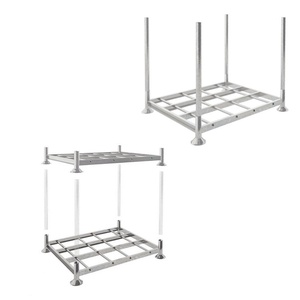
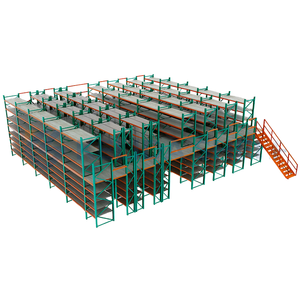
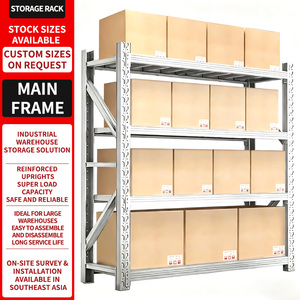
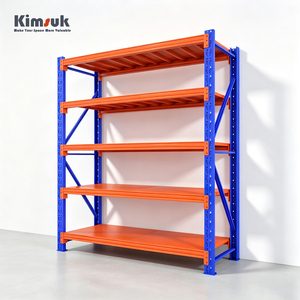
Engineering Anatomy of Pallet Rack Upright Frames: Critical OEM Specifications
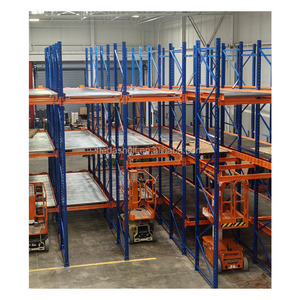
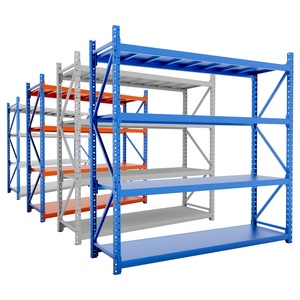
In structural warehousing mechanics, the pallet rack upright frame assembly serves as the critical primary vertical compressive member responsible for resisting dead loads, operational live loads, forklift impact shears, and seismic lateral forces. A standard rack frame consists of two roll-formed upright posts laced together by continuous horizontal and diagonal structural bracing channels, bolted with high-tensile grade 8.8 hardware, and anchored to reinforced industrial concrete slabs via specialized footplates.
When engineering directors and supply chain EPC contractors evaluate pallet rack frame manufacturers in China, understanding the exact metallurgical traits, cold-forming processes, section modulus geometry, and perforation dies is imperative to avoid catastrophic structural racking collapses.
1. Cold-Formed Upright Geometry and the "Omega" Profile
Premier Chinese manufacturers utilize multi-station continuous roll-forming lines (typically 18 to 24 roll-forming stages) to manufacture Omega-shaped upright sections. Unlike simple C-channels, an industrial Omega profile incorporates multiple re-entrant return lips and secondary stiffeners along the web and flanges. This complex geometric curvature substantially elevates the column's moment of inertia ($I_x$, $I_y$) and radius of gyration ($r$), effectively suppressing torsional-flexural buckling and local plate distortion under high-gravity compression loads.
Standard upright profiles produced by Tier-1 Chinese mills include 80×60mm, 90×70mm, 100×70mm, 120×95mm, and 140×100mm, with material wall thicknesses spanning precisely from 1.5mm to 3.0mm. Perforations along the face (50mm European pitch, 75mm standard pitch, or 76.2mm teardrop pattern) are produced via synchronized high-precision automated servo punch presses before rolling, ensuring hole center-to-center pitch tolerances remain within $\pm0.1\text{ mm}$ over 12-meter continuous vertical post lengths.
2. Metallurgical Formulations: Q235B vs. Q355B vs. Micro-Alloyed High Tensile Steel
The performance of a pallet rack upright under axial load is bound by the metallurgical integrity of the parent hot-rolled coil (HRC). Leading Chinese factories maintain primary material partnerships with Tier-1 steel conglomerates such as Baosteel, Shougang, and Ansteel, procuring certified prime coils subject to spectrographic chemical analysis and tensile yield verification:
Grade Q235B (ASTM A36 equivalent): Minimum yield strength $f_y \ge 235\text{ MPa}$, ultimate tensile strength $f_u = 370\text{--}500\text{ MPa}$, with elongation at fracture $\delta_5 \ge 26\%$. This ductile formulation is standard for ambient-temperature commercial warehousing with moderate beam elevations.
Grade Q355B (ASTM A572 Grade 50 equivalent): Minimum yield strength $f_y \ge 355\text{ MPa}$, ultimate tensile strength $f_u = 470\text{--}630\text{ MPa}$, with exceptional impact energy absorption (Charpy V-notch $\ge 34\text{ J}$ at $20^\circ\text{C}$). Q355B is mandatory for high-bay AS/RS systems exceeding 12 meters clear height, sub-zero cold chain logistics facilities (down to $-30^\circ\text{C}$), and high-seismic geographic installations.
| Upright Profile (mm) | Wall Thickness (mm) | Steel Grade | Gross Section Area ($cm^2$) | Moment of Inertia $I_x / I_y$ ($cm^4$) | Max Rated Frame Capacity (kg)* |
|---|---|---|---|---|---|
| 80 × 60 (Omega) | 1.8 mm | Q235B | 3.82 | 32.4 / 18.2 | 6,500 kg |
| 90 × 70 (Omega) | 2.0 mm | Q235B | 5.12 | 58.6 / 36.1 | 9,800 kg |
| 100 × 70 (Omega) | 2.0 mm | Q355B | 5.68 | 81.2 / 41.5 | 13,500 kg |
| 120 × 95 (Heavy Duty) | 2.5 mm | Q355B | 8.95 | 184.2 / 112.8 | 21,000 kg |
| 140 × 100 (AS/RS Spec) | 3.0 mm | Q355B / Micro-alloy | 12.40 | 362.5 / 215.4 | 32,000 kg |
*Note: Maximum frame load capacity depends strictly on unsupported beam level pitch (effective buckling length $L_{cr}$), seismic acceleration coefficient ($S_s, S_1$), and installation slab flatness. Structural engineering calculations per project are verified using finite element analysis.
3. Bracing Geometry: K-Brace vs. Z-Brace Frame Trusses
The structural rigidity of an assembled frame is dictated by its vertical truss design. The horizontal and diagonal braces (typically roll-formed C-profiles of $30\times30\times1.2\text{ mm}$ to $40\times25\times1.5\text{ mm}$) transfer transverse shearing loads to the floor slab. High-end Chinese manufacturers execute full K-truss bracing or Warping-Z layouts where the bottom diagonal brace ties within 150mm of the slab baseplate. This eliminates vulnerable cantilever flexure at the upright base, significantly curtailing damage caused by low-velocity forklift wheel outrigger impacts.
Global Standards Verification: RMI, EN 15512, and AS 4084
A frequent compliance vulnerability when procuring rack frames from mainland China is cross-standard translation error. Discerning procurement engineers must require factory verification of engineering methodologies certified under three distinct international regulatory regimes:
European Standard: EN 15512
Requires rigorous limit-state mechanical testing of perforated upright sections. Short-column stub tests define effective section area ($A_{eff}$), while long-column portal tests determine connection stiffness and loosening characteristics under cyclically applied horizontal sway forces.
American Standard: RMI (ANSI MH16.1)
Focuses on allowable stress design (ASD) and load and resistance factor design (LRFD). Governs baseplate hole tearing calculations, upright torsional buckling ratios, and minimum column shear impact capacity criteria (minimum 1,250 lbs resistance at low heights).
Australian Code: AS 4084
Strict operational tolerances on frame vertical out-of-plumbness (limiting post-installation lean to 1:500) and mandatory safety clips designed to resist unintentional vertical dislodgement forces exceeding $5.0\text{ kN}$ without permanent deformation.
Strategic Sourcing Insights: Future Procurement Trends (2025–2030)
Warehouse automation, changing trade dynamics, and aggressive carbon-neutral agendas are fundamentally altering how international enterprise buyers contract with Chinese racking factories. Watch these critical shifts:
1. AS/RS Sub-Millimeter Upright Tolerances
Autonomous Mobile Robots (AMRs) and automated stacker cranes require frame plumbness tolerances under 1:1000. Top Chinese mills now deploy robotic laser measurement arms directly at the cut-off die to guarantee straightness within $0.5\text{ mm}$ per 3 meters.
2. Sustainable Low-Carbon Hot-Rolled Coils
European and North American buyers are demanding Environmental Product Declarations (EPD). Chinese mills are expanding production using Electric Arc Furnaces (EAF) powered by renewable hydro and solar energy, slashing embedded carbon per ton of finished racking by up to 42%.
3. Micro-Alloyed High-Yield Thin-Gauging
Advances in niobium and vanadium micro-alloying permit reduction of upright wall thickness from 2.5mm to 2.0mm while sustaining equal section yield characteristics. This yields up to a 15% reduction in shipping gross tonnage and lowered landed shipping costs.
4. Continuous Robotic Mig/Tig Automated Fabrication
Manual welding of baseplates, bracket connectors, and beam end connectors is being phased out in Tier-1 facilities. Six-axis robotic welding cells guarantee 100% deep-penetration weld seams free of micro-cracks, porosity, and slag inclusions.
Why Global Logistics Integrators Partner with Guangzhou Heda Shelves
Since its founding in 2001, Guangzhou Heda Shelves Co., Ltd. has scaled into one of China's most trusted manufacturers and turnkey exporters of heavy-duty pallet racking systems, structural steel mezzanine floors, and dynamic high-density storage platforms. Operating from an expansive 30,000 square meter high-capacity manufacturing base in Guangzhou, South China, Heda produces in excess of 30,000 tons of certified storage racking every single month.
Certified Engineering Authority
Heda Shelves operates under verified, auditable credentials including CE Certification No. 2435-CPR-8605159, ISO 9001:2015 Certification No. 18624Q00169R0M, and comprehensive European RoHS environmental compliances.
Integrated 10-Stage In-House Quality Process
From prime steel coil inspection, precision CNC shearing, automated servo punching, and 20-stage cold profile forming, to specialized chemical pickling, zinc phosphating, and automatic electrostatic powder baking—every component is 100% traceable.
Free 2D CAD & 3D BIM Structural Design
Our veteran team of over 300 structural engineers and warehouse planners deliver customized layout configurations, structural moment calculations, and spatial capacity simulations within 24 hours of receiving site blueprints.
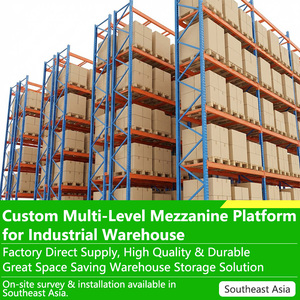
Whether configuring high-throughput selective pallet systems for logistics hubs in Mundra, Chennai, or Nhava Sheva, humidity-resistant deep-lane drive-in racks for agricultural processors in Chittagong, or multi-level order picking mezzanines across Southeast Asia, Europe, and the Americas, Guangzhou Heda Shelves delivers guaranteed fitment, competitive FOB/CIF container shipping optimization, and dedicated on-site engineering installation oversight.
Frequently Asked Questions: Sourcing Pallet Rack Frames from China
Essential guidance for international project engineers, inventory controllers, and professional procurement specialists.
Accelerate Your Storage Capacity with Certified OEM Excellence
Direct from our 30,000 m² Guangzhou production facility: Receive engineered 2D/3D CAD layouts, structural finite element calculation reviews, and factory-direct container quotes within 24 hours.