Precision-Engineered Industrial Shelving & Upright Systems
Certified industrial load columns, tear-drop punch configurations, and structural roll-formed profiles manufactured direct from Guangzhou Heda Shelves Co., Ltd.
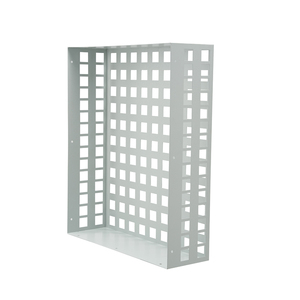 Precision Fit
- Surface: Hardened Chrome Plating
- Upright Profile: 80×60 / 90×70 C-Section
- Application: Cleanroom & Heavy Stamping
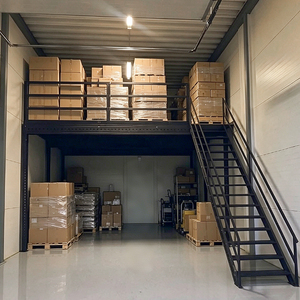 Multi-Tier
- Floor Load: 300–1000 kg/m²
- Upright Stanchion: Heavy Tubular / Omega
- Clear Height: 2.2m–4.5m Per Deck Tier
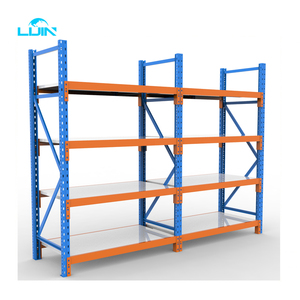 Modular Boltless
- Pitch: 50mm / 75mm Pitch Adjustability
- Steel Grade: High Tensile Q235B
- Locking: Spring-Steel Safety Connector
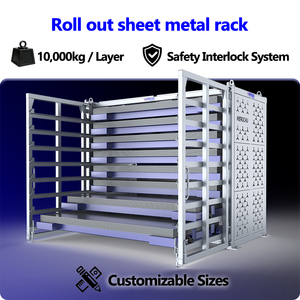 CE Certified
- Compliance: EN 15512 & CE 2435-CPR
- Column Section: 90×70 / 100×70 / 120×95
- Unit Capacity: Up to 4,500 kg/level
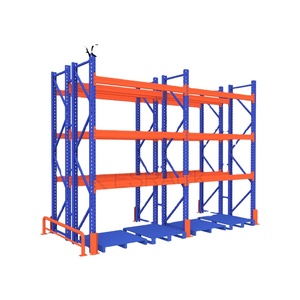 Specialized
- Configuration: Deep Horizontal Saddle
- Structural Core: Roll-formed Box Upright
- Corrosion Shield: Electrostatic Polymer
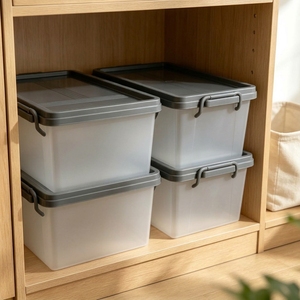 Upright Fitment
- Material: Food-Grade Virgin PP Polymer
- Compatibility: Longspan Shelving Uprights
- Sealing: Silicone Perimeter Gasket
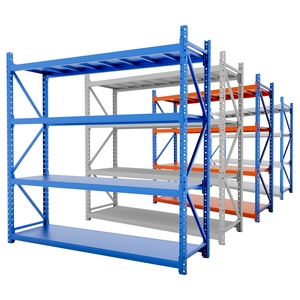 Factory Direct
- Capacity: 500–800 kg per Shelf Plane
- Bracing Pattern: K-Braced Diagonal/Horizontal
- Standard Finish: Epoxy Powder Coated
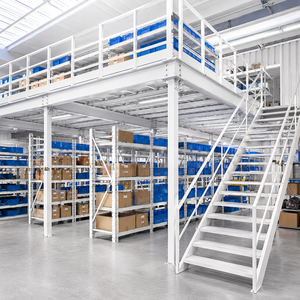 High Utilization
- Integration: Rack-Supported Catwalk
- Safety Gate: Pivot/Sliding Pallet Drop
- Decking: Perforated Zinc / Plywood
Engineering Fundamentals of Industrial Shelving Uprights: Profile Metallurgy and Punch Geometry
Industrial shelving uprights (often referred to as racking vertical columns, frame posts, or stanchions) form the primary vertical axial load-bearing skeleton of any high-bay distribution centre or manual-pick shelving framework. While structural beams carry surface-level static pallet forces, the entire building envelope's volumetric safety hinges directly upon the column buckling limit states, moment frame connections, and metallurgical ductility of the roll-formed upright profile. Chinese manufacturers supplying global supply chains operate under stringent cold-roll forming and continuous automated progressive-die punching standards, converting prime hot-rolled and cold-rolled pickled coils (predominantly standard Q235B, Q355B, and regional equivalents such as ASTM A36 and ASTM A572 Grade 50) into multi-bend open-channel geometries designed to counteract torsional-flexural buckling under axial stress.
The profile geometry of a high-performance industrial upright is never a simple rectangular or square tubular shape; instead, it incorporates complex omega-style profiles, multi-rib return flanges, and internal stiffeners. Each progressive pass across a 16-to-24-station roll-forming line introduces localized cold working, which raises the yield point of the base steel at the radii while introducing controlled work-hardening properties. However, unmonitored residual stresses within poorly calibrated roll sets can induce longitudinal bow, camber, and cross-sectional twist—an absolute catastrophic failure point when frames are interconnected across heights exceeding 10 to 14 meters. Premier Chinese upright manufacturing facilities resolve this through closed-loop servo-driven flying punches paired with active straightening cassettes, ensuring perpendicularity and axial tolerance within ±1.0 mm per 10 meters of post run.
Crucial Technical Insight: The interface between the upright punch slot (butterfly, teardrop, or hexagonal keyhole) and the beam connector's forged or stamped hooks governs the semi-rigid rotational stiffness (Ν0) of the entire rack frame. Excessive play or uneven die wear during column stamping reduces frame stiffness, necessitating severe load derating under ANSI/RMI MH16.1 and EN 15512 design formulas.
Punch configurations demand extreme micro-clearance stamping. Standard center-line hole spacings are traditionally indexed at 50 mm (European metric standard), 75 mm (British/Australian AS4084 standard), or 50.8 mm / 2 inches (North American teardrop profile). Precision tooling in Chinese tier-1 factories guarantees that the net section reduction—the loss of steel cross-section resulting from punched holes—is mathematically compensated by dynamic longitudinal edge stiffeners formed along the face and sidewalls of the column profile, preserving gross buckling capacity without adding unnecessary steel dead-weight.
| Upright Profile (mm) | Standard Gauge / Thk | Steel Grade Yield (MPa) | Max Frame Capacity (kg) | Primary Application Profile |
|---|---|---|---|---|
| Omega 80 × 60 | 1.5 mm – 1.8 mm | Q235B (≥ 235 MPa) | 4,500 – 6,000 kg | Medium-duty longspan shelving & light pallet tiers |
| Omega 90 × 70 | 1.8 mm – 2.0 mm | Q235B / Q355B | 8,000 – 12,000 kg | Standard selective pallet racking up to 7m height |
| Omega 100 × 70 | 2.0 mm – 2.3 mm | Q355B (≥ 355 MPa) | 13,000 – 16,500 kg | Heavy logistics, cold storage drives, mezzanine bases |
| Omega 120 × 95 | 2.5 mm – 3.0 mm | Q355B High-Tensile | 18,000 – 26,000 kg | VNA (Very Narrow Aisle), ASRS, seismic-rated bays |
| Boxed / Double C | 3.0 mm – 4.5 mm | Custom Structural Plate | 30,000+ kg | Automated crane run posts and deep radio shuttle hubs |
Manufacturer Infrastructure: Guangzhou Heda Shelves Co., Ltd. Global Manufacturing Dominance
Operating as a critical supply node in South China since 2001, Guangzhou Heda Shelves Co., Ltd. has established an integrated industrial complex that solves the precision, consistency, and lead-time constraints faced by international buyers. Spanning an expansive 30,000 m² factory footprint equipped with multi-axis automated CNC cutting stations, dedicated column cold-roll forming lines, and precision welding gantries, the company processes upwards of 30,000 tons of structural steel components monthly. This immense scale insulates global B2B procurement heads from erratic spot-market steel pricing while guaranteeing single-source structural traceability across every raw mill cert down to individual beam weld clips and footplates.
Integrated Metallurgical Control
Direct mill sourcing of prime slit coils with verified carbon, manganese, and silicon stoichiometry ensuring zero weld brittleness and ductile elongation above 21%.
Automated 10-Stage Finishing
Continuous submerged chemical pickling, alkaline degreasing, and nano-ceramic zirconizing/phosphating prior to high-voltage electrostatic polyester powder coating.
Documented Global Compliance
Fully certified quality architecture: CE Certificate No. 2435-CPR-8605159, ISO 9001:2015 Registration No. 18624Q00169R0M, and RoHS hazardous material containment.
Unlike regional trading intermediaries or assembly-only outfits, Heda Shelves engineers every upright component around client-specific site constraints. For industrial facilities operating across tropical, high-humidity, or marine environments (e.g., South and Southeast Asian port logistics zones, chemical handling hubs, and sub-zero blast-freezing facilities), standard surface coatings invariably fail within 24 to 36 months. Heda's multi-stage automated pre-treatment system replaces rudimentary spray washes with deep chemical immersion pickling and phosphating. This maximizes polymer resin cross-linking during infrared curing ovens, delivering salt spray test resistance well beyond 500 hours (ASTM B117) and eliminating the underfilm corrosion creep that compromises steel upright root collars near base anchoring points.
Procurement Dynamics: Market Trends & Next-Generation Industrial Upright Innovations (2025–2030)
The industrial shelving and vertical column sector is navigating a tectonic shift driven by supply chain nearshoring, land price surges, and the explosive proliferation of automated material handling equipment (AMR, AGV, and miniload ASRS). Corporate procurement officers, industrial civil engineers, and supply chain directors must evaluate vertical racking purchases through the lens of long-term total cost of ownership (TCO) and structural agility, rather than transactional price-per-kilogram metrics. Several strategic trends define the next half-decade of upright sourcing:
1. High-Tensile Micro-Alloyed Steels (Down-Gauging Without Capacity Deficits)
Rising oceanic freight costs and strict container weight limitations have accelerated the adoption of micro-alloyed, high-strength low-alloy (HSLA) steels such as Q355B, Q460, and European S355MC for vertical uprights. By moving from conventional carbon structural steel to advanced HSLA grades, upright wall thicknesses can be safely reduced by 12% to 18% without diminishing overall column axial load capacities or Euler critical load limits. The lower structural dead-weight allows buyers to maximize container cube utilization—shipping significantly more total rack storage capacity per 40HQ container and sharply curtailing landed CIF costs.
2. Seismic-Damped Upright Footplates & Inelastic Energy Dissipation
Warehouses built across active seismic hazard zones (e.g., Pacific Rim, Latin America, Mediterranean, and Northern Indian subcontinents) can no longer rely on rigid, pinned baseplates bolted directly into thin floor slabs. Advanced upright engineering now incorporates seismic baseplates with engineered sacrificial plastic hinges, slotted anchor paths, and ductile anchor bolts. Under cyclic ground accelerations, these base connections yield in a controlled, predictable manner, absorbing seismic kinetic energy and preventing sudden global column shear failure or brittle concrete anchor blowouts.
3. Integration with Smart IoT & Optical Health Monitoring Systems
Uprights in busy distribution centers face perpetual risk from forklift mast and outrigger impacts, which cause localized denting, tearing, and structural out-of-plumb deviations. The emerging industry standard embeds passive RFID tags, optical displacement targets, and calibrated strain-gauge telemetry sensors into the lower 1,500 mm impact zone of upright posts. These systems automatically monitor structural drift, beam-connection unseating, and structural deflection in real time, alerting maintenance managers via warehouse management system (WMS) dashboards long before a minor forklift impact precipitates progressive structural collapse.
4. Circular Economy, Low-VOC Powders, and Traceable Low-Emissions Steel
Global Fortune 500 supply chain operators increasingly enforce Scope 3 emissions quotas across their material handling procurement. As a result, premier Chinese manufacturers are transitioning from coal-fired blast furnace hot metal to high-percentage electric arc furnace (EAF) scrap steel feeds, coupled with triglycidyl isocyanurate (TGIC)-free, ultra-low-VOC polyester electrostatic finishes. This green manufacturing evolution allows multinational clients to document verifiable reductions in embedded structural steel carbon while qualifying for regional green building certifications (LEED v4, BREEAM).
Frequently Asked Questions: Global Industrial Shelving Upright Procurement
Technical, metallurgical, and commercial inquiries routinely reviewed by Heda Shelves' application engineering team for Tier-1 supply chain procurement audits.
Frame load capacity is not determined merely by adding beam loads together. It is calculated by modeling the entire frame as a continuous vertical beam-column subjected to axial compression and bi-axial bending moments, governed by EN 15512 or RMI standards. The most critical variable is the maximum unsupported vertical beam spacing (the distance between the floor and the first beam level, or between subsequent beam levels). Doubling this clear distance dramatically reduces the column's Euler buckling load limit, requiring either a thicker steel gauge, a wider profile width, or continuous structural diagonal cross-bracing.
Q235B steel has a minimum nominal yield strength of 235 MPa and a tensile strength of 370–500 MPa, making it the most cost-effective, easily formed alloy for standard light-to-medium-duty storage up to 6–8 meters in non-seismic conditions. Q355B has a minimum yield strength of 355 MPa (over 50% stronger in yield limit) and superior low-temperature impact toughness (-20°C rating), making it the mandatory specification for heavy-duty pallet racking, multi-tier mezzanine supporting columns, VNA racking exceeding 10 meters, and sub-zero cold storage warehouses.
The teardrop profile (50.8 mm / 2-inch pitch) is an open-standard non-proprietary interface universal throughout the US, Canadian, and Mexican supply chains, allowing universal interchangeability between beam styles and upright brands. European (FEM/EN) and Asian standards predominantly utilize proprietary 50 mm, 75 mm, or butterfly/hexagonal punch shapes that lock beams via tapered self-wedging action, often achieving higher rotational rigidity and lateral joint stability with fewer mechanical safety pins.
Intercontinental sea shipping subjects packed steel to severe humidity cycles, salt-laden ambient air, and container condensation (container rain). Quality manufacturers deploy a multi-layer protective protocol: continuous high-density polyethylene (HDPE) vapor-barrier wrapping, localized rust-inhibiting VCI film over sheared upright ends, fumigated solid wood dunnage, high-tensile steel strapping with non-abrasive corner edge protectors, and multiple desiccant packs distributed within the container interior to eliminate condensation damage.
Yes, provided a full static floor slab review is conducted prior to production. Heda Shelves' civil and structural engineers evaluate client-provided floor parameters—including slab thickness (typically 150–250 mm), unreinforced vs. fiber-reinforced concrete design, compressive strength (e.g., C20/25 to C30/37), subgrade modulus (k-value), and saw-cut joint locations. Custom baseplate dimensions and heavy wedge anchors (such as M10×80 through M16×120) are calculated to distribute point-load forces safely within the concrete's punching shear limits.
A complete project data book from a compliant manufacturer should include: certified mill test reports (MTR) showing raw material chemical analysis and yield/tensile curves; ISO 9001:2015 and CE Declaration of Performance (DoP) certificates; finite-element structural calculation packages signed by qualified structural engineers; layout installation drawings detailing anchor torque specifications; and official operating load plaque placards defining rated capacity limits per beam level and upright frame.
Design Your High-Efficiency Warehouse Storage Solution
Connect directly with Guangzhou Heda Shelves' engineering department for comprehensive CAD/3D layouts, finite element load verification, and direct factory-gate quotation packages within 24 hours.